


For heavy artificial intelligence power users, the honeymoon phase of cheap, seemingly unlimited cloud compute is rapidly coming to a close. As mainstream large language model platforms begin tightening session limits, watering down responses, and scaling back experimental features, a growing number of developers and independent creators are finding themselves squeezed by rising costs and platform restrictions. For one dedicated LLM power user who routinely burns through 100 million to 200 million tokens a day, the breaking point arrived quietly, prompting a deep dive into the complex world of hardware ownership and a bold decision to invest $15,000 into a custom-built, high-end local inference machine.
The motivation behind building local hardware goes beyond simple frustration with subscription limits and shifting platform policies. In the current artificial intelligence ecosystem, users who rely entirely on centralized big labs face a dual threat: the looming reality of severe compute constraints as global demand outstrips supply, and the intellectual property risk of having proprietary ideas absorbed by massive corporate training pipelines. To maintain true independence, digital sovereignty, and the freedom to run always-on AI agents fueled only by the cost of electricity, taking control of the physical infrastructure has become an increasingly compelling path.
Stepping into the world of local artificial intelligence hardware quickly reveals a harsh technical reality: the central bottleneck of AI inference is not just memory capacity, but memory bandwidth. Unlike traditional system RAM, which handles general computing tasks, large language models demand vast amounts of VRAM—the ultra-fast memory embedded directly onto graphics processing units where intermediate mathematical calculations are stored and processed at lightning speed. Without sufficient VRAM, running sophisticated models locally becomes functionally impossible.
Navigating the hardware landscape requires carefully weighing the architectural trade-offs of different systems. While popular consumer alternatives like Apple’s unified memory architecture allow the central processing unit and graphics equivalent to share a massive pool of memory, they suffer from a significantly slower Time To First Token relative to dedicated discrete graphics cards. Moving past consumer desktop setups, prospective builders must evaluate the true performance costs of various component configurations.

Initial research often points hobbyists toward older generation hardware, such as NVIDIA’s RTX 3090, which has gained a cult following for offering 24 gigabytes of VRAM alongside NVLink support at an attractive price-to-performance ratio. However, 24 gigabytes quickly feels restrictive when attempting to serve multiple models simultaneously, maintain massive context windows, or experiment with frontier-class architectures. More advanced open-weight models scaling toward one trillion parameters require staggering amounts of memory, sometimes demanding over a terabyte of RAM even with aggressive quantization techniques designed to reduce model fidelity and resource consumption.
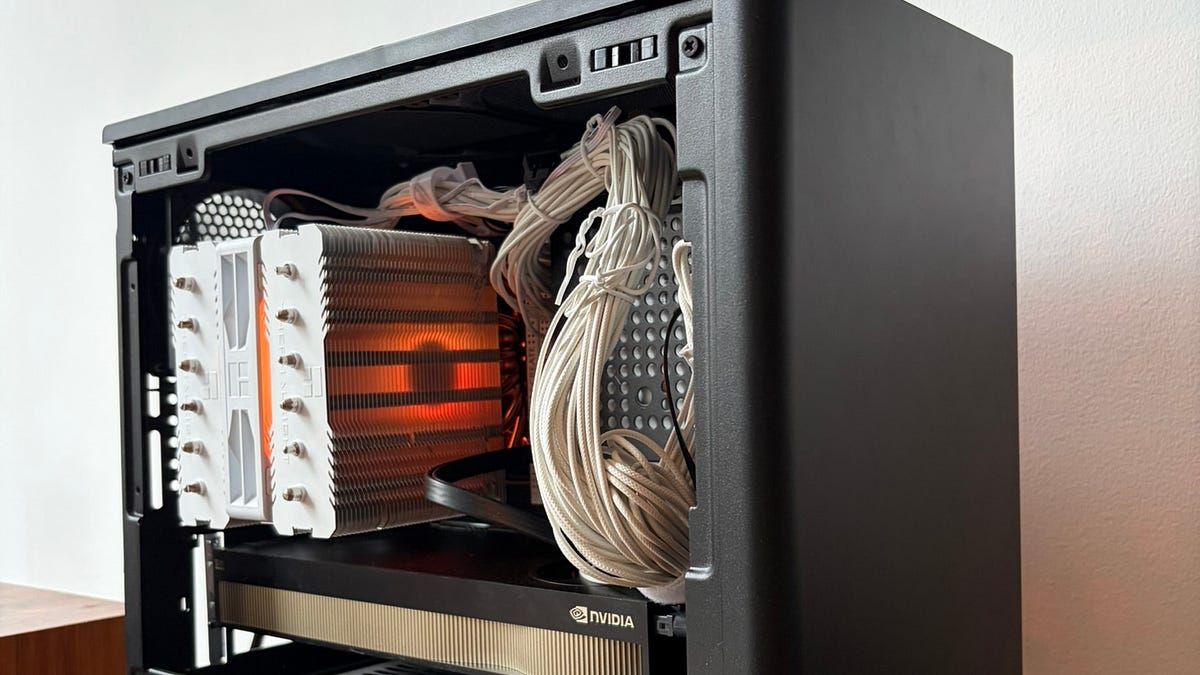
Faced with these demanding performance thresholds, the scope of the hardware project expands rapidly. Rather than chaining together multiple lower-end consumer cards or settling for limited capacity, the ultimate solution for a high-volume power user points toward the absolute pinnacle of consumer-grade graphics hardware: the NVIDIA RTX 6000 Pro. Released in 2025 with a staggering 96 gigabytes of VRAM and a price tag reaching $10,000, this enterprise-adjacent powerhouse represents the upper limit of what an individual can deploy without crossing into complex data center infrastructure. Furthermore, choosing a specialized Max-Q variant helps manage the intense thermal and power demands, drawing 300 watts instead of 600 watts while sacrificing only a marginal fraction of raw performance, enabling the creation of a compact, highly portable inference workstation.

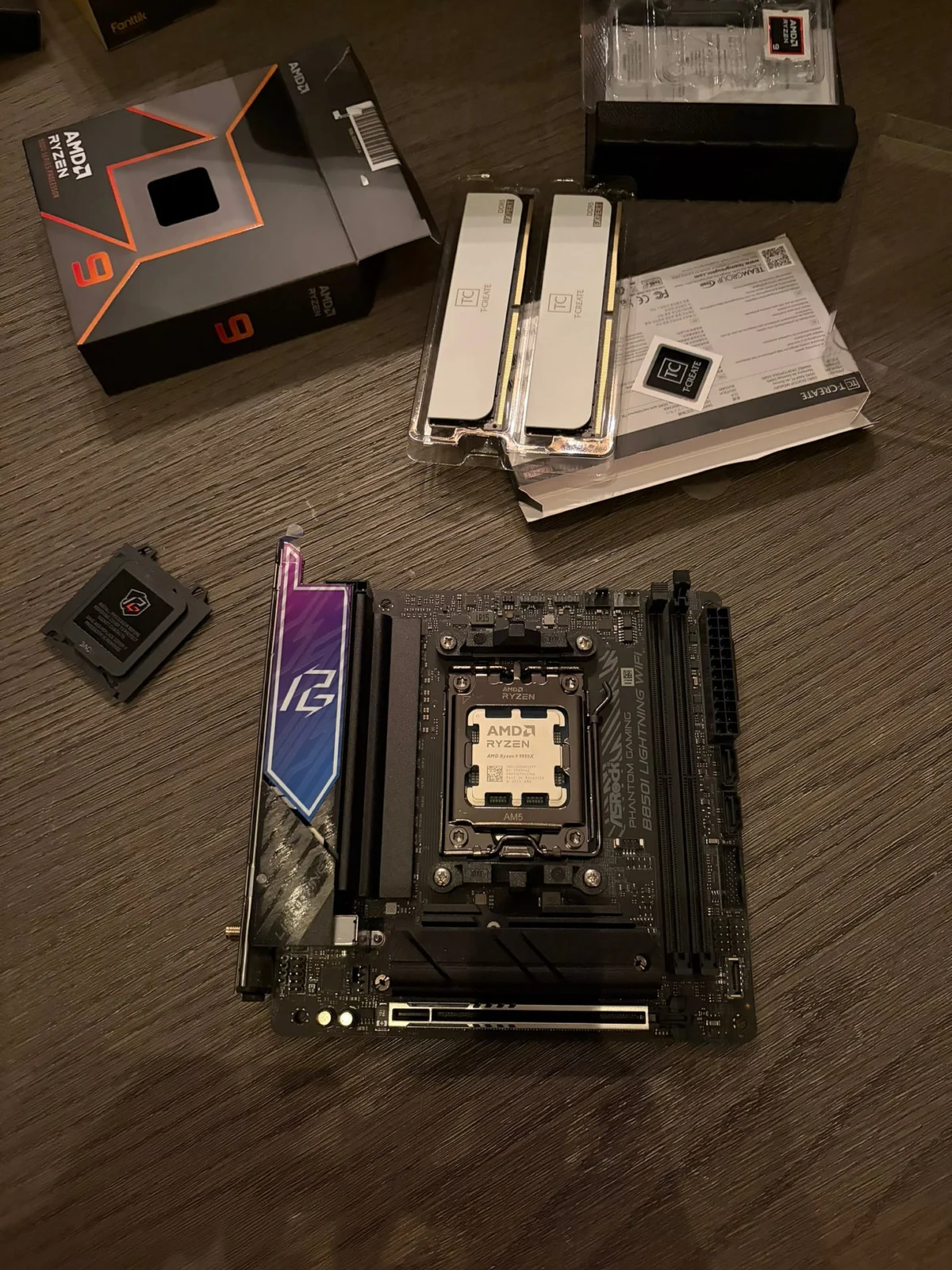
Designing a compact mini-ITX system around such a monumental graphics card introduces strict physical and architectural limitations. The motherboard acts as the ultimate gatekeeper, dictating the boundaries for memory, storage, and peripheral expansion. Selecting a modern motherboard such as the ASRock AMD B850i restricts the build to two RAM slots, a single primary graphics card slot, and limited NVMe storage channels. To maximize performance within these tight constraints, the system can be packed with 128 gigabytes of fast DDR5 RAM, bypassing the enterprise-grade error-correcting code memory and registered DIMM configurations typically reserved for sprawling server racks that require full-sized ATX motherboards.
Complementing the core graphics and memory architecture requires a carefully balanced selection of supporting components, including a powerful Ryzen 9950X processor, a reliable 850-watt power supply unit, four terabytes of fast NVMe storage, and an advanced CPU cooler to manage thermal output inside a tightly enclosed chassis. Assembling a machine from scratch using components worth thousands of dollars each transforms the living room into a high-pressure, nerve-wracking workshop. Over the course of a demanding weekend, every connection requires absolute precision, from seating the processor and snapping in the heavy graphics card to managing cramped cable routing inside a small form-factor case.

The physical assembly process comes with its own unique set of anxieties, particularly when handling delicate PCIe slots and expensive circuit boards where a single misstep could instantly ruin thousands of dollars in hardware. Rigorous pre-installation testing, methodical component troubleshooting, and careful adherence to technical manuals ultimately culminate in the satisfying moment of powering on the system for the first time. Seeing the machine spring to life with its colorful diagnostic lights marks the successful conclusion of the hardware phase, but it also signals the beginning of the true software journey.
Deploying useful applications, configuring local inference engines, and integrating always-on agent workflows represent the next frontier of independent computing. While the software configuration process is ongoing, the initial performance results are profoundly encouraging, proving that individuals can successfully reclaim their technical independence from centralized cloud providers. As the broader technology landscape continues to shift toward scarcity and monetization constraints, the movement toward personal hardware ownership and local compute power establishes a resilient foundation for the next generation of software innovation.



Comments (0)