



For years, a dedicated faction of old-school computer enthusiasts championed the principles of local-first software and private data storage, often dismissed by mainstream users as tech enthusiasts searching for problems to solve. Their persistent advocacy for keeping personal files and information on local hardware rather than remote servers once seemed like an eccentric crusade in an era dominated by convenient cloud storage. However, the rapid advancement and widespread integration of artificial intelligence have fundamentally altered the technological landscape, turning what was once a niche philosophical preference into a critical strategic advantage.
In the contemporary digital ecosystem, everyday user data is largely centralized and controlled by major technology corporations. Google manages personal communications and correspondence, Apple oversees vast archives of digital life and media, and Meta anchors social interactions and personal networks. Historically, this arrangement offered a pragmatic trade-off. Users exchanged access to their personal data for robust, reliable, and often free cloud services that synchronized seamlessly across multiple devices. While these platforms delivered undeniable utility, they also established massive data silos tailored to traditional web services rather than the demands of modern artificial intelligence.
As artificial intelligence systems evolve from simple conversational agents into proactive digital assistants capable of executing complex workflows, these corporate data silos present a significant bottleneck. When individuals seek to deploy an AI agent to manage tasks, coordinate schedules, or retrieve information across different platforms, they encounter severe architectural and policy limitations imposed by the service providers. Many dominant technology companies obscure these restrictions by offering proprietary, deeply integrated AI solutions designed to operate exclusively within their closed ecosystems. These tools can create a powerful illusion of productivity and capability, yet they fundamentally restrict the user’s operational freedom by trapping information behind corporate walls.
The core limitation stems from how artificial intelligence systems interact with information. For an AI to function with maximum effectiveness and autonomy, it requires comprehensive, unhindered access to context. When an individual houses their essential data on physical hardware they personally control—whether organized as standard file directories or stored within locally executed databases—an AI model operating on that same hardware gains profound, continuous context. The artificial intelligence can read, analyze, and synthesize information across disparate formats without encountering corporate application programming interface limits, privacy restrictions, or artificial throttling.

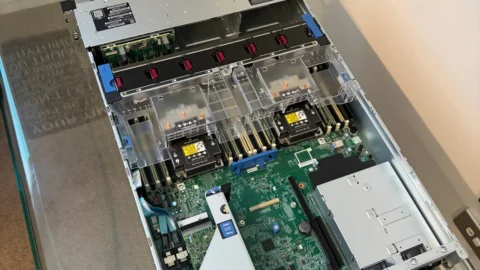
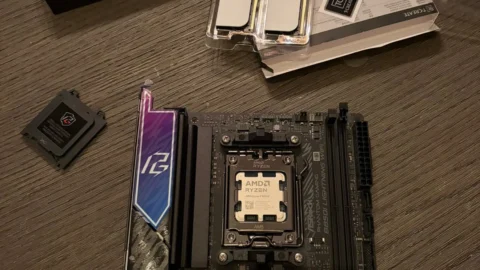
This architectural shift is accelerated by the rapid democratization and capability gains of open-source artificial intelligence models. As powerful large language models and specialized AI architectures become publicly accessible, the technical barrier to running sophisticated machine intelligence locally has plummeted. Users now possess the unprecedented capability to maintain a continuous digital intelligence running twenty-four hours a day, seven days a week, on local hardware, incurring no ongoing subscription costs beyond the electricity required to power the machine.
Conversely, individuals and organizations that continue to anchor their data within external cloud services find themselves increasingly dependent on external providers. These users remain at the mercy of platform operators who dictate access terms, modify privacy policies at will, and impose substantial financial rents for advanced AI services built upon the user’s own information. The economic and operational calculus of data ownership has shifted dramatically, raising the cost of digital dependency to new heights as artificial intelligence becomes central to daily productivity.
As the tech industry moves deeper into the intelligence age, the strategic value of self-hosted data infrastructure continues to compound. Analysts observing the trend note a growing movement among forward-thinking technologists who systematically reduce their reliance on external software services and proprietary data traps, choosing instead to maximize their personal compute capacity. By reclaiming control over digital assets, these individuals position themselves to harness the full potential of emerging AI capabilities without external interference or recurring corporate overhead.
Ultimately, the evolving relationship between artificial intelligence and personal data suggests that securing local control over digital information is no longer merely a precautionary measure for privacy advocates. It has become a foundational requirement for achieving maximal leverage and operational independence in an increasingly automated world. Navigating the future of personal computing will require a deliberate transition away from centralized digital dependencies toward robust, local data architectures capable of fueling the next generation of autonomous intelligence.


Comments (0)