



As traditional financial markets closed for the Christmas holiday and trading volumes dried up across the board, the crypto ecosystem experienced a quiet end to the week. Bitcoin slipped slightly by 0.4% amid muted activity, mirroring the broader holiday lull that typically characterizes the final week of December. With immediate price action subdued, market participants and investors have begun stepping back to reflect on a remarkable 2025 and evaluate strategic positioning for the year ahead.
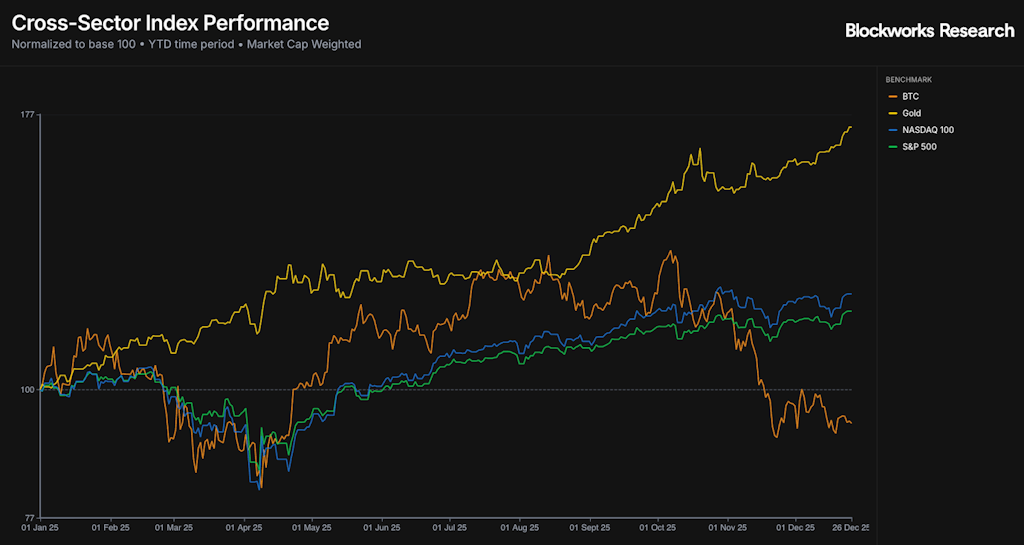
The macroeconomic and digital asset landscapes of 2025 have delivered unexpected outcomes, challenging conventional narratives about inflation hedges and risk-on assets. While Bitcoin has underperformed major stock market benchmarks throughout the year, its relative performance against precious metals has been even more striking. Precious metals have emerged as the standout asset class of 2025, defying the expectations of many market analysts who entered the year favoring digital alternatives or traditional equities.

Gold is currently on track to record its best annual performance since 1979, surging approximately 72% year-to-date. The yellow metal recently broke out to new all-time highs, pushing decisively past the $4,500 per ounce threshold. This monumental rally has been fueled by sustained macroeconomic uncertainty, shifting monetary policy expectations, and robust central bank accumulation. However, even gold’s impressive gains have been overshadowed by its sister metal, silver.
Silver has outperformed virtually every major asset class in 2025, rallying nearly 160% since the beginning of the year. The white metal experienced a breathtaking vertical move, gaining about 45% in the past month alone to reach a record high of approximately $75 an ounce. The historic run in precious metals highlights a strong global preference for hard assets and physical stores of value during a complex macroeconomic cycle, contrasting sharply with the choppy performance observed in major cryptocurrencies.
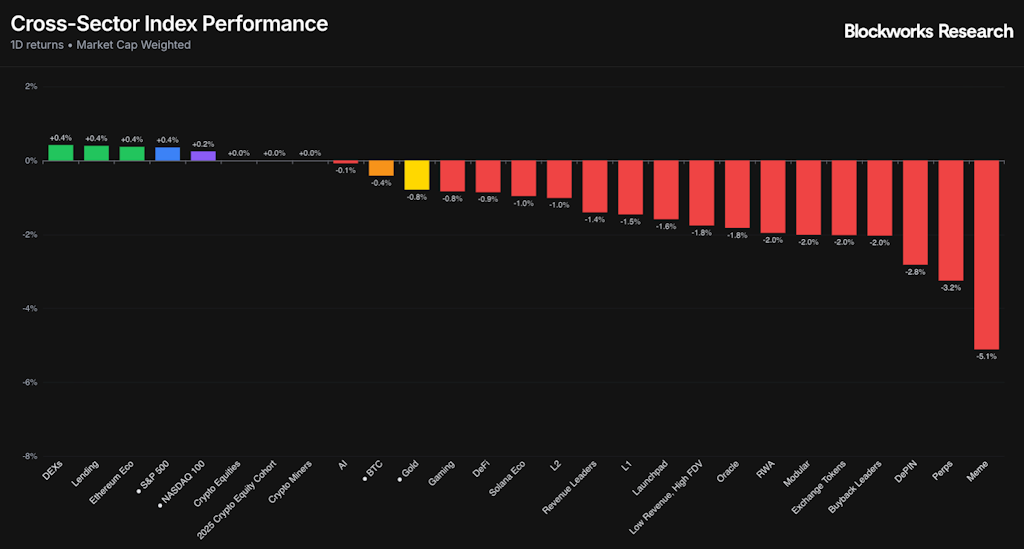
While commodities experienced a historic renaissance, the decentralized finance sector faced a very different reality. Many prominent DeFi tokens are currently trading near multi-year lows, creating a stark divergence between asset valuations and underlying network activity. Despite depressed token prices, the fundamental metrics, usage rates, and forward-looking growth projections for many leading decentralized finance protocols remain robust.
This disconnect between token valuations and protocol health has highlighted a fundamental shift in value capture within the blockchain ecosystem. In previous market cycles, value primarily accrued to base-layer infrastructure tokens. However, the dynamics have fundamentally flipped. Today, applications are capturing a vastly superior share of economic value compared to the underlying networks they operate upon.
A prime example of this structural shift can be observed on the Solana network, where decentralized applications now generate roughly three times the revenue of the underlying blockchain infrastructure itself. This evolution suggests that the growth of public blockchains is increasingly driving direct economic activity at the application layer rather than solely benefiting network tokens.
As the market looks ahead to 2026, this evolving market structure presents compelling opportunities for investors in liquid tokens. The central question facing market participants moving into the new year is whether, and precisely when, broader market valuations will begin to reflect this new economic reality, where application-layer revenues and fundamental growth outweigh purely speculative infrastructure narratives.





Comments (0)