


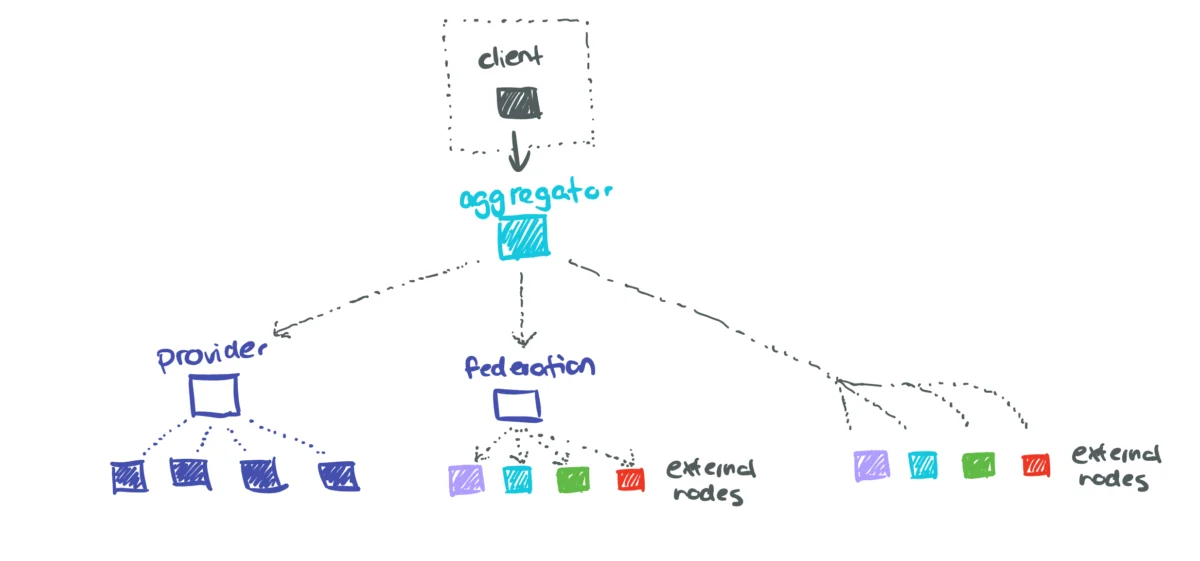
Crypto Remote Procedure Call (RPC) markets are, at their core, compute commodity markets in disguise. While the end product remains fundamentally the same—blockchain data delivered to applications—the operational mechanisms, routing logic, and business models used to deliver that data exhibit significant variances. These structural differences have given rise to four distinct categories within the infrastructure landscape: RPC providers, RPC federations, RPC proxies, and RPC aggregators.
Understanding how these segments differ is crucial for developers, infrastructure engineers, and protocols seeking to optimize their backend architecture. Although they may appear similar on the surface, each category handles node ownership, pricing power, and operational overhead in profoundly different ways.
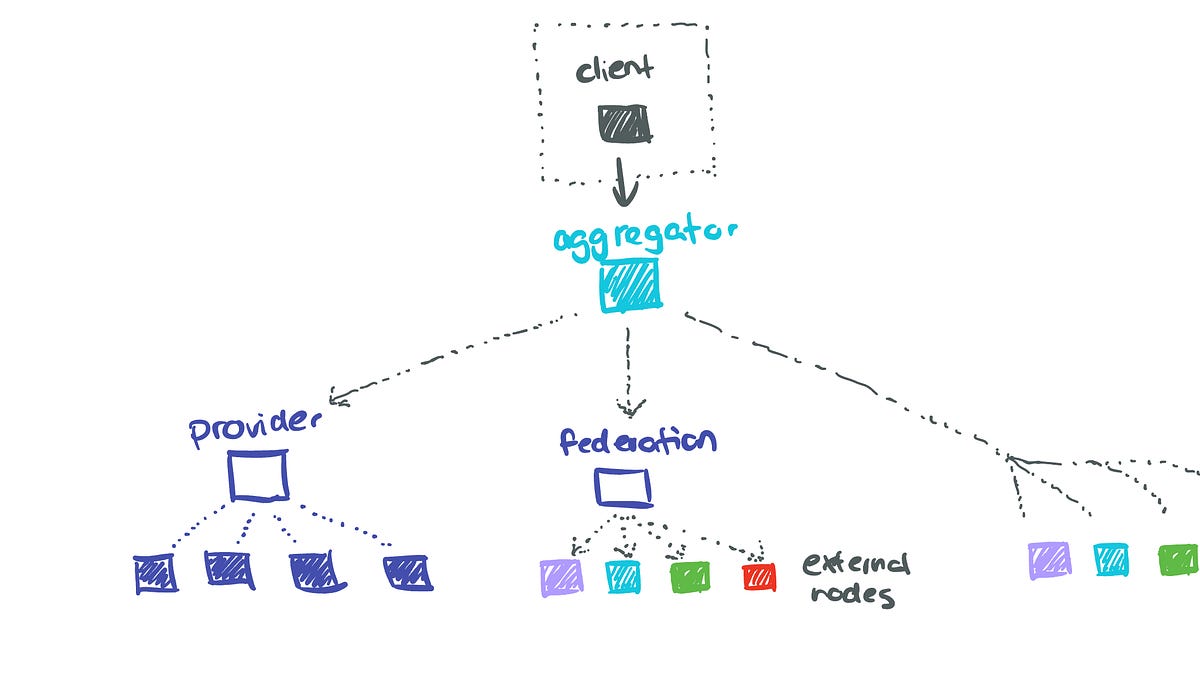
At the foundational layer of the market are RPC providers. Defined as companies that buy, manage, and orchestrate their own proprietary inventories of nodes, their core defining trait is absolute ownership of their node fleet. Prominent industry examples include major players like Alchemy, Quicknode, and Chainstack, among others. Because these entities own the underlying infrastructure directly, they maintain complete autonomy over pricing and commercial terms. There are no intermediaries sitting between the provider and the nodes they offer to the market. However, utilizing providers directly at scale places a heavier engineering burden on the client, who must independently manage failover systems, inventory allocation, and cost optimization.
Moving beyond direct ownership, the market has seen the emergence of RPC federations. Often confused with aggregators, federations are networks that allow third-party node operators to provision their infrastructure and join a collective pool of nodes. Federations typically establish a single, standardized price for end customers, while ensuring that individual node providers are compensated at a rate strictly lower than the advertised retail price. In addition, participating in these networks often requires specialized software, which can introduce operational complexity. Consequently, traditional RPC providers typically avoid joining federations due to the resulting loss of pricing power and added overhead.
Instead, opportunities within federations predominantly attract smaller-scale operations looking to monetize idle compute capacity, provided they possess the requisite technical expertise. On the surface, RPC federations present themselves to the market as a single, unified provider, even though they do not operate the underlying nodes themselves. Notable participants in this space include dRPC, Pocket Network, Infura DIN, and Lava Network.

As infrastructure requirements have grown more sophisticated, developers have increasingly turned to RPC proxies. This category bridges different models by utilizing software that dynamically routes traffic to a preferred provider based on pre-configured rules set by the user. Typically hosted directly by the customer, proxy software requires the user to bring their own providers and manage the associated billing relationships independently. In essence, an RPC proxy functions as a customizable control panel, allowing engineering teams to direct traffic and manage multiple providers through their own technical stack. The inventory remains owned and managed entirely by the customer.
Crucially, proxies and aggregators are not mutually exclusive; a client can easily run a proxy client-side while connecting to multiple upstream providers or aggregators. Current projects operating in this domain include eRPC and Lava Network.
Finally, RPC aggregators represent a distinct mechanical approach that outwardly resembles federations and proxies but operates under fundamentally different principles. Aggregators integrate at the provider level, acquiring an inventory of RPC capacities across multiple external providers while owning zero nodes themselves. This model can be understood as holding a meta-claim on node capacity without the capital expenditure of running the physical infrastructure. Routing and inventory management are executed algorithmically, evaluating options based on criteria such as price and latency without imposing rigid rules or conditions on the underlying providers.

To maintain economic viability, aggregators utilize dynamic pricing models that reflect the true supply and demand forces of running a node for a specific route. Despite adding their own operational margin, aggregators frequently deliver the lowest prices and latencies for consumers by evaluating millions of pathways in real-time through automated routing. The applied intelligence layer generates economies of scale for the aggregator, creating an continuously improving service as machine intelligence is gathered. A notable player operating at the forefront of this space is RouteMesh.
Examining the architecture of these systems reveals that while physical nodes ultimately sit at the end of the chain, the intermediate layers involve considerable technical nuance. Observing how the industry evolves from a low-level technical stack highlights a broader maturation process within the cryptocurrency sector. Much like the internet matured by developing successive layers of technical abstraction, the blockchain ecosystem is undergoing a parallel phase to meet the rigorous demands of global-scale adoption. Without these structural advancements, keeping pace with escalating throughput and availability demands would remain an ongoing challenge for developers across the industry.





Comments (0)