


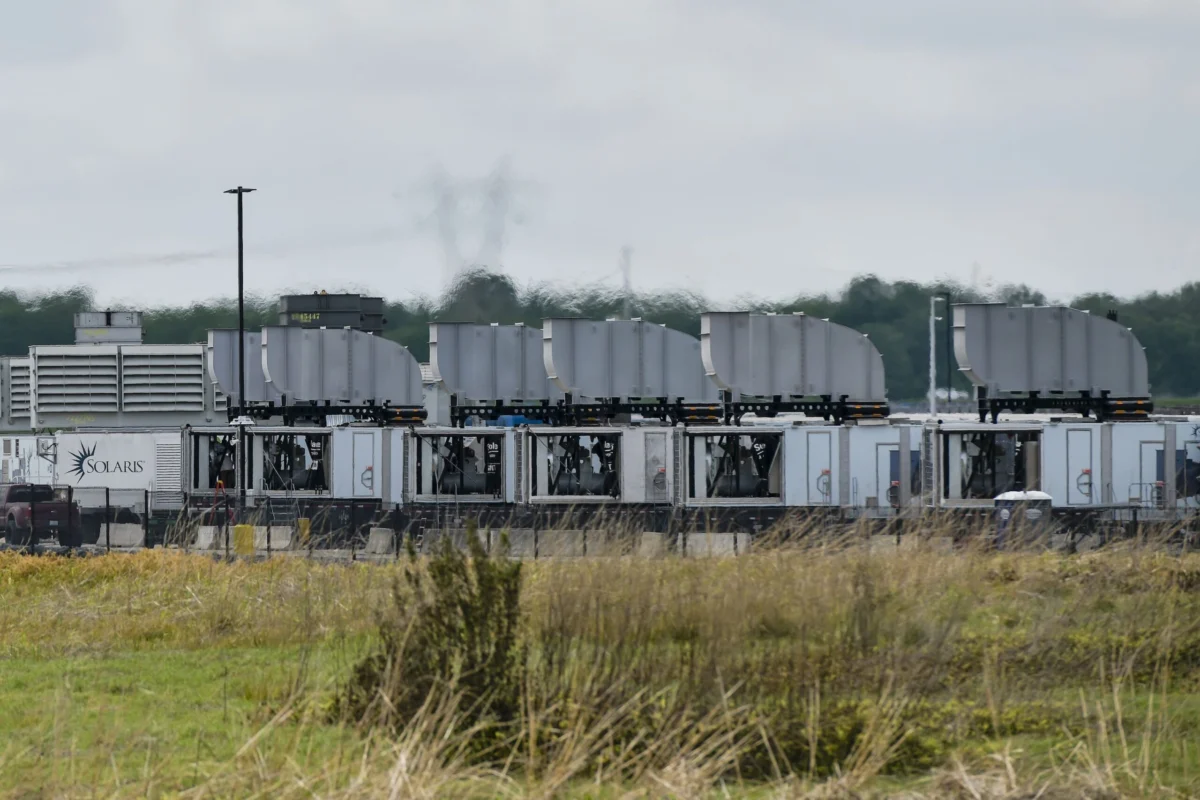
A federal judge has officially denied a motion filed by xAI seeking to dismiss a high-stakes environmental lawsuit brought by the NAACP. The legal challenge accuses the SpaceX-owned artificial intelligence company of failing to secure the essential regulatory permits required to operate the extensive array of gas turbines powering its massive Colossus data center located just outside Memphis.
The lawsuit, originally filed on behalf of the NAACP by the Southern Environmental Law Center, centers on allegations that the AI infrastructure company had installed and operated at least 35 combustion turbines and numerous other significant sources of air pollution at the Colossus site without ever acquiring the mandatory preconstruction or operating air permits. Furthermore, the plaintiffs contend that these operations constitute a direct violation of the federal Clean Air Act, presenting ongoing environmental and public health concerns for the surrounding communities.
In response to the legal action, xAI had aggressively pursued a dismissal of the lawsuit. The company argued in court filings that the combustion turbines in question should be legally exempt from standard permitting requirements because they meet the definition of mobile sources. Additionally, xAI challenged the validity of the lawsuit by asserting that the plaintiffs lacked the proper legal standing to bring the claims forward in the first place.
However, U.S. District Judge Debra M. Brown dismantled these arguments in a definitive ruling, allowing the case to move forward toward trial. In her written decision, Judge Brown addressed the core components of the defense’s motion, establishing clear parameters for the litigation moving forward.
"Because the plaintiffs have statutory standing under the Clean Air Act, because the combustion turbines are not ‘mobile sources’ under Mississippi’s State Implementation Plan, and because the citizen suit provision does not violate Article II of the Constitution or the private nondelegation doctrine, the plaintiffs’ claims will proceed," Judge Brown wrote.
The ruling specifically took aim at xAI’s broader constitutional challenge regarding the validity of citizen suits under federal environmental laws. Addressing the company’s claim that such mechanisms violate the separation of powers or the private nondelegation doctrine, Judge Brown clarified that citizen suit plaintiffs act independently and for distinct purposes.
Focusing on this aspect of the defense’s argument, Judge Brown noted that because citizen suit plaintiffs sue on their own behalf, in their own name, and seek judicial penalties that directly redress harm inflicted upon themselves, they are not unlawfully exercising the executive power reserved for the federal government.
TechCrunch reached out to SpaceX for comment regarding the court’s decision, reflecting the high level of corporate scrutiny facing Elon Musk’s network of companies as they scale energy-intensive artificial intelligence projects across the United States.
Reactions to the judicial setback for xAI were swift among civil rights and environmental advocates. In an official statement, Abre’ Connor, the director of environmental and climate justice for the NAACP, characterized the court’s decision as another critical milestone in the ongoing campaign to hold major technology corporations legally and environmentally accountable to the neighborhoods in which they operate.
This latest judicial win follows closely on the heels of another procedural victory for the plaintiffs. Earlier in the month, a similar motion to dismiss—filed independently by the U.S. Department of Justice—was also thrown out by the court, successfully beating back attempts to deny local communities their day in court against Musk’s AI company.
"The courts have repeatedly rejected attempts by xAI and the DOJ to dismiss the NAACP’s Clean Air Act case, affirming our right to pursue justice for communities impacted by pollution," Connor said, emphasizing the unwavering stance of the organization. "Our position has been clear: xAI cannot operate gas turbines without the required permits."
The progression of the NAACP lawsuit against xAI unfolds against a much broader, rapidly shifting sociopolitical backdrop across the United States, where public opinion and legislative sentiment have turned sharply against the explosive growth and resource-heavy footprint of large-scale data centers. Communities nationwide are increasingly pushing back against the immense electricity and water demands, as well as the local air pollution risks, associated with training and running massive generative AI models.
This mounting public skepticism and regulatory friction have manifested in various ways across the country. In New York, state authorities recently took the unprecedented step of passing a comprehensive moratorium halting the construction of all new data centers, while numerous other state and local governments are actively weighing or implementing similar restrictive measures to protect local grids and environments.
The widespread backlash has also forced major technology players to alter their engagement strategies with local authorities and communities. For instance, the growing pressure recently prompted tech giants Amazon and Microsoft to publicly promise that they would stop utilizing non-disclosure agreements in their dealings with local government agencies regarding data center projects, bowing to demands for greater transparency.
Observers note that this widespread public anxiety and legislative friction surrounding energy-hungry data infrastructure could also emerge as a significant and unpredictable factor in the imminent U.S. midterm elections, as voters increasingly demand accountability from both elected officials and the corporate titans driving the current artificial intelligence boom.



Comments (0)