


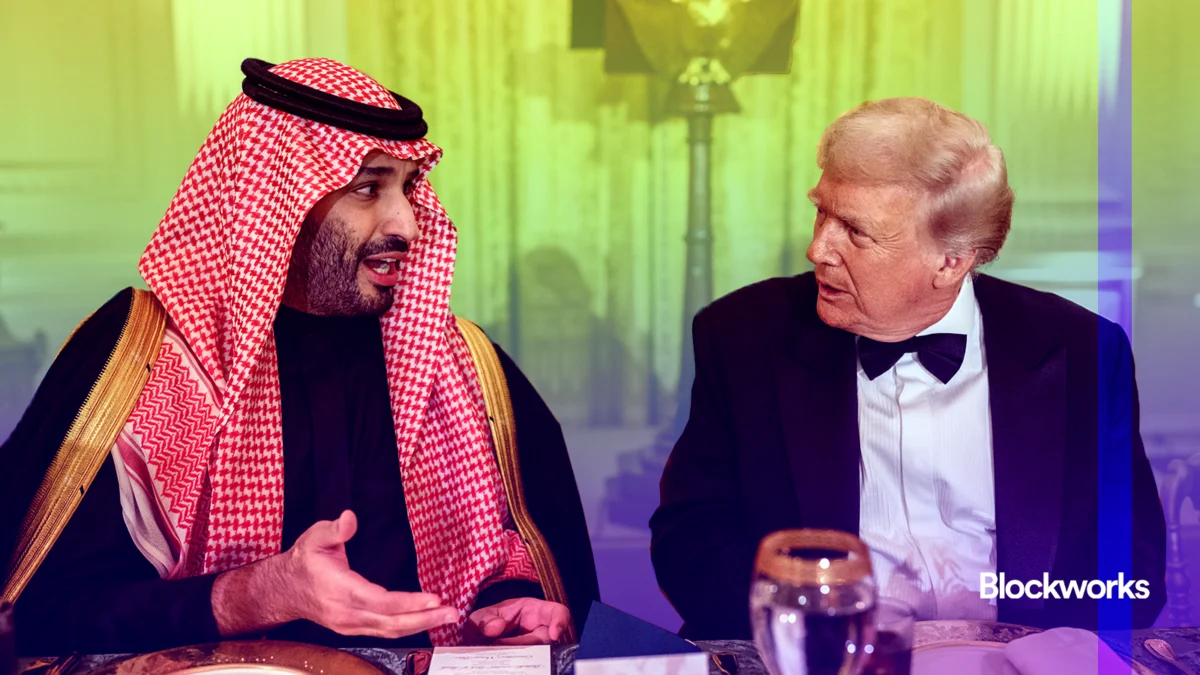
Federal Reserve Chair Jerome Powell recently reiterated a view held by many macroeconomic traditionalists: "The dollar is always going to be the reserve currency. Anyway, for a long time." Yet, as global economic landscapes shift and international stakeholders increasingly scrutinize the fiscal trajectory of the United States, debates surrounding the long-term supremacy of the greenback have taken center stage. To understand how the US dollar achieved and maintains its unshakeable foothold in the global financial architecture, modern observers often look backward to the tumultuous economic tremors of the 1970s. However, the popular historical narrative surrounding the birth of the petrodollar system—often framed as a neat geopolitical bargain cooked up in smoke-filled rooms—frequently obscures the messy, improvised, and deeply practical reality of how trillions of petrodollars actually found their way into American markets.
When the global price of oil suddenly quadrupled in 1973, sending shockwaves through industrialized economies and resource-dependent nations alike, Saudi Arabia found itself wholly unprepared for the staggering scale of the financial windfall that began flooding into its ledger books. Strictly speaking, the vast majority of that money never actually made physical or electronic contact with the Kingdom itself. Global buyers of Saudi crude oil dutifully wired their massive payments to accounts held at major commercial institutions like Citibank and JPMorgan in New York City. There, the capital sat largely idle. Saudi finance officials at the time possessed neither the institutional mechanisms nor the logistical framework required to move such monumental sums of money globally, let alone invest them across complex international asset classes.
With billions of dollars rapidly piling up in non-interest-bearing accounts, threatening to lose purchasing power amid a high-inflation environment, the Saudi Arabian Monetary Agency (SAMA) took a reluctant and pragmatic step. They reached out to an American banker named David Mulford, tasking him with the daunting assignment of managing their newly acquired national wealth. Mulford and a small, dedicated team of financial professionals packed their bags and relocated to the underdeveloped port town of Jeddah on the Red Sea coast. They scrambled to secure makeshift living arrangements in houses newly constructed in a barren expanse of the desert completely devoid of paved roads; to reach their residences, drivers simply navigated their vehicles directly over the shifting sands.
The physical hardships faced by these early architects of modern sovereign wealth management were severe. The hastily built houses lacked basic modern conveniences, including telephones, televisions, reliable mail delivery, and even municipal trash removal. Left with no local infrastructure for waste disposal, the bankers routinely dumped their refuse out in the desert sand where it served as a primary food source for local Bedouins’ goats. The conditions at the office they commuted to six days a week proved even more grueling. They were assigned a single room inside a decrepit, decaying building furnished with little more than basic wooden desks and chairs, completely lacking computers, terminals, or direct telephone lines.
The daily operational hurdles were extraordinary. As Mulford vividly documented in his published memoirs, a simple toilet was set across the hall in a long, deep room featuring an open drain running behind it. This rudimentary facility served the entire section of the building and was unceremoniously flushed just once a day at precisely three in the afternoon. Critical investment deals, often involving tens or hundreds of millions of dollars, had to be negotiated, agreed upon, and processed through the building’s single telex machine—a hybrid mechanical device combining elements of a typewriter and a telegraph. Because the machine was in constant demand, executing a single significant transaction required exchanging dozens of telex messages and could take weeks to fully complete.
Despite these primitive conditions, the sheer velocity of incoming capital created an unrelenting pressure cooker. As Mulford recalled of his demanding nine-year tenure at SAMA, the team was forced to deploy capital at an average rate of approximately $500 million per day simply to prevent the fund from falling behind the relentless accumulation of incoming oil revenues. This firsthand account from the front lines of petrodollar administration sheds entirely new light on modern economic history, effectively dismantling the persistent conspiracy theory that Saudi Arabia deliberately invested its massive oil windfall in US Treasurys as a direct quid pro quo in exchange for an explicit American military security guarantee.
Instead, the historical record indicates that the Saudis invested in US Treasurys out of sheer necessity and structural inevitability. Put simply, no other financial market anywhere in the world during the 1970s possessed the sheer depth, capacity, and scale required to absorb the staggering sum of $20 billion every single month that the Saudis urgently needed to deploy. Furthermore, no alternative market offered the same combination of unmatched safety, institutional stability, and ease of execution—factors that were of paramount importance when every single trade and allocation had to be meticulously coordinated and verified via a slow-moving telex machine.
The absolute dominance of the US market was not merely a preference; it was a mathematical constraint. SAMA actually instructed Mulford and his team to actively move 30% of their total investment portfolio completely out of the United States market and into alternative foreign jurisdictions as part of a diversification strategy. However, Mulford and his colleagues struggled immensely to achieve this goal due to structural market limitations. In most foreign financial markets outside of the United States during that era, executing a routine currency trade or asset allocation of just $5 million to $10 million was enough to single-handedly move prices and distort local markets. Consequently, stark practical limitations dictated the absolute maximum amount of currency and geographic diversification that the Saudi reserves could possibly absorb.
This historical reality provides a compelling counter-argument to the common assumption that global currency dominance can be engineered purely through political coercion, aggressive foreign policy, or clever regulatory maneuvering. The Saudis chose to pour their capital into US Treasurys because of the intrinsic qualities of what America’s financial system was at the time—its deep liquidity, institutional reliability, and robust property rights—rather than anything the United States government explicitly promised or demanded of them. Even during a tumultuous decade characterized by severe economic stagflation, marked by concurrent recessions and soaring inflation alongside a presidential resignation in deep political disgrace, United States financial markets retained the essential characteristics of depth, liquidity, and safety underpinned by the rule of law. These attributes made it the indisputable destination of choice for the world’s largest institutional investor.
Decades later, the structural gravitational pull of the United States economy has only evolved further, anchored now by the unrivaled global dominance of American corporations and equity markets. Non-US global investors currently hold roughly $19 trillion worth of US equities, a figure that dwarfs foreign holdings of US Treasurys by more than two to one. Furthermore, the nation retains a central bank that has historically fought to preserve its institutional inflation-fighting credibility, even when subjected to intense political pressure from Washington to finance increasingly massive federal fiscal deficits.
Jerome Powell, the current steward of America’s central bank, has repeatedly emphasized that the long-term viability of the dollar as the world’s premier reserve currency is fundamentally rooted in the strength of American democratic institutions and the consistent application of the rule of law. Addressing the foundation of the currency’s global appeal, Powell has stated that he expects the dollar to remain the global reserve currency precisely as long as those foundational institutional pillars remain securely in place.
Of course, maintaining these institutional advantages is an ongoing challenge rather than a permanent guarantee, and a growing chorus of prominent economists and financial historians warn that these foundations may not endure indefinitely. Renowned economist Ken Rogoff has publicly cautioned that the global standing of the US dollar is actively fraying at the edges. According to Rogoff, foreign investors and central banks are growing increasingly anxious over a perceived gradual breakdown of core American governance institutions, increasingly unpredictable and weaponized domestic policymaking that risks penalizing foreign capital, and mounting political threats directed toward the traditional independence of the central bank. All of these compounding factors are gradually culminating in a measurable erosion of international confidence in long-term capital investments within the United States.
Against this backdrop, policy efforts aimed at artificially manufacturing foreign demand for the US dollar—such as government initiatives intended to promote the widespread adoption of dollar-backed stablecoins—are unlikely to provide any meaningful structural rescue if foundational confidence wanes. Digital stablecoins are actively sought after across global markets precisely because the underlying fiat dollar is already in high demand and trusted globally; this is a foundational macro dynamic that is virtually guaranteed never to work in reverse. If the United States ultimately chooses to squander or compromise the structural advantages that underpin its financial supremacy, no amount of manufactured digital demand or regulatory engineering will be sufficient to save the dollar’s preeminent global status.




Comments (0)