



Risk assets and cryptocurrency markets are heading toward the close of the year with lingering downward momentum, offering little festive relief to investors searching for a dependable market bottom. As broader macroeconomic pressures weigh on global markets, the crypto ecosystem continues to test lower thresholds. Market participants are increasingly looking toward fundamental flows—primarily driven by exchange-traded fund (ETF) dynamics and protocol-level buybacks—to establish a firm floor and halt the persistent slide.
Indices and Market Performance
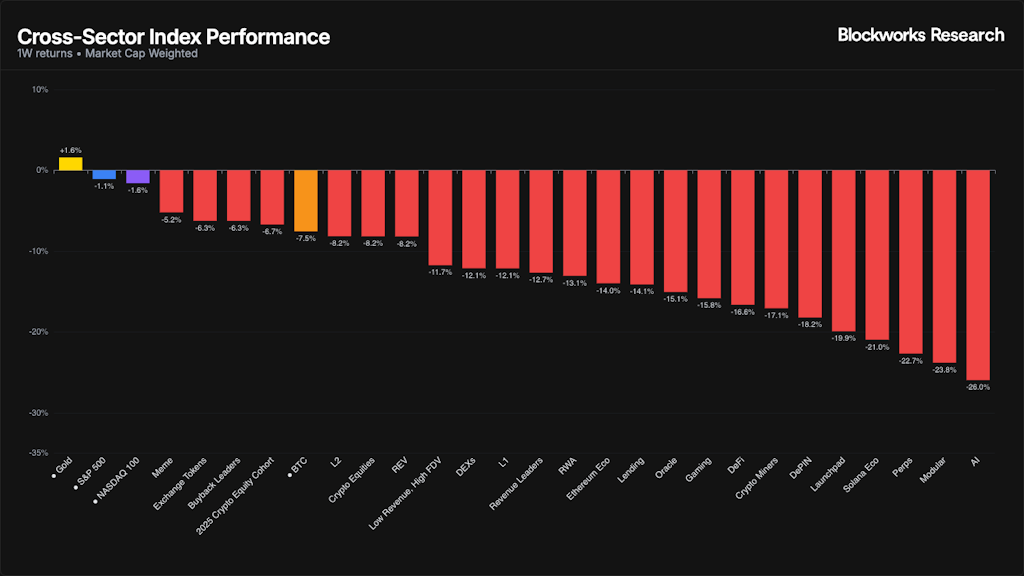
The trading week has concluded with broad-based weakness across traditional risk markets and cryptocurrency sectors alike. Major global equity benchmarks mirrored the downward trend, with both the S&P 500 and the Nasdaq 100 dropping over 1% during the week. Amid the widespread risk-off sentiment, gold stood out as a notable exception, maintaining relative strength as a traditional safe-haven asset.

Within the digital asset class, nearly every tracked crypto index finished the week in the red. However, relative performance diverged beneath the surface. Specific cohorts—notably exchange tokens, buyback leaders, and the 2025 crypto equity cohort—managed to outperform Bitcoin on an intra-week basis, while the remainder of the market lagged behind the premier cryptocurrency.
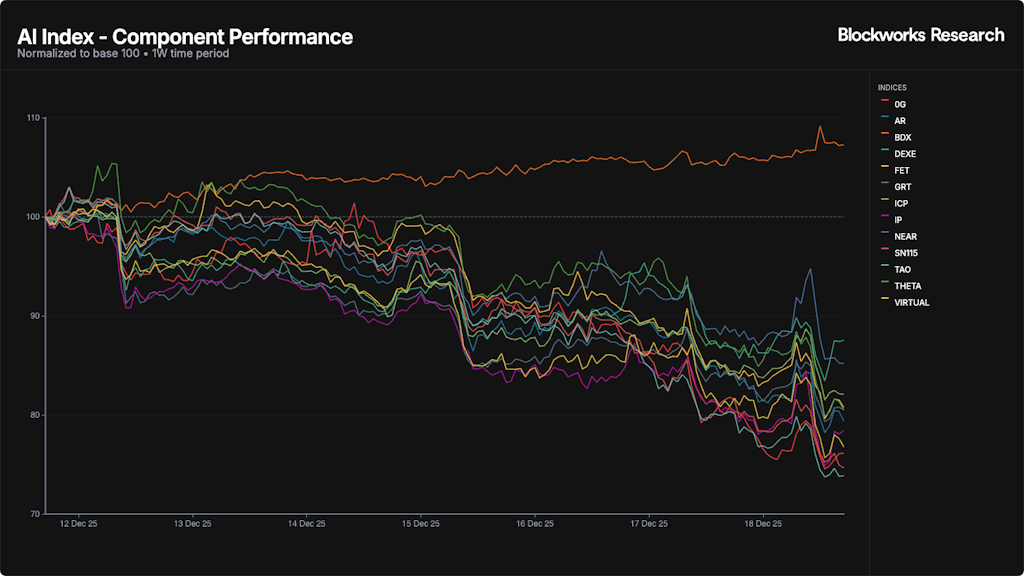
Sector-specific declines were particularly pronounced in artificial intelligence-related tokens, which emerged as the worst-performing sector of the week with a sharp 26% drawdown. This downward correction was spearheaded by TAO, which slumped to fresh multi-month lows following an impressive rally that had established it as one of the top-performing assets in October.
The broader digital asset market continues to navigate a persistent downtrend. Major digital assets such as Bitcoin, Ethereum, and Solana are displaying noticeable weakness, while longer-tail alternative tokens are enduring even steeper percentage losses. Market analysts suggest that risk assets are actively searching for a fundamental floor. Until price levels and programmatic buybacks become overwhelmingly attractive, allowing protocol cash flows to organically set a bottom, prices may drift lower. Similarly, major cryptocurrencies may require a renewed surge in net ETF inflows to establish their respective cyclical lows, given that the support provided by these institutional investment vehicles has remained remarkably anemic over recent weeks.
Weekend Reading: Market Perspectives and Structural Debates
As market participants digest the weekly price action, several prominent thought pieces and ecosystem reports have captured the attention of researchers and developers across the industry, highlighting deep structural debates ranging from macroeconomic precarity to the limits of traditional financial integration.
Taking a Step Back to Step Forward
Michael W. Green has published a detailed commentary titled “Taking a Step Back to Step Forward,” offering a structural and mathematical examination of current economic precarity in the United States. Grounding his analysis in Ole Peters’ theoretical framework known as the “Equation of Life,” Green contends that wealth has a natural propensity to concentrate without deliberate redistribution mechanisms, inherently driving systemic inequality over time.
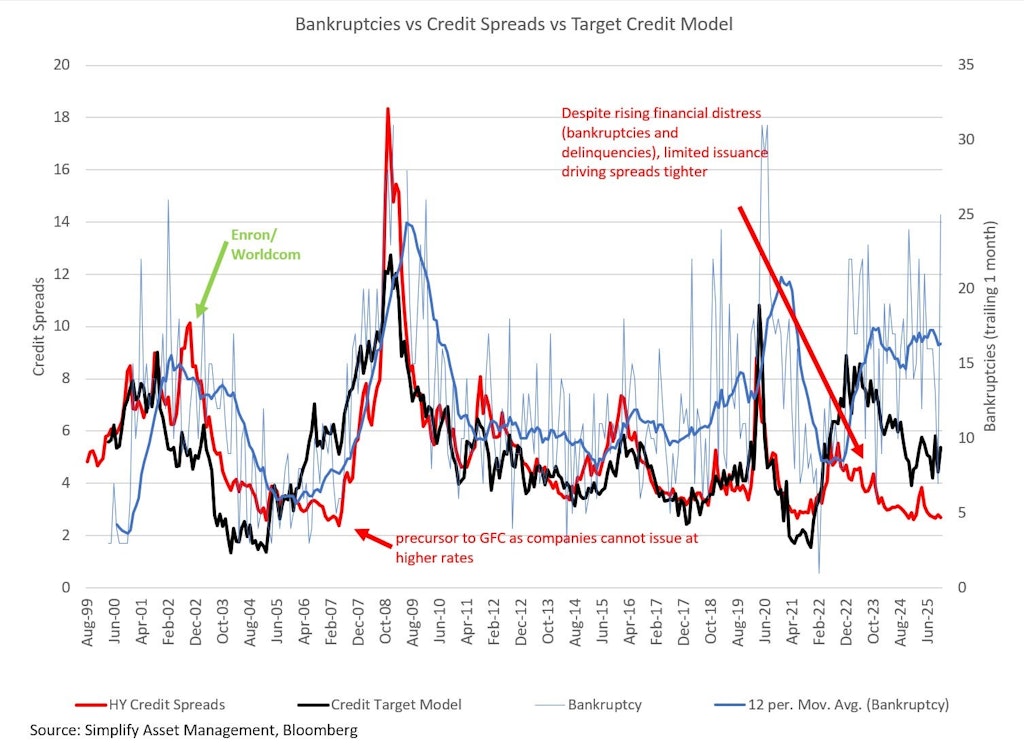
His analysis offers a sharp critique of distorted Consumer Price Index measurements, institutional complacency among technocrats, and persistent housing scarcity, characterizing these factors as structural mechanisms of economic extraction. Pointing to credit spreads that remain artificially tight despite mounting corporate and consumer defaults, Green issues a stark warning regarding underlying financial fragility. The essay ultimately issues a call for heightened civic engagement and institutional accountability, serving as a foundational piece for upcoming essays and political discussions centered on comprehensive systemic reform.
Annual State of Sky Ecosystem
In contrast to the broader macroeconomic gloom, the Sky Frontier Foundation released a comprehensive research report detailing the financial growth and major achievements of the Sky Ecosystem throughout 2025. The report highlights a dramatic 86% expansion in the circulating supply of USDS, which climbed to $9.86 billion, comfortably outpacing the growth rate of the broader stablecoin sector.
During the year, the Sky Protocol demonstrated robust financial performance, generating $435 million in protocol revenue and securing $168 million in net profits. This strong financial health facilitated substantial SKY token buybacks and attractive staking rewards for participants. Bolstered by emerging regulatory clarity stemming from the GENIUS Act and the rollout of multiple Sky Agent products, the ecosystem report projects accelerated institutional adoption and aggressive protocol expansion heading into 2026, solidifying Sky’s position as a prominent leader in decentralized, yield-bearing stablecoin infrastructure.
Beware the Lofty Promises of TradFi Firms Embracing Tokenization
Turning a critical eye toward institutional adoption, Omid Malekan published a commentary warning the digital asset community to remain cautious regarding the stated intentions of traditional financial institutions entering the tokenization space. Titled “Beware the Lofty Promises of TradFi Firms Embracing Tokenization,” the essay critiques legacy entities such as the Depository Trust and Clearing Corporation, Visa, SWIFT, Stripe, and PayPal for selectively adopting blockchain-based efficiencies while actively seeking to neutralize technologies that pose an existential threat to their traditional business models.
Malekan argues that while these institutions enthusiastically promote the concept of tokenization, they systematically avoid decentralization, thereby risking the co-optation of crypto’s core ethos. He cautions that the proliferation of permissioned ledgers and aggressive corporate lobbying efforts threaten to dilute the foundational principles that made public blockchains revolutionary. While acknowledging the necessity of engaging with traditional finance, Malekan urges the digital asset community to staunchly defend open, public, and permissionless networks rather than sacrificing decentralization for the sake of mainstream institutional convenience.
Addressing Non-USD Stablecoin Inventory Challenges in Global Banking
Another critical debate surfaced on social media and digital forums, where pseudonymous researcher @DeFi_Cheetah challenged prevailing narratives surrounding non-USD stablecoin adoption. In a widely discussed post titled “It’s Not ‘No One Wants Non-USD Stables’ — It’s ‘No Banks Want Non-USD Inventory,’” the author argues that the sluggish adoption of non-USD stablecoins is not a symptom of weak market demand, but rather the result of severe structural constraints embedded within the global banking architecture.
The analysis dissects how stringent Basel III capital requirements, ongoing liquidity constraints, and regulatory penalties levied against Global Systemically Important Banks actively discourage traditional financial institutions from holding non-USD inventories or facilitating emerging market currency corridors. This institutional reluctance creates a persistent liquidity vacuum within non-USD foreign exchange markets. The author concludes by advocating for decentralized finance-native solutions to organically bootstrap non-USD stable liquidity, warning that relying on legacy foreign exchange infrastructure for digital asset adoption is structurally bound to fail.




Comments (0)