


Following a decisive wave of victories in the U.S. midterm elections, congressional Democrats and newly elected state leaders are signaling an aggressive pushback against the rapid expansion of artificial intelligence infrastructure, placing a heavy focus on the environmental and economic impact of sprawling data centers.
The political shift follows a series of local referendums across the United States where voters on Tuesday approved stringent new limitations on data center construction. The outcomes have energized progressive and mainstream Democrats alike, many of whom made Big Tech’s resource-intensive infrastructure a central pillar of their campaigns.
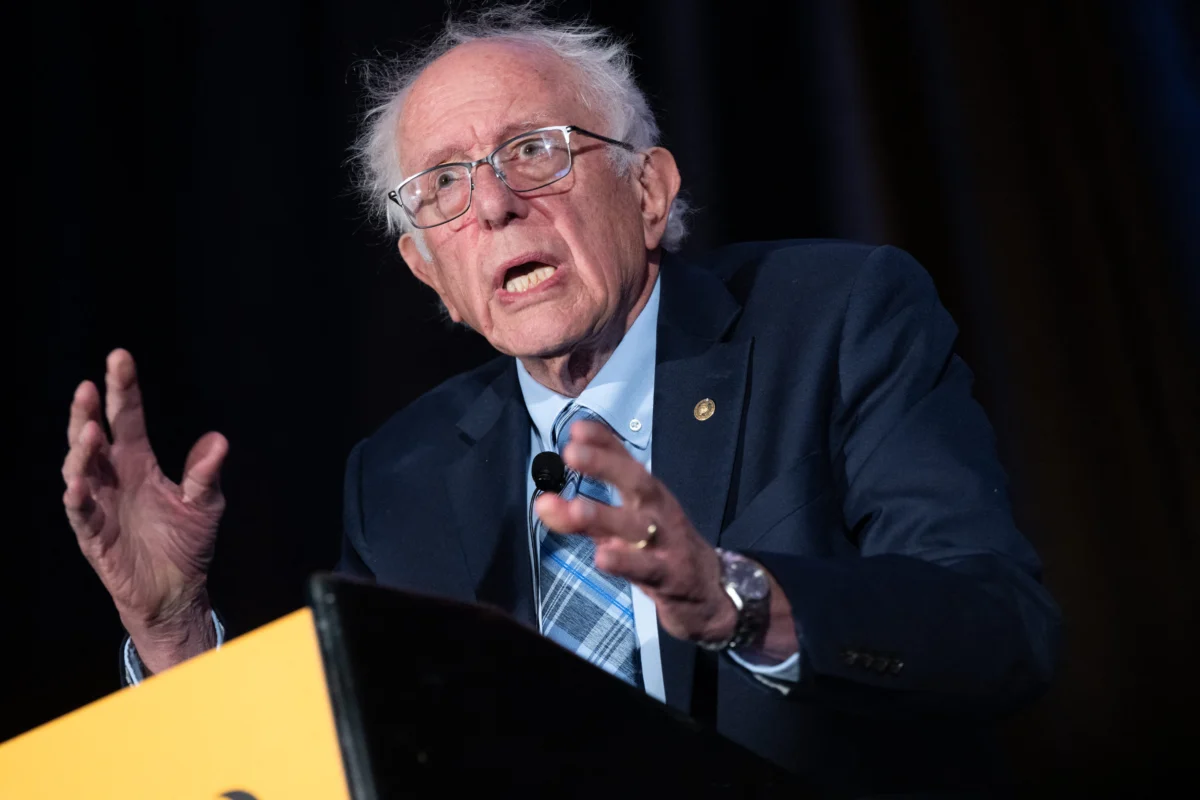
Writing on the social media platform X, Senator Bernie Sanders, an independent from Vermont who caucuses with the Democrats, pointed to the local ballot measures as a definitive sign that the public wants immediate federal intervention.
"National data center moratorium now," Sanders wrote in his post. "Americans don’t want Big Tech oligarchs wrecking the environment, gutting jobs and threatening humanity’s future."
The sentiment was echoed by other prominent progressive figures in Washington. Representative Yassamin Ansari, a Democrat from Arizona, argued in a separate post on X that placing a temporary pause on unchecked artificial intelligence development must rank as a top legislative priority for the newly empowered Democratic majority in the House of Representatives when lawmakers return to Capitol Hill. Representative Greg Casar of Texas, who serves as the chair of the Congressional Progressive Caucus, quickly amplified Ansari’s statement, responding with an enthusiastic endorsement.
The legislative push comes as voter anxiety surrounding the tech industry’s rapid footprint reaches new heights. According to data from the CNBC Voter Poll, 56 percent of participating voters identified artificial intelligence and the proliferation of data centers as a crucial or major factor influencing their decisions at the ballot box. Among that specific subset of voters, an overwhelming 65 percent reported casting their ballots for a Democratic candidate for Congress.
The political momentum immediately reverberated through financial markets, triggering a sell-off in technology equities. While stocks linked to the artificial intelligence build-out dipped slightly on Wednesday in the immediate wake of the election results, the downward pressure intensified significantly on Thursday. Investors increasingly priced in the realistic possibility that newly emboldened Democratic majorities and local regulators could successfully impede or halt future data center construction.
Chipmakers bore the brunt of the market downturn. The iShares Semiconductor ETF, traded under the ticker SOXX, tumbled nearly 9 percent. Individual industry leaders suffered steep losses as well, with graphics giant Nvidia declining by 8 percent, while Advanced Micro Devices plummeted by more than 14 percent.
The electoral backlash against Big Tech was not confined to Washington. Across the country, candidates who flipped critical seats in traditionally competitive races made data centers a focal point of their winning strategies, framing the issue around local autonomy versus corporate overreach.
In South Carolina, Democrat Annie Andrews successfully flipped a closely watched Senate seat. During her campaign, Andrews launched a dedicated website branding her Republican opponent, incumbent Senator Darline Graham, with the moniker "data center Darline."
During her victory speech on Tuesday night, Andrews underscored the local nature of the issue, telling supporters that voters chose a South Carolina "where decisions about communities are made by the people who live in our communities, not the billionaires or data center companies in Washington D.C."
In Ohio, veteran lawmaker Sherrod Brown successfully returned to the U.S. Senate after defeating incumbent Republican Senator Jon Husted. Addressing supporters following his hard-fought victory, Brown delivered a blunt message regarding his political loyalties. "I do not work for data centers," he declared.
State executives also amplified the anti-data center platform during their victory addresses, pointing to executive authorities as a mechanism to curb runaway development. Pennsylvania Governor Josh Shapiro, who previously signed an executive order in August aimed at slowing the pace of data center development across the Commonwealth, argued that major technology corporations should not dictate the long-term future of local residents. "Instead, the folks in our local communities get the final say," Shapiro told the crowd.
Perhaps no state is more central to the national debate over digital infrastructure than Texas. According to financial projections from Wells Fargo, Texas currently accounts for a staggering 27 percent of all planned data center capacity nationwide, making it ground zero for the current building boom.
Gina Hinojosa, the Democrat who unseated incumbent Republican Governor Greg Abbott, made the controversial infrastructure projects a cornerstone of her successful gubernatorial campaign. While she did not explicitly center data centers in her brief victory speech, the topic defined her campaign trail messaging.
In a video statement posted to her X account in late October, Hinojosa laid out an uncompromising platform regarding the tech industry’s expansion in the Lone Star State. "When I am governor, I will issue a moratorium, a ban, on all data center approvals until laws can be passed by the legislature to protect Texans," she said in the video. "This is about one fight. Is this going to be a Texas that is by and for the people, or is this the billionaire’s world and we just live here? Data centers are part of that fight."




Comments (0)