


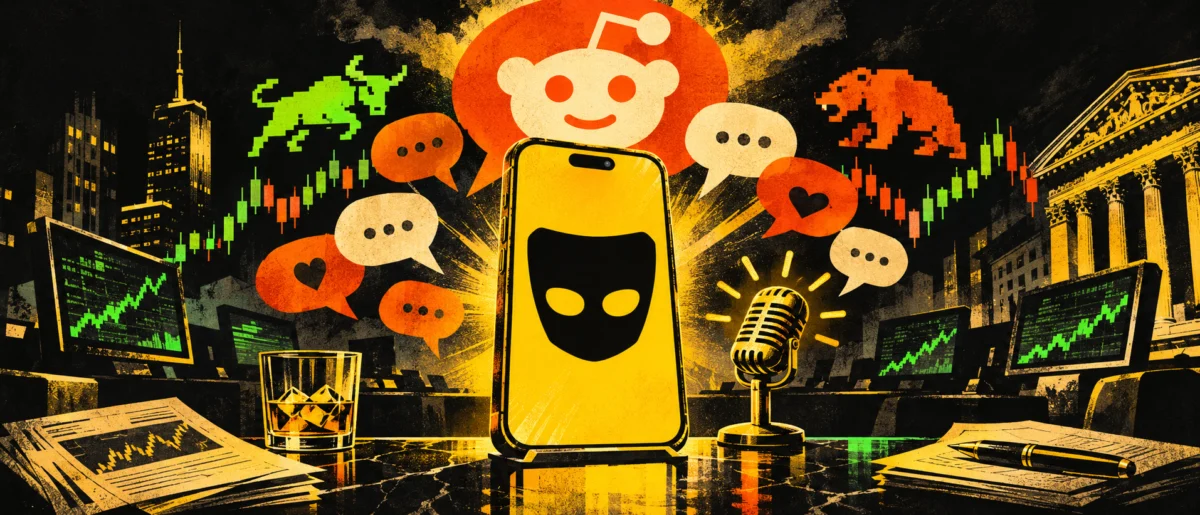
In a striking collision between traditional investor relations and unfiltered internet culture, Grindr CEO George Arison recently took the company’s third-quarter earnings story directly into the belly of the beast: the notorious Reddit community r/wallstreetbets. Following a financial report that highlighted strong user metrics, an aggressive push into consumer artificial intelligence, and strategic expansions into telehealth, Arison’s decision to host an Ask-Me-Anything (AMA) session yielded an explosive mix of financial inquiry, serious policy debate, and unrelenting community humor.
The November 6 event provided a fascinating case study in modern corporate communications. While Arison aimed to discuss Grindr’s nearly 16 million monthly active users, its evolution from a basic dating platform into an expansive social network, and its broader commercial ambitions, the subreddit had an entirely different agenda. The resulting digital town hall mixed earnest questions regarding data privacy and advertising loads with relentless innuendo concerning stock-market bears, fast-food dumpster folklore, and the platform’s unmistakable brand identity.
"This is Where the Magic Happens"
Choosing r/wallstreetbets as a post-earnings tour stop is not standard corporate playbook behavior. Most publicly traded companies opt for sterile earnings calls with institutional analysts, carefully curated conference presentations, or measured interviews with financial news outlets. Grindr, trading under the ticker symbol GRND, chose instead to step onto a digital floor where a stock ticker and a punchline frequently occupy the same sentence.
When one participant asked why he chose this specific, chaotic venue rather than a more conventional community, Arison delivered the most concise possible defense of the appearance with a four-word reply: "This is where the magic happens." The response demonstrated an intuitive understanding of the forum’s ecosystem. Rather than apologizing for the unconventional setting or attempting to sanitize the dialogue, the CEO embraced the unpredictability of the crowd.
That embrace set the tone for an exchange where corporate messaging was constantly stress-tested by internet satire. Throughout the AMA, the discussions ranged from the absurd to the surprisingly poignant, touching upon the realities of operating a major tech platform in an increasingly complex global landscape.
Balancing Financial Strategy with Internet Irreverence
The tension between serious corporate guidance and internet comedy was evident from the earliest moments of the thread. One of the thread’s most popular, albeit blunt, inquiries bypassed financial metrics entirely to ask a famously meme-ified question about sexual orientation. While Arison did not address that specific prompt in the transcript, he leaned enthusiastically into other playful provocations.
When a user inquired about supposed platform outages during high-profile political events like Republican National Conventions—a nod to long-running internet lore regarding traffic spikes—Arison offered a playful denial. While the remark did not establish any empirical data regarding convention-week traffic, it successfully turned a loaded online rumor into a clever brand moment. Similarly, when questioned about top-line versus bottom-line growth, Arison offered a dual-purpose reply that functioned simultaneously as a nod to the platform’s user base and a meme-ready soundbite. For investors desperately seeking granular margin guidance, the response provided zero basis points of financial insight; for everyone else, it stood out as the session’s most shareable piece of commentary.
The forum’s unique economic folklore also surfaced when a user invoked the subreddit’s recurring fixation on Wendy’s and its legendary dumpster lore. Arison surprised the community by confessing that he had never actually eaten at the fast-food chain, momentarily casting himself as a tourist visiting a national landmark of retail-trading culture. However, he quickly pivoted the exchange toward serious macroeconomic commentary, transitioning a casual joke into a thoughtful observation about housing affordability and cost-of-living pressures. It was a whiplash-inducing shift from meme economics to real-world policy, revealing a CEO willing to engage with the underlying anxieties of his audience.
Tackling Security, Privacy, and Real-World Risks
Beneath the steady stream of jokes and double entendres lay consequential challenges regarding user safety, data privacy, and information security. Grindr handles data that is often deeply sensitive, making security protocols a paramount concern for its user base.
During the session, participants pressed the leadership team on past security incidents and internal practices. While some pointed questions regarding past data vulnerabilities went unanswered in the provided excerpts, Arison addressed broader safety mechanisms in separate replies, offering a rare window into how the company adapts its product features for high-risk jurisdictions. He detailed concrete engineering and policy choices designed to protect users in dangerous environments, including hiding geographical distances, blocking media screenshots, and removing third-party advertising in specific regions.
These safeguards represent tangible design choices rather than vague promises, though they remain subject to independent scrutiny. The ability to seamlessly pivot from lighthearted banter about an "exposed backend" to serious disclosures about regional safety measures highlighted the delicate balancing act required of modern tech executives navigating public forums.
Redefining Grindr: From Dating App to Global Social Network
Beyond the memes and security debates, Arison used the AMA to articulate a broader strategic vision for Grindr. For years, the platform has been colloquially understood as a transactional matchmaking tool. Arison and his team are aggressively pushing a different narrative: that Grindr functions primarily as an open social network for the global LGBTQ+ community.
To support this repositioning, the CEO highlighted engagement metrics that rival traditional social platforms. He noted that average users produce more than 50 messages daily, a statistic designed to signal to investors that Grindr benefits from robust network effects and ongoing utility rather than superficial, short-lived interactions. This high level of engagement serves as the foundation for the company’s expansion plans, which include travel features, community-building tools, AI-powered enhancements, and healthcare services.
Arison addressed the commercial hurdles the company faces, including institutional resistance. He recounted an instance where a major financial institution allegedly declined to work with Grindr simply because the platform was "about sex," a rationale he characterized as fundamentally homophobic. By reframing traditional commercial objections as a double standard applied to LGBTQ+-focused businesses, Arison challenged industry biases while emphasizing the company’s cultural reach. He noted, for instance, that the platform is responsible for an estimated quarter of all gay relationships in the United States—a statistic he utilized to argue that successful matchmaking does not inherently hurt user retention if the platform successfully transitions into a broader hub for community, travel, and friendship.
Monetization, Management, and the Future of AI
Monetization remained a central theme throughout the discussion. Responding to user complaints regarding intrusive advertisements, Arison defended the ad-supported model as the vital mechanism that allows the core product to remain free for roughly 93% of its user base, even as he acknowledged that the advertising experience requires ongoing refinement.
The conversation also touched upon management philosophy and technological integration. Quoting an investor’s advice that "companies die from indigestion, not starvation," Arison emphasized the importance of maintaining strict focus by prioritizing a handful of key initiatives rather than scattering corporate attention across too many fronts. This disciplined approach underpins the company’s current roadmap, which pairs its core social networking features with premium AI offerings and digital healthcare initiatives, such as the acquisition of telehealth provider Freddie to support HIV prevention.
As the AMA drew to a close, the participants continued to blend technical curiosity with internet humor, questioning whether upcoming AI chatbots could "flirt in Rust" or whether the session constituted an official application to become a meme stock. Arison reflected that the discussion had proven far more substantive than he originally anticipated, offering a final compliment to a community famous for its unpredictability.
Ultimately, the experiment demonstrated the high-stakes reality of modern executive outreach. While corporate leaders cannot control the irreverent nature of internet forums, willingness to engage directly with raw, unvarnished user communities can transform a routine post-earnings cycle into a cultural moment, bridging the gap between cold financial metrics and the vibrant, chaotic reality of everyday users.


Comments (0)