


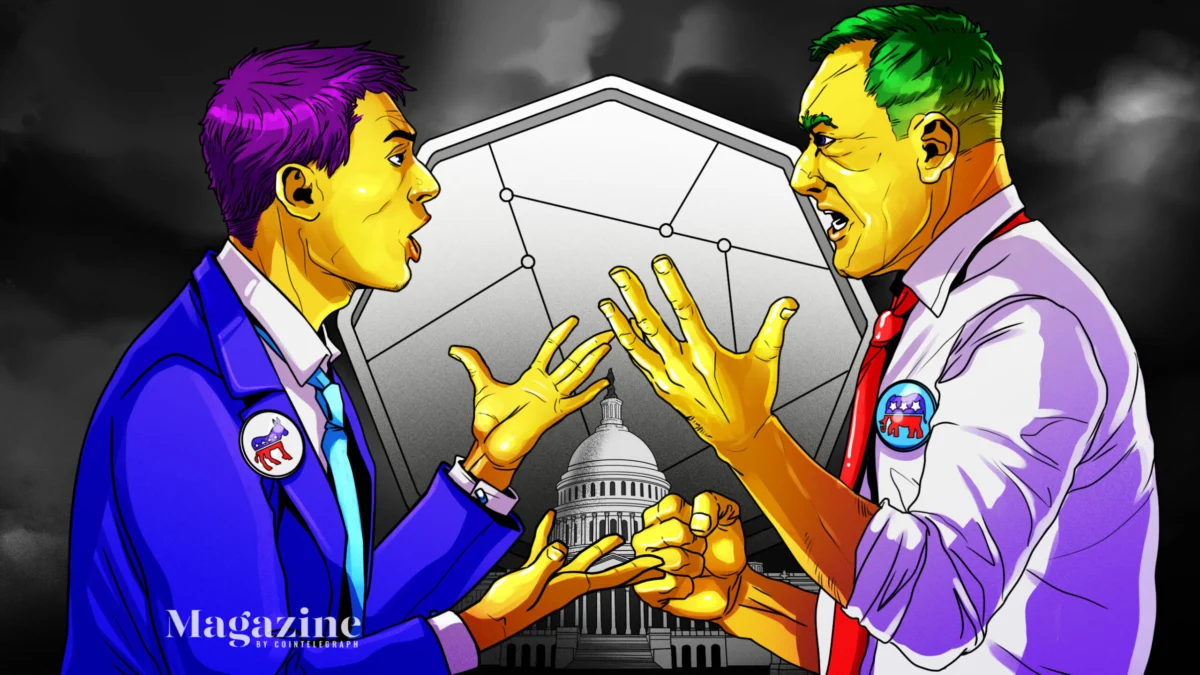
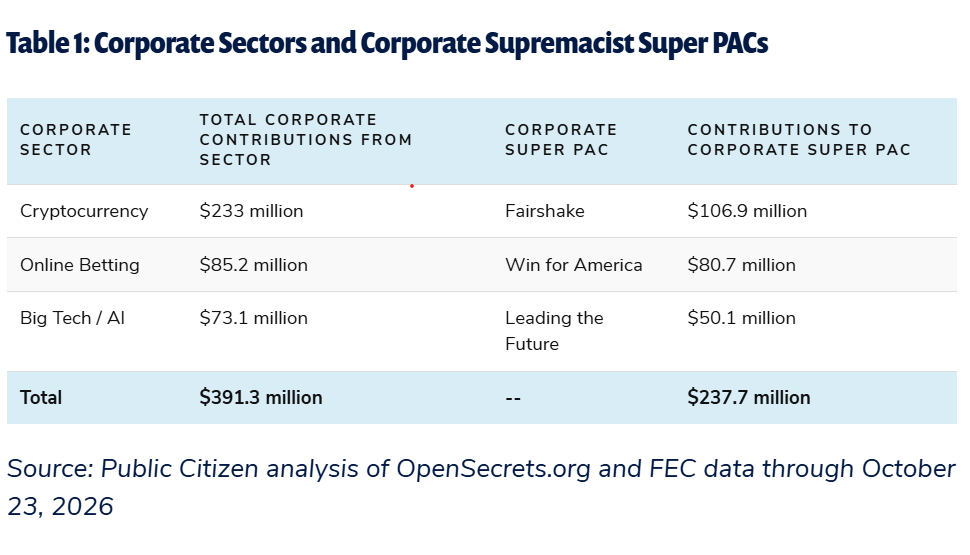
The cryptocurrency industry’s massive financial push into the political arena during the 2026 United States midterm election cycle has left Washington at a critical crossroads. According to a comprehensive analysis of federal campaign finance filings by Public Citizen, crypto-aligned political committees poured a staggering $233 million into midterm races. Despite this unprecedented expenditure aimed at reshaping the legislative landscape and unseating vocal critics, the political outcome has set the stage for a tense, high-stakes battle over federal market structure regulations when a newly controlled Congress takes office in January.
The results of the midterm elections delivered both chambers of Congress to the Democrats, fundamentally altering the trajectory of stalled legislative initiatives such as the CLARITY Act, which seeks to establish comprehensive federal rules for digital asset markets. Among the most notable outcomes of the cycle was in Ohio, where Democratic incumbent and longtime crypto skeptic Senator Sherrod Brown successfully defended his seat against Republican challenger Jon Husted. This victory came despite crypto-backed political action committees spending an estimated $64 million specifically to defeat Brown.
Compounding the shifting power dynamics in the Senate, Senator Elizabeth Warren—widely recognized as one of digital assets’ most rigorous and vocal critics in Washington—is widely expected to chair the powerful Senate Banking Committee in the upcoming Congress as its most senior Democrat. As Capitol Hill prepares for the new session, stronger consumer protections, heightened scrutiny of political conflicts of interest, and a fundamental realignment of regulatory oversight are expected to top the legislative agenda.
However, political analysts note that a Democratic majority does not necessarily spell the complete death of crypto market structure legislation. Several lawmakers remain cautiously optimistic that a viable compromise can be reached, provided the industry is willing to accept significantly stricter compliance and ethical standards.
Representative Shri Thanedar, a Democrat who remains hopeful that the CLARITY Act can ultimately pass, emphasized that any successful future legislation must incorporate rigorous anti-corruption requirements. Speaking about the hurdles facing the bill, Thanedar pointed to past controversies, stating that ongoing concerns regarding political ethics have severely hampered legislative momentum. He asserted that Democrats will demand strong anti-corruption provisions that apply broadly across the executive branch, rather than focusing solely on congressional members, to restore public trust before any market structure bill can advance.
A Different Deal for Crypto
The path forward for digital asset legislation remains fraught with political hurdles. In September, the Senate officially failed to advance the CLARITY Act, with deep disagreements over ethics provisions and consumer safeguards playing a major role in the legislative impasse.
In the wake of the midterm elections, congressional Democrats are reportedly already discussing ways to reshape the overarching market structure debate. House Democrats are said to be exploring the expansion of proposals previously introduced by Representative Maxine Waters into a much broader, comprehensive market structure bill. Such legislation could potentially incorporate enhanced consumer safeguards, an expanded oversight role for the Securities and Exchange Commission, and stringent new ethics restrictions targeting the personal crypto activities of public officials.
This potential pivot could finally allow lawmakers to decouple the digital asset industry’s legitimate push for regulatory clarity from the swirling controversies surrounding personal crypto ventures associated with prominent political figures, including former President Donald Trump. Democrats have already signaled clear intentions to investigate various business dealings tied to the Trump family and other corporate entities, with incoming House Oversight Committee Chair Robert Garcia planning to aggressively pursue inquiries into corporate corruption.
Industry veterans have expressed mixed views on this unfolding dynamic. Hadley Stern, head of institutions at Silence Laboratories and founder of Fidelity Digital Assets, argues that Democrats are entirely justified in pursuing these investigations, suggesting that the industry itself should welcome such oversight because political entanglement is precisely what is poisoning potential bipartisan deals.
Stern noted that a sitting president’s family launching memecoins and stablecoins presents a profound governance dilemma. Drawing comparisons to traditional financial institutions, he remarked that engaging in such activities at an established firm like Fidelity would result in immediate termination. Furthermore, Stern emphasized that the digital asset ecosystem of 2026 bears little resemblance to the landscape during the last period of Democratic congressional leadership in 2022, which was marred by the collapse of FTX and a speculative token frenzy. Today, the sector encompasses federal frameworks for stablecoins, tokenized equities, and on-chain Treasury and credit funds, leading him to conclude that policymakers cannot effectively regulate a multibillion-dollar financial sector simply by pretending it does not exist.
What Would the Industry Have to Concede?
To secure lasting legislation capable of surviving future shifts in political control, the cryptocurrency sector will likely have to accept considerably more demanding regulatory standards.
Paul Brody, founder and CEO of Nightfall Networks and former global blockchain lead at EY, predicts that traditional banking institutions will ultimately emerge as legislative winners. He expects banks to relentlessly lobby for crypto companies to be held to the exact same rigorous consumer protection, security, and operational standards that govern traditional financial services.
While the digital asset industry has historically resisted such rigid mandates, Brody suggests that adopting a pragmatic strategy would serve the sector well. He notes that blockchain-native ecosystems remain inherently more flexible, programmable, and efficient than legacy financial systems, meaning they can absorb these conditions while retaining their technological advantages.
Similarly, Lindsay Fraser, chief policy officer at the Blockchain Association, contends that robust consumer protection and technological innovation do not need to be mutually exclusive objectives. Fraser asserts that policymakers can effectively safeguard consumers while ensuring that federal law accurately reflects the operational realities of blockchain technology. The overarching goal, she argues, must be the establishment of enduring policy frameworks that earn broad public trust, provide long-term regulatory certainty for builders operating within the United States, and reinforce American financial leadership globally.
Despite these potential pathways to compromise, obstacles remain formidable. Brody warns that the threat of a presidential veto continues to loom large over any prospective negotiations. Moreover, he points out that crypto market reform is likely to be treated as a relatively low legislative priority when weighed against more pressing national battles over federal budgets, ongoing geopolitical conflicts, and sweeping corruption investigations.
How the Binance Hack Could Influence Lawmakers
The conclusion of the midterm elections and the subsequent legislative maneuvering coincide with a period of intense scrutiny following a catastrophic security breach in the sector. Lawmakers on Capitol Hill are currently grappling with the fallout from the Binance hack, which stands as the largest security exploit in the history of cryptocurrency, resulting in the theft of over $6.3 billion on October 29. The massive breach has injected a renewed sense of urgency into debates concerning exchange security, systemic vulnerabilities, and the adequacy of customer asset protections.
Representative Thanedar acknowledges that while pending market structure legislation would not instantly solve every systemic problem within the ecosystem, it would introduce much-needed regulatory certainty and vital security guardrails. He views the Binance exploit as a stark, unmistakable illustration of the severe dangers associated with failing to enact appropriate federal oversight.
Conversely, industry legal experts argue that the incident exposes fundamental shortcomings in current legislative proposals. Maylea Ma, deputy general counsel at 1inch, suggests that rather than strengthening the case for passing the existing draft of the CLARITY Act, the hack highlights critical vulnerabilities that the legislation entirely fails to address. Ma points out that the exploit targeted a centralized exchange’s hot wallet and involved a signing failure, yet the current legislative draft lacks provisions for mandatory insurance, loss payees, or hot wallet caps that might have mitigated the losses or imposed preventative security standards.
This sentiment is echoed by consumer advocacy groups. Amanda Fischer, policy director at Better Markets, publicly characterized the episode as evidence that the contemporary crypto ecosystem remains fundamentally unsuited for mainstream finance. Fischer argued that permitting cryptocurrency exchanges to function as unregulated or under-regulated custodians creates unacceptable systemic risks akin to a financial honeypot.
As a result, legal and policy observers like Ma believe the devastating hack will heavily influence upcoming legislative votes on the CLARITY Act. Lawmakers are expected to demand even more stringent consumer safeguards before agreeing to advance any bill championed by the digital asset industry. Having spent years successfully lobbying Washington for a seat at the regulatory table, the cryptocurrency sector now faces the reality of agreeing to the rigorous obligations that accompany it.





Comments (0)