


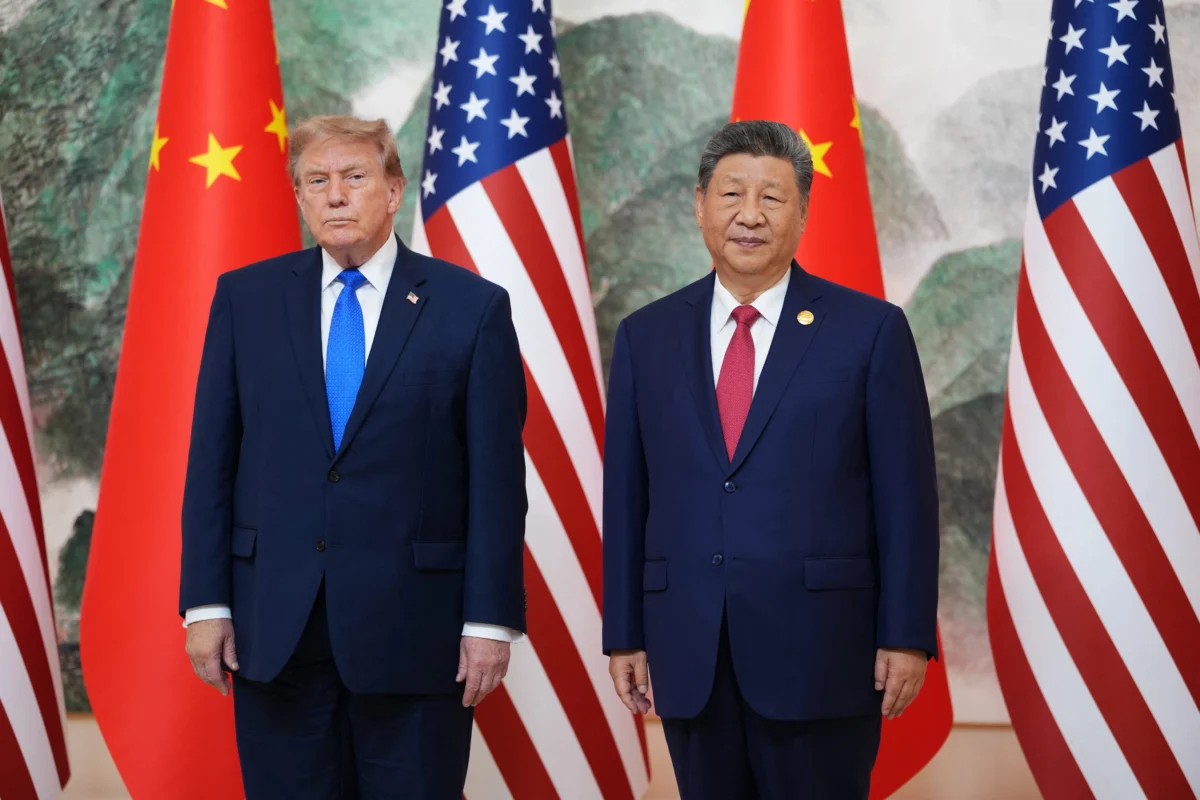
SHENZHEN, China — As leaders from the 21 member economies of the Asia-Pacific Economic Cooperation gathered for high-profile photo opportunities at the conclusion of the summit, critical geopolitical and economic issues—ranging from the future of Nvidia and advanced artificial intelligence technology to the persistent security flashpoint of Taiwan—remained conspicuously unaddressed.
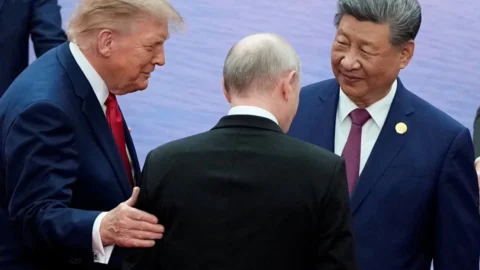
The annual summit, hosted in China’s southern manufacturing and technology hub of Guangdong Province, was dominated by major-power optics, most notably a historic trilateral meeting between U.S. President Donald Trump, Chinese President Xi Jinping, and Russian President Vladimir Putin. Yet behind the carefully choreographed handshakes and multilateral pageantry, regional stakeholders and market observers noted a distinct lack of substantive breakthroughs on the structural frictions dividing the world’s largest economies.
"The intrigue is around not what was said, but what remains unresolved," said Gary Dvorchak, managing director at Blueshirt. "Taiwan remains a major source of strategic uncertainty. North Korea was notably absent from the trilateral nuclear declaration. Southeast Asia, which is increasingly central to global manufacturing and investment, was overshadowed by major-power diplomacy."
President Trump did not hold a bilateral meeting with North Korea’s leader, Kim Jong Un, despite earlier speculation and media reports suggesting a potential encounter on the sidelines of the broader diplomatic gatherings. Instead, the focal point of the week’s events crystallized around the unexpected Thursday trilateral session at Kylin Villa involving Trump, Xi, and Putin. Meeting together for the first time, the three leaders reaffirmed mutual interests in reducing nuclear risks and discussed potential frameworks to increase global oil production.
The optics, however, drew immediate skepticism from foreign policy analysts. "The optics are impressive, but there’s not much happening," Ian Bremmer, president and founder of Eurasia Group, said during an appearance on CNBC’s "Squawk Box Asia." Bremmer emphasized that any durable resolution to the years-long war in Ukraine would ultimately require the direct participation of Ukrainian President Volodymyr Zelenskyy and key European allies, rather than trilateral declarations forged outside traditional diplomatic channels.
Taiwan, an official member economy of APEC, was represented at the summit by Acer Group founder and honorary chairman Stan Shih. Despite Beijing’s long-standing territorial claims over the self-governed island, Taiwan did not feature prominently in the formal summit agenda or joint communiqués. The diplomatic sidelining of Taipei occurs as the island prepares for consequential local elections, including closely watched races for Taipei mayor and other municipal posts scheduled for November 28.
Little on Tariffs, or Elon Musk
Prior to the trilateral gathering, President Trump and President Xi held their third bilateral summit of the year. Xi greeted Trump upon his arrival at the airport late Wednesday, reciprocating the diplomatic hospitality extended in September when the Chinese leader visited Washington for discussions.
Despite the face-to-face engagement, little substantive information was shared publicly regarding whether the two economic superpowers had agreed to roll back existing tariffs, extend the upcoming January deadline for the uninterrupted flow of critical rare earth minerals, or establish new guardrails for escalating technological competition.
The summit also took place against the backdrop of mounting tensions within the technology sector. Recent reports linking Jensen Huang to an alleged Chinese spy network led to the executive’s sudden resignation as CEO of Nvidia. The development has ignited intense debate on Capitol Hill regarding the efficacy and enforcement of U.S. export controls designed to restrict Beijing’s access to advanced semiconductors used to train complex artificial intelligence systems.
President Trump indicated in an interview with Fox News that the situation surrounding Nvidia and Huang came up briefly during his private talks with Xi. Ahead of the summit, U.S. officials had signaled that Trump did not actively plan to raise the matter, though initial travel manifests indicated that Tesla and SpaceX CEO Elon Musk would accompany the American president to China.
Other prominent American business leaders made their presence felt in Shenzhen. Visa CEO Ryan McInerney, who also chairs the U.S.-China Business Council, attended the APEC CEO Summit and was spotted among the dignitaries at a welcome banquet held Wednesday evening.
However, Musk’s itinerary diverged notably from the official presidential delegation. While CNBC observed the opening portions of the Wednesday banquet and the Economic Leaders’ Meeting on Thursday, Musk was conspicuously absent from these marquee APEC events. Instead, the billionaire entrepreneur flew to Shanghai early Thursday morning to tour Tesla’s local manufacturing facility, an appearance later confirmed by company executives on Chinese social media. Musk was also featured in a circulated online video alongside Ren Hongbin, chairman of the China Council for the Promotion of International Trade.
Musk did deliver virtual remarks at the DealBook Summit in New York on Wednesday via video conference, having previously indicated on social media platform X that he would be connecting directly from China. Representatives for both Tesla and the White House did not immediately respond to requests for comment regarding Musk’s precise scheduling and movements.
"We still don’t have a durable resolution of the U.S.-China trade dispute," Dvorchak said, underscoring the sentiment of the wider business community. "Business needs certainty, not just ceremony."
U.S. Builds Interests in Asia Outside China
The Shenzhen summit formed just one leg of a broader Asian tour for President Trump, who arrived in China following a brief stop in the Philippines. On Tuesday, Trump participated in a high-level meeting with the leaders of Australia, India, and Japan on the sidelines of the ASEAN Summit, convening under the banner of the Quad security partnership. He also held discussions with Thai Prime Minister Anutin Charnvirakul.
U.S. Ambassador to ASEAN Kevin Kim told reporters that discussions during the regional engagements centered on deepening U.S. cooperation with Southeast Asian nations, expanding trade ties, and securing supply chains for critical minerals. While Kim declined to comment on whether Beijing’s expanding regional footprint was explicitly tabled, he emphasized that the region represents the strategic heartland for artificial intelligence development. He stressed the importance of ensuring that American technology is directed responsibly through regulatory frameworks established by the administration.
Speaking to reporters the following day in Shenzhen, Japanese Prime Minister Sanae Takaichi pointedly elevated the outcomes of the ASEAN and Quad summits above the formal APEC proceedings. "The major outcome of this diplomatic week was the Quad Summit," Takaichi said through an official English translation, noting that the four allied leaders articulated strong opposition to any unilateral attempts to alter regional status quos through force, coercion, or arbitrary export controls.
Takaichi’s presence in China marked a notable milestone as the first visit by a Japanese leader in seven years. Her arrival in Shenzhen was met with a notably cool reception from Beijing.
Bilateral frictions between Tokyo and Beijing have remained elevated since November 2025, when Takaichi drew sharp rebukes from Chinese authorities by stating that a potential Chinese military action against Taiwan could compel a defensive Japanese military response.
Addressing reporters on Thursday, Takaichi reaffirmed that Tokyo’s core diplomatic posture regarding Taiwan remains unchanged, anchored in the foundational principles outlined in the 1972 Japan-China Communiqué. That historical joint document states that the government of Japan "understands and respects" Beijing’s territorial claim over Taiwan, stopping short of explicit formal recognition of sovereignty.


Comments (0)