


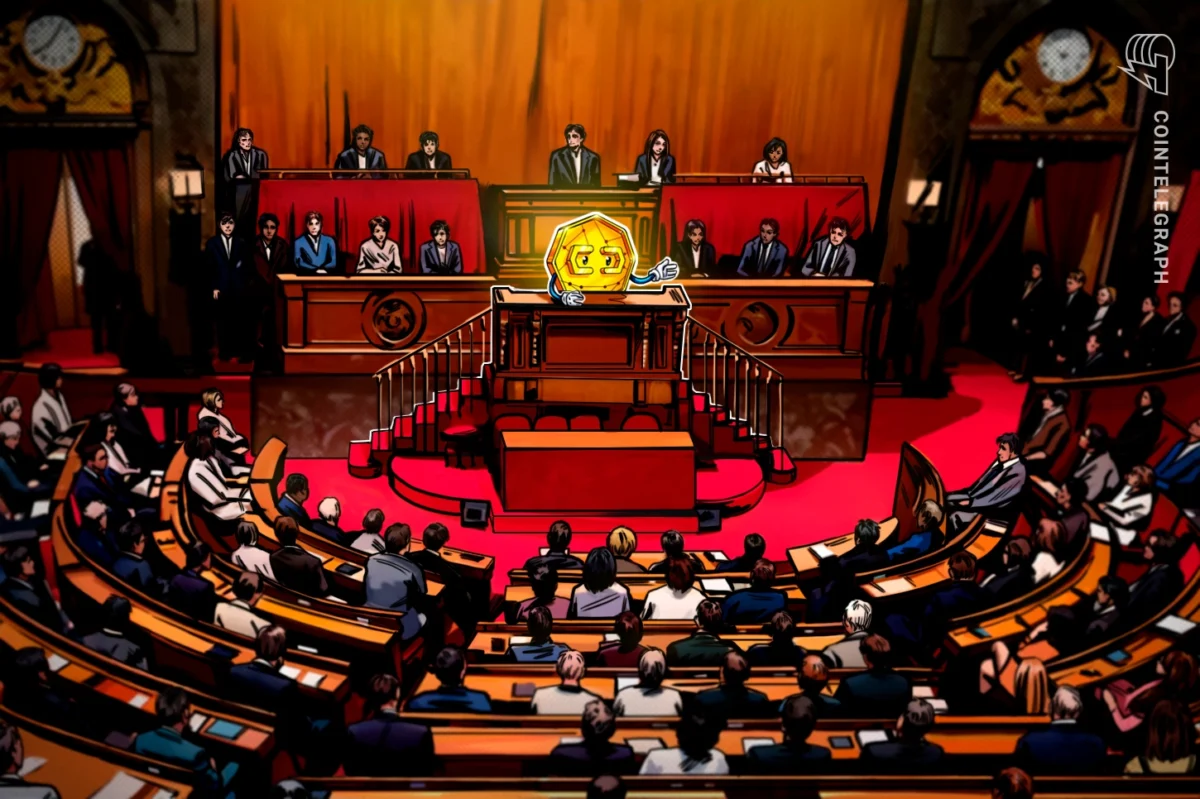
United States Senator Richard Blumenthal has ratcheted up pressure on major players in the digital asset industry, establishing a definitive January 4, 2027, deadline for crypto exchange Binance, stablecoin issuer Tether, and two prominent crypto firms tied to President Donald Trump to voluntarily hand over requested records.
The ultimatum follows months of escalating congressional inquiries examining potential conflicts of interest, foreign investments, and compliance protocols related to sanctions. In a series of follow-up letters sent Thursday, Blumenthal warned that failure to meet the fast-approaching deadline could prompt aggressive alternative measures, signaling a potential escalation in enforcement powers as the political landscape shifts in the nation’s capital.
Blumenthal, currently the ranking Democrat and incoming chair of the influential Senate Permanent Subcommittee on Investigations, targeted four specific entities in his latest correspondence: Binance, Tether, World Liberty Financial, and Fight Fight Fight LLC. The latter company is the corporate entity responsible for launching President Donald Trump’s TRUMP memecoin, drawing intense scrutiny regarding political intersections with the decentralized finance sector.
Under the terms outlined in the Thursday letters, the targeted companies have been asked to begin turning over documents by November 30. However, the hard compliance deadline of January 4, 2027, falls strategically just one day after Democrats are officially scheduled to take control of the Senate, granting the subcommittee’s leadership expanded operational leverage.
Blumenthal explicitly noted that the subcommittee would actively consider "alternative measures to obtain compliance" should the firms fail to meet the January cutoff. Under the existing operational rules of the congressional panel, its chair holds the authority to unilaterally issue formal subpoenas for corporate documents, financial records, and internal communications, carrying significant legal weight for non-compliant organizations.
Despite the gravity of the ongoing congressional probes, representatives for the affected entities have largely maintained their defensive postures. Industry publication Cointelegraph sought official comment from Binance, Tether, World Liberty Financial, and Fight Fight Fight LLC following the release of the letters, but none of the companies provided responses prior to publication.
The latest round of letters marks a continuation of a broad, multi-pronged legislative oversight effort that has spanned several years and touched upon sensitive geopolitical and domestic political issues.
Senate Inquiries Span Sanctions and Trump’s Crypto Ties
The investigative trajectory spearheaded by Blumenthal covers a wide array of high-stakes concerns, ranging from the alleged circumvention of international financial sanctions to deeply intertwined domestic political ventures.
The oversight involving President Trump’s digital asset endeavors began in earnest in May 2025, when Blumenthal launched an official inquiry into potential conflicts of interest. At the time, the senator demanded comprehensive records from both World Liberty Financial and Fight Fight Fight LLC concerning their underlying ownership structures, foreign capital investments, and institutional safeguards designed to prevent ethical breaches. Legal counsel representing World Liberty Financial vigorously disputed the senator’s claims during the initial exchanges, explicitly asserting that the company maintained no formal corporate affiliation with Fight Fight Fight LLC.
The tension surrounding World Liberty Financial escalated further in June 2026. At that time, Blumenthal and four other Senate Democrats publicly called for formal congressional hearings into a widely reported $500 million transaction. The reported deal involved an Abu Dhabi-based investment firm moving to acquire a substantial 49% equity stake in World Liberty Financial, raising immediate red flags among lawmakers regarding foreign influence and the financial entanglements of a sitting U.S. administration.
Simultaneously, Blumenthal has pursued a separate, equally contentious line of inquiry regarding international regulatory compliance and illicit finance. In February, the senator formally asked Binance to surrender detailed transactional records associated with various Iranian entities as well as vessels operating within Russia’s so-called shadow fleet, which is frequently used to evade Western oil and financial restrictions.
Binance responded to the inquiry in March, dismissing the underlying media reports as entirely false. In its official reply, the crypto exchange maintained that, to the best of its knowledge, no Binance account had ever engaged in direct transactions with any Iran-based entity. However, in his follow-up letter on Thursday, Blumenthal emphasized that despite the ongoing dialogue, Binance has yet to deliver any of the specific records requested by the subcommittee.
Tether has faced a similarly intense level of scrutiny over its flagship stablecoin, USDT. Blumenthal’s renewed letter to the stablecoin issuer pressed the company once again for comprehensive records detailing the utilization of USDT by sanctioned actors and entities. Additionally, the inquiry demanded transparency regarding Tether’s commercial dealings with Nxum, a specialized consulting firm co-founded by Bo Hines, a former White House crypto adviser.
The pressure on Tether intensified significantly in September, when Blumenthal published a comprehensive staff report compiled by the subcommittee’s Democratic investigators. The document alleged that USDT had evolved into an indispensable instrument powering Iran’s covert shadow banking network. Tether swiftly and forcefully disputed these findings, rejecting allegations that its stablecoin functions as a secure haven for sanctioned individuals and regimes. In its defense, the company highlighted its proactive cooperation with international law enforcement, noting that it had actively assisted authorities in freezing nearly $550 million worth of Iran-linked tokens throughout 2026.
As the January 2027 deadline approaches, the unfolding confrontation between the Senate Permanent Subcommittee on Investigations and the crypto sector underscores a broader regulatory reckoning. With subpoena powers hanging in the balance and leadership dynamics shifting within Congress, the coming weeks will determine whether Binance, Tether, and the Trump-linked ventures will voluntarily comply with federal oversight or face a renewed legal battle over transparency and accountability in the digital asset space.




Comments (0)