


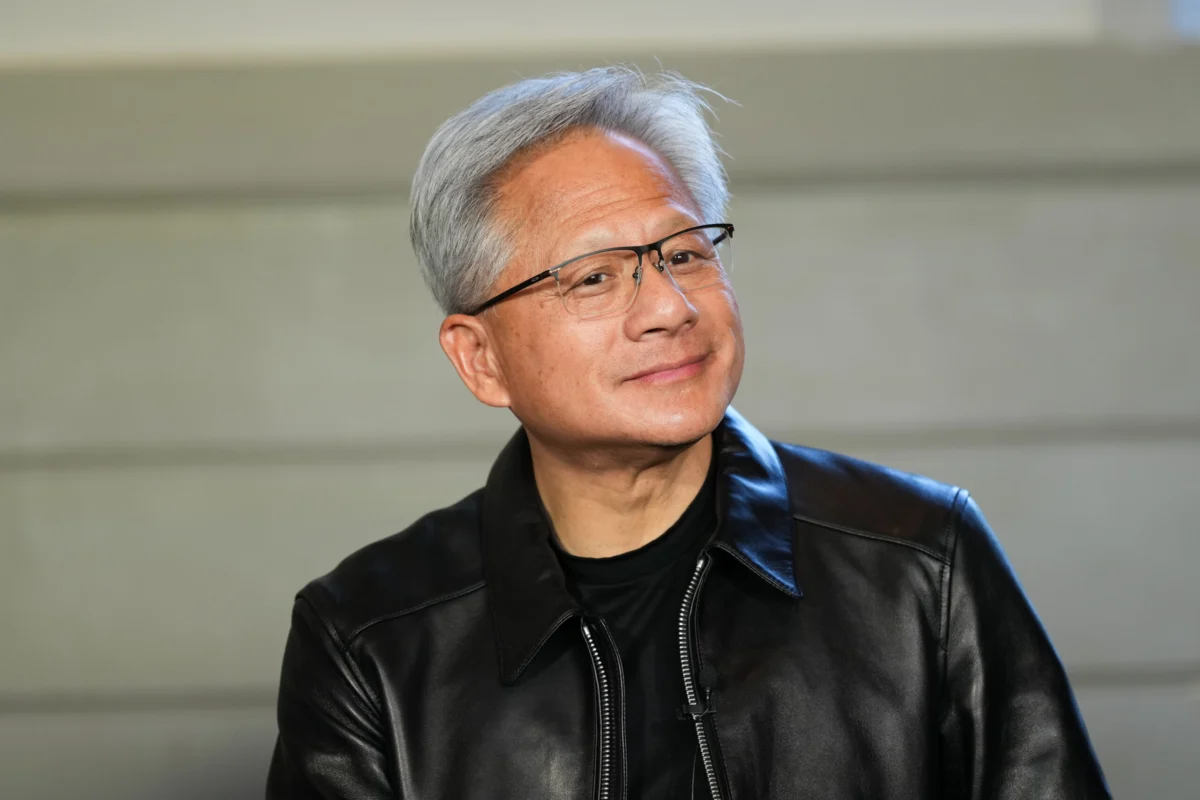
The controversy erupted after Huang admitted publicly to an extramarital affair with a woman whom U.S. intelligence agencies have identified as an operative for China’s Ministry of State Security. The stunning disclosure has instantly transformed the leadership dynamics at the world’s leading artificial intelligence hardware powerhouse, drawing immediate scrutiny from federal lawmakers and shaking investor confidence. Despite the severity of the allegations and the ensuing board investigation, however, financial markets and speculative traders are betting that Huang will maintain his grip on the helm of the semiconductor giant, at least in the near term.
The unfolding scandal came to light following a cascade of investigative reports and official acknowledgments. According to reporting by The New York Times and subsequent confirmations, U.S. intelligence officials flagged the woman involved in the affair as a Chinese intelligence asset. On Sunday, Huang addressed the situation directly, acknowledging the relationship. The admission immediately triggered alarm bells in Washington, where lawmakers have increasingly scrutinized corporate ties and vulnerabilities to foreign espionage within the critical semiconductor and artificial intelligence sectors.
In response to the mounting pressure and potential governance implications, Nvidia’s board of directors announced that it has launched an active investigation into the circumstances surrounding the CEO and the intelligence targeting. The board’s review aims to determine whether any proprietary corporate information, sensitive strategic plans, or export-controlled technologies were compromised, as well as to evaluate the personal conduct of the chief executive against corporate governance standards.
The market reaction was swift. Shares of Nvidia tumbled by more than 5% in Monday trading as Wall Street digested the unprecedented news. For a company that sits at the absolute center of the global artificial intelligence boom—powering everything from hyperscale cloud data centers to advanced research laboratories with its coveted graphics processing units—any instability at the top introduces a massive layer of uncertainty.
Yet, even as Wall Street analysts weigh the potential fallout, participants on prominent prediction markets are signaling a distinct skepticism regarding whether the scandal will actually force Huang out of the company he co-founded and built into a multi-trillion-dollar titan.
Data from prediction markets like Kalshi illustrate nuanced long-term projections by speculators tracking the CEO’s tenure. According to Kalshi contracts, which are resolved using information from Bloomberg, market participants currently assess just a 17% probability that Huang will be removed or step down from his position by the end of 2027. While that reflects a relatively low immediate risk of ouster in the eyes of these speculators, the odds tick upward as the timeline extends. The probability of Huang’s departure rises to 30% by the year 2028 and reaches 35% by 2029. Looking further down the horizon, traders on the platform see a higher likelihood of eventual transition, pricing a 75% probability that Huang will have departed Nvidia by the year 2031.
A similar sentiment is echoed on Polymarket, another major prediction market platform, where speculators are currently placing one-in-four odds—roughly a 25% chance—that Huang will either resign or be forced out of his role by the end of March 2027. Unlike Kalshi’s framework, contracts on Polymarket are specifically resolved using official public statements released directly by the company or by Huang himself, anchoring the market outcomes to verified corporate actions rather than broader news reports alone.
The investigation in Stockholm, where Huang had recently been appearing for high-profile events such as the launch of the Sferical One AI supercomputer, underscores the global footprint and intense spotlight under which Nvidia operates. As a foundational pillar of modern technological infrastructure, the company’s leadership stability is viewed as a matter of both corporate health and national security.
As the Nvidia board’s investigation continues to unfold and congressional scrutiny intensifies, the ultimate fate of one of the tech industry’s most influential leaders remains a subject of intense global attention. For now, while financial shares have dipped and intelligence agencies probe the depths of the foreign influence effort, prediction market speculators are betting that Jensen Huang’s foundational role at Nvidia will insulate him from an immediate exit, even as long-term governance questions linger.



Comments (0)