


When Kevin Kelly encountered Google co-founder Larry Page at a social gathering back in 2002, he found himself grappling with a fundamental economic paradox. Why, he wondered, would anyone pour vast amounts of capital and engineering talent into a company whose core offering—web search—was delivered to users entirely for free? Kelly pressed Page on the matter, recalling that he still did not understand the underlying business model. There were already numerous search companies operating at the time, and the prospect of offering free web search raised a pressing question: Where does that business model ultimately lead?
Page’s response was both memorably concise and remarkably prophetic. He did not talk about advertising revenue, click-through rates, or dominating digital directories. Instead, he simply stated, “Oh, we’re really making an AI.”

That brief exchange took place two years before the launch of Facebook, three years before the founding of YouTube, five years before the debut of the iPhone, and a staggering two decades before ChatGPT would capture the public imagination. For Kelly, the conversation served as a profound intellectual awakening.
Writing years later in 2016, Kelly reflected on the true architecture of Google’s enterprise. Rather than using artificial intelligence merely to improve its search engine, Kelly observed that Google was using its search engine to improve its artificial intelligence. Every time an everyday user typed a query, clicked on a search-generated link, or created a new hyperlink on the broader web, they were actively and continuously training Google’s underlying AI models. Kelly realized that using search engines to train artificial intelligence would eventually prove far more consequential to human history than serving digital advertisements.
Yet, looking at the technological landscape from the vantage point of 2025, analysts and economists suggest an even more sweeping realization: the true historical purpose of the entire internet was never primarily to serve human entertainment, communication, or commerce. Its foundational purpose was to function as the training ground for artificial intelligence.
That perspective has been championed by economists like Alex Tabarrok, who recently remarked that future historians will likely look back and remember the internet primarily as an “agar culture for the growth of the AI”—essentially functioning as the nutrient-rich petri dish from which modern machine intelligence sprang. Fellow economist Tyler Cowen echoed that sentiment, noting that society is only just beginning to grasp this reality. Tabarrok added that when people look back and ask what the internet actually was, they will realize that putting everything online was ultimately for the AI, not for human convenience, even if very few people understood that dynamic at the time.
Except, of course, for Larry Page. And perhaps Page’s father, who was an early pioneer in artificial intelligence research. And Sergey Brin, Page’s co-founder and a machine-learning expert deeply versed in AI who has even contributed code to Google’s large language model, Gemini. None of these three foundational figures made the cover of Time Magazine as an designated “architect of AI,” but the historical record suggests they probably deserved to, given that Google’s search engine executed precisely the vision they laid out from the very beginning.
The ultimate search engine, Page explained during a public discussion as early as 2000, would understand everything on the web. It would understand exactly what a user wanted and deliver the precise right answer. Page noted that such a capability is manifestly artificial intelligence: the ability to answer any question because virtually all human knowledge has been gathered onto the web.
And who populated the web with that vast ocean of data? The users did. As Kelly detailed in 2016, when an ordinary person types a common term into an image search bar and clicks on the image that best matches their mental concept, they are explicitly teaching the machine learning model what that object looks like. Billions of daily queries tutored deep learning systems repeatedly over the course of decades. With Google handling upward of 16 billion queries a day in the modern era, everyday web users have effectively served as the most prolific, unpaid tutors in the history of technology.
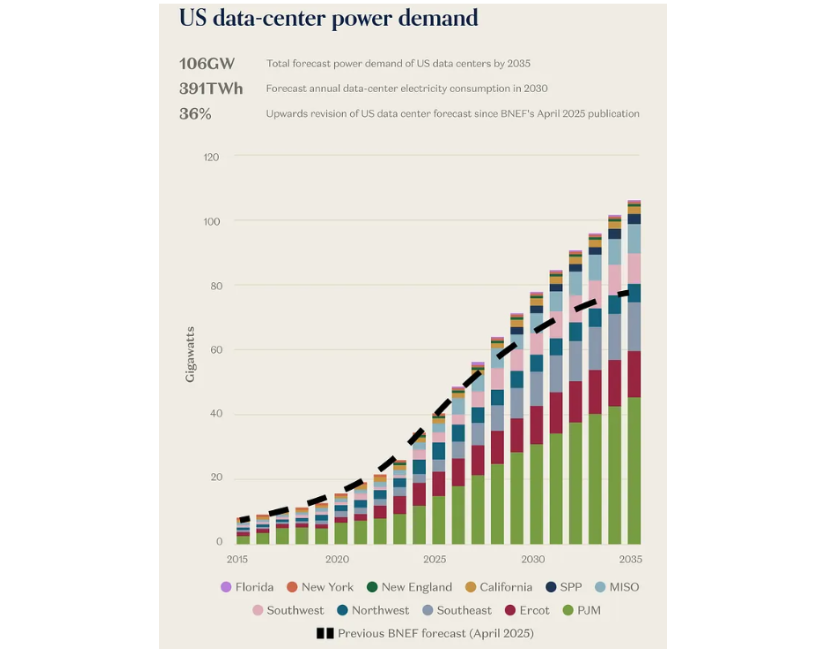
This ongoing digital transformation, however, brings with it immense physical and economic constraints that are reshaping global markets. Forecasts for data center power consumption have surged dramatically, rising by roughly 36% in a matter of months. Across global financial markets, AI-related stocks have experienced downward pressure in part due to a severe physical bottleneck: technology companies simply cannot secure enough electrical power to operate all the data centers they need—or believe they will need—to sustain their ambitious growth trajectories.
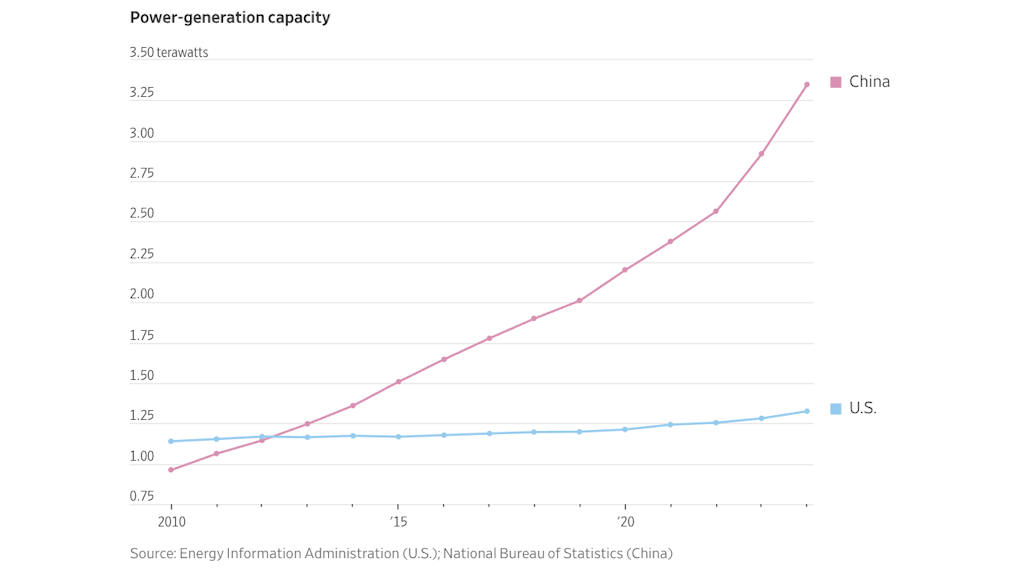
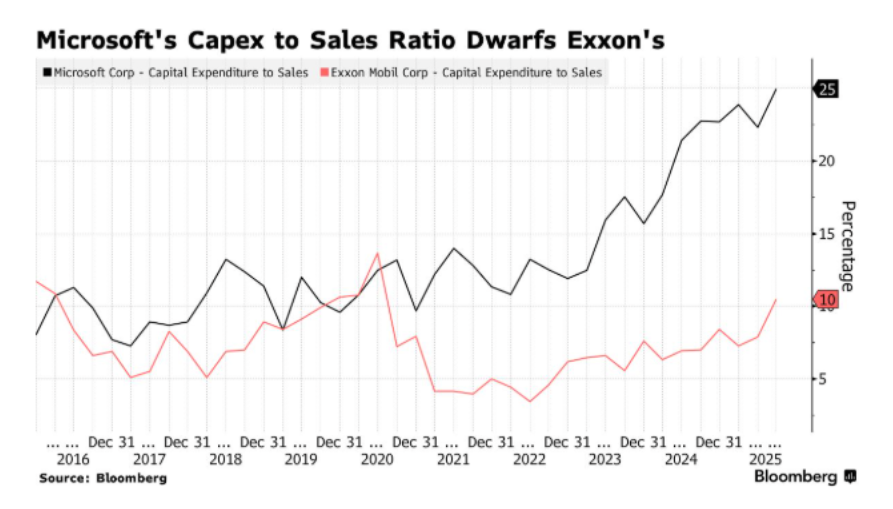
This power crunch has introduced fascinating geopolitical dynamics. Among them is China’s growing advantage in the global race toward artificial general intelligence, driven by projections that the country will soon be generating roughly three times as much electrical power as the United States. Meanwhile, the capital expenditure required to build out this new infrastructure has triggered a striking reversal in traditional corporate investing roles. Financial analysts note that Microsoft, historically operating as an asset-light software business, is now spending more than double the percentage of its sales on capital expenditures compared to Exxon, a traditionally asset-heavy energy corporation.
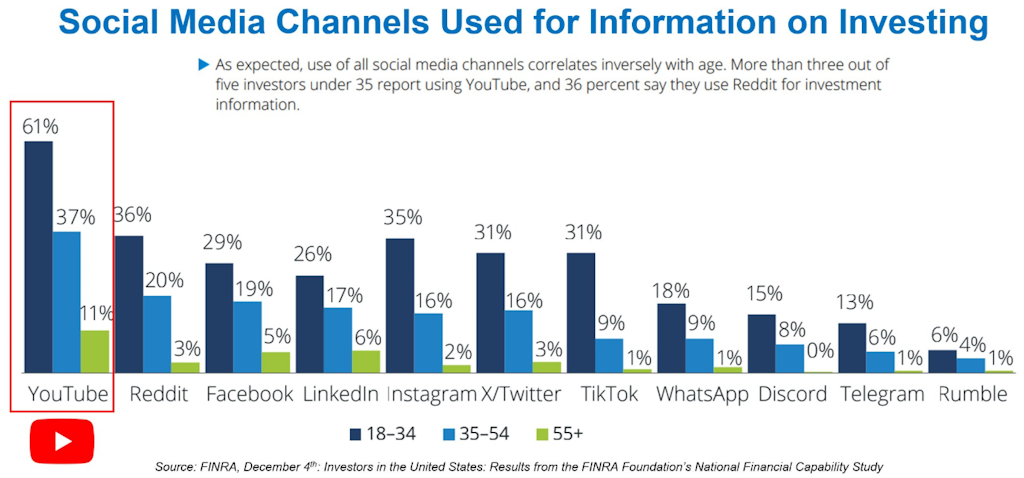
These massive shifts in technology and capital are unfolding alongside evolving consumer behaviors and demographic challenges. Financial regulatory surveys indicate that a striking 61% of investors under the age of 35 now turn to platforms like YouTube for financial advice. This reliance on social media content for major economic decisions highlights how deeply digital platforms have integrated into daily life, even as policymakers around the world grapple with the societal implications of screen time and online access for younger generations.
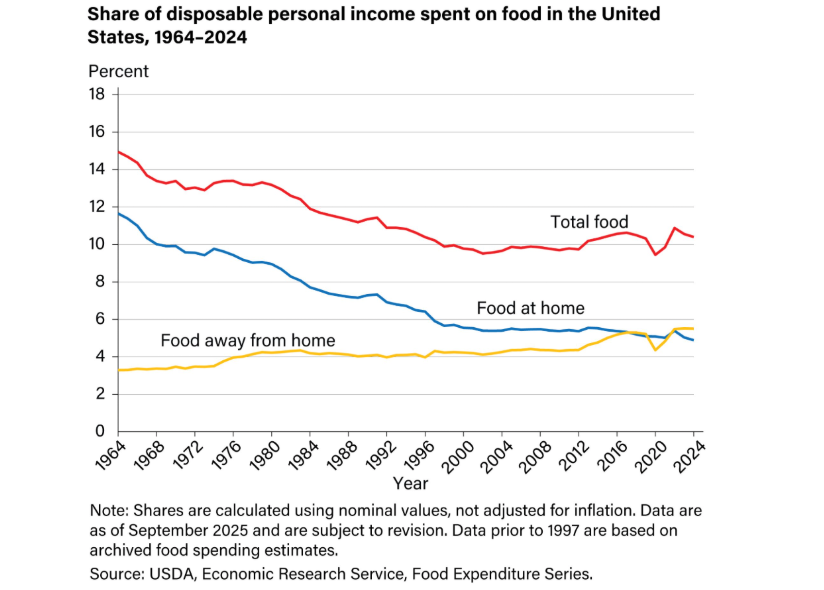
At the same time, broader economic anxieties, such as persistent concerns over grocery store prices, often contrast sharply with actual macroeconomic data. Economic analyses show that as a percentage of disposable income, spending on food consumed at home has actually become more affordable over time, while total household food budgets remain remarkably stable.
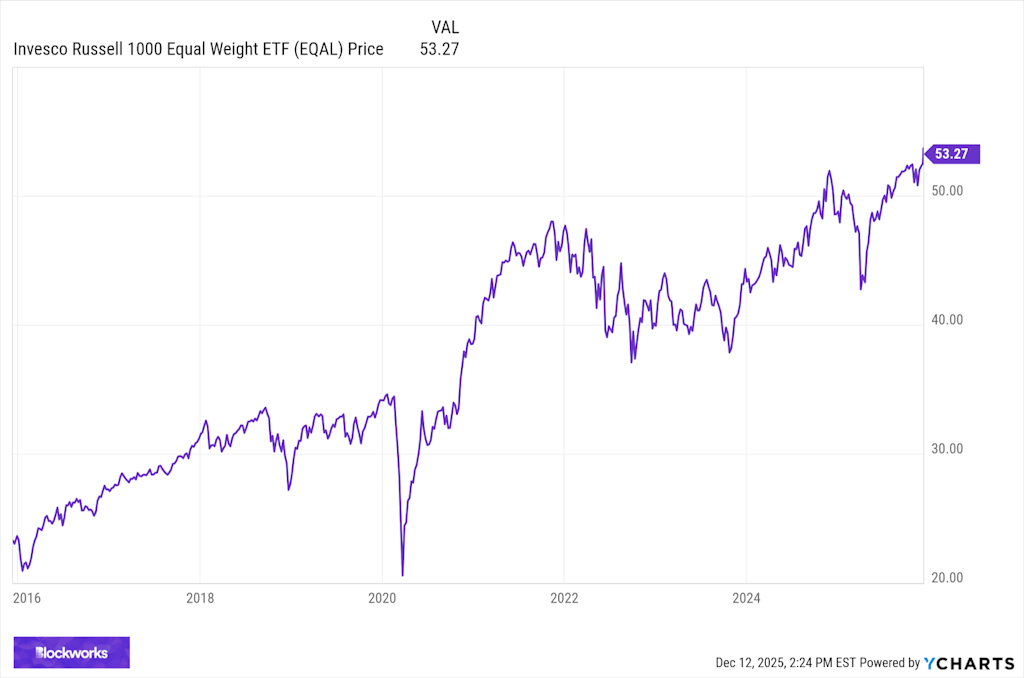
Beyond the dominant technology sector, the broader economy continues to navigate diverse currents. The equal-weight S&P 500 recently reached an all-time high, demonstrating that market strength extends well beyond the handful of mega-cap technology stocks driving the artificial intelligence boom.
Yet, long-term structural challenges remain stark, particularly in demographics. Economists point to severe demographic contractions in nations like South Korea, where current birth rates imply that every 100 citizens today will have only six great-grandchildren among them in total. Observers note that such demographic trajectories underscore why automating labor through advanced artificial intelligence is viewed by many economists not just as a commercial opportunity, but as an economic necessity for aging societies.
Reflecting on these milestones, observers note the irony in how history recognizes technological contributions. Time Magazine famously named "The Computer" as its Machine of the Year in 1982, and later recognized individual content creators—the everyday people populating the World Wide Web with blog posts, videos, and images—as Person of the Year in 2006. In many ways, everyday web users deserved to be recognized once again alongside modern AI pioneers, because without the billions of human contributions that populated the internet over the past thirty years, the modern architects of artificial intelligence would have had nothing to train their systems on.




Comments (0)