



The trajectory of modern technology is no longer moving along a predictable, linear path; it is accelerating exponentially, driven by an insatiable, parabolic demand for processing power. Industry observers, market analysts, and infrastructure architects are increasingly confronting a stark reality that challenges traditional economic models: the global appetite for compute is not merely growing—it is hurtling toward a structural ceiling defined by physics, manufacturing limits, and raw energy availability.
When the initial assessments regarding compute capacity were modeled years ago, Wall Street and traditional financial analysts projected a relatively modest trajectory. Standard consensus models estimated that by the year 2030, the global economy would require at most a tenfold increase in total compute usage compared to historical baselines. However, reality has rapidly outpaced these conservative forecasts. Artificial intelligence research laboratories are doubling their compute footprints on an annual basis, scaling directly into the gigawatt tier, while foundational infrastructure and downstream applications are registering astronomical workload expansions of ten to one hundred times every two to three years.

Data gathered from industry insiders and technical anecdotes paint a consistent picture of relentless, parabolic demand. While declaring that the demand for compute is effectively infinite may sound hyperbolic, the underlying data streams continue to support this hypothesis, leaving market skeptics searching for empirical evidence to the contrary.
Navigating Wall Street Skepticism and the Semiconductor Cycle
The broader financial markets generally view this unprecedented capital expenditure cycle through a polarized lens. The prevailing bearish consensus suggests that the vast sums currently being poured into artificial intelligence infrastructure are running significantly ahead of actual end-user demand. Under this traditional viewpoint, supply will eventually catch up, or demand will experience a sudden contraction, marking a cyclical peak reminiscent of historical semiconductor downturns.

This skepticism is deeply rooted in how Wall Street has traditionally evaluated semiconductor manufacturers and memory providers. Historically, companies operating in the memory sector have experienced severe boom-and-bust cycles. For instance, financial charts tracking the earnings and stock valuations of major memory producers reveal a nearly flawless correlation, where corporate earnings and equity prices track each other step-by-step through massive expansion and contraction phases.
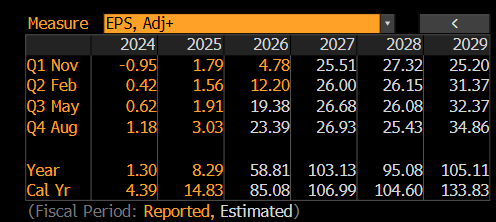
Looking forward into upcoming financial estimates, mainstream analysts generally project that earnings will plateau and remain largely constant following the current infrastructure build-out. Because fiscal year estimates for upcoming periods closely mirror subsequent years, traditional analysts conclude that the memory market will experience little to no secular growth beyond the near term. Consequently, even lofty equity valuations for major memory suppliers are often assigned modest forward price-to-earnings multiples by bears who anticipate a familiar pattern of collapsing demand or a sudden flood of oversupply.
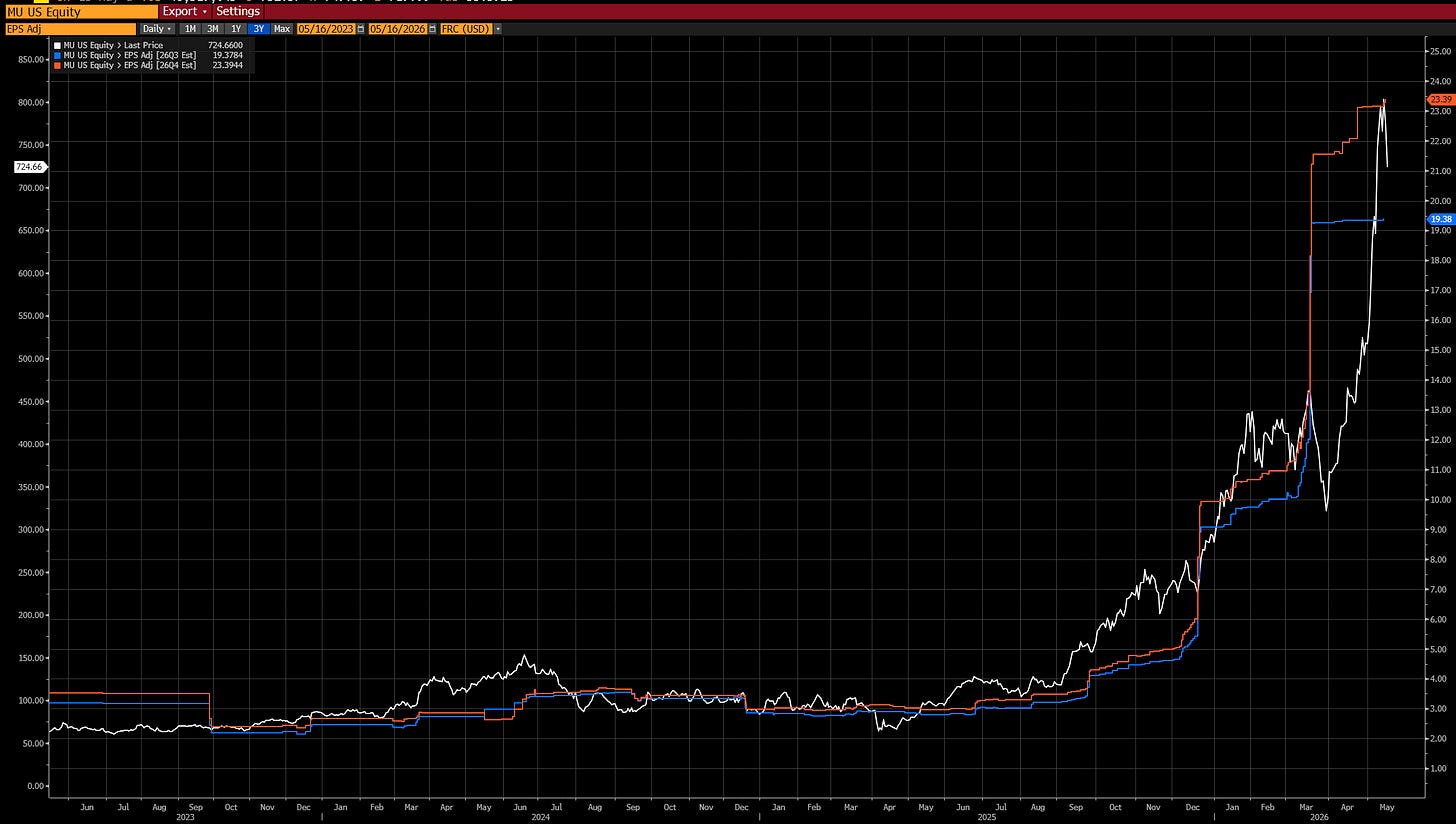
Bears frequently point out that key memory manufacturers have navigated severe downturns before, citing periods of deeply negative earnings immediately following historic industry booms. This historical parallel, however, relies on the assumption that the technological landscape of the next five years will mirror the structural realities of the past.
Supply Constraints, Physical Limits, and the Manufacturing Bottleneck
As the technology sector approaches critical financial reporting milestones, the debate over whether the current infrastructure boom represents a sustainable paradigm shift or a temporary bubble remains fierce. Industry executives, however, are pointing to severe supply chain bottlenecks that suggest the primary danger is not excess supply, but rather an inability to manufacture enough silicon and memory to keep pace with demand.
Industry leadership has offered sobering timelines regarding current and future shortages. Executives from major memory suppliers have indicated that structural shortages across the semiconductor ecosystem could persist well into the decade, citing severe deficits in foundational silicon wafer availability. Furthermore, adding new wafer fabrication capacity is an intensely complex, capital-intensive endeavor that requires a minimum of four to five years from conception to mass production.
Among the major memory producers, capacity additions are rolling out gradually. While some suppliers have accelerated fab schedules and brought new plants online in South Korea, others have scheduled major facilities in the United States, Taiwan, and Japan to ramp up mass production progressively over the coming years. Despite these investments, the near-term burden of supplying advanced memory remains concentrated among very few global players.
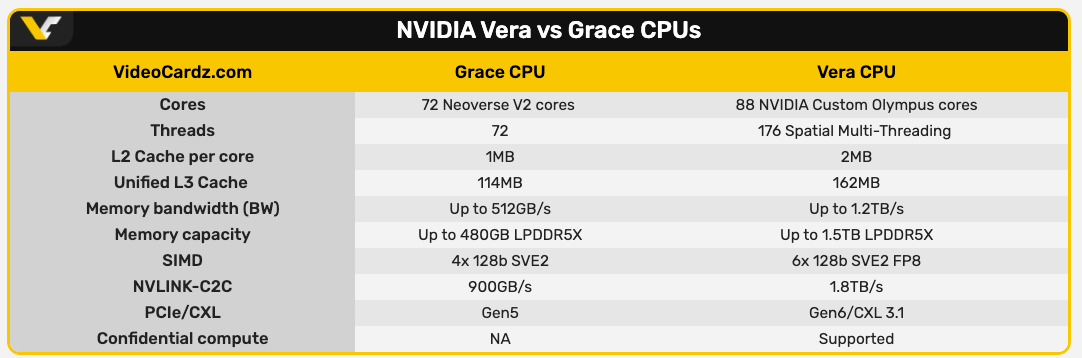
The physical architecture of emerging hardware platforms further exacerbates this tightness. Upcoming generations of advanced server racks and high-performance processing units require staggering amounts of high-bandwidth memory. For example, next-generation architectures designed by leading hardware developers feature massive leaps in onboard memory consumption, tripling the requirements of previous generations.
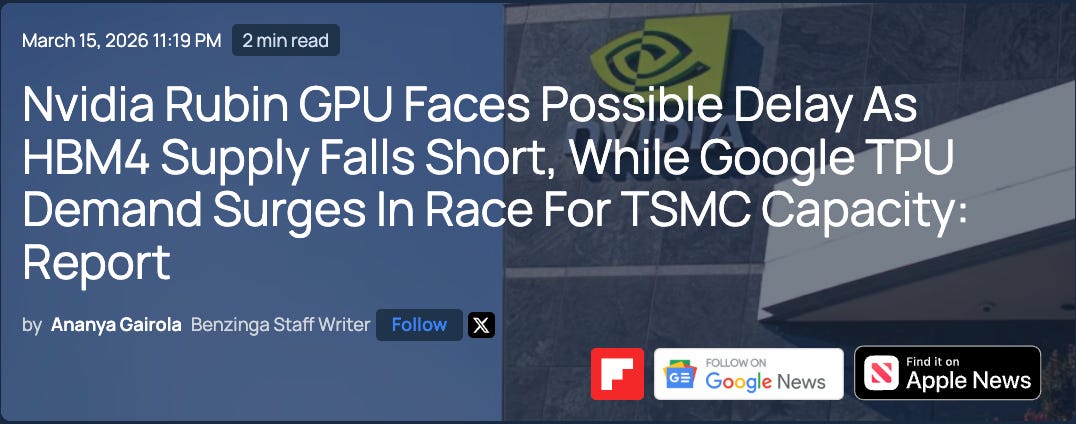
High-Bandwidth Memory itself represents a pinnacle of semiconductor engineering—a specialized, multi-layered chip architecture that only a handful of companies worldwide possess the capability to manufacture. The technological challenge is compounded by the physics of advanced packaging. Once individual memory stacks and graphics processing units are manufactured, they must be meticulously joined together on silicon interposers using highly specialized advanced packaging techniques, a domain where foundry leaders like TSMC play a critical role. Because advanced packaging capacity is severely constrained globally, it acts as a primary structural bottleneck, effectively preventing any possibility of the market being flooded with excess memory chips.

Microeconomic Signals and the Scarcity of Consumer Compute
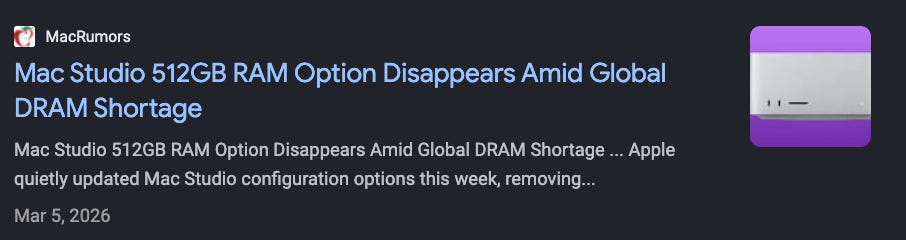
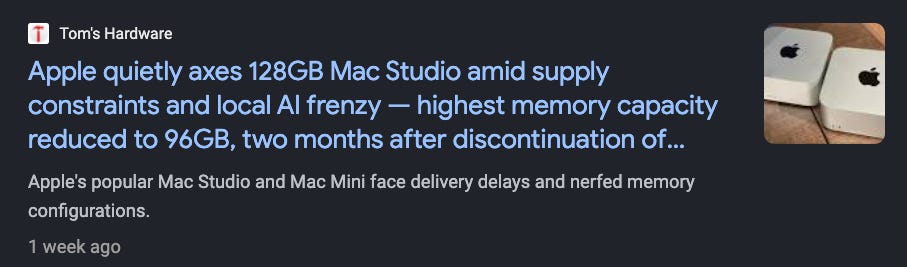
These macro-level constraints are increasingly mirrored in microeconomic signals visible to everyday consumers and enterprise buyers alike. Over recent months, major hardware manufacturers have systematically streamlined their product lineups, phasing out entry-level and mid-tier high-capacity memory configurations for high-performance workstations. Popular professional desktop configurations equipped with substantial unified memory have vanished from primary retail channels, with remaining units commanding significant premiums on secondary markets.
As configuration options narrow and delivery timelines stretch, the evidence mounts that computing resources are transitioning from a readily accessible commodity into a scarce asset. In this emerging environment, securing hardware is no longer simply a matter of financial capital; it has become a challenge of pure access.
This scarcity dynamic fundamentally alters the traditional economic narrative. Rather than triggering a market crash through oversupply, severe resource constraints create an environment where infrastructure landlords and hardware providers can command premium pricing from the highest bidders. Over time, this dynamic threatens to price individual consumers and smaller enterprises out of high-end compute markets, mirroring historical resource constraints seen in other critical sectors.
The Geopolitical and Economic Implications of the Compute Economy
When these accelerating trends are projected forward, the global economy appears headed toward a future where the entire semiconductor supply chain struggles to satisfy the overwhelming appetite for processing power. Compute is fundamentally constrained not just by the speed of silicon manufacturing, but by the availability of physical data center real estate equipped with sufficient electrical power and cooling infrastructure.
As these pressures intensify, the competition for processing power will transcend corporate boardrooms and evolve into a major geopolitical priority. Major nation-states are already moving aggressively to secure domestic semiconductor manufacturing and power supply chains, recognizing that national competitiveness depends directly on access to advanced infrastructure. By the latter half of the decade, leading nations may face severe domestic compute caps, forcing the race for processing power to expand across international borders on an unprecedented scale.
In this transformed landscape, any parcel of land boasting reliable power infrastructure will become a strategic asset. Real estate will be systematically repurposed, and computational resources will be pooled across organizational and national boundaries to achieve large-scale objectives. Capital alone will no longer define economic power; instead, labor and enterprise will be valued primarily by their ability to effectively direct and harness compute.
While financial markets will inevitably experience cyclical pullbacks and volatility along the way, the overarching direction remains fixed. The global transition toward a compute-driven economy is accelerating, establishing a new foundation for industry, government, and society.




Comments (0)