


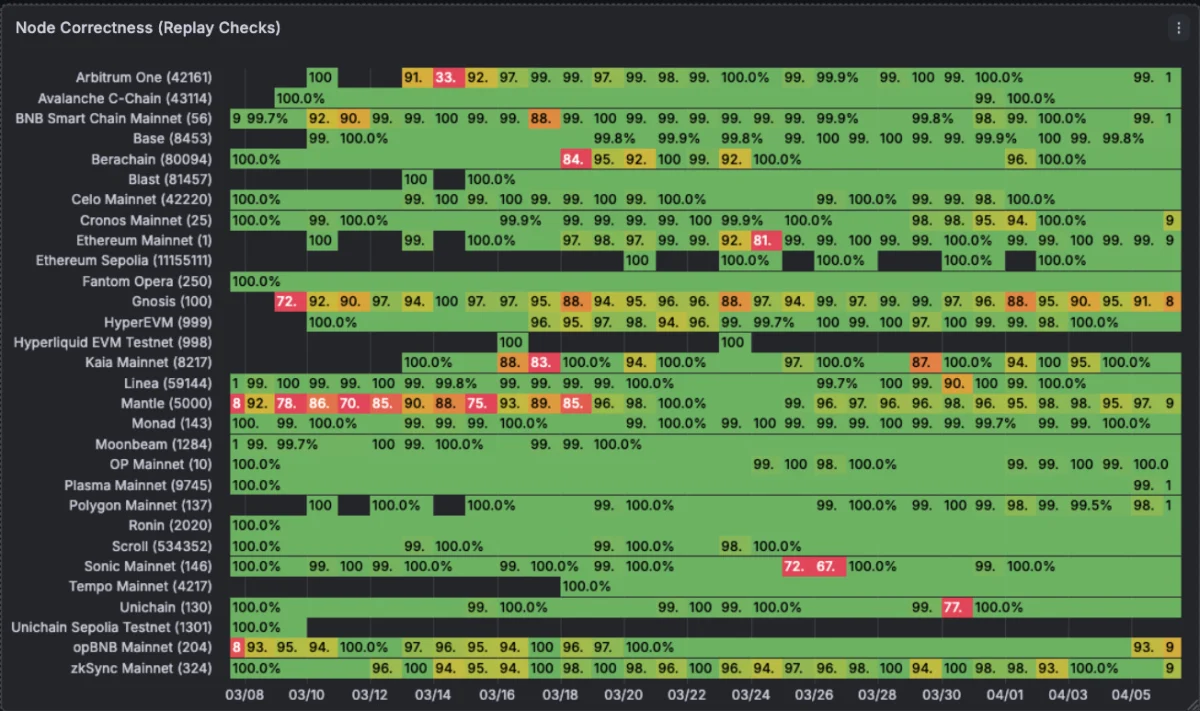
The hidden infrastructure powering the decentralized web may be delivering inaccurate data far more often than developers realize. Recent findings from RouteMesh, a decentralized routing and infrastructure optimization platform, suggest that Web3 builders relying blindly on standard Remote Procedure Call (RPC) node providers may be ingesting incorrect data at alarming rates. While the industry largely operates on the assumption that enterprise-grade node providers deliver near-flawless data streams, empirical monitoring data tells a very different story.
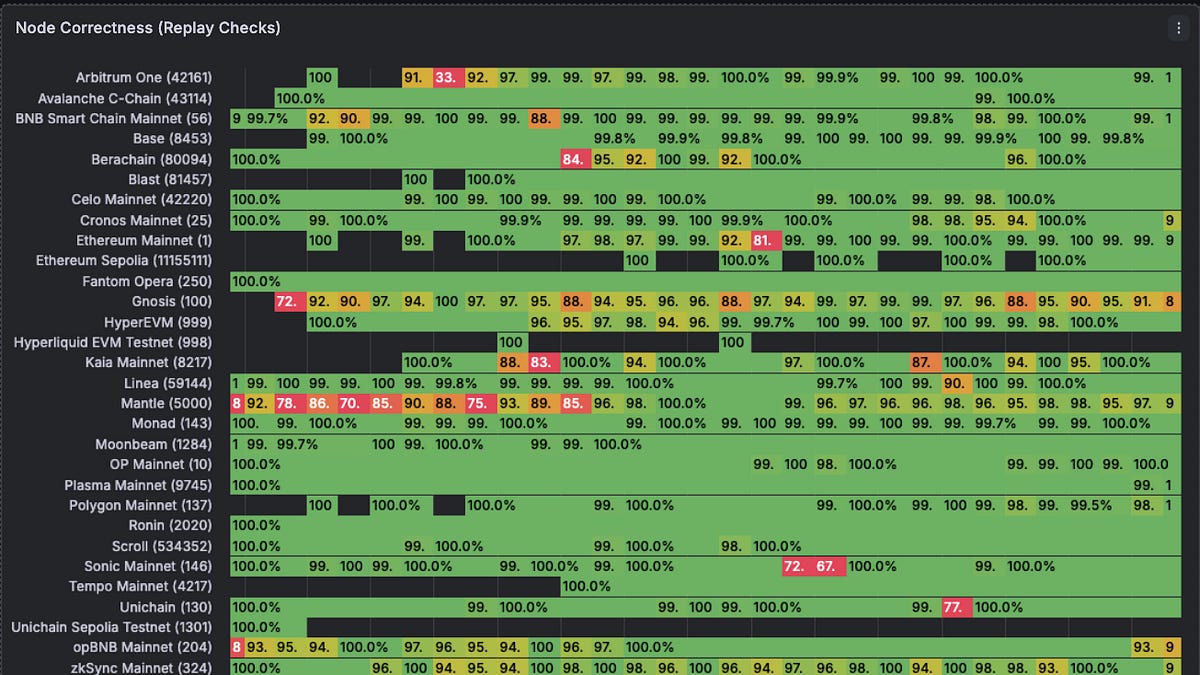
According to operational data gathered and published by RouteMesh, even the highest-performing RPC providers exhibit data correctness ranges fluctuating between 92% and an occasional 100%. In stark contrast, lower-performing infrastructure setups or specific unsupported network environments can see data correctness plunge down to a troubling 60%. These discrepancies introduce severe operational risks for decentralized applications, data indexers, and analytics platforms that depend on continuous, uncorrupted blockchain data feeds to power smart contracts, user balances, and automated trading algorithms.
At the core of the issue is a fundamental challenge that has plagued the blockchain infrastructure landscape for years: how can a consumer or protocol verify that the data returned by a node is genuinely correct? Traditionally, developers either blindly trust that their chosen provider is executing its duties correctly or implement rudimentary multi-provider setups to cross-reference results. However, RouteMesh’s analysis highlights why these traditional safety measures are often insufficient. The reality of determining data validity requires massive-scale, purpose-built infrastructure designed explicitly to measure two critical dimensions of data quality: node synchronization, commonly referred to as lag, and absolute data correctness.
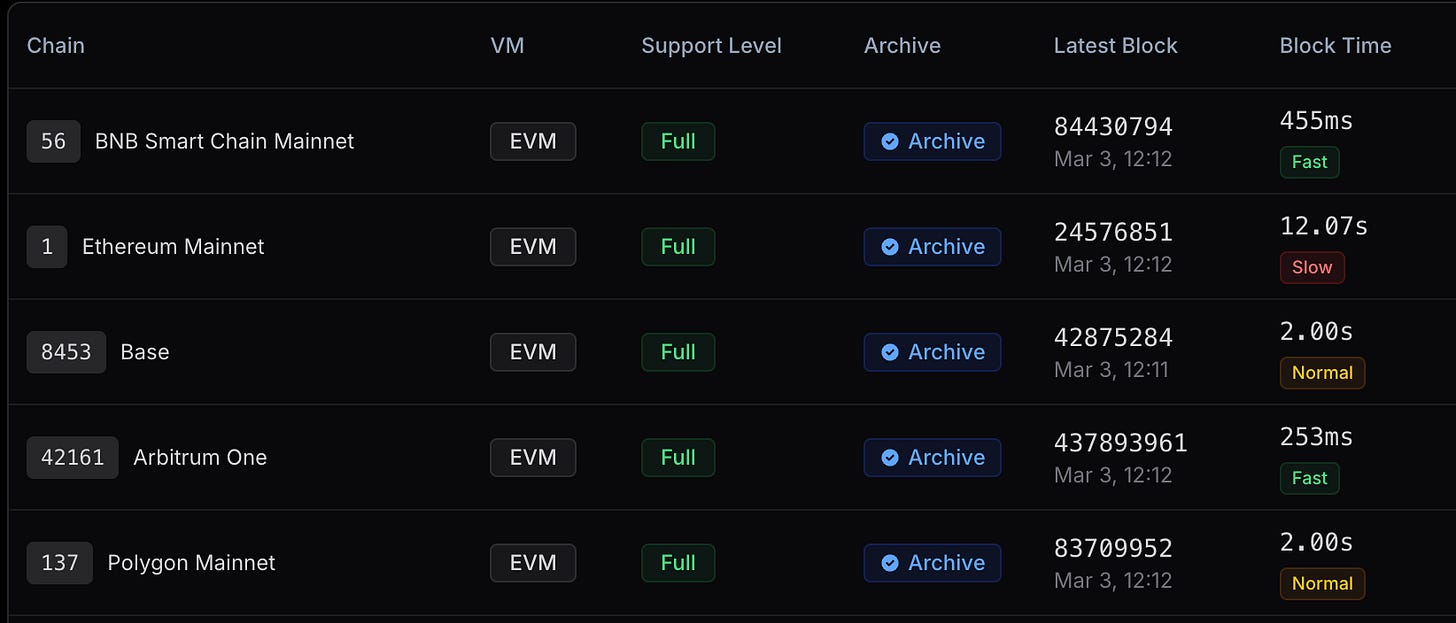
To evaluate whether a node is experiencing lag, infrastructure monitoring systems must track both the current block height of the destination chain and the specific block height reported by the target node in real-time. By querying functions such as eth_getBlock:latest across various RPC nodes simultaneously, monitoring platforms can directly compare node responses against one another. The frequency of these checks must scale dynamically in proportion to a blockchain’s native activity level. Networks featuring exceptionally rapid block production times demand significantly more aggressive polling and verification compared to legacy networks with slower, more predictable block intervals.
Evaluating data correctness, however, introduces an entirely higher order of engineering complexity and economic friction. The simplest theoretical approach—querying every single request across two separate providers—is frequently cost-prohibitive at scale. Furthermore, this dual-provider model assumes that both underlying services maintain a spotless track record of accuracy. If a developer utilizes two distinct providers that each maintain a 90% accuracy rate, the compounded probability can still result in incorrect data slipping through roughly 1% of the time. In high-throughput production environments, a 1% error rate translates to hundreds or thousands of corrupted database entries, which can cascade into severe downstream failures, financial discrepancies, and broken application logic.

To combat these vulnerabilities, platforms like RouteMesh utilize rigorous automated validation workflows—referred to internally as replay checks—to continuously test incoming requests against verified historical states. While these systems rely on hash-based consensus checks that occasionally require minor adjustments to account for minor comparative inaccuracies, they provide an unprecedented window into the operational reliability of the industry’s dominant players.
A close examination of performance metrics across the top three mainstream RPC providers at the time of writing—Alchemy, Quicknode, and Chainstack—reveals distinct operational profiles across global regions including Canada East, Frankfurt, and Singapore. Looking at fleet synchronization data over a thirty-day window, Alchemy’s infrastructure generally maintains a strong alignment with the chain tip, exhibiting only isolated instances of individual nodes falling out of sync. While these minor synchronization hiccups fluctuate from month to month, Alchemy’s overarching fleet consistency remains relatively stable.
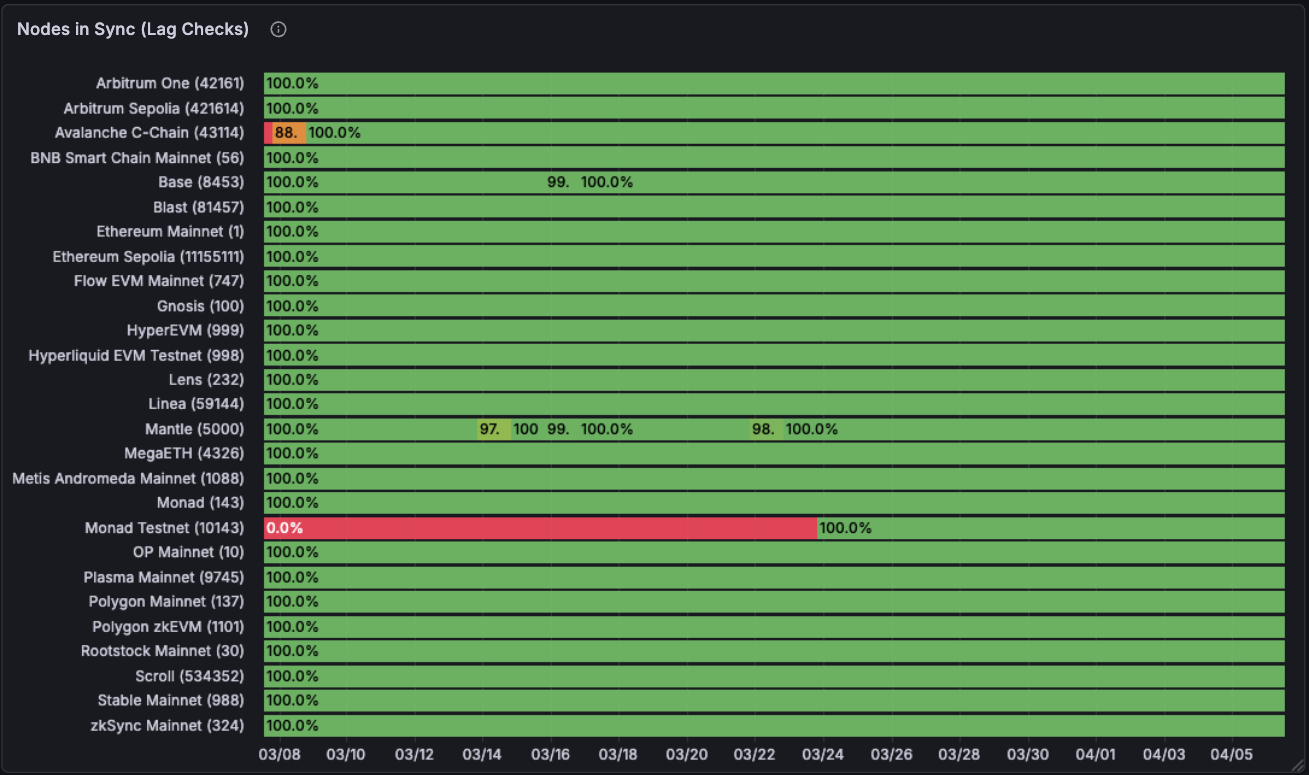
However, the picture shifts dramatically when evaluating absolute node correctness. Network performance data demonstrates that certain chains experience severe anomalies on specific days. For instance, the Ethereum mainnet encountered noticeable correctness hiccups during mid-March, while emerging networks like HyperEVM reported baseline correctness figures hovering between 96% and 98%. For enterprise data pipelines and high-stakes analytics platforms, an error rate of 2% to 4% introduces unacceptable systemic risk.
Quicknode presents a different operational profile altogether. The provider’s node fleet frequently exhibits a higher degree of drift from the absolute tip of the chain compared to its competitors. While this may stem from shifting strategic priorities, sunsetting legacy networks, or varying levels of maintenance attention across specific long-tail chains, the resulting performance gaps are clearly visible. In terms of data correctness, Quicknode generally delivers accurate responses for the majority of queries, but certain major networks—including Arbitrum, Polygon, and Ethereum mainnet—occasionally suffer from acute correctness failures that undermine their reliability during high-volatility periods.
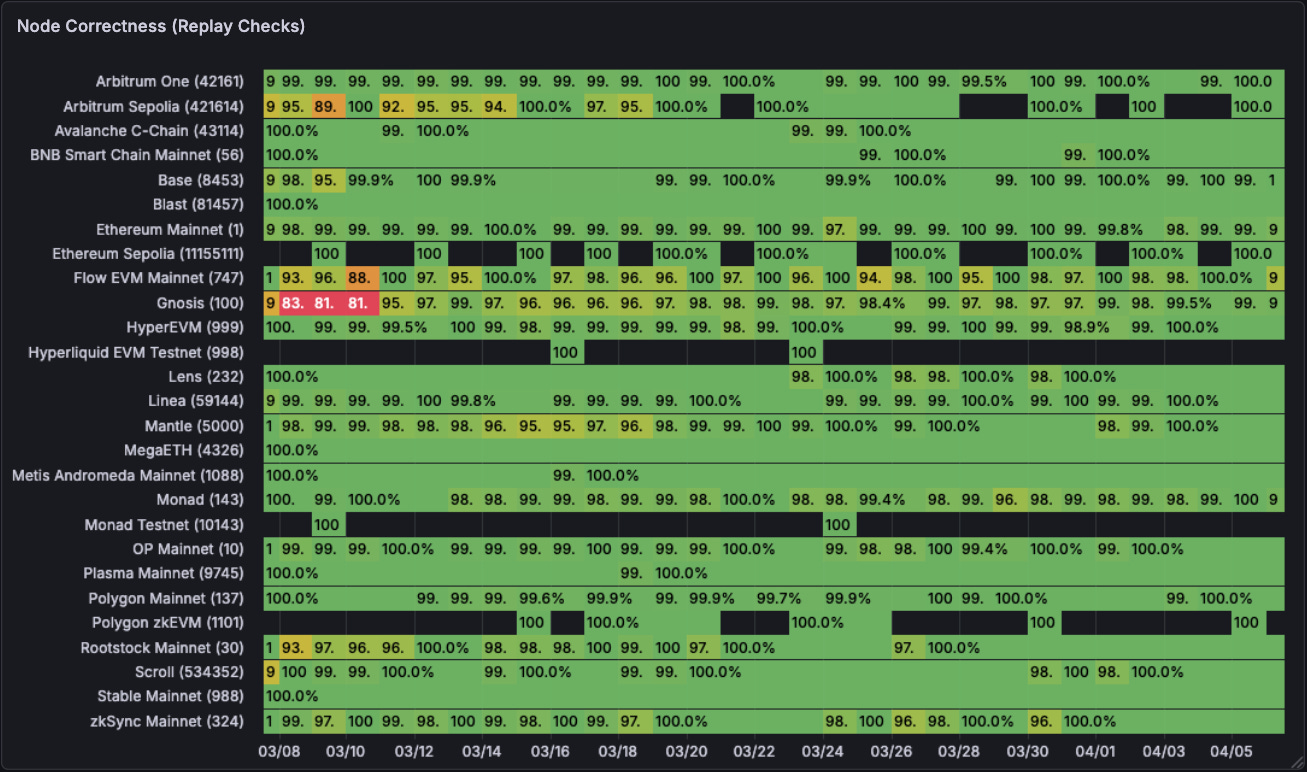
Meanwhile, network data indicates that Chainstack nodes face even greater hurdles regarding absolute correctness. Empirical monitoring reveals that Chainstack’s node fleets routinely dip below acceptable tolerance thresholds for data accuracy on certain chains. Yet, sophisticated routing layers can isolate these underperforming endpoints, dynamically separating accurate responses from compromised data streams to preserve overall system integrity.
The broader implications of these findings point to a systemic misalignment within the Web3 infrastructure market. Much of the industry continues to pay fixed subscription fees for data streams that frequently contain errors, which are then passed downstream into analytical datasets and decentralized applications. While large-scale data indexing operations often build expensive internal redundancy and verification pipelines to filter out bad data, smaller development teams and emerging projects lack the resources to build such infrastructure. Consequently, these smaller builders are left exposed, hoping that their chosen RPC providers are delivering accurate, up-to-date information.
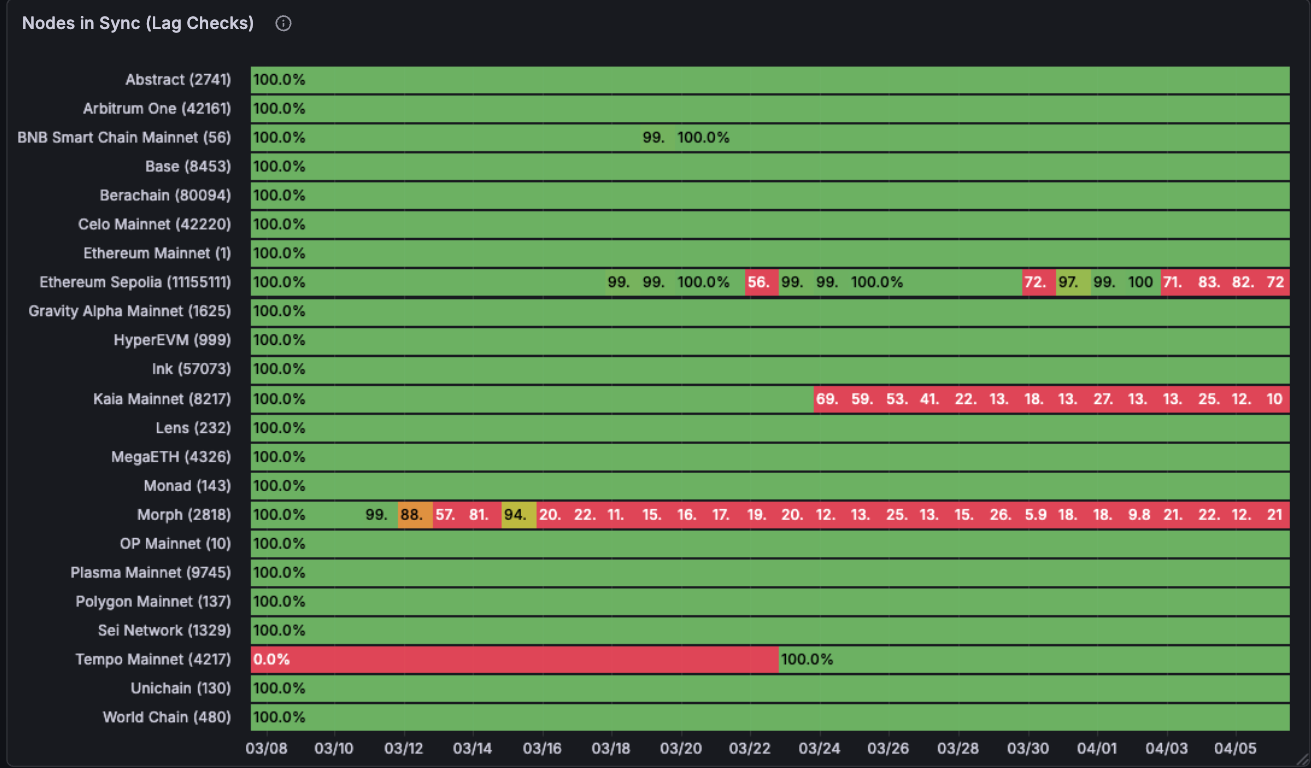
Because the prevailing commercial model relies heavily on static pricing tiers, traditional RPC providers lack direct financial incentives to aggressively resolve complex data integrity issues across every supported chain. Unless a customer operates advanced monitoring and traffic-rerouting pipelines that penalize poor performance, providers rarely face immediate economic consequences for subpar data quality.
Platforms attempting to bridge this gap must shoulder the heavy lifting of continuous network monitoring, sentinel checks, and automated traffic redistribution. By dynamically routing API calls away from lagging or inaccurate nodes and rewarding providers that consistently maintain high operational standards, infrastructure aggregators can protect downstream applications from corrupted data. Ultimately, maintaining transparent, open-source performance metrics remains a critical step toward ensuring that decentralized data infrastructure is not only accessible but fundamentally trustworthy for all builders across the blockchain ecosystem.




Comments (0)