



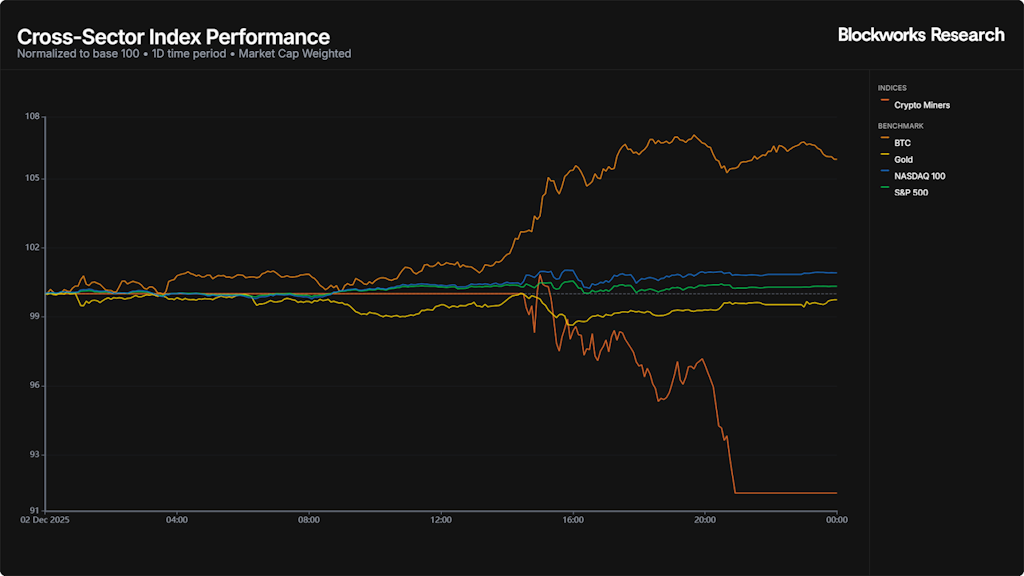
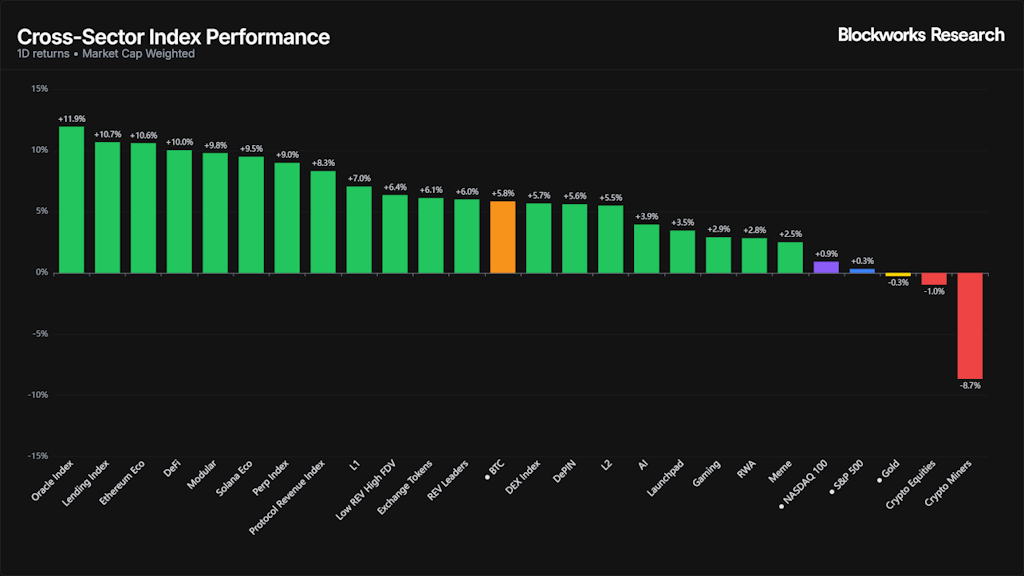
Global financial markets leaned decisively into a risk-on posture, with the cryptocurrency sector outperforming traditional asset classes while major equity and commodity benchmarks remained relatively muted. Bitcoin held a stable mid-pack performance alongside broad-based strength across decentralized finance, modular frameworks, and core infrastructure protocols.
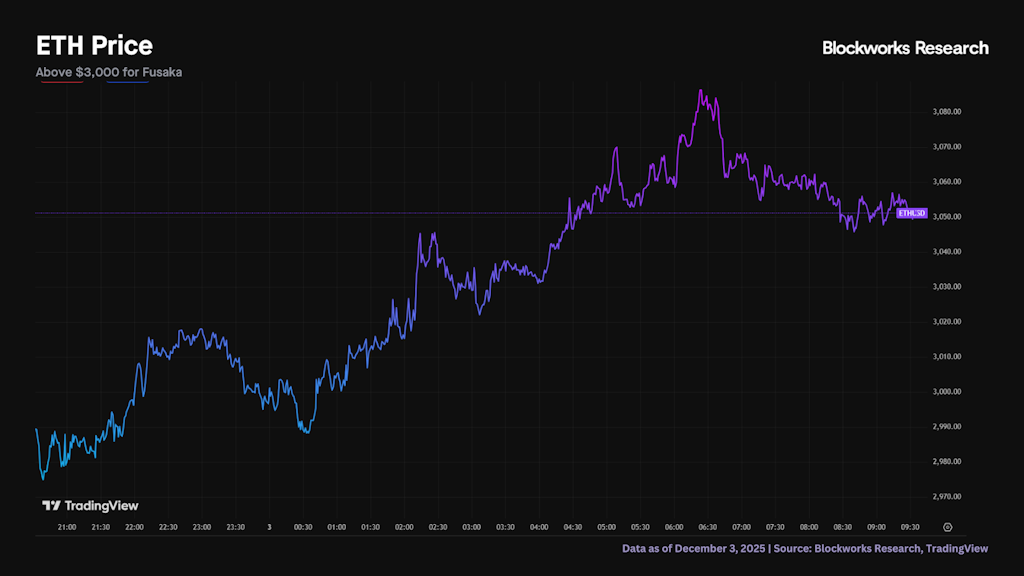
The broader shift in market sentiment coincided with a major milestone for the smart contract ecosystem: the official deployment of Ethereum’s Fusaka upgrade. Representing the second major network upgrade of the year following May’s Pectra hard fork, Fusaka introduces a streamlined suite of improvements designed to enhance data availability, lay the groundwork for more flexible protocol adjustments, and potentially restore deflationary pressures on Ether through revised fee economics.
At the same time, individual layer-1 networks and ecosystem developers are pushing deeper into specialized real-world verticals. Among them, the Sui network is mounting an aggressive, full-stack push into robotics, establishing onchain coordination, reliable settlement, and real-time telemetry as core primitives for the burgeoning wave of autonomous physical machines.

Market Indices and Sector Performance
Cryptocurrency markets showed exceptional breadth as capital rotated back into foundational infrastructure and high-utility protocols. Traditional equity markets experienced only modest movement, with the S&P 500 posting a marginal gain and the Nasdaq 100 ticking slightly higher. Safe-haven assets saw mild downward pressure, with gold slipping slightly, while crypto mining equities emerged as a distinct outlier to the downside, logging significant pullbacks that pointed to short-term profit-taking and heightened sensitivity to Bitcoin’s ongoing price consolidation phase.
Within the digital asset landscape, sector performance underscored a widespread appetite for liquid altcoin beta. Oracles, lending platforms, and the broader Ethereum ecosystem led the charge, signaling renewed investor confidence in core decentralized services. Protocols focused on decentralized finance, modular architecture, the Solana ecosystem, and perpetual swaps followed closely behind with robust gains. Lower down the stack, layer-2 networks, artificial intelligence tokens, launchpads, and gaming assets all trended upward, whereas more speculative segments like meme tokens lagged behind the broader market advance.
This constructive price action reflects a broader improvement in macroeconomic conditions, characterized by stabilizing bond yields, firmer liquidity indicators, and positioning data that indicates institutional and retail investors are stepping up their risk exposure following a prolonged period of consolidation. The sharp rebounds observed across infrastructure sectors highlight expectations for heightened onchain activity and upcoming technological catalysts.
As market participants look ahead to upcoming macroeconomic data releases that could test the durability of this current risk-on sentiment, overall market volatility remains compressed. However, with sector dispersion widening across the digital asset economy, traders are anticipating sharper rotational movements as individual ecosystem narratives continue to develop.
Ethereum Deploys Fusaka Upgrade with PeerDAS and BPO Hard Forks
Against this shifting macroeconomic backdrop, the Ethereum network successfully activated its Fusaka upgrade. The occurrence of two network upgrades within a single calendar year is a rare event for Ethereum, made possible in this instance because Fusaka represents a half-upgrade following the removal of over a dozen Ethereum Improvement Proposals after the abstraction-focused EOF updates were mothballed earlier in the year.
Of the twelve Ethereum Improvement Proposals that remained within the scope of the upgrade, PeerDAS stands out as the most technically significant development. According to Gabriel Trintinalia, a protocol engineer at Consensys, network developers intentionally trimmed the upgrade’s scope during its initial developmental phases to mitigate the risk of delivery delays.
"During the initial development of the Fusaka upgrade, any feature that carried a risk of delaying the fork, such as those requiring more research or having high complexity, was deprioritized and removed from the scope," Trintinalia explained.
PeerDAS introduces native data availability sampling to the network. This cryptographic mechanism allows individual validators to share the heavy burden of processing data blobs rather than requiring every node to download complete datasets. By distributing this validation workload efficiently, the network creates the structural capacity to safely increase the number of data blobs processed per block.
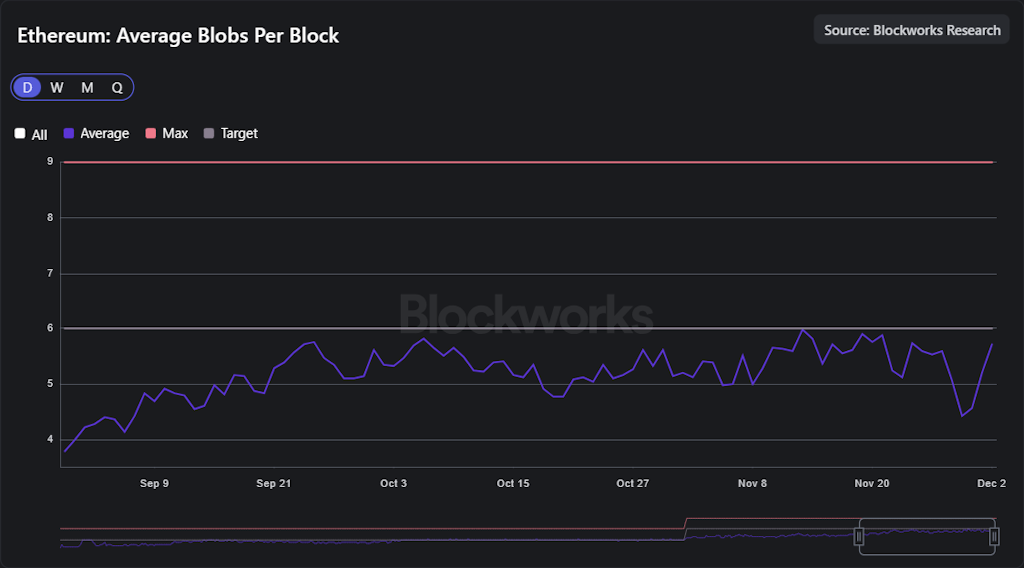
Despite these advances, historical data shows that data blobs have frequently struggled to consistently hit their baseline target of six blobs per block. Paradoxically, even as utilization has hovered below previous targets, core developers are already establishing mechanisms to raise capacity further. Rather than implementing a permanent cap increase directly within Fusaka, the upgrade introduces Blob Parameter Only hard forks.
This structural innovation establishes a separate, significantly streamlined governance and technical process for adjusting blob storage parameters in the future. Instead of forcing the community to wait for massive, multi-year network upgrades, the BPO framework enables core developers to make smaller, more frequent adjustments to blob storage capacity as demand evolves.
Addressing the Blob Fee Market and ETH Deflation
Despite the technological sophistication behind data scaling, the broader economic reality has revealed a persistent mismatch between supply and demand. Because available blob capacity has consistently exceeded current rollup demand, blob gas prices have remained largely immaterial for extended periods, save for occasional temporary spikes where prices touched a nominal one gwei.
Network data indicates that in the months immediately following the Pectra upgrade, Ethereum generated minimal revenue from blob fees. Even during a brief demand spike, total revenue remained relatively modest on an absolute scale, though the blip clearly demonstrated the order-of-magnitude revenue difference that occurs when a genuine, competitive fee market for data blobs materializes.
To solve this underlying structural inefficiency, market participants and core developers are drawing increased attention to a previously overlooked proposal: EIP-7918. The proposal directly addresses the shortcomings of the existing blob fee market by implementing a reserve price mechanism tied directly to underlying execution costs, creating an effective price floor for data availability.
When layer-2 execution costs outpace blob costs, the implementation prevents the blob fee market from collapsing into ineffectiveness at the one-gwei floor. Analysts note that had EIP-7918 been active earlier in the year, the amount of burned blob fees would have multiplied significantly. Beyond boosting token burn mechanics, the upgrade provides a higher degree of price stability and predictability, helping to cushion the network against dramatic, disruptive fee spikes whenever the blob market transitions into periods of inelastic demand.
When combined with the scalability enhancements delivered by PeerDAS and the administrative flexibility introduced by Blob Parameter Only hard forks, these upgrades suggest that as Ethereum successfully scales its layer-2 transaction capacity, associated blob revenues should rise in tandem—reversing a historically inverse relationship. For long-term Ether holders, this economic realignment, working alongside ongoing layer-1 scaling initiatives, offers a viable pathway toward restoring the asset’s supply to a sustained deflationary phase.




Comments (0)