


This is a segment from The Breakdown newsletter.
In economics, things take longer to happen than you think they will, and then they happen faster than you thought they could. This famous observation by economist Rudiger Dornbusch captures the creeping, then suddenly overwhelming, pace of technological transformation.
Consider the opening scene of Philip K. Dick’s 1969 science fiction classic Ubik, which features an apartment door demanding payment from its owner. When Joe Chip, running low on funds and behind on his rent, attempts to open the door for an incoming guest, the mechanical portal refuses to budge, barking out a demand for five cents. Short on physical change, Chip tries to pay the next day, but his digital credit score has cratered, causing the door to ignore his pleas.
He tries to reason with the obstruction, arguing that what he pays is in the nature of a gratuity and that he is not strictly obligated to pay. The door responds smugly, instructing Chip to check his contract, where he will discover that the machine is legally in the right. When Chip resorts to unscrewing the bolt mechanism with a knife, the door threatens him with legal action. Chip remains undeterred, remarking that he has never been sued by a door before, but figures he can live through it. Before any permanent damage can be done, Chip’s guest pays the fee from the other side, and the door finally swings open.
Later in the narrative, Chip’s refrigerator, coffee maker, and shower all demand immediate micro-payments before rendering their basic services, and the guest is forced to pay the door yet again just to leave the apartment. Such was Philip Dick’s dystopian vision of the future: residential apartments turned into intrusive, pay-as-you-go vending machines.
Yet, this exact dynamic might also represent the utopian future of decentralized finance. The overarching promise of decentralized finance is to transform every tangible and intangible asset into a programmable financial instrument that automatically and flawlessly enforces the terms of its own contract without human intermediaries.
The persistent bottleneck facing decentralized finance, however, has been its containment within the digital boundaries of native crypto assets. A smart contract executing on a blockchain cannot physically reach into the material world to repossess an automobile, turn off household utilities, or evict a non-paying tenant.
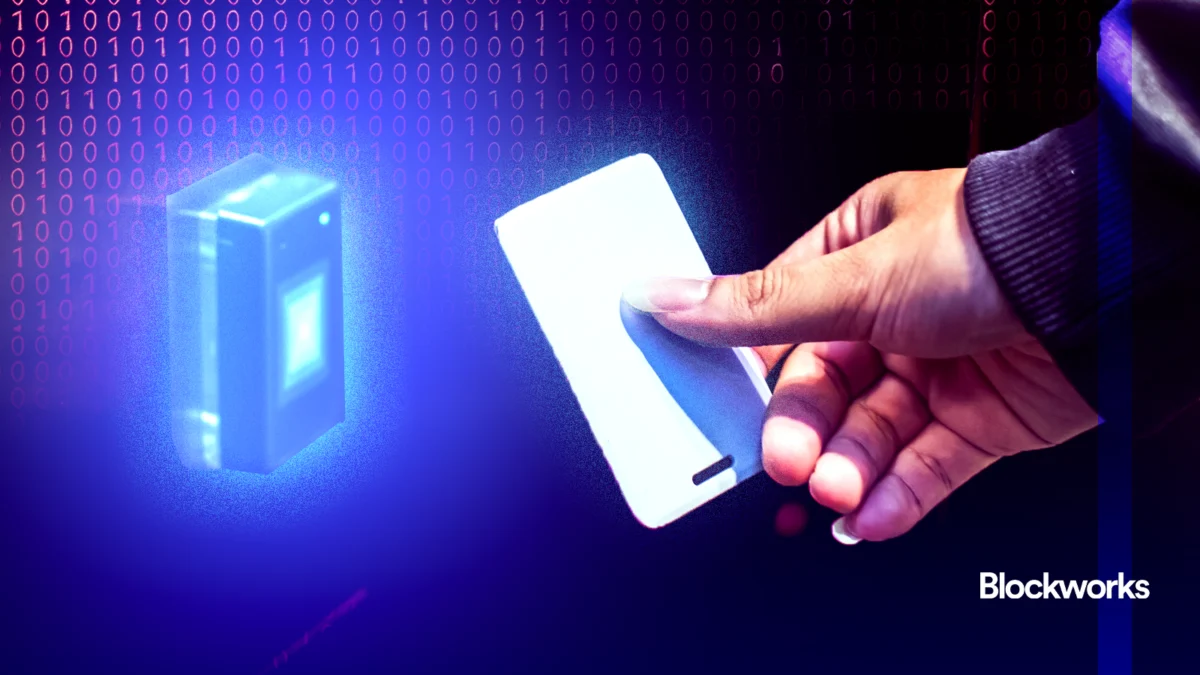
What if a smart contract could digitally lock or unlock the front door to your house, your car, or your refrigerator? In that envisioned world, a lender could confidently accept real-world assets—essentially anything physical that can be digitally locked—as secure, programmatic collateral against onchain loans.
While revolutionary in its application to blockchain ecosystems, the concept is far from new. Way back in 1997, cryptographic pioneer Nick Szabo described the profound utility of turning smart contracts into physical smart locks. He noted that many kinds of contractual clauses, such as collateralization, bonding, and the delineation of property rights, could be deeply embedded into the hardware and software we interact with daily. This integration would make a breach of contract economically expensive, and if desired, prohibitively so, for the offending party.
Szabo added that these advanced cryptographic protocols would give absolute control of the digital keys required to operate a piece of property back to the person who rightfully owns it, strictly based on the verifiable terms of the underlying contract.
Up to this point, that property has been almost exclusively restricted to digital tokens, largely because tokens are the only assets whose ownership can be natively and seamlessly embedded directly into smart contracts. But smart locks, governed by smart contracts featuring verifiable and immutable rules, could potentially turn the entire physical world into a vast, interconnected vending machine.
Szabo famously referred to traditional vending machines as the primitive ancestors of smart contracts. A vending machine is essentially a mechanical contract that holds an asset, such as a can of soda, and releases it exclusively to anyone who satisfies the exact conditions of that contract by inserting a coin. No human clerk or corporate shopkeeper is needed to facilitate the exchange.
The rules-based machine effectively becomes the shopkeeper, much like Joe Chip’s aggressive door functioned as his vigilant landlord. Szabo anticipated that we were heading toward a reality where contracts are embedded in all sorts of valuable property controlled by digital means.

Sixteen years before the launch of the Ethereum blockchain, Szabo envisioned smart locks granting digital control over real-world property, citing automobiles as the most straightforward and immediate use case for smart locks. He explained that society could create a smart lien protocol where, if a vehicle owner fails to make their required payments, the smart contract automatically invokes the lien protocol and returns control of the car keys back to the issuing bank.
While nothing precisely matching that exact end-to-end decentralized framework has materialized at a mass scale just yet, Szabo was at least directionally correct on two major counts: smart contracts now exist natively on Ethereum and numerous other networks, and traditional auto-loan lenders are already actively securing their collateral using remote locking technology.
Starter interrupt devices, or SIDs, which allow traditional lenders to remotely disable an automobile when a borrower falls behind on monthly payments, have become widely popular among sub-prime auto lenders over recent decades. This widespread practice raises obvious and pressing ethical questions: What happens if you desperately need that car to drive to work so you can earn the money required to catch up on your loan? What if you are driving 80 miles per hour on a busy freeway when your lender decides to remotely disable your vehicle?
Unlike Joe Chip’s door, you cannot simply drop coins into the dashboard of a SID-disabled car to unlock it. Furthermore, borrowers often face immense difficulty getting anyone on the phone at a traditional lending institution to plead their case or process an immediate payment to restore functionality.
However, a blockchain-enabled infrastructure could solve this friction. A borrower could quickly top up their loan payment via an automated smart contract using a smartphone equipped with a digital wallet, instantly restoring access to their vehicle without waiting on human customer service representatives.
The idea of consumer-facing blockchain locks is also not entirely novel. Back in 2015, a project called Slock.it promised precisely the kind of decentralized digital locks that Joe Chip had to negotiate with in fiction. The team explained at the time that with their technology, a person renting a house would pay directly to the lock itself, which would then enter into a direct smart contract with the renter.
For reasons that remain somewhat unclear to industry historians, Slocks failed to catch on commercially and never even made it past early development into widespread production. Part of the challenge may have been poor timing, or perhaps the fact that the Slock.it team diverted their focus when a side project known as The DAO nearly collapsed the nascent Ethereum network during its infancy.
Yet, it is increasingly apparent that they may simply have been years ahead of their time. If that is true, the present moment may finally be arriving for blockchain-based smart locks.
The necessary technological infrastructure is largely built: public blockchains are fast, transaction fees are low, and front-end interfaces are exceptionally user-friendly. Traditional finance institutions are desperate to tokenize everything. While speculative crypto asset markets faced headwinds, enthusiasm for bringing real-world assets onchain has accelerated significantly.
Global investors continue searching hungrily for alternative assets. The demand for productive yield outside the increasingly shrinking universe of traditional public equities is seemingly insatiable. Smart contract-enabled smart locks might just be the mechanism required to provide that secure, yield-generating bridge.
Consider the economic reality in countries like Turkey, for example, where everyday borrowers face staggering interest rates of 5 percent per month on personal auto loans. This works out to an annualized rate of over 100 percent, sitting roughly 70 percentage points above the local inflation rate.
If those high-yield loans were tokenized and governed by a transparent smart contract that automatically and impartially manages risk by disabling a vehicle upon default, it would likely attract yield-seeking capital from investors across the globe.
BlackRock Chairman and CEO Larry Fink highlighted this broader industry trend, noting that tokenization has the capacity to greatly expand the global universe of investable assets far beyond the listed stocks and bonds that currently dominate traditional financial markets.
Philip K. Dick predicted the contour of the technology in fiction, and Nick Szabo wrote the conceptual manual for its implementation. Now, the modern financial ecosystem just needs to build the door to this investor utopia.

Comments (0)