


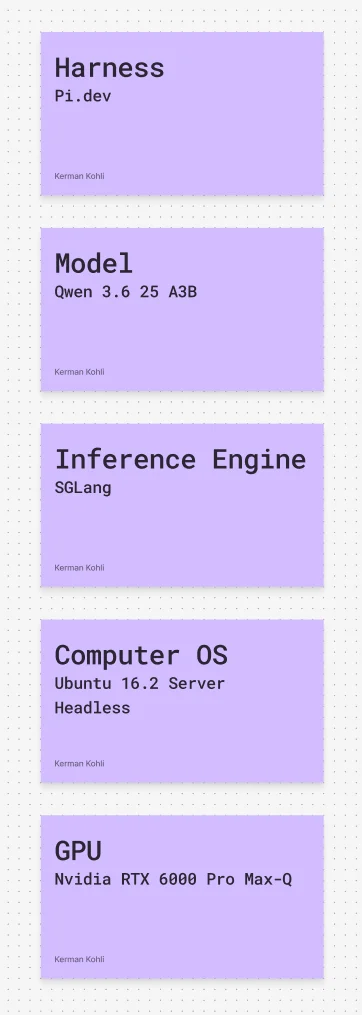
After previously exploring the foundational steps required to assemble a custom inference machine from the ground up, the critical next phase involves putting that hardware to work and extracting tangible value from the setup. In the rapidly evolving landscape of artificial intelligence, hardware and software are inextricably linked, meaning every architectural decision must cohere seamlessly across the entire stack. To understand this deep integration, one must examine a specific high-end build and trace how its hardware specifications dictate the necessary software layers, starting with the base choice that shapes every subsequent decision.
Choosing the right foundational hardware is arguably the most critical choice in any local AI or large language model setup, as it severely restricts or enables every layer built above it. When evaluating base hardware options, architects generally weigh several distinct pathways, ranging from consumer-grade components to enterprise solutions. The primary driving factor in this particular architectural decision was raw speed. Avoiding sluggish processing speeds of 10 to 15 tokens per second was essential, especially when supporting three to five parallel sessions for one to two concurrent users capable of heavy operational workflows. Consequently, memory bandwidth and memory capacity emerged as the top priorities.
Apple hardware options, including Studio and Ultra configurations, offer high memory capacity but suffer significantly in processing speed. While their unified memory architecture performs reasonably well on MLX-optimized models, choosing Apple locks the user into a rigid, narrow ecosystem. Furthermore, Apple devices are poorly suited for dedicated server environments. Attempting to use a Mac Mini as a remote macOS server exposes glaring limitations, particularly because reliable server operations demand a robust Linux-based environment.
This reality narrowed the field down to NVIDIA graphics processing units, which remain the industry standard for high-performance machine learning tasks. A major dilemma in selecting the GPU was whether to opt for an older-generation RTX 3090 or a cutting-edge, best-in-class alternative. The RTX 3090, a 2020-era GPU featuring 24 gigabytes of video random-access memory, offers compelling advantages, notably a lower cost point of around one thousand dollars and NVLink support, which allows two units to link together to achieve high interconnect speeds across 48 gigabytes of VRAM.
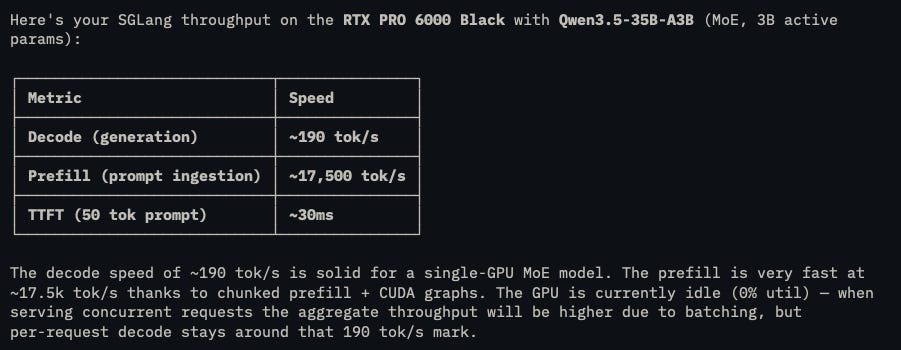
However, because all AI inference is fundamentally memory bound, limited VRAM acts as a severe operational bottleneck. Running the absolute best possible models without performance restrictions required prioritizing maximum capability alongside power efficiency. Drawing up to 300 watts maximum on a single high-end consumer GPU in exchange for minimal performance trade-offs proved far more sustainable than powering dual older cards. Ultimately, investing in top-tier consumer hardware serves as a hedge against rapid technological obsolescence, noting that older GPUs like the 3090 have retained their initial market price points years after release. Furthermore, modern architectures like the Blackwell series introduce specialized optimizations such as native NVFP4 support, though these advanced capabilities command a premium price.
Operating system selection follows hardware decisions closely, with Linux-based kernels standing out as the definitive choice for dedicated AI compute boxes. While various Linux distributions exist, the goal of a sovereign AI box is to create an appliance-like system that powers on and operates indefinitely without manual intervention, managed entirely through remote administration. Apple environments fall short in this regard due to unreliable remote management, intermittent Secure Shell disconnections, and weak reboot recovery mechanisms.
For a reliable personal sovereign intelligence infrastructure, a headless Ubuntu installation is the recommended standard. Running without a graphical user interface preserves precious video random-access memory, ensuring that every gigabyte is dedicated entirely to model execution rather than rendering desktop elements. Managing this headless compute environment effectively relies on secure overlay networks like Tailscale, enabling seamless remote administration via Secure Shell from secondary devices like a MacBook.
Navigating the open-source inference engine landscape introduces another layer of complexity. Popular open-source options include various established frameworks, though initial experimentation often reveals significant disparities in efficiency. While introductory tools are frequently recommended for beginners, they can prove remarkably inefficient for heavy concurrent workloads. Simpler frameworks suit basic hardware configurations, but advanced architectures like Blackwell chips require specialized inference software capable of harnessing their unique hardware capabilities. When standard engines lack necessary concurrency support or specific hardware optimizations, alternative frameworks focused on advanced parallel processing become the clear choice.
A vital optimization technique in modern inference engines is paged attention, which caches historical prompts and executed codebases. This mechanism drastically reduces the memory footprint of incremental prompts, yielding blazing-fast response times and significantly boosting concurrency when multiple users perform similar tasks.

Transitioning from inference engines to model selection reveals a complex web of interdependent variables. Choosing a model involves balancing parameter counts, deciding between full models and mixture-of-experts architectures, sizing the key-value cache, defining concurrency requirements, and selecting acceptable quantization levels. Because certain inference engines lack universal compatibility with every available model, architects face a three-way dependency spanning hardware specifications, inference software, and the underlying model itself.
A configuration utilizing an unquantized model running on an optimized inference engine delivers exceptionally rapid results, vastly outperforming alternative consumer setups. Correctly configuring reasoning parsers is equally vital to ensure that local harnesses can properly interpret and utilize advanced model capabilities.
Achieving true digital sovereignty extends beyond raw models to the software harness used for day-to-day operations. While commercial coding assistants and development environments offer extensive feature sets, a sovereign workflow requires a harness that adapts fluidly to the underlying hardware stack rather than locking the user into a proprietary ecosystem. Fully open-source, modular development harnesses built for incremental expansion provide the flexibility needed to orchestrate multiple models effortlessly.
While a local sovereign AI setup may not fully match the capabilities of multi-billion-parameter frontier cloud models—achieving roughly sixty to seventy percent of their performance—the operational advantages are profound. Operating at the marginal cost of electricity eliminates rate limits, preserves data privacy, and ensures absolute ownership of intellectual output. As commercial cloud compute costs and rental index prices continue to rise steeply, establishing independent sovereign intelligence infrastructure offers a strategic hedge against broader industry inflation, empowering individuals and organizations to control their technological
destiny.




Comments (0)