


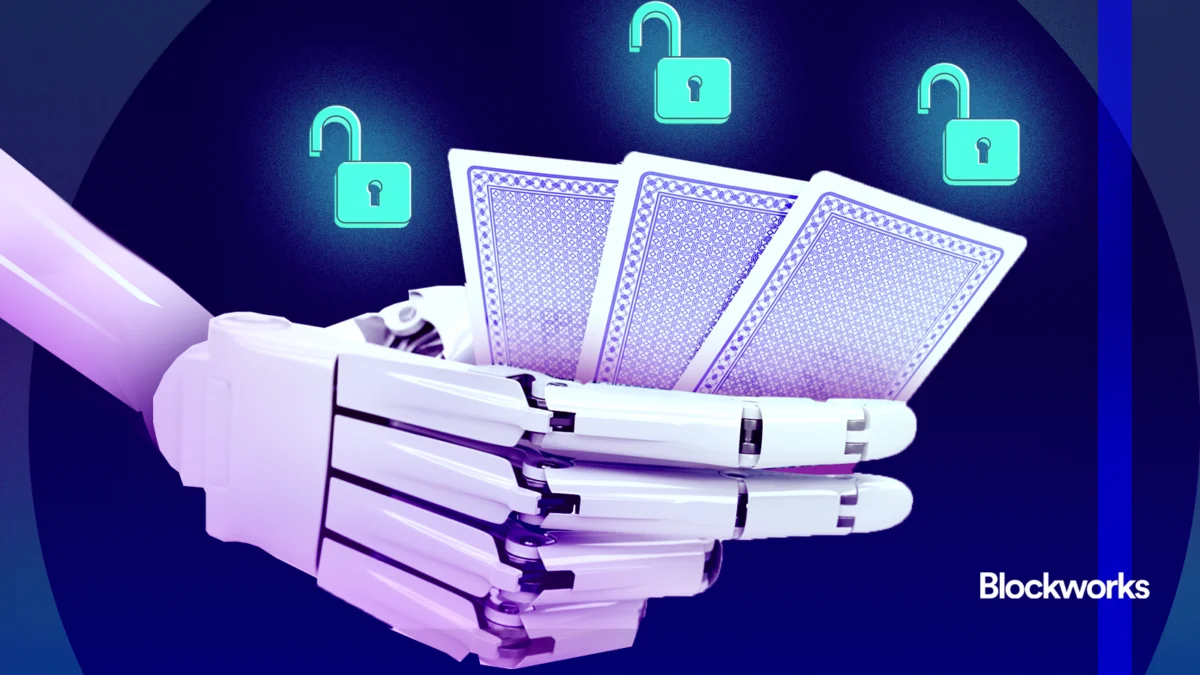
This is an expanded segment from The Breakdown newsletter, offering a deep dive into the evolution of modern betting, the dual-edged sword of prediction markets, the terrifying speed of AI-driven smart contract exploits, and the unique vulnerabilities facing the cryptocurrency ecosystem.
The First Prop Bet
Financial author Michael Lewis dates the modern phenomenon of "betting on everything" back to 1985, an era when placing a wager required picking up a telephone to call a sportsbook in Las Vegas. That was the year Caesars Palace took a calculated risk and offered 20-1 odds on William "The Fridge" Perry, a massive rookie defensive lineman for the Chicago Bears, scoring a touchdown in the Super Bowl.
Perry delivered, executing a one-yard rumble into the end zone. Caesars lost at least $250,000 on the wager—a substantial sum at the time. Yet, despite the financial hit, the president of Caesars famously declared it the best bet the casino had ever taken, noting that the resulting publicity far outweighed the cash lost.
Prominent bookmaker Jimmy Vaccaro recalled to Lewis how the fallout unfolded the very next day. Phones started ringing off the hook from major cities across the country as word spread about Perry’s touchdown.
Before The Fridge lumbered into the end zone, Super Bowl betting options were severely restricted, typically limited to just three choices: picking the outright winner, betting on the total combined points, or wagering on the halftime score. Today, bookmakers handle a staggering volume of alternative propositions—known widely as prop bets—ranging from the outcome of the coin toss to the content of the game’s first commercial or whether a wardrobe malfunction will occur. Bookmakers now write more business on these creative props than they do on the actual outcome of the games themselves.
As it turned out, that memorable Super Bowl score was the final offensive touchdown of Perry’s career, despite him playing another ten seasons primarily on defense. But those three short rumbles across his career laid the groundwork for today’s expansive ecosystem of prediction markets, where participants can wager on virtually any conceivable future event, even though the vast majority of betting capital still gravitates directly toward sports.
A Look Inside Political Markets
To understand just how sophisticated prediction markets have become, one need only look at the habits of researchers like Andy Hall. A political science professor at Stanford University, Hall has grown so accustomed to the rapid-fire adjustments of modern prediction markets that he now checks them right before a major play during sports broadcasts, noting that the market odds often shift several seconds before the live television feed actually shows the event.
Hall’s primary academic interest, however, lies in how these prediction markets are fundamentally altering the way the public monitors and understands politics. He expresses a cautious optimism that the booming sector could ultimately prove to be a public good, arguing that prediction markets possess the potential to offer a clearer, shared picture of highly complex political environments by aggregating diverse information rapidly.
At the same time, Hall harbors deep concerns about the strange feedback loops these markets can create. As a prime illustration, he points to a past Virginia Attorney General race where unverified exit poll claims circulated on social media platforms. Those rumors moved prediction markets, which in turn prompted social media users to post breaking news alerts about the movement within the markets. That sudden reporting drove prediction markets to shift even further, creating a self-fulfilling loop of misinformation that offered little benefit to the broader public.
Furthermore, Hall notes that prediction markets are beginning to raise profound questions regarding what it actually means to "win" an election. In a world where prediction markets are increasingly treated by the public as arbiters of truth—such as instances where platforms like Kalshi are cited as having "called" municipal elections before official results are finalized—resolving these edge cases becomes exceedingly fraught. If a platform calls a razor-thin presidential election in 2028, the societal and political consequences could prove difficult to navigate. Similar disruptions have already been observed in other domains, such as bettors altering digital maps of frontlines in active conflict zones like Ukraine.
AI Agents are Very Good at Hacking Smart Contracts
While prediction markets grapple with social feedback loops, the technological foundation of digital assets faces an entirely different kind of stress test from artificial intelligence. Researchers at Anthropic recently revealed the results of an experiment testing how effectively AI agents could exploit smart contracts. The findings demonstrated that these agents successfully exploited 56% of smart contracts that contained known vulnerabilities.
More impressively—and considerably more worryingly—when the same AI agents were tested on 2,849 smart contracts with no known vulnerabilities, the systems successfully discovered two novel "zero-day" exploits. This milestone demonstrated that advanced agents are capable of discovering entirely new, previously unknown vulnerabilities autonomously.
Even more alarming is the velocity at which these capabilities are advancing. According to the researchers, the exploit revenue generated by frontier models has been doubling roughly every 1.3 months over the past year. To put this pace into perspective, Moore’s Law famously describes the performance of semiconductors doubling roughly every two years. By comparison, these AI agents are doubling their capacity to uncover and execute software exploits every six weeks.
The researchers emphasized that no actual blockchains were harmed during the experiment, as the testing was conducted entirely within simulated environments. Moreover, Anthropic’s primary focus was not specifically on cryptocurrency, but rather on evaluating how adept AI agents will become at auditing and hacking code of any kind. The underlying capabilities that make agents effective at exploiting smart contracts—including long-horizon reasoning, boundary analysis, and iterative tool use—apply equally to all forms of software development.
The economic reality of this threat is equally striking. Researchers found that it costs an average of just $1.22 for an AI agent to exhaustively scan a contract for vulnerabilities. As computational and operational costs continue to fall, malicious actors will inevitably deploy automated agents to probe any piece of code situated along the path to valuable assets, no matter how obscure or seemingly secure it may be.
Quantum Computers are Coming for Crypto First
Compounding the technological pressures facing digital assets is the looming horizon of quantum computing. The existential risk that quantum computers pose to cryptography is frequently dismissed with the casual assertion that once quantum technology reaches that level of capability, all traditional digital security will be at risk, meaning society will have much larger problems to worry about.
However, recent discussions on industry podcasts like Epicenter highlight why the cryptocurrency ecosystem is uniquely and acutely vulnerable compared to traditional web infrastructure. Stefano Gogioso explained that the classical cryptography community has been actively preparing for the quantum era for years, maintaining backup protocols ready to deploy if a breakthrough were to happen suddenly. In traditional Web2 environments, centralized authorities and institutional intermediaries—such as banks—maintain the operational flexibility to simply halt transactions for a day or two while emergency measures are implemented.
In contrast, decentralized crypto ecosystems face two distinct hurdles. First, blockchains rely on novel applications of cryptography that have received relatively little academic attention regarding quantum resistance. Second, even if technical solutions were readily available, the decentralized nature of crypto governance—fraught with competing voices, opinions, and vested interests—makes updating foundational infrastructure an immensely challenging undertaking.
More fundamentally, Gogioso points out that the entire design philosophy of public blockchains was built to make transaction data transparent and accessible to everyone at all times. Once quantum computers are fully operational, they will theoretically possess the capability to decrypt the entire historical transaction record of every public blockchain. For individuals who have relied on privacy-focused networks to obscure financial transactions, the implications could be severe. Gogioso suggests that privacy-centric architectures like Monero are already effectively compromised over the long term.
Furthermore, governments are expected to leverage quantum computing power to audit historical blockchain records, identifying individuals who failed to report capital gains taxes on digital asset earnings and issuing retroactive tax bills. Additional hypothetical scenarios include uncertainty surrounding early accumulated assets, such as determining whether a movement of Satoshi Nakamoto’s foundational Bitcoin holdings originates from the creator or simply an actor wielding quantum decryption tools. Beyond individual taxation or asset tracking, geopolitical rivals could target Bitcoin not necessarily for financial gain, but to destabilize a financial instrument that has grown increasingly integrated into Western financial systems.
Perhaps the most profound prediction highlighted by experts is that quantum technology could eventually give rise to a form of permissionless, digital sovereign money capable of solving the traditional double-spending problem without relying on the exploit-prone models of distributed consensus currently utilized by blockchains.
Despite these recognized threats, industry response remains vastly disproportionate to the risk. Commentator John Lilic notes that given the multi-trillion-dollar market capitalization of the broader cryptocurrency sector, even a 1% probability of catastrophic loss implies that the industry should be investing tens of billions of dollars into quantum-resistant infrastructure development. Instead, current capital allocation toward neutralizing the quantum threat remains minimal.





Comments (0)