



Financial markets continued their steady recovery from earlier weekly losses, driven by shifting macroeconomic signals, a softening private-sector job market, and shifting expectations regarding future monetary policy. Across traditional financial markets and digital assets alike, investors weighed fresh economic data against shifting corporate sentiment and sector-specific catalysts. In the cryptocurrency ecosystem, attention remained sharply focused on major macro developments, shifting capital flows, and the post-launch performance of prominent new layer-1 networks navigating their initial weeks in the public spotlight.
Risk appetite showed noticeable signs of improvement as traditional equities and cryptocurrencies clawed back ground lost during the sudden selloff earlier in the week. Bitcoin led the digital asset recovery with a solid daily advance, while major equity benchmarks such as the S&P 500 and the Nasdaq posted modest gains. Meanwhile, traditional safe-haven assets experienced a slight pullback as investors grew more comfortable re-engaging with risk-on assets. The broader market uptick was largely catalyzed by a surprise contraction in private sector employment, which fundamentally altered rate expectations heading into the final stretch of the year.

Macroeconomic Shifts and Corporate Pressures
The catalyst for the mid-week market rebound arrived via the latest labor market indicators, which revealed an unexpected decline in private sector employment. Private employers shed tens of thousands of jobs during the month, falling well short of Wall Street’s consensus expectations for steady job growth. This unexpected cooling in the labor market immediately shifted trader sentiment regarding the path of monetary policy, pushing the implied probability of an upcoming interest rate cut up significantly compared to readings from the previous week. Lower interest rate expectations historically tend to ease financial conditions, providing a supportive backdrop for growth-oriented sectors and risk assets, including digital currencies.
At the same time, individual corporate performances continued to exert influence over traditional equity indices. The technology-heavy Nasdaq faced headwinds from high-profile corporate names, most notably Microsoft. Shares of the technology giant drifted lower following reports that the company had adjusted its internal sales quotas for artificial intelligence software downward, reflecting corporate adoption rates that have thus far materialized more slowly than initially anticipated. Despite the pressure on specific bellwether stocks, the broader equity and crypto markets managed to absorb the news and maintain their upward momentum.

Crypto Sector Performance and Institutional Flows
Performance across the various digital asset sectors presented a mixed picture, with most segment indices finishing the day in positive territory. The artificial intelligence crypto sector outperformed the broader market by a wide margin, propelled by strong upside momentum in prominent network tokens ahead of widely anticipated network supply-reduction events. Layer-1 networks also posted strong gains, buoyed by major foundational assets that continue to command the lion’s share of sector capitalization and trading volume. Conversely, alternative sectors experienced varied fortunes; the gaming segment remained under pressure, continuing a challenging trend that has defined its performance over the course of the year. Meanwhile, meme-based tokens, which typically act as highly reflexive proxies for broader market sentiment during rallies, lagged behind other sectors despite modest overall gains, weighed down by localized pullbacks in several prominent community-driven tokens.
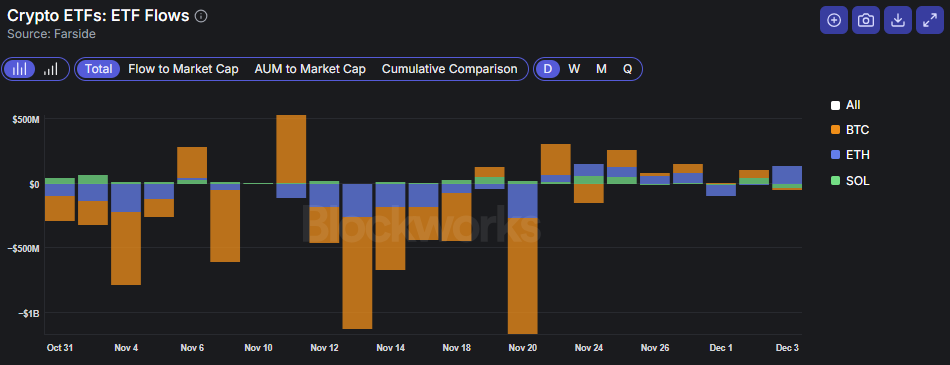
Institutional capital flows revealed a more cautious underlying sentiment among larger market participants, contrasting with the optimistic price action across spot markets. After a brief multi-day streak of net positive inflows, exchange-traded products tracking the leading digital asset saw capital reverse direction, recording minor net outflows. Conversely, exchange-traded products tied to the second-largest cryptocurrency experienced a robust rebound in inflows following a brief period of redemptions earlier in the week. Even with these intermittent inflows, aggregate institutional investment flows have yet to demonstrate definitive, long-term conviction when viewed against the substantial net capital withdrawals recorded across the broader market during the preceding month.

Market Update: Monad Ecosystem Performance
Approximately a week and a half following its highly anticipated token generation event, the market has begun taking a closer look at the actual on-chain performance and foundational adoption metrics of the Monad network. Following an initial post-launch price rally, the native asset MON experienced a cooling-off period, retracing a portion of its weekly gains while remaining moderately above its initial coin offering valuation. On the decentralized finance front, total value locked across the network has steadily climbed, establishing a notable baseline of capital deployment as users and developers explore the freshly minted environment.
A significant portion of the total value locked within the network remains heavily concentrated in specific stablecoin assets. A substantial share of the capital sits within specialized stablecoin deployments, actively being farmed across various native protocols to capture ecosystem-level incentive programs. Assets are being actively deployed across prominent decentralized lending markets and automated market makers, where yields are heavily supplemented by native token incentives rather than being driven entirely by organic borrowing demand. While liquidity mining incentives remain a standard and effective mechanism for bootstrapping early-stage network liquidity and drawing initial attention, industry observers note that the ultimate test for the network will be its ability to foster native applications capable of generating sustainable, organic economic yield once temporary incentive programs eventually taper off.
Among native consumer applications, decentralized token launchpads have emerged as breakout leaders in terms of account creation and transaction volume since day one. However, the long-term staying power of these early launchpads remains uncertain. Only a small fraction of the tokens initially deployed through these community platforms has managed to cross significant market capitalization milestones, with high-profile community tokens experiencing substantial pullbacks from their initial trading highs. Such price action underscores the speculative nature typical of early-stage meme economies on newly launched infrastructure chains.
At the same time, other homegrown infrastructural and application-layer projects are steadily gaining traction. Liquid staking tokens have begun establishing themselves as core primitives within the network’s financial stack, while alternative decentralized exchanges are carving out market share alongside established protocols. Additionally, on-chain gaming titles and interactive experiences have quietly accumulated meaningful usage numbers, ranking near the top of ecosystem leaderboards for daily active accounts and transaction counts.

On a purely infrastructural level, transaction activity presents a promising picture for a network in its infancy. The chain has successfully generated significant fee revenue over its initial operational weeks, outpacing several established layer-1 competitors in transaction throughput and fee generation. Daily transaction counts and active wallet addresses have maintained steady, respectable levels, reflecting genuine early engagement from the Web3 community.
However, detailed cross-chain bridge data highlights a notable trend regarding capital retention. A substantial majority of the assets initially bridged into the network have subsequently flowed back out to alternative chains. This movement suggests that a significant cohort of early network participants may be engaging in transient yield farming and cross-chain capital rotation rather than establishing permanent roots within the ecosystem.

For Monad, the upcoming phase of development will center entirely on economic conversion. The central challenge moving forward will be determining whether the network can successfully transform speculative early-stage inflows into sticky, long-term liquidity and sustained economic activity, cementing its place within the competitive layer-1 landscape.





Comments (0)