


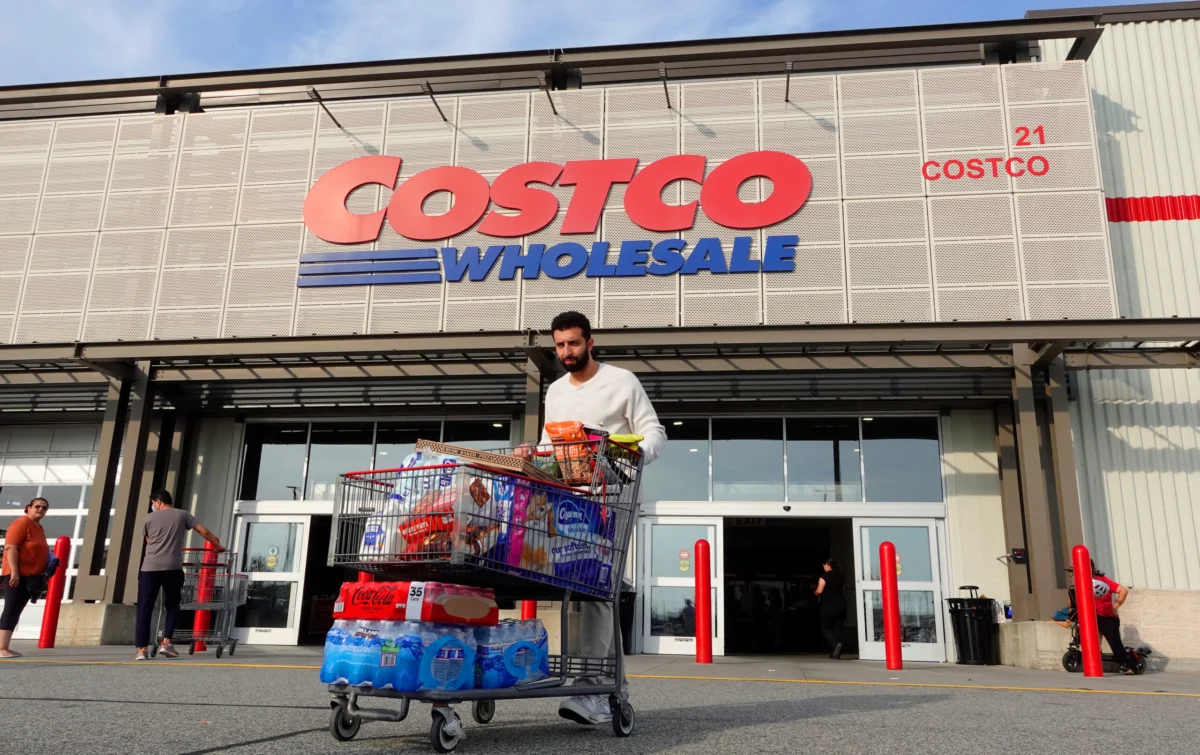
A recent wave of high-profile technological disruptions across critical infrastructure sectors has prompted a wave of consumer anxiety, driving shoppers across the United States to stock up on emergency supplies and bulk goods. According to a new research note from financial services firm Mizuho, warehouse retail giant Costco is experiencing a notable sales lift as a result of these unfolding events.
The surge in demand highlights a growing sensitivity among consumers regarding digital reliance and infrastructure vulnerability. In the final week of October, Mizuho estimates that Costco’s U.S. comparable sales, excluding gasoline, jumped significantly, rising between 11% and 12%. This marked a sharp acceleration from the retailer’s more typical performance during the first three weeks of October, which saw a still-solid comparable sales increase of 6% to 7%. Overall, Costco reported an 8.1% increase in comparable sales for the full month.
Financial analysts at Mizuho report that this stronger-than-average pace of consumer spending is continuing unabated through November. Evidence of the elevated demand can be seen online, where 21 of the 26 high-ticket inventory generators tracked by the firm on Costco’s official website had completely sold out as of Sunday night. Despite the positive retail momentum, shares of Costco were trading roughly flat to lower during Wednesday morning sessions, hovering at around $1,107 apiece.
The underlying catalyst for this consumer behavior appears to be a string of unexpected technological failures that rattled various sectors of American life over a compressed period. Mizuho analyst David Bellinger pointed to these cumulative incidents in a research note published on a recent Monday.
"Consumer anxiety following the Microsoft Outlook outage, the ground stoppage for all U.S. airline flights, and apocalyptic concerns flaring up across social media have all contributed to increased emergency prep sales at COST," Bellinger wrote in the note.
The sequence of events began on a Thursday with a major service disruption affecting Microsoft’s Outlook and Teams platforms, impacting corporate and personal communications alike. The following day, the situation escalated when the Federal Aviation Administration (FAA) issued a sudden ground stop that halted flight departures nationwide, stranding travelers and creating widespread logistical headaches.
The disruption continued into the new work week. On Monday, a software failure at major financial institution JPMorgan Chase resulted in significant banking transaction delays for customers. Concurrently, a separate system outage forced delays for United Airlines flights, compounding the earlier aviation sector woes. Adding to the unease, the National Security Agency (NSA) disclosed on Tuesday that its internal communication network had experienced a temporary system outage.
Industry and government officials have moved quickly to contextualize the technical glitches. The outages appear to coincide with a broader, urgent industry push to patch and recover from software vulnerabilities that have been newly uncovered or accelerated by advanced artificial intelligence tools. Federal and corporate officials have repeatedly emphasized that there is no underlying reason for public panic, framing the technical failures as separate, manageable incidents rather than a coordinated systemic collapse.
However, the reassurance from authorities has done little to quell online chatter. On platforms like TikTok and various other social media networks, viral posts and videos urging everyday citizens to stock up on non-perishable food, bottled water, and emergency equipment have gained significant traction, fueling an atmosphere of preparedness that has translated directly into foot traffic and digital orders for warehouse retailers.
In response to these retail trends and Costco’s demonstrated resilience and upside potential, Mizuho adjusted its financial outlook for the company, raising its price target on Costco shares to $1,150 from its previous target of $1,100 while maintaining a buy-equivalent outperform rating. The financial firm projects that Costco’s U.S. comparable sales could comfortably exceed 10% growth for the month of November.
Beyond Costco, Mizuho anticipates that other major retail players will capture a share of this emergency-driven consumer spending. The firm expects Walmart’s warehouse division, Sam’s Club, to benefit similarly as shoppers look to bulk-buy pantry staples and long-term provisions. Additionally, home improvement giants Home Depot and Lowe’s are positioned to see gains as consumers purchase hardware, backup generators, and other home emergency preparedness supplies.
For Costco specifically, analysts and investors will be closely watching whether this sudden surge in emergency shopping has successfully translated into an influx of new member sign-ups. Those metrics are expected to come into sharper focus when the warehouse retail corporation officially reports its financial results for the first quarter of fiscal 2027 on December 10.




Comments (0)