


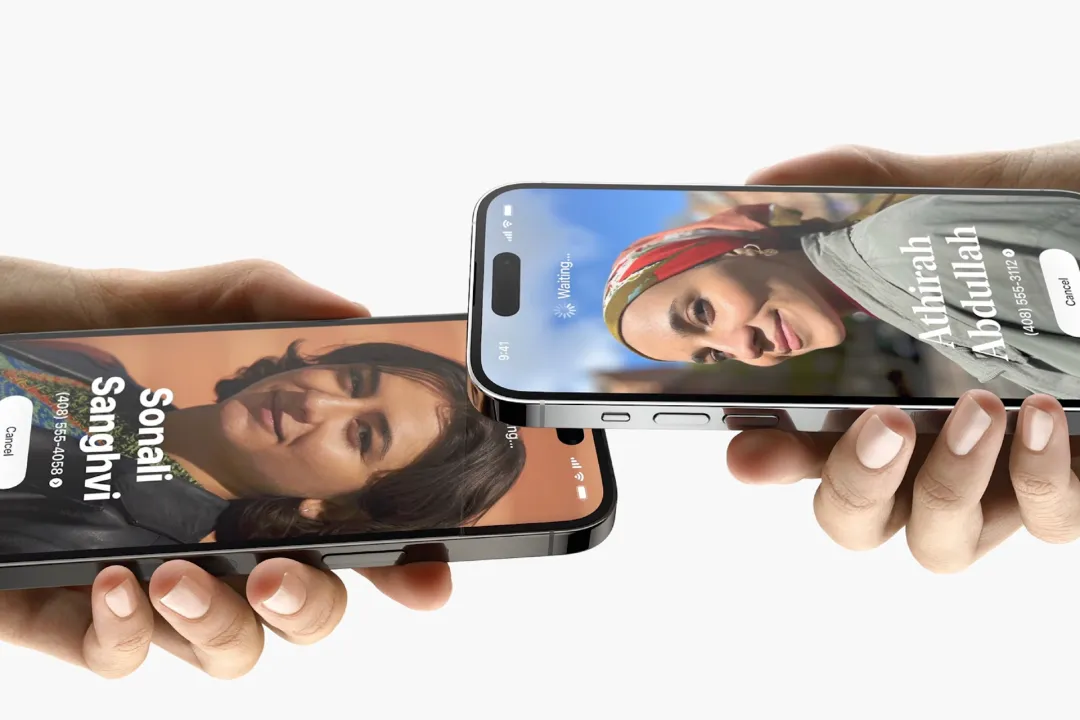
Apple is facing a high-stakes legal challenge in India, where a United States-based startup has filed a massive lawsuit alleging that the iPhone maker’s popular NameDrop feature infringes on its patented proximity-based contact-sharing technology. GG Technologies, the creator of the networking app StayTouch, is seeking ₹15 billion, which amounts to approximately $161.86 million, in damages alongside a comprehensive judicial injunction to block the sale and importation of the affected devices.
The legal confrontation underscores the escalating global friction between major technology conglomerates and innovative startups over intellectual property rights. According to court documents reviewed by industry observers, Santa Monica-headquartered GG Technologies initiated the lawsuit in the Bombay High Court in October following the breakdown of pre-institution mediation proceedings. Under Indian commercial litigation rules, parties are generally required to engage in pre-institution mediation before filing formal lawsuits, a step that GG Technologies pursued starting in April before declaring the talks unsuccessful in September.
The core of the dispute revolves around NameDrop, a native feature that Apple introduced as part of its iOS 17 software update in June 2023. The functionality officially rolled out to users later that year, allowing individuals to effortlessly exchange contact information simply by bringing two compatible iPhones—or an iPhone and a supported Apple Watch running watchOS 10.1—into close physical proximity. GG Technologies contends that this seamless method of transferring data directly violates its Indian patent, which covers technology designed to facilitate contact exchanges between nearby mobile devices without the cumbersome requirement of manual pairing.
The startup’s journey to secure these intellectual property rights spans several years. Founded in 2018 by Gaurav Goel, an alumnus of the prestigious Indian Institute of Technology (IIT) Delhi and a former Goldman Sachs investment banker, GG Technologies developed the StayTouch app as a modern, digital alternative to traditional paper business cards. The application, which is currently available for download on both iOS and Android platforms, lets users exchange contact details by bringing their phones close together—the very concept that would later characterize Apple’s NameDrop feature.
In 2019, the same year it launched StayTouch, GG Technologies first sought patent protection for the underlying technology in the United States. Following that initial filing, the company pursued international protections, filing its Indian patent application in 2021. The effort culminated in July 2024 when the startup officially received its Indian patent, providing the legal foundation for the massive infringement lawsuit now unfolding in the Bombay High Court.
In its extensive 781-page court filing, the startup has laid out detailed arguments regarding how Apple’s native software encroaches upon its intellectual property. GG Technologies is urging the high court to issue an injunction to restrict the usage of the NameDrop feature across iOS. Furthermore, the company wants the court to bar Apple from selling, distributing, or importing any iPhones and Apple Watches preloaded with NameDrop into the Indian market. While the high-profile case has been formally filed, it has yet to be officially listed for an initial court hearing.
This legal battle in India is not an isolated front for Apple. The Cupertino-based tech giant is fighting a simultaneous multi-jurisdictional war over the same technology. Earlier in April, GG Technologies initiated a parallel patent infringement lawsuit against Apple in the United States. That domestic legal action quickly expanded when the startup brought the matter before the U.S. International Trade Commission. Demonstrating the gravity of the allegations, the International Trade Commission officially opened an investigation into Apple’s alleged patent infringement in August following a formal complaint filed by the startup. In that U.S. proceeding, GG Technologies is aggressively pursuing an exclusion order that could block the importation of infringing Apple devices into the American market, alongside strict prohibitions against their continued commercial sale.
Legal representatives and industry analysts are closely monitoring these concurrent proceedings, as an adverse ruling in either major market could force Apple to alter core software functionalities that rely on proximity-based sharing. Despite the mounting pressure from the courts in both India and the United States, Apple has maintained a tight-lipped stance, offering no response to media requests for comment regarding the ongoing litigation.
The timing of the Indian lawsuit adds a layer of complexity for Apple, which has increasingly elevated India’s strategic importance within its global operations. In recent years, India has transformed rapidly from a purely consumer-driven market into a critical manufacturing hub situated outside of China. Apple has ramped up its local production capabilities to the extent that industry reports indicate a significant portion of all iPhones are now manufactured within the country. Alongside its manufacturing footprint, Apple has systematically expanded its direct retail presence across the South Asian nation, opening flagship branded stores to capture the enthusiasm of local consumers.
Despite this robust expansion and the growing popularity of premium smartphones in the region, iPhones still account for less than 10% of total smartphone shipments in India. This relatively modest market penetration means the country represents a massive runway for future growth, making any potential judicial restrictions on sales or flagship features a sensitive matter for Apple’s executive leadership team in California. As the legal teams for both GG Technologies and Apple prepare for their respective day in court, the outcome of the Bombay High Court proceedings and the U.S. International Trade Commission investigation could establish a significant precedent for how tech giants implement and protect proximity-based sharing innovations in an increasingly competitive global marketplace.





Comments (0)