



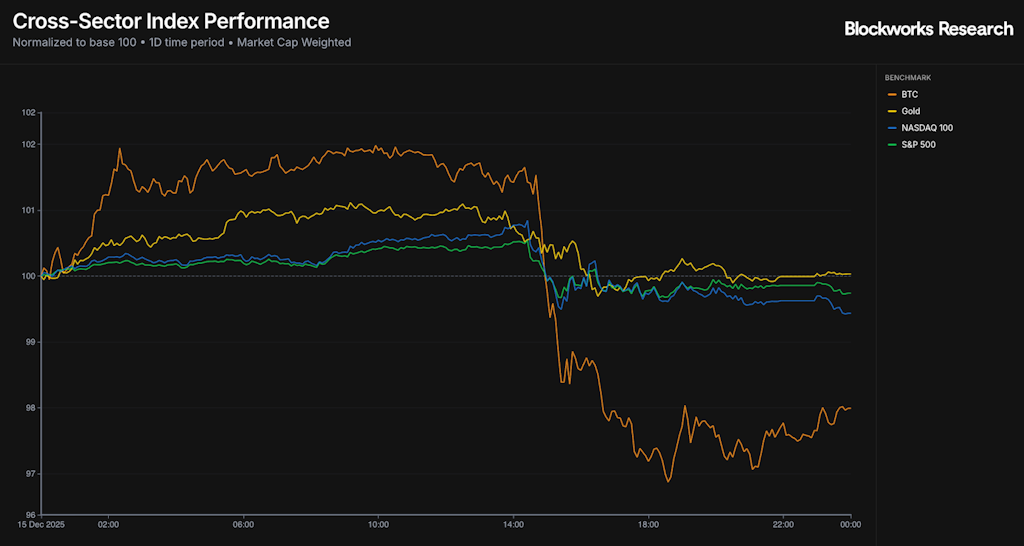
Financial markets shifted into a defensive risk-off posture as the trading week commenced, with Bitcoin slipping below the $86,000 threshold and underperforming both traditional equities and gold. The broader digital asset market faced headwinds as investors adopted a cautious stance ahead of a heavily packed economic data calendar closing out the final full trading week of the year for traditional stock markets. Despite the pervasive downward pressure across major crypto assets, selective pockets of outperformance emerged, led notably by strength in decentralized lending protocols and the broader Ethereum ecosystem.

In the wider financial indices, gold remained relatively resilient, closing the day flat, while Bitcoin dropped 2.01%. Traditional equities mirrored the risk-off sentiment, with the S&P 500 dipping 0.26% and the Nasdaq 100 falling 0.57% as market participants rotated defensively across asset classes. On the macroeconomic front, market participants are bracing for crucial labor market reports, including the delayed October and November nonfarm payrolls releases. The October employment report had previously been postponed due to a brief U.S. government shutdown earlier in the quarter, elevating the importance of today’s combined data release for interest rate expectations.
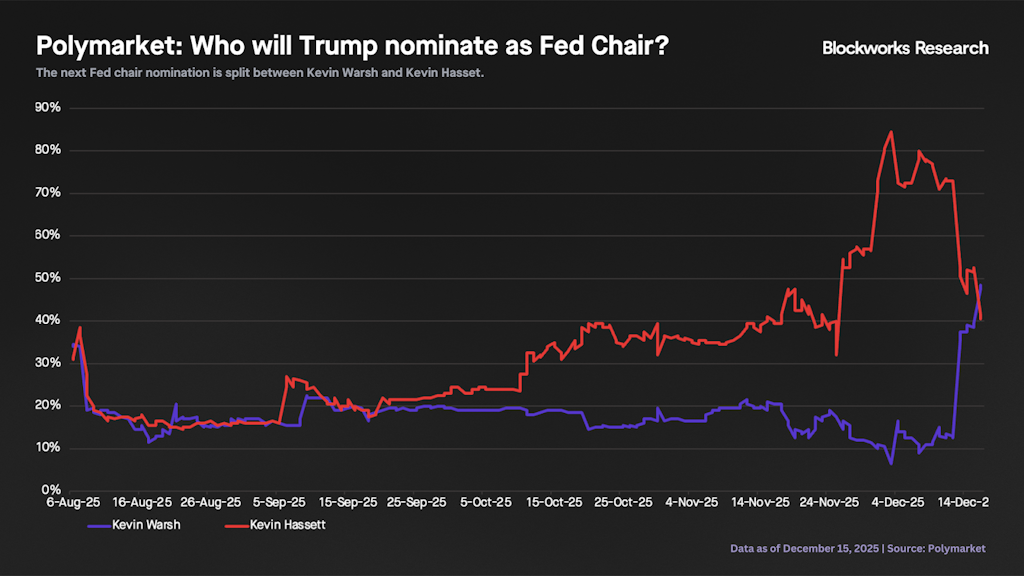
Concurrently, speculation surrounding the future leadership of the United States Federal Reserve has intensified as current Chair Jerome Powell’s term approaches its expiration in May 2026. While economic policy analyst Kevin Hassett emerged as a leading frontrunner earlier in the month, former Fed Governor Kevin Warsh has edged ahead by a narrow margin in recent speculation, highlighting a fluid race for the central bank’s helm. Regardless of the eventual appointee, market consensus largely anticipates a more dovish Federal Reserve under incoming leadership, pointing toward additional interest rate cuts in the coming year.
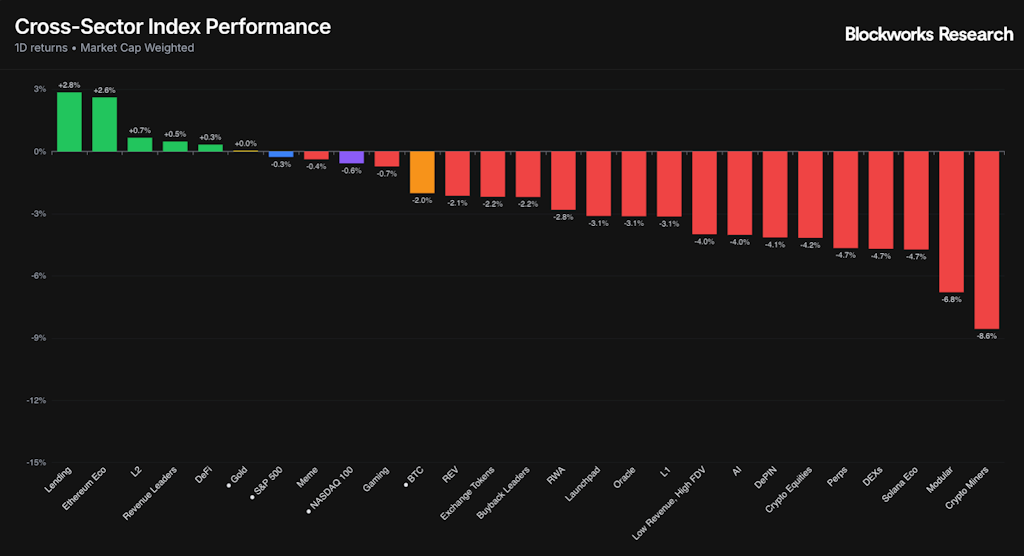
Despite the macro-driven crypto sell-off, specific sector indices demonstrated notable relative strength. The Lending index advanced 2.8%, while the Ethereum Ecosystem index rose 2.6%, decoupling from the broader market contraction. Aave led the charge within both sectors, gaining 3.0% as its foundational asset. The upward momentum followed a high-profile move by Aave founder Stani Kulechov, who swapped nearly $10 million worth of wrapped Ethereum into AAVE tokens. The sizable transaction was widely interpreted by market observers as a definitive signal of internal alignment and commitment to the token following recent governance discussions between the Aave DAO and associated core contributors.
A Defining Year for Consolidation and M&A
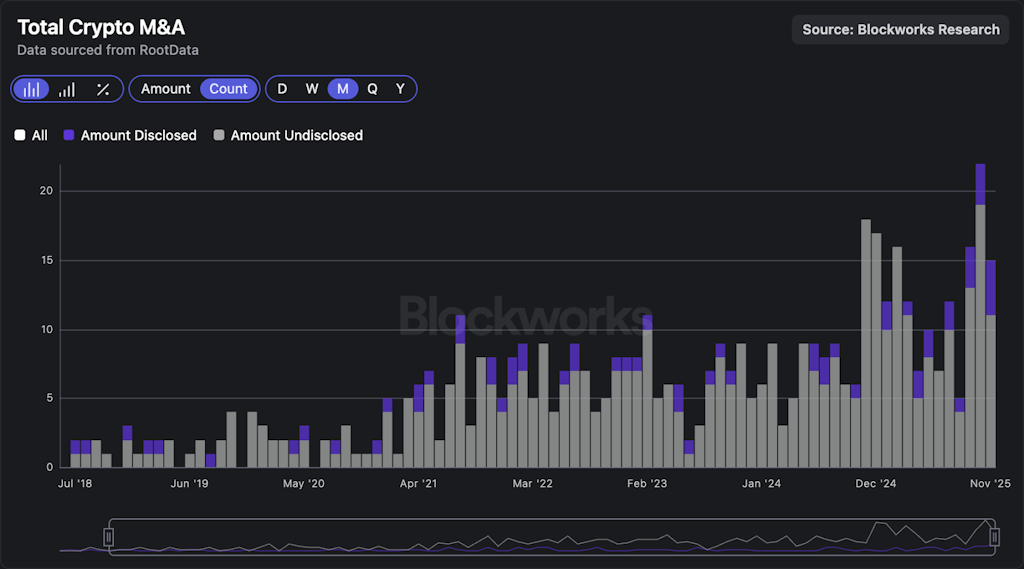
Looking ahead at the structural trajectory of the digital asset industry, market analysts point to consolidation as a defining theme, with fragmented sectors gradually coalescing around a select group of dominant platforms. Cryptocurrency mergers and acquisitions have accelerated significantly over the past year, indicating that the industry is entering a more mature phase of corporate evolution. According to data tracking from RootData, the crypto sector has recorded 143 M&A deals over the course of the year. However, transaction values remain tightly held, with financial terms disclosed in only 21 of those deals. Among the most substantial transactions noted was Naver’s acquisition of Dunamu, valued at an estimated $10.3 billion.
While corporate consolidation is widely viewed as a hallmark of a maturing financial sector, a series of high-profile M&A transactions over the past two months has cast a glaring spotlight on what many consider a fundamental structural flaw within the crypto economy: the persistent underperformance and utility deficits of digital tokens. Recent corporate maneuvers—including Pump’s acquisition of Padre, Coinbase’s acquisition of Vector, and Circle’s acquisition of the Axelar core team along with its associated intellectual property—shared a common characteristic in largely overlooking the interests of existing token holders. In the case of Pump, acknowledgement of PADRE token holders only materialized following substantial community backlash.
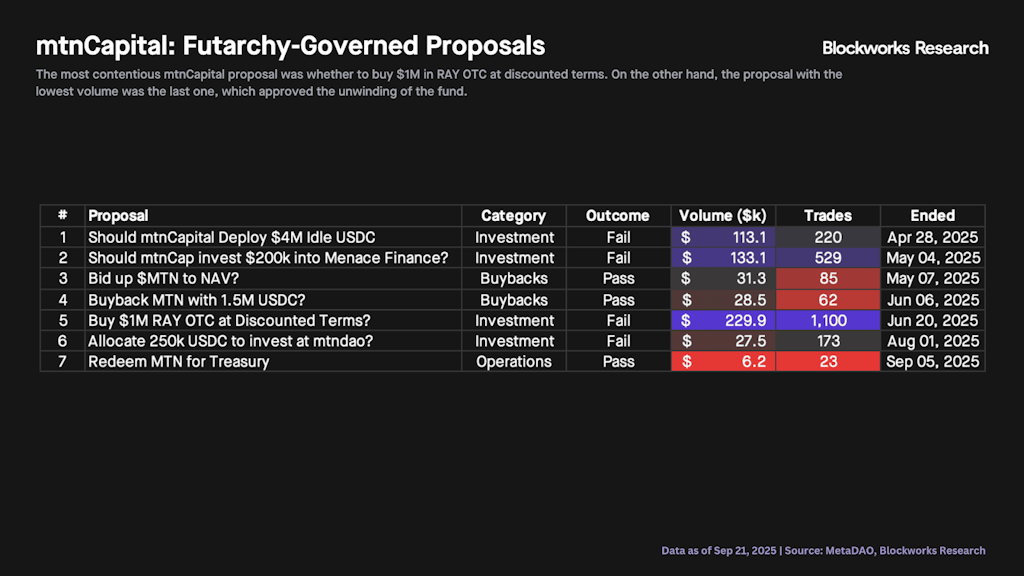
This ongoing friction has catalyzed renewed interest in governance frameworks designed to protect decentralized stakeholders. Projects such as MetaDAO have sought to address these structural shortcomings through mechanistic token protections, including the implementation of treasury clawback proposals that empower token holders to intervene as a last resort. The orderly unwinding of mtnCapital provided a live demonstration of this mechanism in action, enabling token holders to redeem their MTN holdings directly for USDC from the treasury when the underlying investment thesis failed to materialize.
Parallel to efforts aimed at fixing native crypto tokens, a competing approach seeks to bypass token volatility altogether by bridging traditional equities and primary capital formation directly onto blockchain rails. Superstate’s Opening Bell platform, for instance, facilitates the seamless movement of shares between legacy traditional markets and tokenized representations of those equities across networks like Ethereum and Solana. The introduction of Direct Issuance Programs by Superstate represents a further step in modernizing traditional capital formation. This infrastructure enables SEC-registered issuers to receive stablecoins directly into corporate wallets from verified, KYC-compliant investors, instantly issuing tokenized shares to the investor’s wallet while updating the corporate shareholder registry in real time.
Industry participants increasingly argue that the distinction between holding a native crypto token and a tokenized traditional equity will matter less over time, provided the underlying instrument conveys a clear legal claim on cash flows, underlying assets, and robust legal recourse. Both token-centric governance fixes and asset tokenization models are expected to play fundamental roles as onchain financial markets continue to evolve.
Evaluating the Sustainability of Onchain Demand
A central question confronting analysts and market participants revolves around the durability of demand generated by incentive-driven mechanisms, airdrops, and points-farming campaigns. For retail and institutional users alike, incentive structures have historically provided lucrative risk premiums and additional yield kickers for participating in emerging financial applications. For protocols and emerging networks, token incentives function as a non-cash customer acquisition expense, serving as a critical mechanism to achieve initial liquidity scale and overcome the traditional cold start problem. Eventually, however, the community rewards budgets embedded within token allocations are exhausted, leaving open the question of whether a financial product can sustain organic viability once artificial incentives are removed.
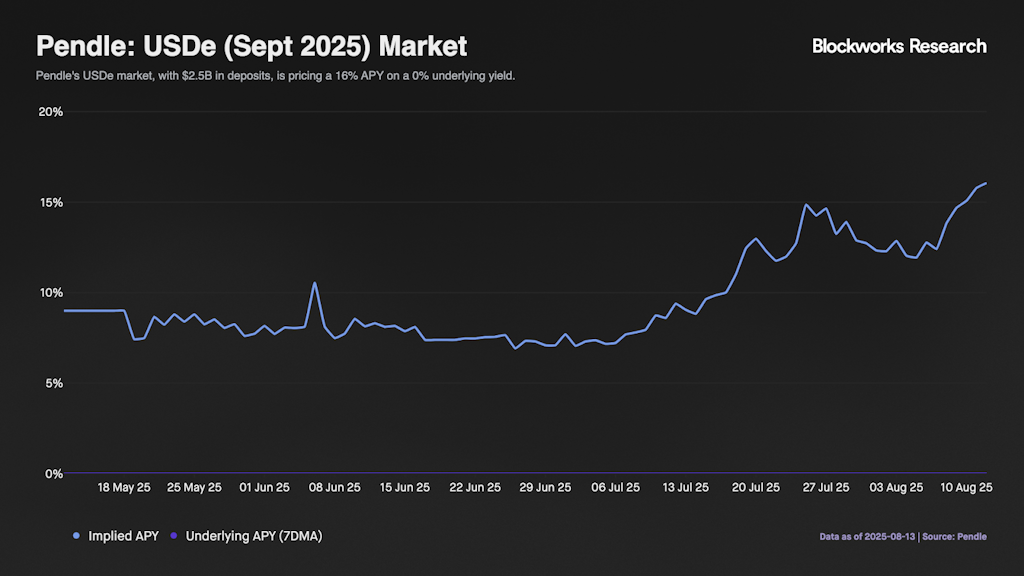
A prominent case study illustrating this dynamic involves the market for synthetic dollar assets on yield-trading platforms like Pendle. Earlier cycles saw the Pendle market for Ethena’s USDe accumulate a 70x points boost ahead of its maturity date. Despite offering zero underlying yield on the instrument itself, the implied yield on the market surged past 16%, drawing in over $3 billion in total deposits. Users were able to capture fixed yields on principal tokens while looping positions against variable borrowing costs, supported heavily by the distribution of ENA incentives.
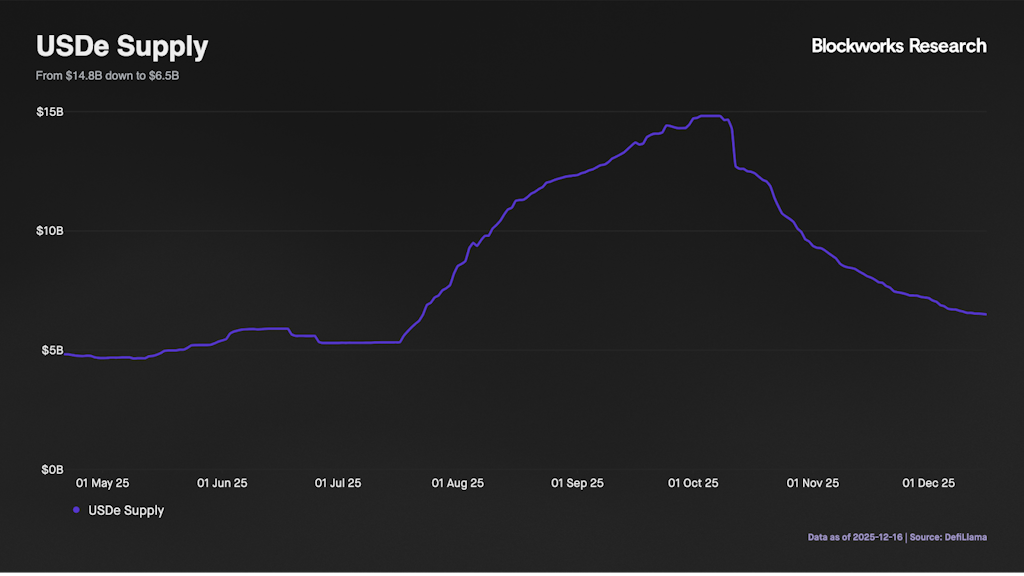
This dynamic propelled USDe’s total supply from roughly $5 billion toward $15 billion. However, following the maturity of over $5 billion in instruments, the conclusion of a major points campaign, and shifts in broader crypto market conditions—such as a compression in funding rates and intermittent market liquidations—the supply of USDe subsequently contracted back down to approximately $6.8 billion.
Similar patterns have played out across other newly launched assets. Kinetiq’s kHYPE asset attracted substantial deposits ahead of its token generation event, with Pendle markets pricing implied yields as high as 15% against a modest 20% underlying base staking yield. The market eventually captured over 40% of the total kHYPE supply. Yet, following the token generation event and the expiration of the maturity window, the supply of kHYPE contracted by 40%.
More recently, emerging protocols such as USD.AI—which aggregates onchain stablecoin liquidity to fund real-world GPU infrastructure financing—attracted over $600 million in deposits in a compressed timeframe. Demand for the protocol’s airdrop exposure was so intense that participants facing deposit caps bid the stablecoin above its intended peg by $0.04 on secondary markets. Pendle markets for USD.AI similarly experienced surging implied yields reaching up to 30% against an underlying yield of virtually zero, with over 80% of the token supply utilized on the platform.
Market analysts continue to scrutinize whether these elevated yields can maintain their appeal once incentive programs conclude and protocols must rely entirely on organic revenue generated from their underlying loan books. While incentive programs remain an effective tool for protocols seeking rapid user acquisition and bootstrapping initial liquidity, capital within the digital asset ecosystem remains fluid, continually rotating toward the most attractive risk-adjusted returns available across decentralized markets.





Comments (0)