


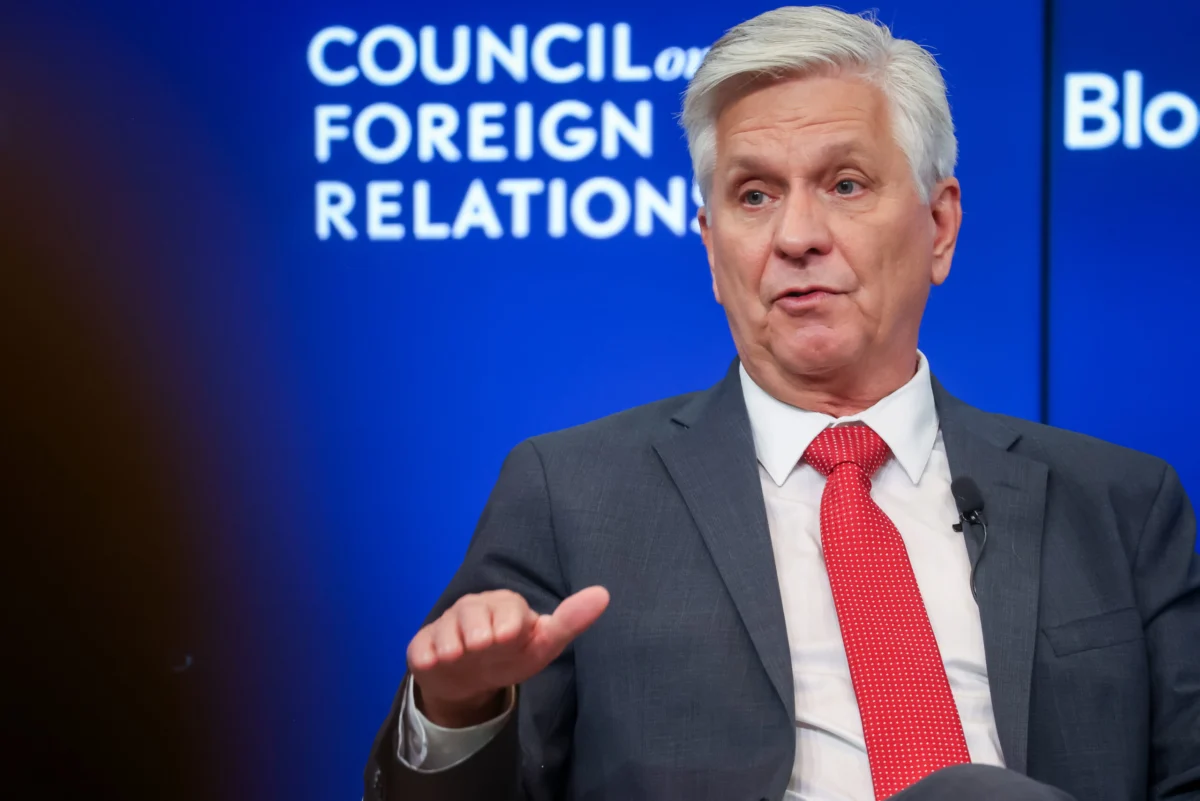
Speaking in London during a series on international economics, the policymaker said he is leaning toward a rate increase in December even if the upcoming October inflation data comes in softer than expected. Furthermore, Waller stated that he would support more robust action if the incoming readings come in higher than currently forecast by economists and market participants.
In that case, Waller explained, a 50-basis-point hike in the benchmark policy rate should be seriously considered at the central bank’s upcoming policy meeting in December. Hiking by only 25 basis points under those circumstances, he argued, would put the institution’s hard-earned credibility at risk—a hazard he is not eager to take on.
Waller noted that Federal Reserve communications prior to and during the October policy meeting have already led financial markets to price in additional rate hikes. Following through on those clear communications, Waller added, is what remains critically important, even if the subsequent rate increases are implemented intermittently rather than at every single gathering.
When this communication is clear and credible, what really matters is that those anticipated hikes are eventually carried out, Waller observed. He clarified that it is not strictly necessary, for example, to raise borrowing costs at consecutive meetings to achieve the desired macroeconomic effect. If, however, the promised hikes are not ultimately carried out, markets will quickly reduce their expectations of rate hikes, causing market rates to immediately fall. Such an outcome, he warned, would loosen monetary policy in an undesirable way just as the central bank is trying to cool inflationary pressures.
Waller added that higher interest rates will be needed sooner rather than later to keep the broader economy on a sustainable trajectory. While the precise timing of the individual hikes matters less, ensuring that the promised monetary tightening is implemented within a reasonable period of time is vital for anchoring long-term inflation expectations, he said.
The Federal Reserve’s path forward has been a subject of intense debate among policymakers and market participants alike. In its recent decision to pass on an October rate hike, the rate-setting Federal Open Market Committee stated that the accumulation of more information will help guide the proper policy path needed to bring inflation sustainably back down to target levels. However, that policy decision was far from unanimous. Governor Lisa Cook and Cleveland Fed President Beth Hammack both dissented from the majority, signaling underlying divisions within the central bank regarding the immediate pace of monetary normalization.
To provide further clarity on the economic trajectory, the Bureau of Labor Statistics is scheduled to release the October reading on the consumer price index on Tuesday. This report serves as one of the final major inflation updates before the central bank holds its next scheduled policy meeting on December 8 and 9.
Since the October policy decision, multiple Federal Reserve officials have continued to counsel patience while strongly emphasizing the absolute necessity of bringing inflation back down to the central bank’s official 2% target over time. Despite Waller’s aggressive stance on potential larger hikes, broader financial markets are currently pricing in a better than 80% chance of a standard December quarter-point hike, while assigning virtually no probability to a half-percentage-point move, according to data from CME Group’s FedWatch tool.
Other regional Federal Reserve leaders have similarly voiced caution about the risks of premature easing or letting economic pressures mount unchecked. Chicago Fed President Austan Goolsbee warned on Monday that the central bank has to be careful not to let the broader economy run too hot. Once an economy gets overheated, Goolsbee explained, it becomes extremely painful to get rid of that kind of persistent overheating through subsequent policy interventions.
In his comprehensive remarks addressing the broader macroeconomic backdrop, Waller characterized the United States economy as currently growing at a healthy and sustainable pace. He pointed to a labor market that has also remained solid, even if it is not excessively dynamic within the current low-hire and low-fire operational climate. This resilient economic foundation, Waller suggested, provides the central bank with the necessary room to maneuver as it evaluates how much additional monetary tightening will be required in the months ahead.


Comments (0)