



Artificial intelligence is a genuinely transformational technology that is well worth the capital and strategic effort required to adopt it, but investors must exercise strict selectivity when funding the underlying infrastructure, according to the head of one of the world’s largest global banking institutions.
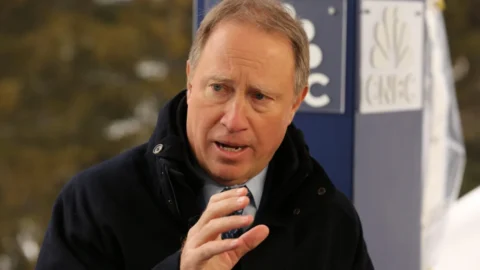
Speaking in an interview with CNBC’s Dan Murphy, HSBC Chief Executive Officer Georges Elhedery described artificial intelligence as a powerful catalyst capable of fundamentally re-engineering and reimagining corporate operations, internal activities, and client services across the financial sector.
Elhedery emphasized that the technology is poised to shift significant operating power directly into the hands of workforce personnel by delivering unprecedented levels of operational productivity. He noted that the sweeping technological shift is set to completely transform the bank’s internal architecture, affirming that HSBC is firmly committed to its ongoing adoption journey.
However, when the conversation shifted from software and operational integration to the physical infrastructure underpinning the artificial intelligence boom—specifically data centers—the banking executive cautioned against a broad, uncritical approach to investment, advising a far more discerning strategy instead.

Elhedery stressed that market participants must carefully evaluate the quality of tenancy agreements and the pricing terms of individual contracts before committing capital. He noted that not all infrastructure contracts share the same level of financial soundness or operational viability, warning that some arrangements could harbor hidden challenges that investors should think twice about supporting strongly.
Headquartered in London, HSBC holds a massive footprint in international finance. According to data compiled by S&P Global last year, the institution ranks as the seventh-largest bank globally and stands as the single largest lender operating in Europe, boasting a balance sheet with assets valued at close to $3 trillion. Given its immense scale, HSBC occupies a unique dual position in the modern digital economy, acting simultaneously as a major financier of large-scale technology infrastructure and an active operator of data centers.
The bank’s strategic outlook explicitly highlights this technological intersection. In its comprehensive 2025 annual report, HSBC outlined its ambition to establish itself as the premier banking partner for fast-growing transition ecosystems, pointing out that its expansive corporate customer base directly includes businesses operating within data centers and the broader artificial intelligence sector.
Data center campuses—vast facilities packed with the high-powered servers required to run complex cloud computing networks and generative artificial intelligence models—have experienced a staggering multibillion-dollar investment boom in recent years as global demand for digital processing capacity surges to historic highs.
Projections from consulting firm McKinsey indicate that global spending on the build-out of data centers could climb as high as $7 trillion by the year 2030. To keep pace with this astronomical capital expenditure, major technology companies—often referred to in financial markets as hyperscalers—are increasingly turning to private credit markets and taking on substantial new corporate debt to finance the construction and operation of these massive facilities.

Yet, this aggressive borrowing spree is rapidly becoming a significant source of tension and anxiety within global financial markets. As central bank policies keep the cost of capital elevated, major corporations are piling on enormous amounts of debt in a high-stakes race to secure adequate processing capacity, funding artificial intelligence infrastructure at a pace that is drawing intense scrutiny from economists, risk managers, and institutional investors alike.
Addressing financial market pressures at LSEG and Eurasia Group’s GZERO Summit in London, Mohamed El-Erian, chief economic adviser at Allianz and former CEO of PIMCO, drew attention to the intensifying competition for capital between sovereign governments and artificial intelligence-related enterprises as a primary driver of volatility in bond markets.
El-Erian pointed out that governments are already borrowing heavily to finance public expenditures while simultaneously being forced to refinance existing sovereign debt at persistently higher interest rates. At the same time, he noted, major technology hyperscalers raised roughly $200 billion in bond financing in the previous year and are on track to seek as much as a trillion dollars in bond financing within the current year alone. According to El-Erian, these technology giants are largely yield-insensitive and spread-insensitive because they are aggressively betting on a technological shift they believe will be profoundly transformational.
This massive influx of corporate borrowing coincides with a broader tightening of financial conditions. Throughout 2026, bond yields issued by several major global economies have climbed to multi-decade highs. These elevated yields have been driven by lingering market anxieties over persistent government fiscal deficits, mounting national debt burdens, concerns regarding sticky inflation figures, and increasingly hawkish monetary policy stances adopted by major central banks seeking to keep price pressures under control.
The scale of the debt accumulation tied to the artificial intelligence sector is immense. Earlier this year, financial analysis from JPMorgan Chase estimated that a staggering $4.1 trillion in artificial intelligence-related debt will be issued by the end of the decade, underscoring the extraordinary financial commitment being made as data center developers and adjacent technology firms spend aggressively to expand their operational capacity.




Comments (0)