


Artificial intelligence has taken the global digital landscape by storm over the past few years, fundamentally reshaping how software, media, and enterprise systems operate. Yet, industry observers widely agree that the technology is still only scratching the surface of its ultimate potential. As digital AI has transitioned across major technological phases—moving from foundational pretraining models to advanced reinforcement learning and large-scale deployment—the capital and resources dedicated to compute and data have not plateaued. Instead, investment has accelerated at an unprecedented pace, driven by the insatiable demand for more capable, intelligent systems.
Now, the technology sector stands on the precipice of a new frontier: bringing artificial intelligence out of the digital ether and directly into the physical world. This transition represents a wave of technological and economic importance comparable to the rise of digital AI, if not significantly larger. However, the foundational infrastructure required to achieve physical AI is markedly more difficult to build, test, and scale. These acute infrastructure hurdles are already becoming apparent at every single stage of the development lifecycle.
In the realm of digital pretraining, large language models and generative systems benefited immensely from decades of accumulated human text, books, and code freely available across the internet. In stark contrast, the robotics and physical AI sector has no comparable, ready-made, centralized collection of the diverse movements, physical interactions, and rich sensory information required for a machine to truly comprehend the physical world. That critical experiential data must be captured actively and meticulously before any advanced machine learning model can begin to learn from it.
Furthermore, during the reinforcement learning and deployment phases, digital AI typically operates within clean, highly structured digital environments that are remarkably easy to scale across cloud servers. Physical AI, on the other hand, must exist within the noisy, unpredictable, and operationally complex reality of the physical world. It must function reliably out in the field, navigating chaotic real-world environments rather than pristine cloud-based servers.
To successfully reach the milestone of physical Artificial General Intelligence, the technology industry must engineer both the mechanical body and the cognitive brain in tandem. The brain requires massive streams of comprehensive data that have never been systematically collected before, while the physical body requires continuous, hands-on work carried out on the ground in real-world settings.
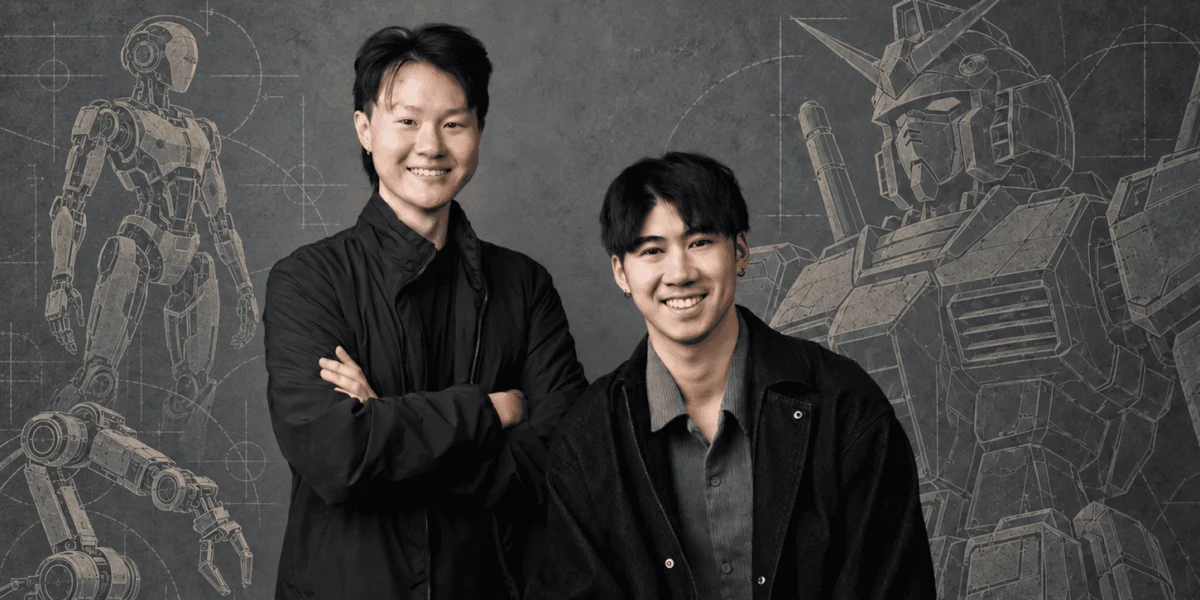
Recognizing this massive market gap, founders Josh, Jason, and the broader team at Mecka AI have taken on this monumental mission. Their core objective is helping leading physical AI labs, robotics companies, and traditional industrial enterprises reach physical AGI and put it into practical, everyday use. Mecka AI aims to achieve this by acting as an end-to-end operational partner providing specialized training data, managing complex reinforcement learning pipelines, and facilitating seamless real-world deployment.
Delivering successfully on a mission of this magnitude requires developing multiple complex operational muscles across various technical disciplines, all at the exact same time and strictly at scale. Each of these individual disciplines is notoriously difficult to master on its own, but achieving success in the physical AI race demands not just one of these capabilities, but all of them working in complete synchronization. For example, training data in the modern landscape must possess high volume, high diversity, and high quality, while simultaneously being delivered at rapid speeds and maintaining a competitive price point. It is relatively easy for a startup to achieve one of these attributes at a small volume, but it is extraordinarily difficult to deliver all of them concurrently and at a massive industrial scale. Yet, mastering this exact combination is what it takes to help industry partners cross the threshold toward physical AGI.
The founders and team at Mecka understood this operational reality early on and moved rapidly to build out their core capabilities, establishing a differentiated competitive edge in each area and executing with precision. The result is a robust, highly scalable, and flexible platform that has allowed them to win the trust of many of the world’s leading artificial intelligence research labs and robotics companies, quickly positioning them as the emerging market leader in this critical category.
What drew early backers and investors to Mecka AI is not merely the fact that they made the correct strategic bet on the right form of data for training autonomous systems, though they certainly did. The robotics industry is still in its relative infancy compared to the mature state of digital AI, meaning that the physical form factor of the data will likely evolve, and the mechanical form factor of the robots themselves will undoubtedly change as hardware designs mature over coming years. What truly matters is that Mecka has successfully built a foundational machine that scales efficiently alongside the broader industry and its diverse partners. Regardless of how the specific input data changes over time, the operational output will consistently deliver what their partners need.
This dynamic is analogous to how major logistics platforms engineered their underlying systems. Whether the input being transported is a hot pizza or a high-end laptop, the end customer receives the same reliable, delightful delivery experience. In the technology sector, whenever a domain within the physical world presents exceptionally high barriers to scale, it creates a generational opportunity for the right founding team to build a large, durable enterprise equipped with deep competitive moats.
This strategic vision is precisely why venture investors and industry leaders are backing Josh, Jason, and their fast-growing team at Mecka AI. Observers see within the company a unique combination of talent and execution that will continue to compound over the long term, ultimately winning this critical technology category and empowering global partners to advance the shared mission of building and deploying functional robots at scale across the globe.
This widespread industry conviction is also why a formidable group of strategic partners and veteran operators have joined the funding rounds. The roster includes major strategic backers such as NVIDIA, Samsung, Microsoft, and Qualcomm, alongside elite founders and corporate operators who scaled some of the most defining technology companies of their generation. These backers bring deep expertise across many of the exact disciplines required in Mecka’s complex business model, including Tony Xu, founder and CEO of DoorDash; Frank Slootman, former CEO of ServiceNow and Snowflake; Milan Kovac, former head of Optimus at Tesla; Christopher Payne, former President and COO of DoorDash; Jonathan Chadwick, former COO and CFO of VMware and board member at Databricks; and numerous other accomplished industry leaders.




Comments (0)