



In 1901, US Steel etched its name into the history books by becoming the world’s first $1 billion company. Reflecting on the milestone two decades later, a corporate historian marveled at the sheer magnitude of the figure, writing that while "hundreds of millions commanded respect," a billion—a thousand million—seemed merely like a row of abstract figures, something that could hardly be computed by contemporary standards.
Today, the baseline for corporate ambition and market scale has shifted by a factor of a thousand. Investors are no longer grappling with millions or even billions; they are tasked with computing the staggering reality of the trillion-dollar club. There are now eleven publicly traded companies globally that boast market capitalizations exceeding $1 trillion.

To put this astronomical scale into perspective, consider a simple mathematical exercise: if an individual were to earn $1 every second of the day, every single day of the year without ever spending a single cent, it would take until the year 33,168 to accumulate a net worth of $1 trillion. Modern investors, who are unlikely to live long enough to see that timeline play out, must instead rely on the assumption that these corporate giants will generate massive revenue streams at a pace that justifies their unprecedented market valuations.
Financial analysts use sophisticated tools to measure the feasibility of these expectations. Aswath Damodaran, a prominent finance professor and valuation expert, frequently employs a reverse discounted cash flow (DCF) methodology to determine the exact annual revenue the world’s most valuable companies must capture to support their current stock prices.
According to Damodaran’s calculations, an investor buying into Tesla today must believe that the electric vehicle and clean energy pioneer will pull in annual revenues of at least $2.2 trillion by the year 2030. He characterizes this underlying assumption as one that is "pushing the limits of possibility." Meanwhile, shareholders of semiconductor giant Nvidia face a slightly less daunting, though still colossal, expectation. Damodaran estimates that Nvidia needs to achieve roughly $590 billion in annual revenue by the end of the decade. While he notes that this target is a distinct reach, he classifies it as both possible and plausible.
Even so, $590 billion is a gargantuan sum. For historical context, US Steel at its 1901 peak was worth only about $46 billion when adjusted for modern inflation.
The ambition of the modern tech and artificial intelligence sector dwarfs even these historical comparisons. OpenAI has reportedly sought to raise upwards of $100 billion in a single cash call to investors at an estimated valuation of $830 billion. Simultaneously, aerospace manufacturer SpaceX has engaged in talks regarding share sales that would lift its valuation to $800 billion, with long-term aspirations of an initial public offering targeting $1,500 billion, or $1.5 trillion. Anthropic, structured as a public benefit corporation explicitly designed to prioritize its mission over raw profit maximization, is nonetheless tracking toward a potential IPO valuation of $300 billion.
These figures represent a fundamental acceleration of venture capital and public markets. It was only 12 years ago that the term "unicorn" was coined to describe the rare private startup valued at $1 billion. Today, the market has birthed "centicorns"—privately held enterprises worth one hundred times that amount. Perhaps most indicative of this hyper-inflation of capital is the AI startup Thinking Machines, which secured a remarkable $2 billion in a seed funding round earlier this year led by prominent figures in the space, including Mira Murati. A seed round matching the inflation-unadjusted size of US Steel’s initial valuation illustrates just how dramatically financial markets have expanded over the past century.
The central question facing economists and market observers is whether these companies can collectively generate the multi-trillion-dollar revenues required to validate these sky-high valuations. When broken down into dollars per second, the targets border on the unimaginable. Yet, industry leaders argue that traditional economic models fail to capture the paradigm shift underway. As the leadership behind generative AI platforms like ChatGPT has emphasized, there is an argument to be made that the global economy faces a near-infinite demand for intelligence. If human and machine intelligence truly unlock an era of boundless productivity, then perhaps the parallel demand for equity will follow suit.
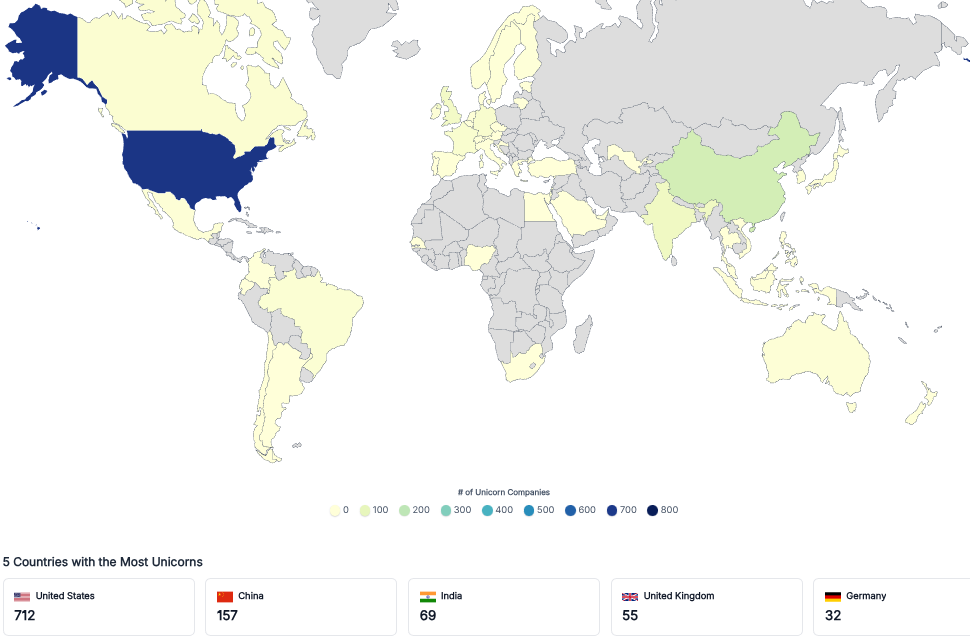
That transformation is already visible across international markets, though the distribution of technological dominance remains heavily skewed. Data tracking the global distribution of unicorns highlights the profound concentration of high-growth startups in the United States compared to the rest of the world. The United States currently hosts 712 unicorns with a collective valuation of $2.9 trillion, vastly outpacing second-place China, which accounts for 157 such entities. Notably, 80 of the American unicorns were founded in the year 2025 alone.
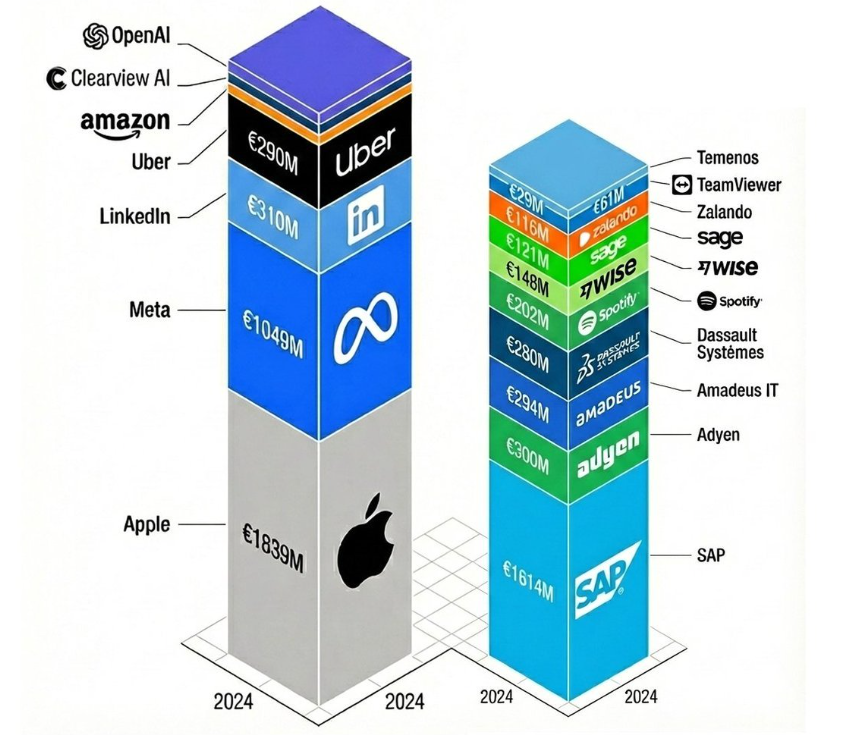
This transatlantic and trans-Pacific divergence extends to the public markets as well. Unofficial market tallies indicate that in 2024, the European Union collected more revenue from regulatory fines levied against American technology companies than it generated from all public European internet companies combined. Furthermore, historical data attributed to Goldman Sachs reveals that over the past fifty years, just 14 companies with a market cap greater than $10 billion were founded in Europe, compared to 241 in the United States.
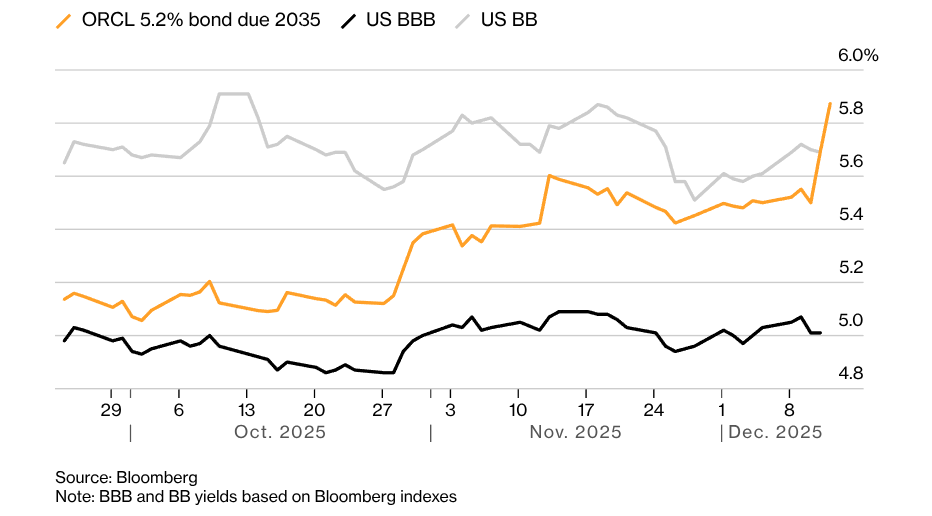
While equity markets soar on the back of artificial intelligence optimism, underlying credit and macroeconomic indicators suggest pockets of vulnerability. Recent reports from financial terminals indicate that corporate debt issued by major technology-adjacent entities, such as Oracle, has begun trading at junk-bond levels as credit spreads widen and debt risk flares up.
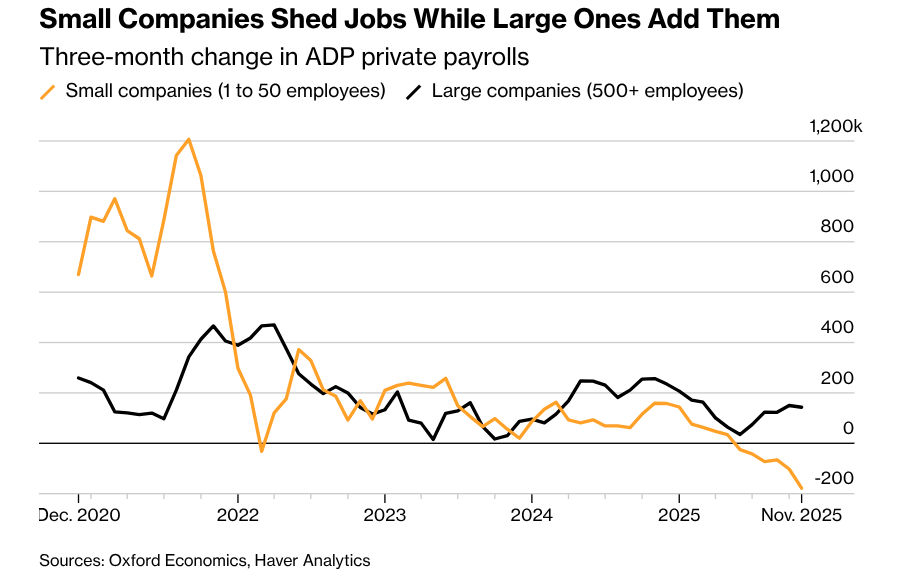
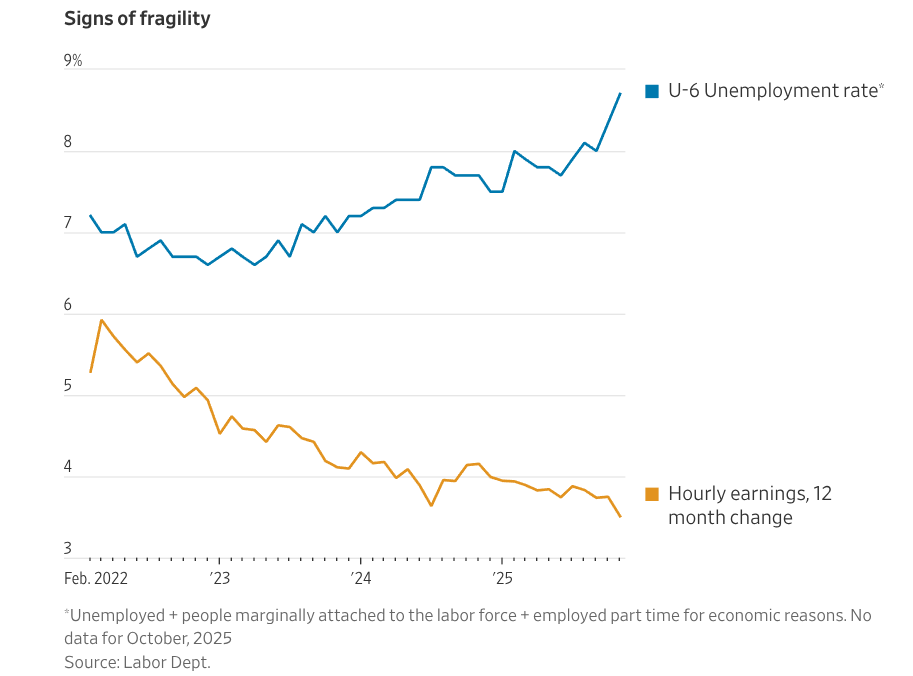
At the same time, the macroeconomic landscape for everyday workers is shifting. Economic analysts note that with US unemployment ticking upward and wage growth decelerating, the primary source of public anxiety is rapidly pivoting away from consumer price inflation toward job security. This pressure has been unevenly distributed, with reports indicating that smaller businesses have been hit hardest by regulatory shifts and tariff implementations, leading them to shed personnel.
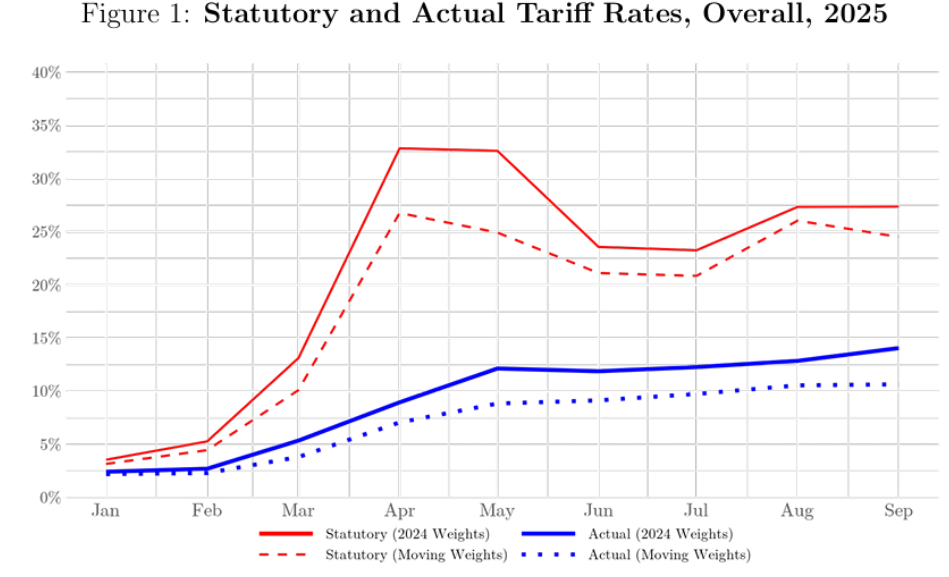
Trade policy continues to create a complex environment for domestic firms. A prominent study analyzing effective US tariff rates indicates that while headline figures have been partially cushioned by time lags, exceptions, and enforcement gaps—averaging out to roughly half their stated rates—nearly 100 percent of the cost of those tariffs is ultimately being passed down to consumers through higher retail prices.
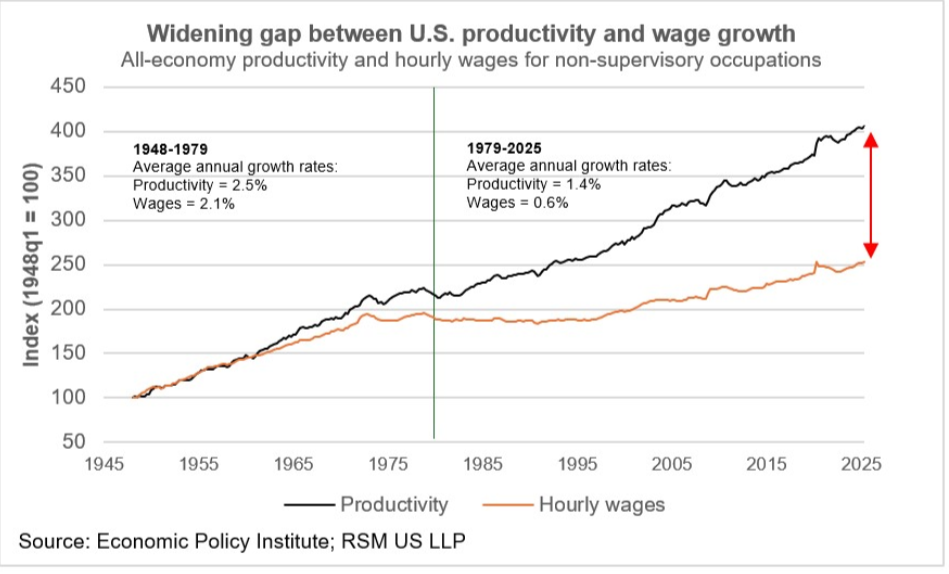
Simultaneously, the structural gap between US productivity and the hourly wages paid to non-supervisory workers continues to widen. Observers note that this divergence is accelerating as the American economy undergoes a deep structural transformation driven by reconfigured global supply chains and rapid technological advancements.
This technological and economic transformation coincides with sweeping cultural shifts in how younger generations consume information and media. Research highlights a steady decline in traditional reading habits among the public, with the percentage of Americans reading for personal interest dropping notably over the past two decades. Among teenagers, nearly 50 percent report that they "hardly ever" read books in their spare time, a significant increase from previous decades. While traditionalists view this trend with concern, analysts point out that the digital ecosystem—ranging from educational video platforms to deep analytical newsletters—has fundamentally redefined how knowledge is acquired.
Global financial flows are also reacting to shifting interest rate environments and technological allure. Yields on 10-year Japanese government bonds have climbed to approximately 2% for the first time since 1999. Historically, higher domestic yields in Japan would incentivize local savers to repatriate capital by selling foreign holdings. However, current market behavior suggests the opposite trend is taking hold, with Japanese capital continuing to chase high-yielding US technology and artificial intelligence equities.
Ultimately, trying to make sense of modern valuations often requires a recalibration of perspective. When evaluated through unconventional lenses—such as measuring manufactured goods by weight—the deflationary power of industrial and technological progress becomes starkly apparent. As engineers have observed when comparing the cost-per-pound of advanced electric vehicles to artisanal cheese, modern economies pull raw elements like sand, oil, and ore from the earth and transmute them into complex, highly sophisticated machinery that costs less than aged dairy.

Whether that same alchemy can sustainably justify a world of trillion-dollar valuations remains the definitive financial question of our era.





Comments (0)