


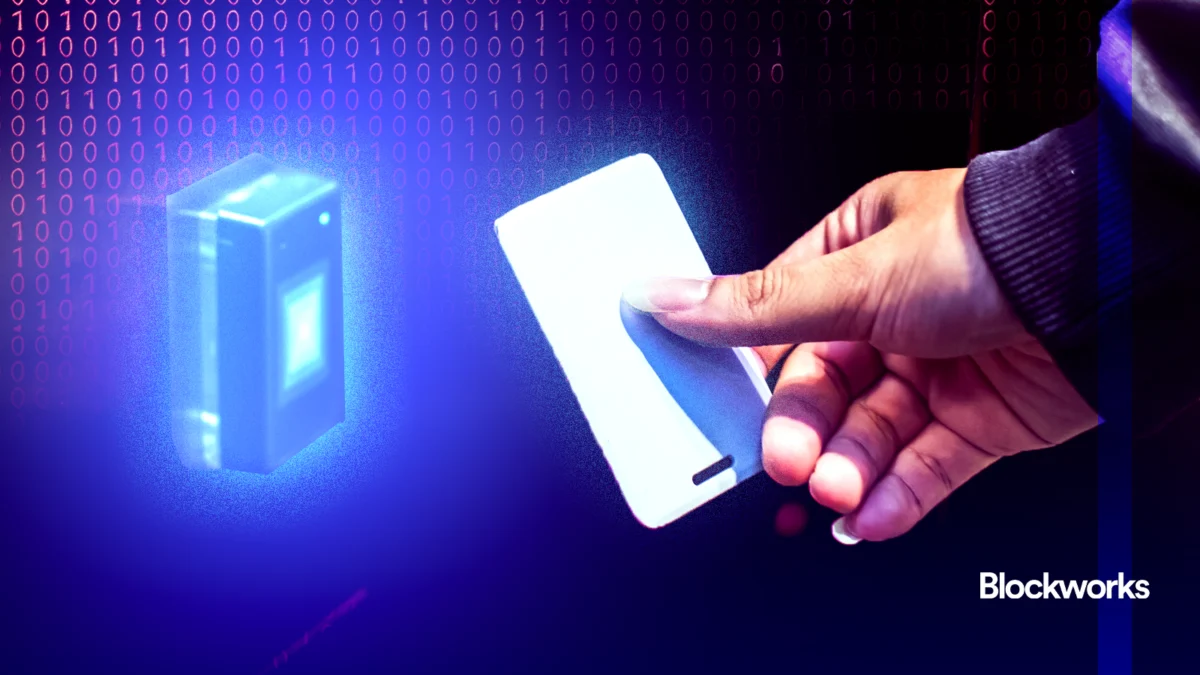
In the opening scene of Philip K. Dick’s 1969 science-fiction classic Ubik, the protagonist, Joe Chip, faces a distinctly modern administrative frustration dressed up in futuristic garb. Standing inside his apartment, he attempts to open the door for a guest, only to be stopped short by a mechanical voice demanding payment. Behind on his rent and with a severely damaged credit score, Chip tries to reason with the portal, arguing that what he pays is merely a gratuity rather than a binding obligation. The door, thoroughly unimpressed and sounding entirely smug, instructs Chip to check the terms of his contract, where he inevitably discovers that the technology holds the legal and functional upper hand.
When Chip attempts to unscrew the bolt mechanism with a knife, the door casually threatens legal action—prompting the pragmatic rejoinder that he has never been sued by a door before, but figures he can live through it. Before any permanent damage can be done, Chip’s guest intervenes by paying the fee from the outside, finally granting them passage. Throughout the narrative, the apartment’s refrigerator, coffee maker, and shower similarly demand micro-payments before rendering their services, reducing a living space to a pay-as-you-go vending machine.
Such was Philip Dick’s dystopian vision of the future, where everyday objects are weaponized against the impoverished through automated commerce. Yet, as the boundaries between software, hardware, and global financial markets continue to blur, this very concept may represent the utopian frontier of decentralized finance.
The core promise of decentralized finance has always been the transformation of every asset into a programmable financial instrument capable of automatically enforcing the terms of its own agreement. Up to this point, however, the ecosystem has remained largely constrained to native crypto assets. This limitation stems from a fundamental structural barrier: a smart contract operating on a blockchain cannot directly reach into the physical world to repossess a car, evict a tenant, or seize a piece of machinery.
Yet an intriguing question persists across the financial technology sector: What if a smart contract could digitally lock the door to a house, a car, or a refrigerator? In that realization of the future, lenders could confidently accept real-world assets—virtually anything equipped with a digital lock—as viable collateral against on-chain loans.
This concept is far from entirely novel. As economist Rudiger Dornbusch famously observed, in economics, things tend to take longer to happen than people think they will, and then they happen much faster than anyone thought they could. Way back in 1997, computer scientist and legal scholar Nick Szabo detailed the profound utility of turning smart contracts into smart locks, outlining a framework where legal clauses could be directly embedded into hardware and software.
Szabo argued that embedding contractual obligations into physical infrastructure makes a breach of contract economically prohibitive for the offending party. These protocols would dynamically allocate control of cryptographic keys for operating property strictly to the rightful owner based on the verifiable terms of an agreement. For decades, however, that property remained limited exclusively to digital tokens, as they were the only class of property whose ownership could be seamlessly native to smart contracts.
By introducing smart locks governed by verifiable, immutable rules executed via smart contracts, the broader physical world could theoretically function much like a vending machine. Szabo famously described vending machines as the primitive ancestors of smart contracts—mechanical constructs that hold a physical asset, such as a can of soda, and release it only when the precise conditions of the contract are met through the insertion of currency. In this paradigm, no human intermediary or corporate shopkeeper is required; the rules-based machine becomes the ultimate arbiter of commerce, much like the demanding doors and appliances in Philip K. Dick’s imagination.
Long before the advent of Ethereum, Szabo envisioned these mechanisms granting digital control over real-world property, pointing to automobiles as the most straightforward initial application. He proposed a smart lien protocol wherein a failure to meet financing obligations would automatically invoke a digital default protocol, returning control of the vehicle keys back to the issuing institution.

While a fully decentralized, blockchain-native version of this exact protocol has taken years to materialize, the broader industry has moved decisively in that direction. In traditional finance, starter interrupt devices that allow lenders to remotely disable an automobile when a borrower falls behind on payments have become a standard fixture for sub-prime auto lenders over recent decades.
This reality introduces complex socio-economic questions. For instance, disabling a vehicle can create a vicious cycle where a borrower loses the transportation necessary to commute to work, thereby cutting off the very income stream required to catch up on delinquent loan payments. Furthermore, being stranded on a busy highway when a centralized lender decides to deactivate a vehicle presents severe safety hazards. Unlike Joe Chip’s fictional door, motorists cannot simply drop coins into a dashboard to instantly restore functionality, nor is it easy to reach a human representative at a traditional lending institution to negotiate in real time.
A decentralized architecture offers a compelling alternative. Borrowers could instantly cure a delinquency by topping up their payments via a smart contract accessed securely through a digital wallet on a mobile device.
The infrastructure to support this vision has experienced similar cycles of anticipation and delay. In 2015, a project known as Slock.it promised the exact category of digital locks that Joe Chip negotiated with, suggesting that renters could pay directly to the lock itself, which would independently establish a smart contract with the occupant. Although those early iterations failed to gain commercial traction—partly overshadowed by the team’s involvement with the controversial DAO project that nearly upended Ethereum in its infancy—the underlying thesis may simply have been ahead of its time.
Today, the macroeconomic and technological conditions for blockchain-based smart locks are vastly more mature. Public blockchains have evolved to become exceptionally fast, transaction fees have dropped dramatically, and user-facing frontends are polished and intuitive. Meanwhile, traditional finance maintains an insatiable appetite for tokenization and alternative productive yields outside the increasingly constrained universe of public equities.
Consider the auto loan market in Turkey, where borrowers frequently face interest rates reaching five percent per month, translating to an annual rate exceeding 100 percent—roughly 70 percentage points above the prevailing inflation rate. If loans of this nature were successfully tokenized and governed by smart contracts capable of managing risk through automated collateral management, the resulting transparent yield would likely attract global capital pools seeking lucrative alternatives.
During discussions on the evolution of global markets, financial leaders have increasingly emphasized the transformative potential of asset digitization. BlackRock executives, including Larry Fink, have noted that tokenization possesses the capacity to vastly expand the universe of investable assets far beyond the traditional listed stocks and bonds that currently dominate global exchanges.
Philip K. Dick predicted the conceptual architecture of automated compliance decades ago, and Nick Szabo established the foundational theory of smart contracts long before the technology existed to build them. As the financial sector continues to refine its technological infrastructure, the path toward a transparent, automated marketplace of real-world assets remains open, waiting for the industry to finish building the door.


Comments (0)