


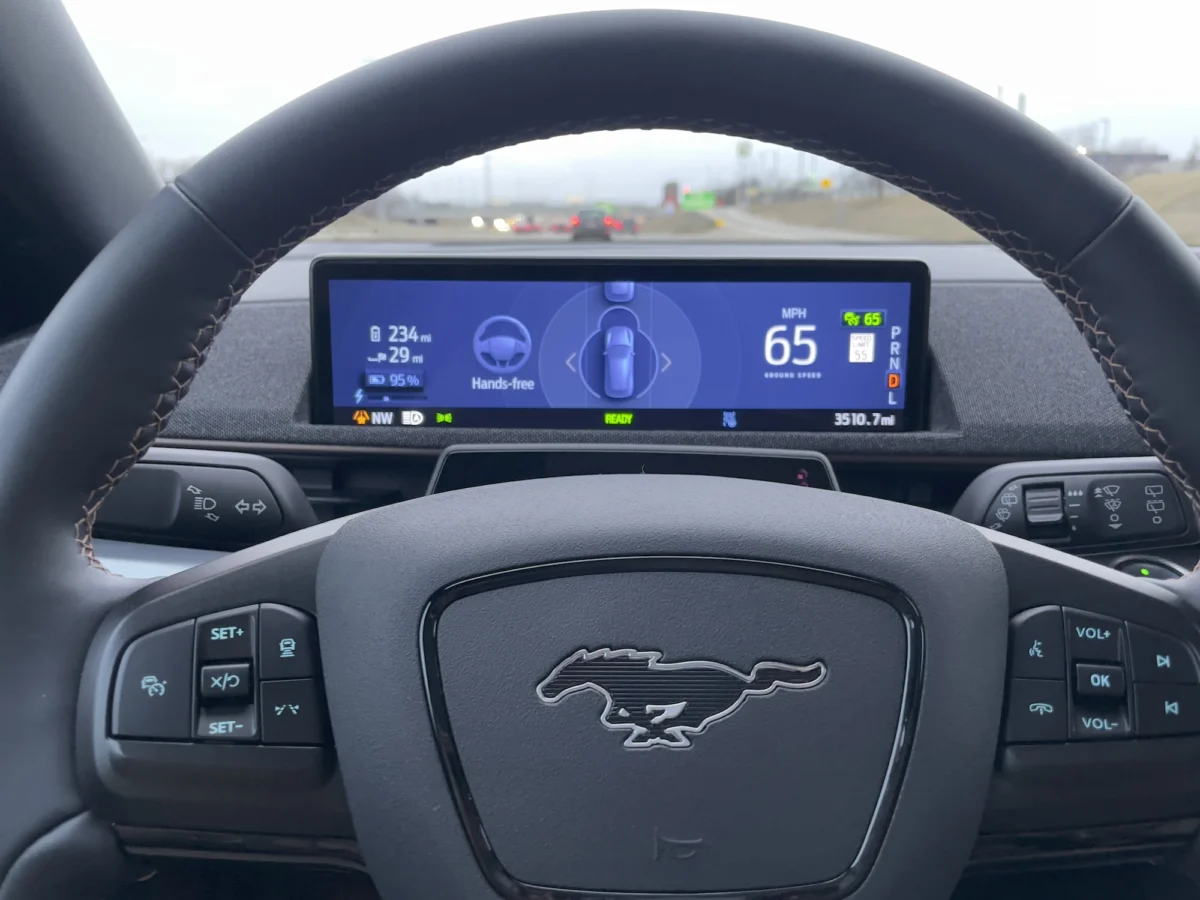
As Ford prepares to launch a new generation of highly connected vehicles, the legacy automaker is making a public commitment regarding how it collects, manages, and protects customer information.
The company unveiled what it is calling a “privacy promise” on Monday, establishing an explicit commitment to keep customers’ vehicle data safe and provide them with direct control over what information they choose to share. Alongside this policy pledge, Ford has launched a dedicated website designed to educate consumers about how, where, and why the automaker utilizes their data, while offering clear instructions on how to adjust their privacy settings.
While the underlying controls to manage this data have technically existed within Ford vehicles for years, the company recognizes a growing need to communicate more clearly with its customer base. This outreach is especially crucial ahead of the commercial rollout of new, deeply connected vehicle architectures, such as the platforms being built for its upcoming universal electric vehicle program.
“I personally think that it’s super important for us to be making it very clear to our customers what our data practices are, and not only that, but making a commitment to them about it,” Ford’s chief privacy officer Kristin Jones said in an interview with TechCrunch. “I also see this as a great opportunity to educate our customers about how they share data.”
This privacy-focused initiative arrives at a time when automakers are racing to integrate advanced connectivity into their entire lineups. Although consumer polling demonstrates that U.S. buyers heavily desire the features enabled by this digital connectivity—such as remote engine start, advanced navigation systems, and sophisticated driver-assistance software—there is a stark gap in consumer awareness. According to industry surveys, roughly 72 percent of Americans expect their next vehicle to function similarly to a smartphone, yet only 14 percent claim to fully understand the scope of the data their vehicle actually collects.
This widespread lack of awareness has historically left room for some automotive companies to quietly harvest and sell driver data to third-party data brokers. Such practices have recently drawn intense regulatory and legal scrutiny. Most notably, General Motors ran into severe trouble with the Federal Trade Commission and recently agreed to a massive $220 million legal settlement with 36 states over allegations regarding the sale of private driver data.
The growing consumer unease surrounding automotive data collection has also opened the door for emerging competitors to market themselves as safer stewards of consumer privacy. For instance, Slate Auto, an electric vehicle startup backed by billionaire Jeff Bezos, has made data privacy a cornerstone of its brand pitch ahead of the expected market launch of its minimalist, modem-free pickup truck later this year.
For Ford, rebuilding and reinforcing consumer trust is paramount in an environment where skepticism runs high.
“We did a survey of 1,000 consumers, and 91 percent of them said that data privacy was a key consideration for them. Realistically, it’s not something they engage with every day, but they want to know that they’re, again, in control, and that they have access to the information they need there,” Jones said. “I wouldn’t comment on what our competitors are doing, or anything that’s sort of been in the news there, but certainly it’s something that people don’t trust companies to take care with their data, and we really want to make sure we’re building that trust relationship with them.”
Jones joined Ford in 2024 after spending nearly two decades specializing in privacy law across the legal, financial, and healthcare sectors. She noted that the internal corporate effort to overhaul how the automaker communicates data-sharing policies to everyday drivers has been a long-term undertaking.
“It’s been a journey for, frankly, most of the time I’ve been at Ford,” she noted.
The newly launched Ford website will feature a comprehensive mix of educational content explicitly detailing what data the company gathers, the exact purposes for which that information is utilized, and straightforward pathways for customers to opt in or out of specific sharing parameters.
Naturally, opting out of certain data-sharing agreements will render some modern automotive features inaccessible, Jones acknowledged. For instance, completely turning off "connected services" within a Ford vehicle will disable real-time cloud navigation capabilities and built-in digital access to roadside assistance programs.
However, a core objective of the "privacy promise" initiative is to better justify why Ford requests access to this data in the first place, while reassuring customers that their information will not be monetized for unrelated commercial ventures like targeted advertising.
Permitting Ford to access data regarding a vehicle’s mechanical health, for example, allows the system to provide owners with timely, real-time insights regarding upcoming maintenance needs. At the same time, this diagnostic data serves a broader purpose by supporting research and development initiatives for next-generation automotive technologies, according to Jones.
“We also do not share information about how our customers are driving their vehicles to data brokers,” Jones said, reiterating the company’s stance on data monetization. “I just want to kind of reiterate that we’re not in it to try and monetize data in some way. We’re trying to offer products and services that customers derive value from.”





Comments (0)