



As another calendar year draws to a close, a curious paradox continues to define modern life: while data-driven analysts point to historic improvements in global living standards, public sentiment remains stubbornly bleak. Observers of contemporary culture and economics have increasingly noted that the prevailing narrative of doom and gloom stands in stark contrast to measurable human progress.

Reflecting on the state of global affairs, analysts and commentators have pointed out that despite the relentless stream of distressing updates broadcasted across television screens and digital feeds, the broader historical trajectory remains remarkably positive. As Johan Norberg famously observed, the defining story of our era is that humanity is currently witnessing the greatest improvement in global living standards ever to take place.
Evaluating the economic and social indicators of recent years, analysts have pointed to significant bright spots that rarely capture mainstream attention. Derek Thompson of The Atlantic characterized a recent twelve-month stretch as an exceptional period for the United States, highlighting sweeping declines in traffic fatalities, drug overdoses, and suicides. Furthermore, data pointed to the largest-ever drop in homicide rates alongside dramatic, continuous advances in modern healthcare. Thompson noted that this appears to be the first recorded period in history where every major cause of premature death—spanning overdoses, automobile accidents, homicides, and obesity-related complications—is falling simultaneously.
Similar observations have been echoed by other economic commentators. Noah Smith outlined ten distinct reasons why society appears to be steadily putting itself back together, citing metrics such as rising life expectancy, a natural peaking of social media usage among certain demographics, and a resilient surge in business dynamism. On a global scale, research platforms like Human Progress collated over a thousand positive news stories from around the world. These accounts ranged from the astonishing and rapid decline of poverty across India to ecological milestones, such as the return of puffins to the Isle of Muck in the United Kingdom after an absence of at least a quarter of a century.
Yet, for the average media consumer, these uplifting milestones remain largely invisible. If individuals relied solely on mainstream news aggregators, they would likely remain entirely unfamiliar with these profound positive shifts. This phenomenon is driven by a timeless media industry axiom: bad news sells. In the fiercely competitive modern attention economy, media outlets increasingly double down on a traditional, high-yield strategy of cultivating fear, anxiety, and outrage.
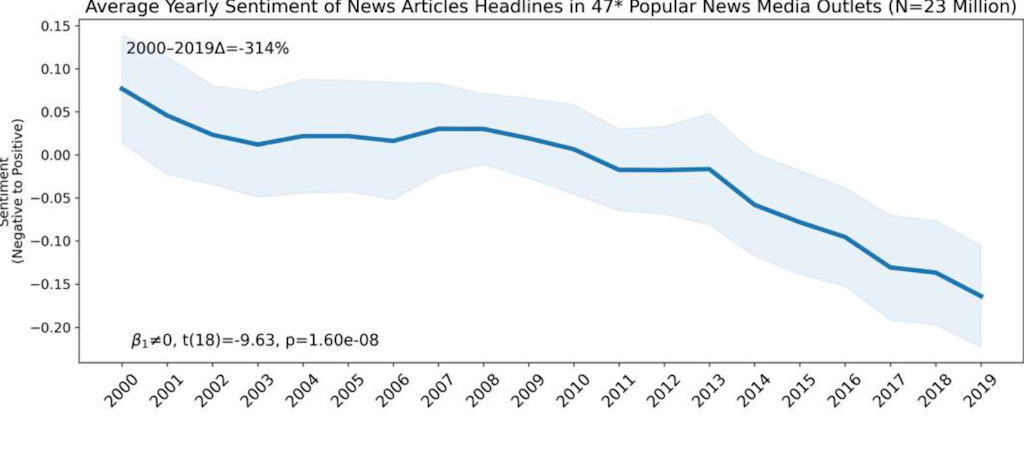
Academic research underscores this troubling trend. A comprehensive 2022 study published in academic literature revealed a clear, measurable pattern of escalating negative sentiment within news headlines over time. The findings demonstrated that headlines from 2019 were a staggering 314 percent more likely to reflect emotions of anger, disgust, fear, or sadness compared to headlines analyzed from the year 2000. Subsequent years have done little to reverse this trajectory, leading critics to argue that society is now suffering from a systemic contagion of negativity.
This negativity bias is heavily propelled by the hypercompetitive media ecosystem, where newspapers, television networks, radio stations, and digital websites routinely present a highly skewed, disproportionately apocalyptic picture of the world. To be certain, the state of the world remains far from utopian. Destructive wars continue to rage across geopolitical fault lines, the global climate continues to warm at concerning rates, governments around the world are grappling with mounting sovereign debt, and displaced migrants continue to face severe persecution in various regions.
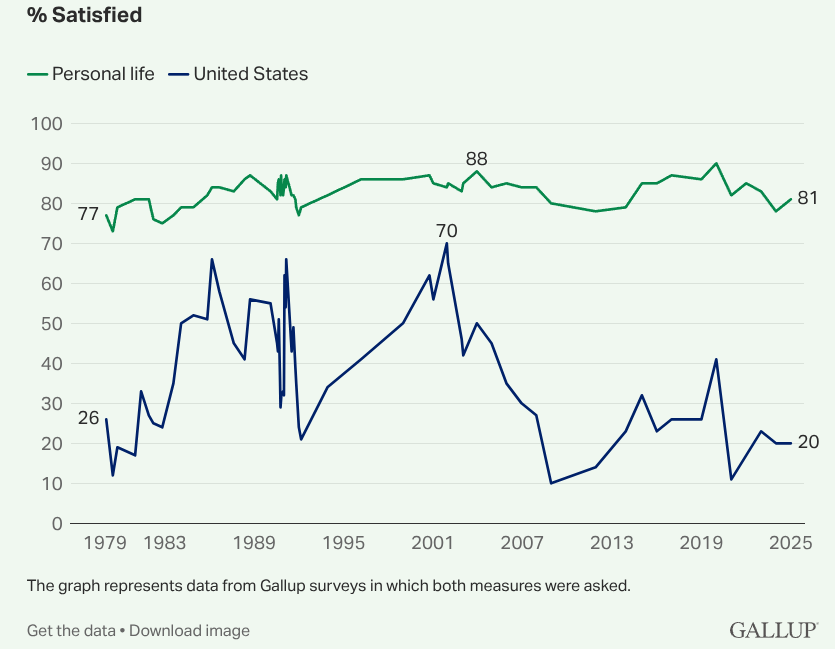
However, objective metrics consistently demonstrate that the world is in a significantly better position than public perception suggests. A glaring illustration of this psychological disconnect can be found in long-running polling data. According to extensive surveys conducted by Gallup, an overwhelming 81 percent of Americans express personal satisfaction with the way things are going in their individual lives. Yet, when asked about the direction of the country as a whole, that figure plummets, with only 20 percent reporting satisfaction. This sharp contrast suggests a fundamental paradox: a society cannot be performing catastrophically if a supermajority of its citizens are personally thriving and reporting a high degree of life satisfaction.
A similar disconnect applies to the pervasive economic anxiety dominating public discourse. Despite relentless media coverage surrounding an ongoing "affordability crisis," thorough economic analyses tell a fundamentally different story. Following a deep dive into available macroeconomic data, The Economist concluded that life in America has arguably never been so broadly affordable for such a large segment of the population. Historical wage data reveals that wages have outpaced consumer price inflation for at least a decade, accounting fully for housing and essential living costs.
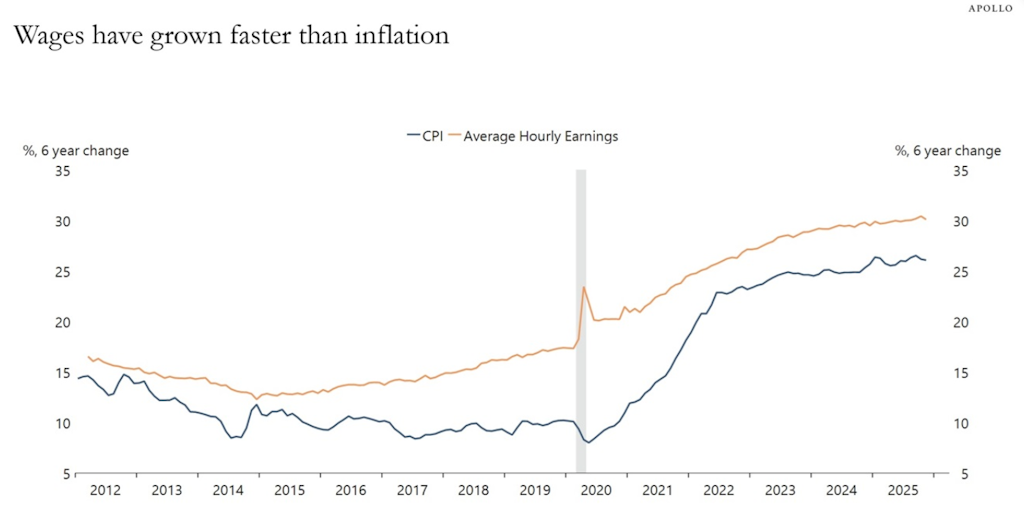
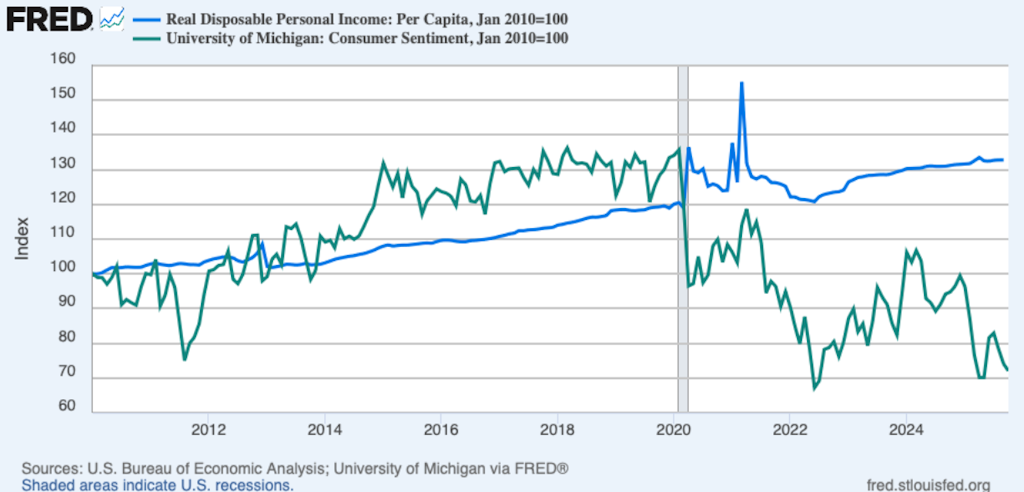
Despite these reassuring fundamentals, consumer sentiment has stubbornly failed to recover. Starting around the onset of the global pandemic, consumer sentiment decoupled entirely from real disposable income and has remained detached ever since. Today, populations across developed economies remain significantly more pessimistic than macroeconomic data objectively justifies.
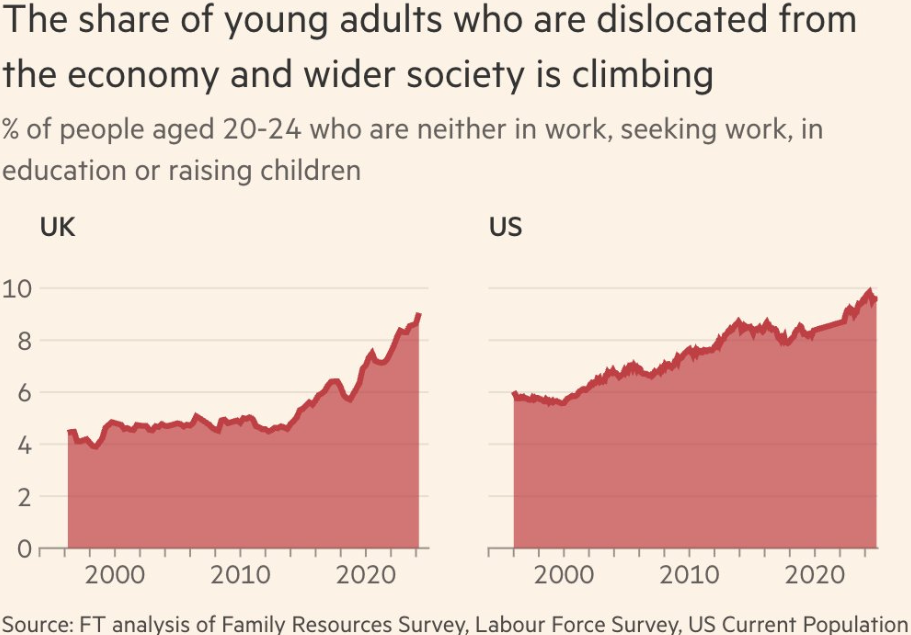
This widespread pessimism has tangible ripple effects, particularly among younger demographics. Recent reporting from financial and labor markets indicates that young adults are becoming increasingly disengaged from traditional societal milestones, such as stable employment trajectories and rates of household formation. Analysts suggest that this growing societal detachment among the younger generation is at least partially fueled by the constant, overwhelming diet of pessimistic headlines shaping their worldview.
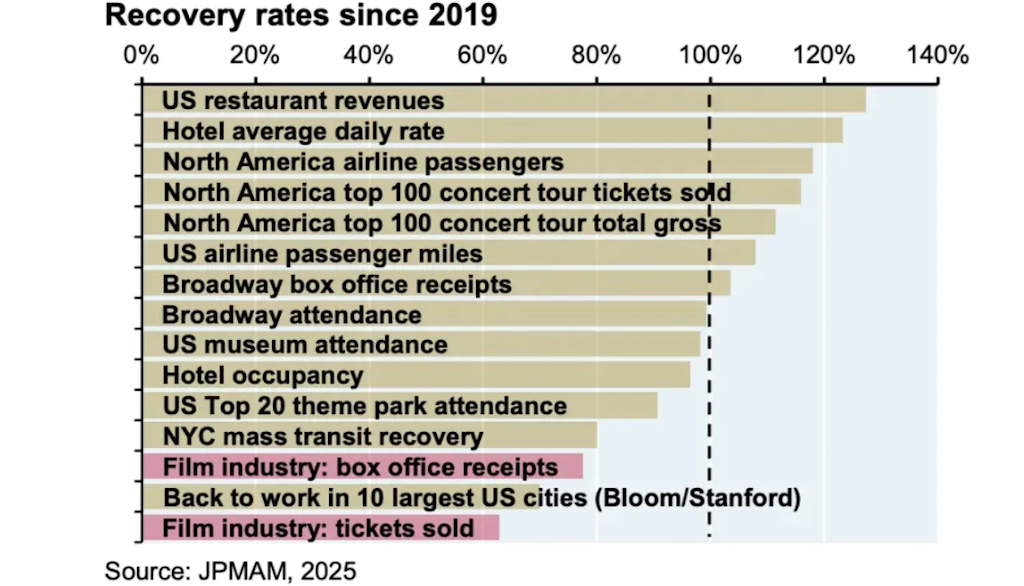
At the same time, cultural and demographic shifts continue to reshape global society in ways that defy simple categorization. Economic research from major financial institutions like JPMorgan highlights a K-shaped recovery across various industries. While sectors such as casual dining, restaurants, and commercial air travel have completely rebounded from pandemic-era disruptions, other areas, including the traditional film industry and mass public transit networks, continue to struggle with structural changes in consumer behavior.
On a broader cultural level, however, some indicators suggest that collective moods may finally be shifting. Recent global data indicates that the world has become surprisingly less irritable, with self-reported feelings of worry, stress, and anxiety receding from their pandemic-era peaks, while moments of shared laughter and positive affect slowly recover. Simultaneously, digital ecosystems continue to evolve, with massive platforms like Roblox capturing the daily attention of over a fifth of the American population, signaling profound changes in how younger generations socialize and interact with technology.
Demographic shifts are similarly reshaping the geopolitical map. Long-term population trends reveal staggering milestones: there are now more annual births recorded in Nigeria than across the entirety of Europe, more births in Ethiopia than in the United States, and more births in Afghanistan than in Japan. These sweeping demographic realignments underscore a world in constant, dynamic motion—one characterized by both unprecedented challenges and historic achievements.
Ultimately, navigating the modern media landscape requires a conscious effort to look beyond the immediate horizon of crisis reporting. While sensational headlines will undoubtedly continue to dominate the news cycle, the underlying data paints a picture of a resilient global community steadily advancing forward. Whether the coming years will see a cultural shift toward greater optimism remains to be seen, but the factual foundation for a more hopeful outlook is already firmly in place.





Comments (0)