


Security Operations Center (SOC) analysts and Managed Security Service Provider (MSSP) teams frequently face a persistent bottleneck during initial threat triage: valuable context is often overlooked simply because analysts do not know it exists. During fast-paced investigations involving suspicious URLs, IP addresses, or file hashes, previous team investigations, related malicious campaigns, and industry-specific observations could provide the critical context needed to decide what to investigate next. However, gathering this intelligence manually often slows down response times or gets missed altogether.
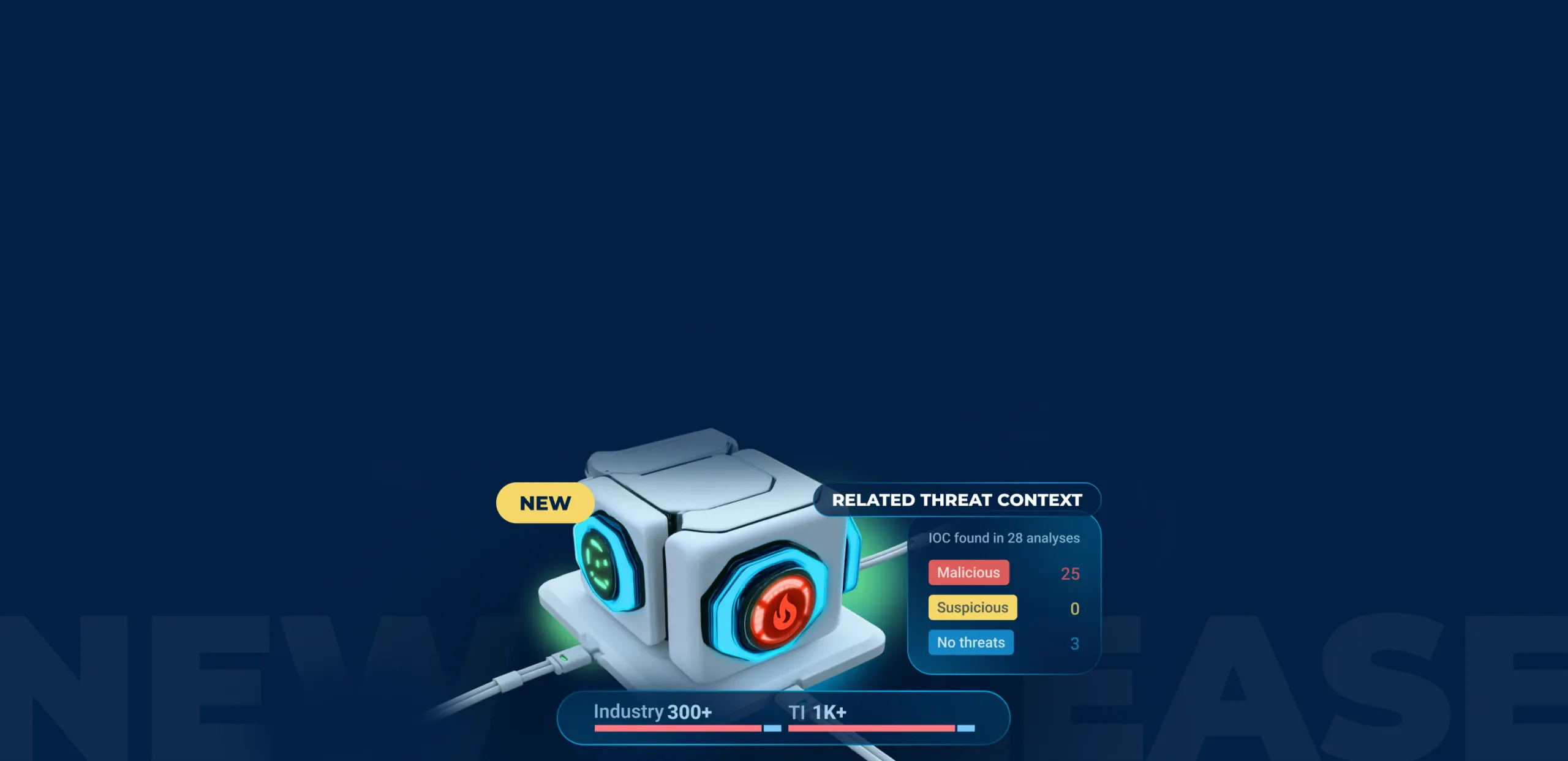
To bridge this operational gap, threat intelligence and interactive malware analysis platform ANY.RUN has announced the launch of Related Threat Context. Now available to ANY.RUN Enterprise clients, the new feature allows security analysts to immediately view vital historical connections alongside indicators of compromise (IOCs) discovered during Interactive Sandbox sessions. By surfacing these connections directly within the workspace, the update aims to help Tier 1 analysts significantly reduce time-to-triage, identify which alerts deserve closer scrutiny, and make better-informed decisions regarding case prioritization and escalation.
The Problem of Missing IOC Context During Triage
The daily routine of a Tier 1 security analyst typically involves investigating a high volume of alerts. For example, an analyst examining a suspicious URL within the ANY.RUN Interactive Sandbox might successfully uncover malicious behavior and extract several associated IOCs. Despite confirming malicious activity, the analyst still faces a difficult decision: should the case be closed, investigated further, or escalated to Tier 2?
Relevant context regarding the threat might already exist within previous team investigations, broader industry analyses, or the extensive database of ANY.RUN Threat Intelligence. Yet, without a seamless way to surface this data, analysts often waste precious minutes searching manually or make critical decisions without knowing that valuable historical intelligence is available. The resulting consequences are familiar to many security leaders: longer time-to-triage, duplicated investigations across different shifts, and unnecessary escalations that burden senior analysts.
With the introduction of Related Threat Context, these historical connections are now made visible directly inside the sandbox environment. This allows security personnel to discover useful intelligence earlier in the workflow, facilitating faster and more accurate decision-making without disrupting ongoing analysis.
Bridging the Gap from Analysis to Enrichment
When ANY.RUN identifies an IOC during a sandbox analysis, Related Threat Context can surface multiple layers of information to enrich the investigation. The transition from initial sandbox analysis to deep threat intelligence enrichment is streamlined, allowing analysts to move fluidly from an incoming alert through sandbox execution, threat intelligence enrichment, and final response or escalation.
Rather than forcing analysts to proactively search external threat intelligence databases or guess whether an unfamiliar IOC warrants deeper investigation, the platform highlights when additional context is available. If an IOC possesses relevant history within the analyst’s industry, previous team investigations, or global telemetry, that context appears directly inside the Interactive Sandbox to guide the next operational step. Furthermore, this transparency ensures that if a case must be escalated, the next analyst receives a clear starting point complete with prior investigations and related intelligence, eliminating the need to rebuild the context from scratch.
Uncovering Hidden Infrastructure and Tracking Campaign Tactics
The practical impact of Related Threat Context extends far beyond individual triage sessions, offering significant value during broader investigations. A standard sandbox analysis frequently reveals only a partial view of the infrastructure behind complex threats, such as widespread phishing campaigns. Related Threat Context helps security teams expand that picture by connecting current samples with historical scans, providing a solid foundation for deeper threat intelligence queries.
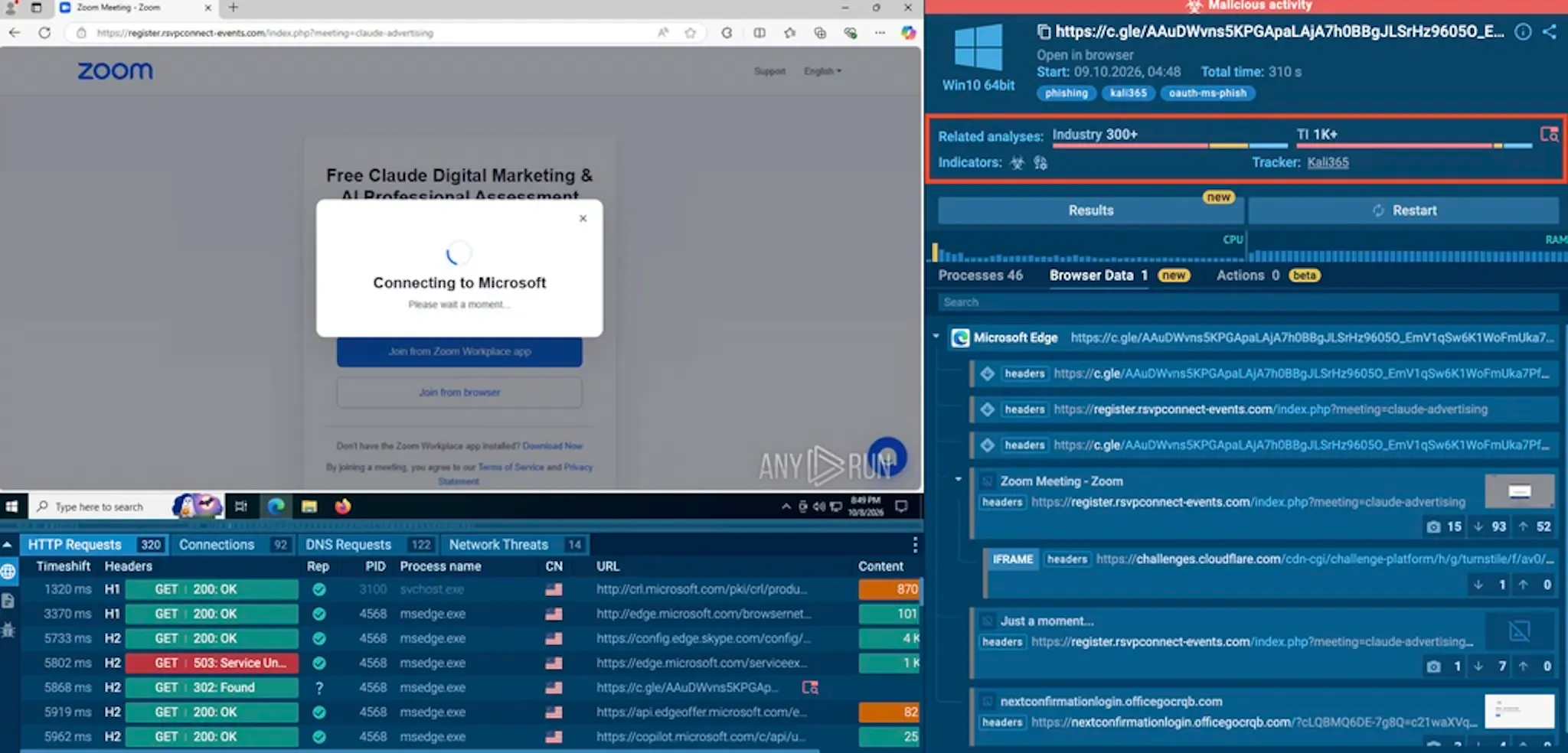
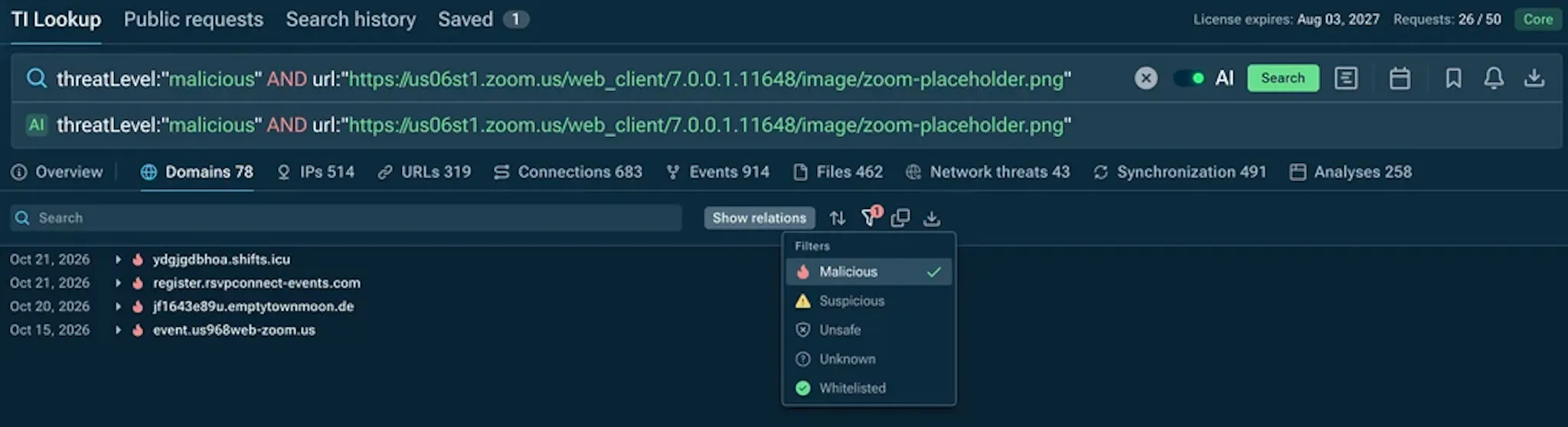
For instance, when analyzing campaigns associated with known threat actors or malware trends such as Kali365, security teams can review related analyses within the sandbox interface to identify a large volume of malicious scans connected through shared infrastructure elements like specific URLs. Analysts can then transition these findings into ANY.RUN Threat Intelligence Lookup to filter and isolate malicious domains and associated infrastructure. By following these established connections, analysts can uncover additional domains linked to a campaign that were entirely absent from the original sandbox execution.
This capability provides Tier 1 analysts with concrete, evidence-backed justification to escalate a case, rather than passing along an isolated IOC. Newly identified domains can be rapidly cross-referenced against internal SIEM and EDR telemetry to determine whether related infrastructure has already interacted with the organization’s enterprise environment.
Signals for Rapid Prioritization
To help analysts quickly evaluate the significance of discovered indicators, Related Threat Context introduces ready-made signals designed to streamline prioritization. Instead of requiring security personnel to manually interpret raw historical data, these indicators instantly show whether a specific artifact stands out or frequently appears in related activity.
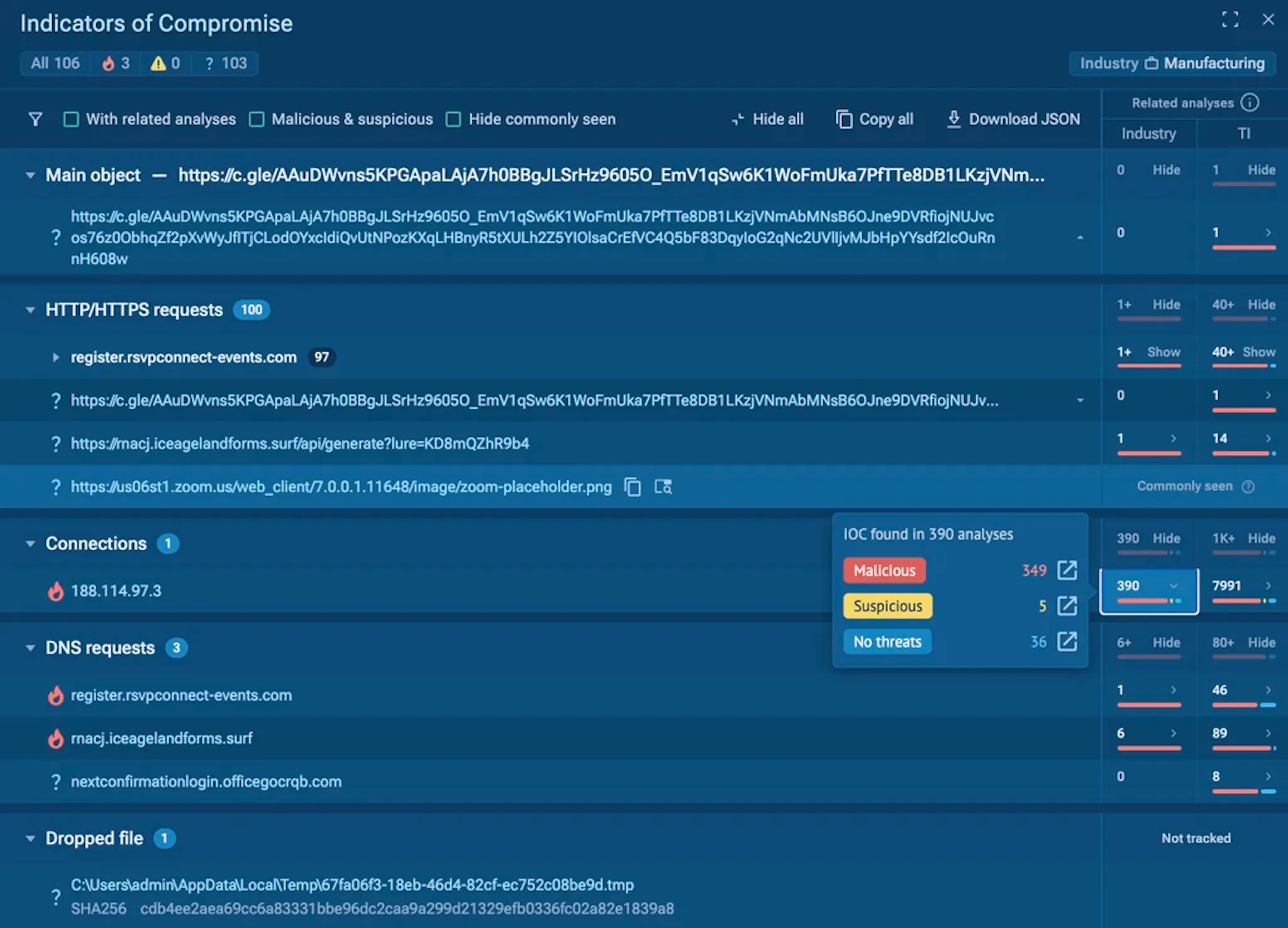
Designators such as "Never Seen Before" and "Commonly Seen" help security teams allocate their attention effectively, combining historical context with the object’s observed behavior and sandbox verdict. Platform developers emphasize that these signals are intended as contextual aids rather than definitive verdicts. A previously unseen indicator is not automatically malicious, just as a commonly encountered indicator is not inherently harmless. Instead, they offer an immediate method to gauge rarity and contextual relevance.
Delivering Value Across the Security Workflow
The integration of related threat context impacts different stakeholders within an organization in distinct ways. For Tier 1 analysts, the feature directly addresses triage bottlenecks by providing immediate visibility into whether an IOC is familiar to the team, holds broader relevance to the organization’s specific industry, or links directly to comprehensive threat intelligence data. This empowers analysts to make faster decisions regarding whether to close a ticket, enrich the data, or escalate the incident.
For incident response and threat hunting teams, the presence of pre-enriched context eliminates redundant work. When an investigation is escalated, the accompanying team knowledge, infrastructure maps, and threat intelligence context allow senior analysts to focus immediately on advanced response activities rather than repeating initial enrichment steps.
For SOC leads and managers, Related Threat Context helps bridge operational gaps caused by shift rotations. As security teams grow, analysts working different shifts frequently encounter the same malicious infrastructure without realizing a colleague has already investigated it. The platform creates visible connections between these independent investigations, allowing teams to leverage past findings and ensure that historical insights are effectively translated into detection engineering, blocking rules, or proactive hunting improvements.
For CISOs and heads of security operations, the broader organizational value lies in a more cohesive security workflow. Connected context supports faster triage speeds, reduces escalations driven purely by uncertainty, optimizes the utilization of Tier 2 expertise, and enhances visibility into threats targeting specific industrial sectors. Ultimately, ANY.RUN’s latest feature reflects a growing industry focus on unifying sandbox analysis and threat intelligence to help security teams transform isolated technical findings into prompt and coordinated defensive actions.





Comments (0)