



For tech builders and infrastructure enthusiasts deep in the trenches of artificial intelligence, the past month has been a period of relentless, high-velocity learning. Rather than spending time publishing updates, industry insiders have been racing to keep pace with rapid structural shifts in how hardware, models, and local-versus-frontier dynamics operate. When examining the modern artificial intelligence landscape, observers frequently misinterpret hardware dynamics, misunderstand the true nature of token demand, and underestimate the strategic imperative of owning physical compute.
A primary point of misunderstanding involves the economics of AI hardware. Building out local inference setups provides a practical lens into these changing market dynamics. Earlier this year, constructing a high-performance local inference machine required an investment of roughly $15,000. Upgrading that system later to accommodate an additional graphics processing unit pushed total capital expenditure to $35,000. Interestingly, supply chain pressures and component appreciation altered the underlying cost basis: individual GPUs that previously retailed for $10,000 rose to $14,000, while system RAM climbed by another $1,000. Consequently, a machine valued at $35,000 carried an adjusted cost basis of $30,000—an inverted depreciation curve that runs entirely counter to traditional computing hardware economics.
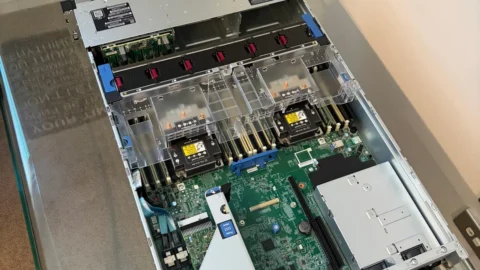
Further expanding local infrastructure operations—such as acquiring multiple specialized enterprise nodes interconnected through high-speed 100Gb switches and fiber optic cables—reveals the complexities of modern GPU clusters firsthand. Purchasing the physical metal remains the most effective educational exercise in understanding the constraints of modern data centers. Yet, the broader market continues to struggle with a fundamental question: How can hardware that is several years old, such as a used RTX 3090 from 2020, maintain its market value or sell at high prices years later? Dismissing this phenomenon as a temporary bubble fails to account for the underlying mechanical realities of silicon.
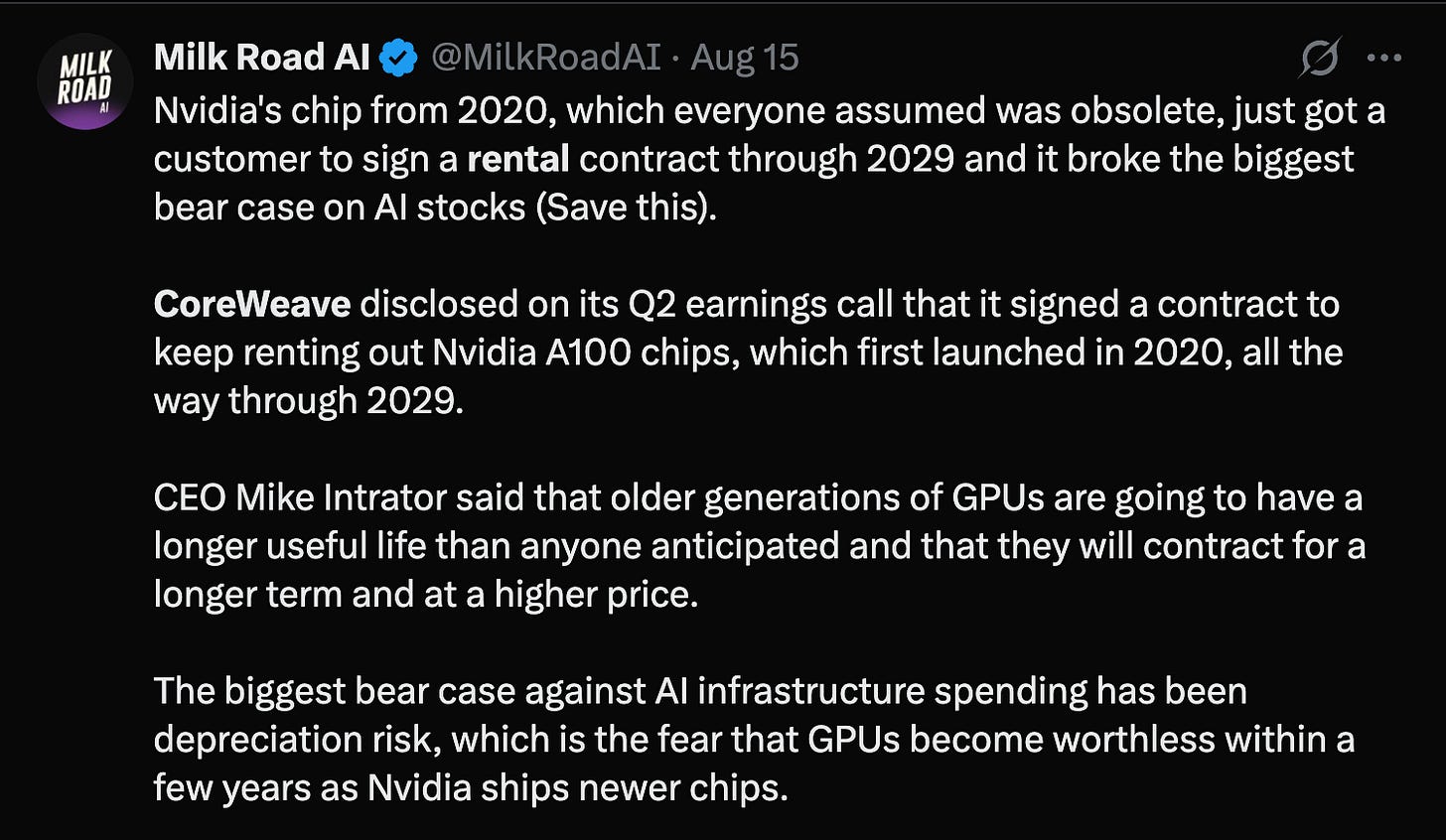
The answer lies in two critical pillars: memory and NVIDIA’s architectural ecosystem. When discussing hardware, analysts frequently conflate compute capacity with memory bandwidth and capacity. While raw compute power—driven by the CPU, GPU, or specialized accelerators—improves with each successive silicon generation, compute is rarely the primary limiting factor for inference workloads. Memory is the true bottleneck, and structural shortages across the memory supply chain are projected to persist for at least another decade. Because memory scarcity underpins the entire ecosystem, any natural depreciation in older compute generations is fully offset by the enduring value of high-capacity memory.

Compounding this dynamic is the unmatched value of NVIDIA’s backwards compatibility. Older silicon generations retain massive, mature software ecosystems and continue to execute economically viable inference tasks that justify keeping them operational in modern data centers. Certain specialized workloads may never genuinely require the newest generations of silicon, effectively tying specific operational tasks directly to older hardware classes in a manner not seen in technology markets for decades.
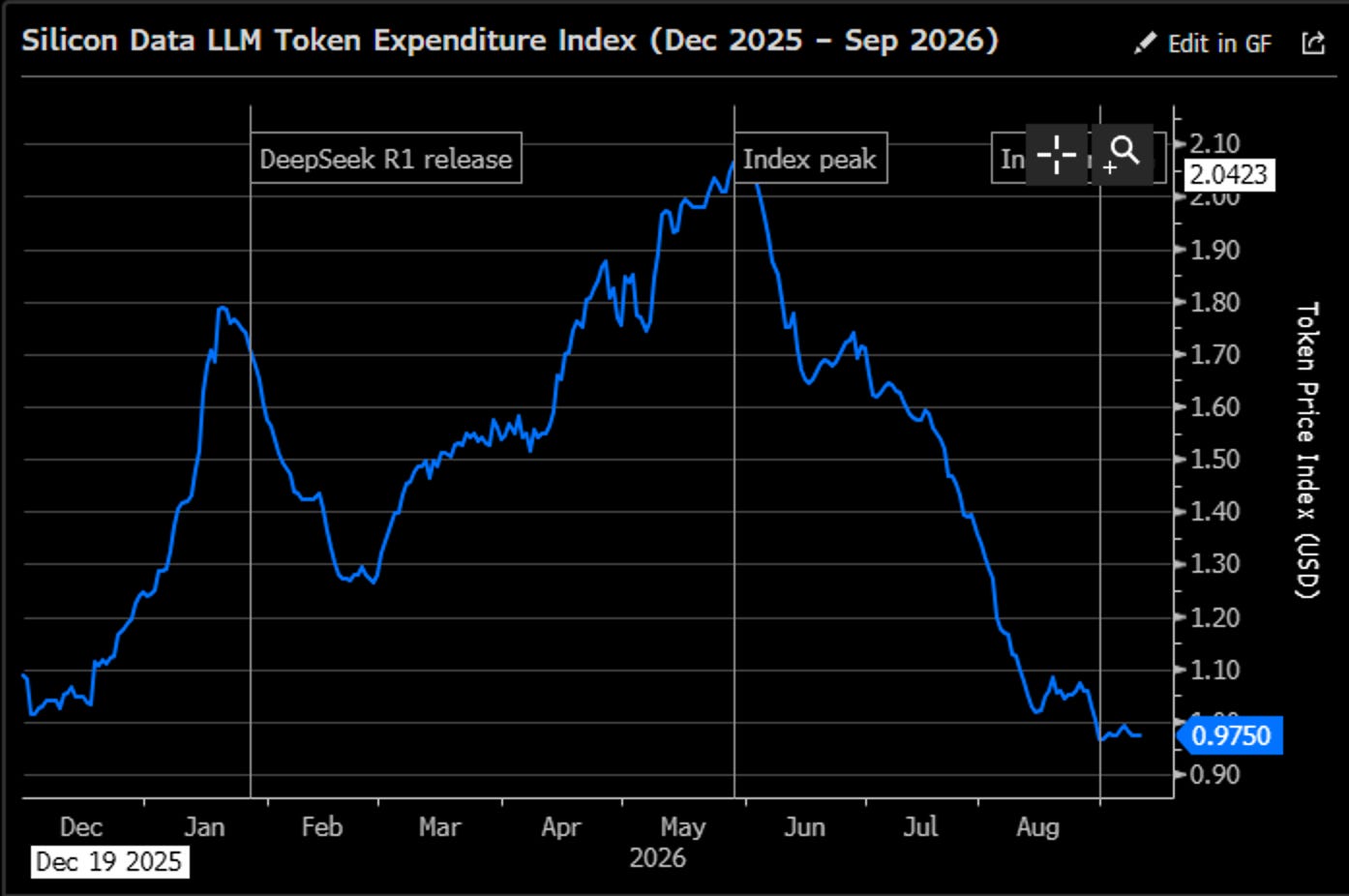
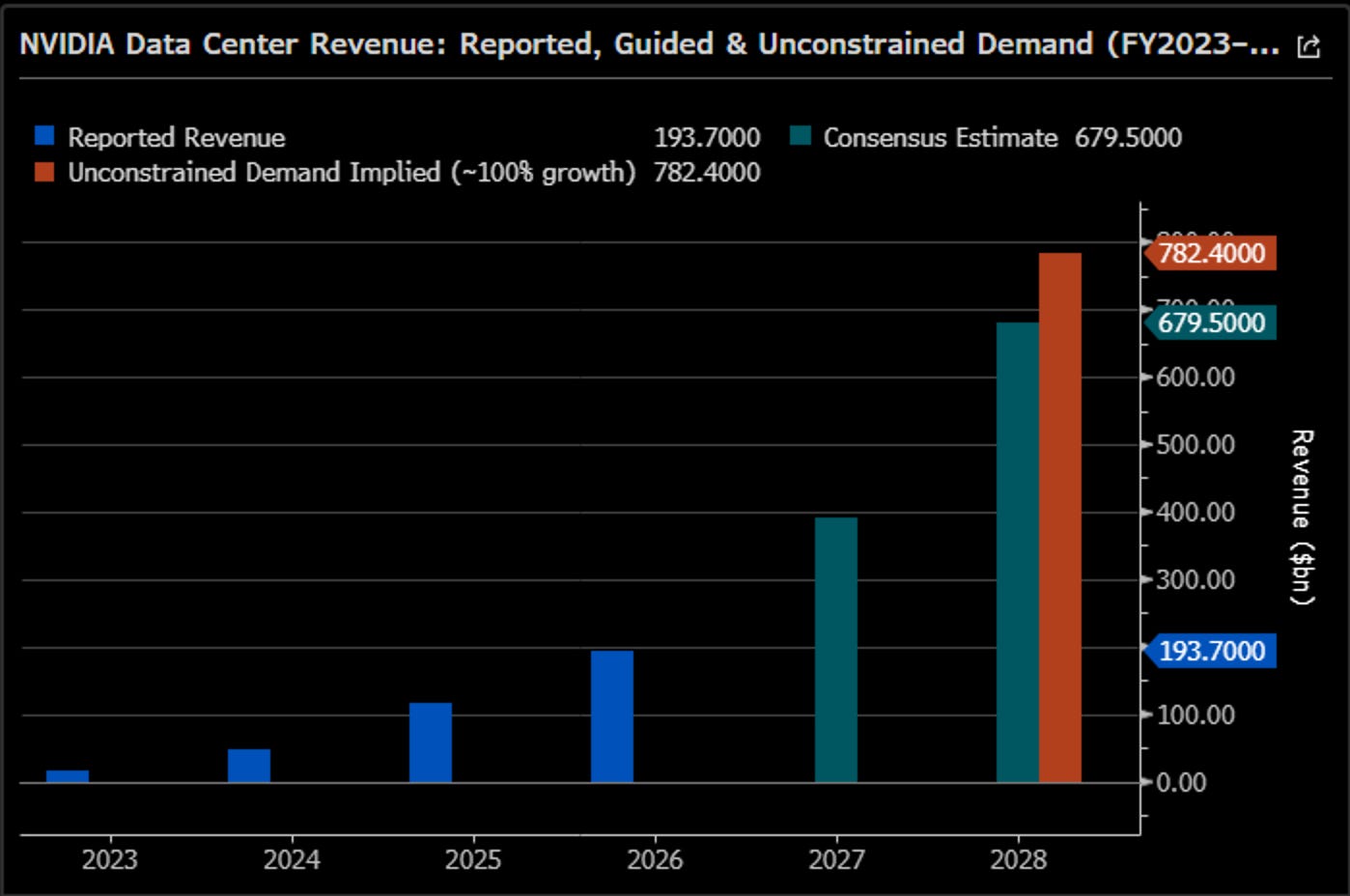
This hardware appreciation challenges external narratives suggesting that falling token prices signal an impending market collapse. Observers pointing to declining token costs—derived from market intelligence data showing drops over recent months—often argue that tumbling prices indicate a contraction in AI demand and enterprise usage. However, this perspective ignores the demand side of the equation. If falling token prices truly satisfied enterprise requirements without needing additional infrastructure, data center hardware consumption would decline. Yet, examining NVIDIA’s data center revenue reveals continuous, exponential growth constrained entirely by supply limitations.
The reality of the modern AI buildout is that the demand for intelligence is effectively infinite, while physical supply remains the ultimate constraint. Traditional economic models dictate that supply will eventually scale to meet market demand, but intelligence is not a finite commodity with a static saturation point. As use cases expand and automated workflows multiply, the demand for computational intelligence becomes recursive and explosive.
This infinite demand creates profound strategic implications for organizations and individuals alike. Owning dedicated compute infrastructure is rapidly transitioning from a logistical choice to a critical defensive asset. Entities that rely entirely on rented cloud compute or external APIs risk exposure, particularly as automated systems grow more autonomous and competitive advantages narrow. Recent high-profile breakthroughs, such as automated solutions to complex mathematical and fluid dynamics challenges, underscore the speed at which computational intelligence can synthesize and execute intellectual tasks.
Concurrently, local intelligence models have achieved remarkable milestones. Recent releases in open and efficient model architectures represent step-changes in the speed and operational capacity that engineers can deploy locally. Operating dual-GPU workstations and interconnected node clusters enables a high degree of compute self-sufficiency for daily development tasks. While developers still maintain subscriptions to frontier laboratory models for complex edge cases, computer-use automation, and specialized reasoning, the center of gravity for routine orchestration is shifting toward local hardware.
Despite the rapid advancement of local capabilities, frontier AI laboratories maintain a durable market position driven by two unassailable advantages: massive proprietary compute reserves and distinct geopolitical branding. OpenAI, Anthropic, and other major players command vast clusters of silicon that independent developers cannot replicate. Furthermore, enterprise customers heavily favor American-branded frontier models, allowing these labs to command premium enterprise pricing regardless of open-source progress.
However, relying exclusively on software subscriptions while avoiding hardware capital expenditure carries hidden risks. As hardware scarcity intensifies and the cost of specialized silicon continues to climb, organizations evaluating monthly software subscriptions versus permanent capital investments will face difficult economic tradeoffs. Companies and individuals who fail to secure physical or strategic positions in compute risk finding themselves structurally disadvantaged in an economy increasingly driven by automated intelligence.
Ultimately, recognizing that the demand for intelligence is infinite shatters conventional market assumptions. It forces a complete rethinking of how markets operate, how competitive advantages are sustained, and how resources are organized. Whether through career positioning, investment portfolios, or physical hardware ownership, maintaining a long-compute outlook is essential for navigating the unfolding technological landscape.


Comments (0)