


It has been just under a year since active semiconductor investing became a central focus for market observers who correctly identified the unfolding compute crunch back in August 2025. Following RAM shortages that took hold in September 2025, semiconductor equities embarked on a parabolic run. For investors who began migrating capital away from cryptocurrency markets around that time, the payoffs have been substantial. Virtually every prominent name listed in early machine economy analyses has seen its valuation double since November.
As these theses have played out directionally in the real world, strategies have continued to refine. By April 2026, high-conviction positioning reached a point where entire portfolios were concentrated in just three core memory stocks: SK Hynix, SanDisk, and Micron. While options trading around other semiconductor names remains common, memory commands the highest level of conviction.
These equities have posted gains ranging from 250% to 1,000% over the past year alone. While earlier entry points would have yielded even greater returns, prevailing sentiment suggests that the market is still in the early innings of this secular shift. Most retail and institutional participants looking at artificial intelligence tickers often feel they have missed the boat, struggling to identify where the next wave of value or optimal allocation lies. The definitive answer, by far, points directly to memory.
Experience continues to underscore a glaring reality: memory remains the single largest play that Wall Street fundamentally fails to understand.
To comprehend the memory trade, one must begin with the underlying technology. In the artificial intelligence race, public attention is typically captured
by the models themselves. The layperson often assumes that possessing a powerful computer or a high-end graphics processing unit is the sole requirement for handling complex computations.

While raw processing power is certainly necessary, what is frequently overlooked is the scale of the computations that must be held active within the system’s architecture—functioning much like a human performing mental math and carrying digits over in their head. Executing this requires two distinct hardware elements, yet both the general public and traditional financial analysts routinely misunderstand the mechanics and scale involved.
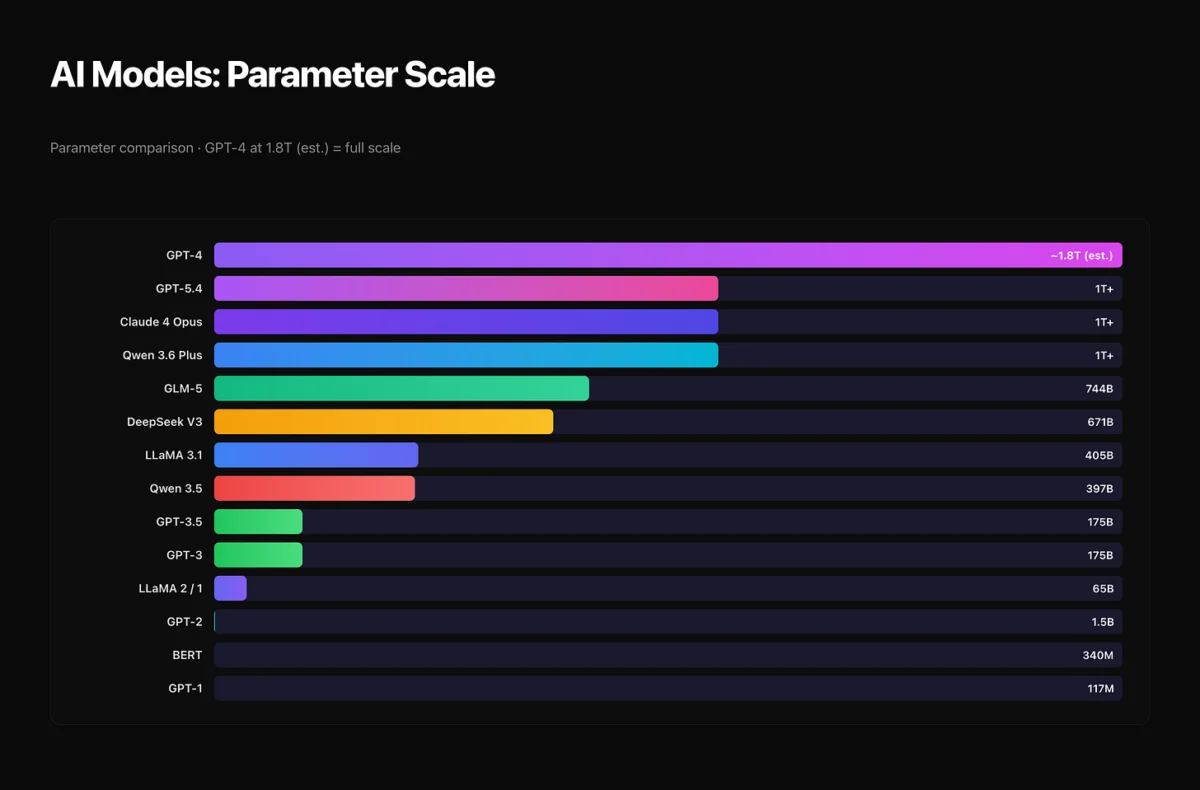
When evaluating artificial intelligence models, they are typically classified by their parameter counts. More capable models naturally feature larger parameter footprints. While ongoing engineering efficiencies mean smaller models are becoming increasingly capable, the ultra-large parameter models are scaling to unprecedented heights of capability. In the modern AI landscape, being memory-poor means a system cannot run the desired models, nor can it maintain an adequate context window. Both capabilities are paramount.
Operating effectively in the AI sphere is less about how many calculations can be performed simultaneously and more about how many calculations can be executed coherently toward a single, unified outcome. Put simply, higher-parameter models demand vastly more memory.
To illustrate, assuming standard half-precision floating-point format (FP16), running an AI model roughly requires two gigabytes of video random-access memory (VRAM) per one billion parameters. Consequently, running a cutting-edge model like GPT-5.4 on consumer-grade hardware would require an astonishing two terabytes of VRAM—a requirement that is both prohibitively expensive and practically impossible for individual setups.
Even smaller variants, such as a 35-billion parameter model like Qwen3.5, demand roughly 70 gigabytes of VRAM, easily exhausting the 24 gigabytes of VRAM found on a ten-thousand-dollar GPU housed within a fifteen-thousand-dollar workstation. The largest single VRAM configurations commercially available, such as the RTX 6000 Pro Max, fall short for the heaviest workloads. Running more advanced iterations like GLM 5.1 or Kimi K2.5 requires between 400 and 600 gigabytes of VRAM, necessitating clusters of six to eight enterprise GPUs and pushing hardware costs into the hundreds of thousands of dollars.
Furthermore, active AI sessions demand substantial memory allocation alongside the model itself. While a 128k context window is standard for coding tasks, it fills up rapidly, making 256k windows essential for serious enterprise or development applications. While various optimizations can stretch these limits, the foundational rule remains immutable: utilizing these models for advanced tasks requires significantly more memory.

Once these technical realities are clear, it becomes evident that the artificial intelligence boom is fundamentally a game of memory. Graphics processing units without adequate memory are functionally useless for inference workloads. Any comprehensive assessment of the AI infrastructure buildout cannot ignore the memory layer.
Public markets are theoretically designed to be efficient, but the semiconductor sector often behaves as though participants are asleep at the wheel. The broader AI trade can be divided into several sub-sectors, ranging from power infrastructure and cooling solutions to networking equipment, GPU design, and foundry fabrication.
The irony inherent in these categories is that they are all anchored to the exact same underlying demand cycle. It is impossible, for instance, to sell millions of advanced NVIDIA GPUs without simultaneously selling massive quantities of high-performance memory. In theory, all of these interconnected companies should share parallel demand assumptions.
Yet, a stark valuation disconnect persists. Companies specializing in data center cooling, such as Vertiv, have traded at forward price-to-earnings multiples around 50, as investors willingly pay a premium on the bet that AI infrastructure demand will remain robust. Meanwhile, NVIDIA—a firm holding the keys to the AI kingdom—has traded at forward P/E multiples below 20. If NVIDIA fails to ship its chips, cooling providers have nothing to cool, yet the market prices these segments with wildly divergent optimism.
Every single advanced AI chip sold requires substantial quantities of specialized high-bandwidth memory (HBM), which can only be sourced from a very limited oligopoly of three global manufacturers: Micron, SK Hynix, and Samsung. If NVIDIA’s future earnings are valued at 20 times forward projections, it defies logic that memory manufacturers should be priced at single-digit forward earnings multiples. Yet, that is precisely how the market has operated.
The core of the thesis rests on a simple truth: memory is the most severely bottlenecked component of the artificial intelligence revolution, yet it remains the most severely underpriced relative to every other category in the supply chain.

The persistent skepticism surrounding memory stems from a deeply ingrained Wall Street narrative: the belief that memory is a cyclical commodity industry bound to crash violently, just as it has during historical downturns. Historically, memory makers have weathered distinct boom-and-bust cycles characterized by oversupply, collapsing spot prices, capital expenditure cutbacks, industry consolidation, and subsequent supply crunches when demand inevitably returned.
However, writing off memory as a simple commodity cyclical industry is intellectually lazy. A closer examination of DRAM demand by end-market segment reveals a structural transformation. Historically, DRAM demand was closely tethered to mobile phone sales and consumer electronics. A pivotal shift occurred in 2023, when server and enterprise demand officially overtook consumer mobile demand for the first time—a trend that has defined every subsequent period.
Furthermore, the DRAM market has fractured into two distinct product lines: standard Double Data Rate (DDR) memory, which consists of swappable sticks used in traditional computing, and High Bandwidth Memory (HBM), which is physically integrated directly onto the GPU package itself. Every advanced AI processor brought to market requires HBM.
For the past two decades, memory was manufactured primarily for standard computing use cases that did not require extreme data transfer speeds. In contrast, high-performance computing and AI workloads are fundamentally throttled by bandwidth. They are what engineers classify as memory-bound. This represents a critical, permanent structural shift from historical norms.
Those who project a crash in memory prices by 2028 are effectively betting that global artificial intelligence demand will fall off a cliff. They are assuming that enterprise adoption will stall and organizations will abandon automated workflows in favor of legacy manual processes. While a segment of the market maintains this view—often because their own interaction with AI is limited to casual chatbot queries—enterprise users and developers experience an entirely different reality. Large language models have enabled smaller teams to operate across vastly larger surface areas, delivering undeniable business value that easily justifies the capital expenditures involved.
The financial upside remaining in these equities is substantial. On conservative forward-looking estimates, SK Hynix is projected to generate roughly $150 billion in profit by 2027, with bullish forecasts exceeding $200 billion. Against a market capitalization of around $540 billion, the dominant memory manufacturer on the planet trades at less than four times forward earnings.

A similar dynamic applies to Micron, a stock long treated with skepticism by Wall Street. Projected to earn approximately $100 billion in profit by fiscal 2027, its market capitalization sits near $500 billion—valuing the company at roughly five times forward earnings. These figures represent net earnings, not top-line revenue, placing Micron’s projected profit generation on par with tech giants like Google and Meta. Yet, the persistent refrain that "memory keeps it cyclical" continues to depress valuations, creating an asymmetric opportunity for long-term investors.
Even in a downside scenario where AI deployment slows, memory manufacturers have insulated themselves by signing robust, multi-year Long-Term Agreements (LTAs) with major technology customers. Recent corporate earnings calls consistently echo the same operational reality: memory supply is largely sold out through 2027 at the earliest, with enterprise clients already looking toward 2030 to secure future capacity windows.
Spot prices have climbed significantly over the past twelve months, but the broader supply squeeze is far from over. As manufacturers continue to prioritize high-margin HBM production and maintain disciplined capital allocation to avoid historical oversupply traps, shortages are likely to persist. Moreover, the demand horizon continues to expand into emerging categories like autonomous robotics, advanced image generation, and video synthesis—all of which are intensely memory-sensitive.
SanDisk presents a distinct exposure centered on NAND flash storage, yet it benefits from parallel structural tailwinds. Through strategic developments such as high-bandwidth flash co-developed with SK Hynix, flash memory is finding new relevance in high-performance architectures, defying simplistic assumptions about mature hardware markets.
Ultimately, the market’s reluctance to reprice memory highlights a profound misunderstanding of the physical constraints governing modern computing. As the artificial intelligence transition accelerates, memory remains the indispensable foundation upon which all intelligence is built.



Comments (0)