



In 1901, US Steel made history by crossing an extraordinary financial Rubicon, becoming the world’s first $1 billion company. At the time, observers looked upon the milestone with a mixture of awe and bewilderment. A retrospective history published just two decades later remarked that while hundreds of millions of dollars commanded immense respect, reaching a billion—a thousand million—seemed like little more than an abstract row of figures that defied practical computation.
Today, the financial landscape has shifted to a scale that would render early 20th-century industrialists entirely unrecognizable. Investors are no longer grappling with millions or even single billions; they are attempting to compute the staggering realities of the trillion-dollar club, which now counts 11 publicly traded companies among its ranks.

To grasp the sheer magnitude of a trillion dollars, consider a simple mental exercise: if an individual were to earn $1 every single second of every day without ever spending a single cent, it would take until the year 33,168 to accumulate a trillion dollars. Because human lifetimes are somewhat shorter than three millennia, modern investors must rely on the hope that the corporate giants in their portfolios can generate returns at a vastly accelerated pace.
The Mathematics of Modern Valuations
To evaluate whether today’s colossal valuations are rooted in economic reality or speculative fantasy, financial analysts turn to more rigorous metrics. Renowned finance expert Aswath Damodaran frequently employs reverse Discounted Cash Flow (DCF) models to calculate the precise annual revenues the world’s most valuable companies must achieve to justify their current market prices.
The findings highlight the extreme expectations baked into modern equities. According to Damodaran’s calculations, an investor buying into Tesla today must implicitly believe that the electric vehicle and clean energy pioneer will scale its annual revenue to at least $2.2 trillion by the year 2030. He notes that such an assumption is rapidly "pushing the limits of possibility."
By comparison, Nvidia shareholders face a slightly more grounded, though still massive, hurdle. To justify its valuation, Nvidia must pull in roughly $590 billion in annual revenue by 2030. While Damodaran characterizes that target as a significant reach, he concedes that it remains both possible and plausible.
Even so, $590 billion is a gargantuan sum. For historical perspective, when US Steel reached its groundbreaking $1 billion valuation in 1901, that figure represented only about $46 billion in inflation-adjusted terms.
From Unicorns to Centicorns
The rapid inflation of corporate values is not confined to the public markets; it is sweeping aggressively through the startup ecosystem. Just twelve years ago, the term "unicorn" was coined to describe the rare and impressive phenomenon of privately held startup companies achieving a $1 billion valuation. Today, that label feels quaint. The market has birthed "centicorns"—private startups boasting valuations 100 times greater than the original unicorn benchmark.
The scale of private funding rounds has expanded in tandem. Recent reports indicate that OpenAI is seeking to raise a staggering $100 billion in a single cash call at an $830 billion valuation—more than double the inflation-adjusted value of US Steel at its inception. Simultaneously, SpaceX has reportedly been in talks for a share sale valuing the aerospace enterprise at $800 billion, with ambitions for an initial public offering targeting $1.5 trillion. Anthropic, structured as a public benefit corporation explicitly designed to prioritize missions beyond mere profit maximization, is similarly rumored to be eyeing an IPO valuation in the neighborhood of $300 billion.
Perhaps the most startling illustration of this trend occurred earlier this year when Thinking Machines, an artificial intelligence startup, secured a staggering $2 billion seed round from investors. A seed round matching the nominal size of historical industrial titans underscores just how dramatically global financial markets have expanded over the past century.
These dizzying numbers prompt a fundamental question: Will these companies realistically generate the multi-trillion-dollar revenues required to support such lofty valuations? When measured in dollars per second, the proposition feels almost unimaginable. Yet, industry leaders argue that traditional economic frameworks fail to capture the true potential of emerging technologies. As the head of ChatGPT recently observed when discussing the future of artificial intelligence, there is "near-infinite demand for intelligence." If that premise holds true, the market may well find near-infinite demand for the equities driving it.
Shifting Global Dynamics and Economic Pressures
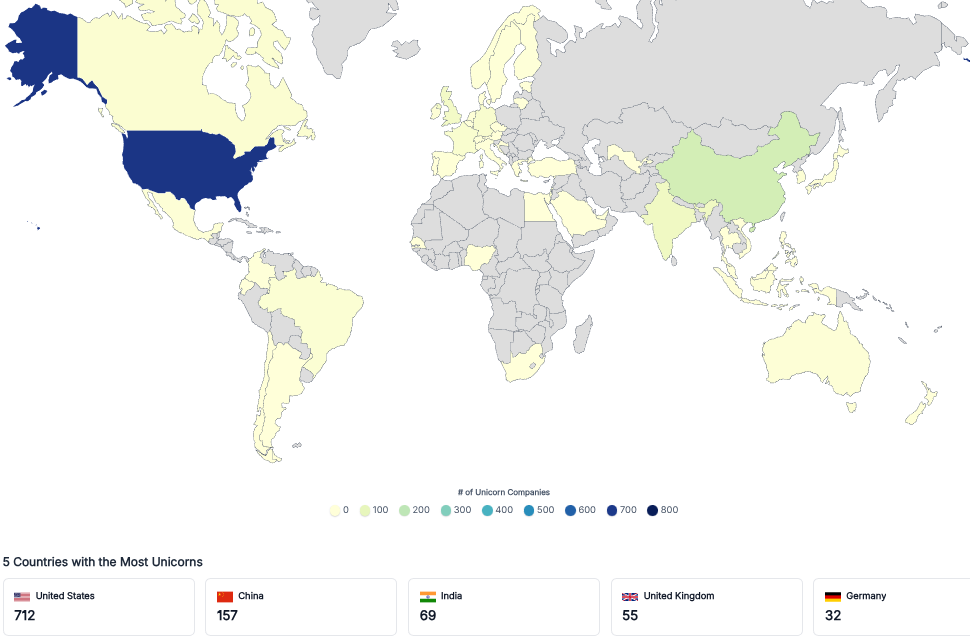
Beneath the headline-grabbing valuations of the tech sector, broader economic currents are reshaping the global landscape. Geographic disparities in market power continue to widen. In the United States, the startup ecosystem remains exceptionally robust, boasting 712 unicorns with a collective valuation of $2.9 trillion, including 80 new additions minted in 2025 alone. China follows as a distant second with 157 unicorns.
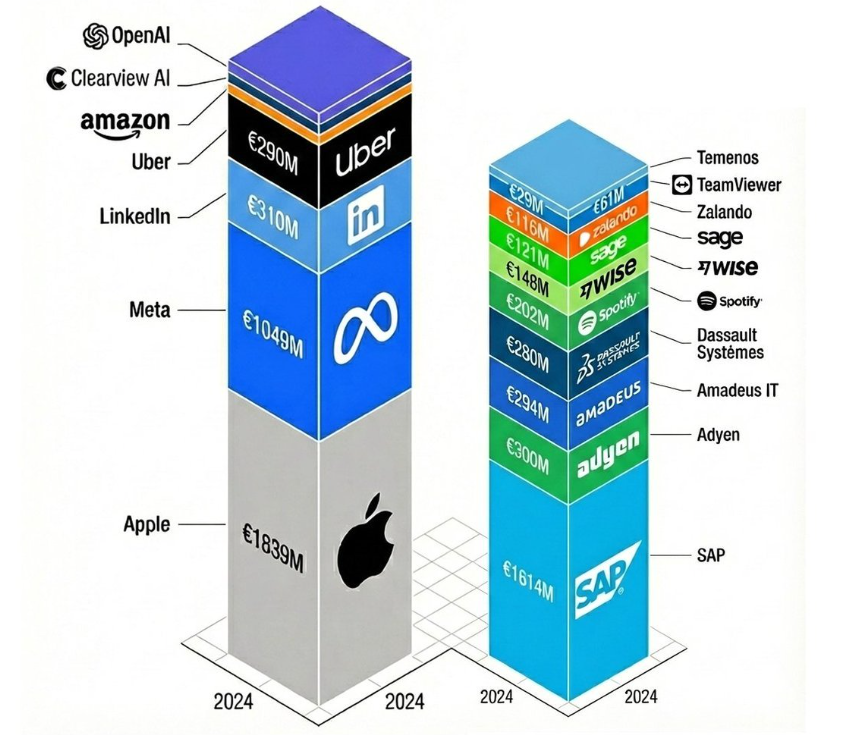
Europe, meanwhile, continues to grapple with a persistent innovation and market capitalization gap. According to data attributed to Goldman Sachs, over the past 50 years, just 14 companies with a market capitalization exceeding $10 billion were founded in Europe, compared to 241 in the United States. Underscoring this regulatory and economic friction, an unofficial tally reveals that in 2024 alone, the European Union collected more revenue from fining American technology companies than it did from all public European internet companies combined.
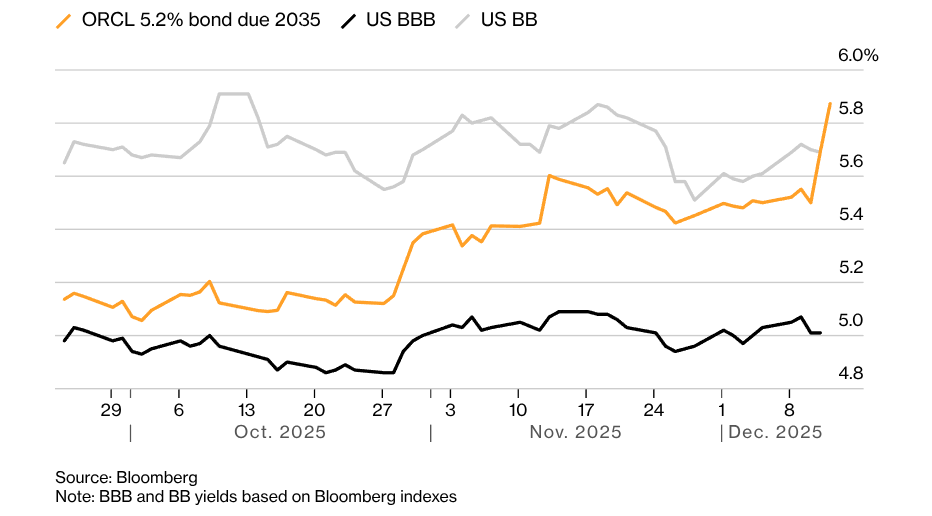
Credit markets are also beginning to reflect the intense pressures facing tech giants and their infrastructure backers. Bloomberg recently reported that debt issued by Oracle has begun trading at junk-bond levels, signaling rising anxiety among creditors over the capital-intensive nature of the artificial intelligence boom.
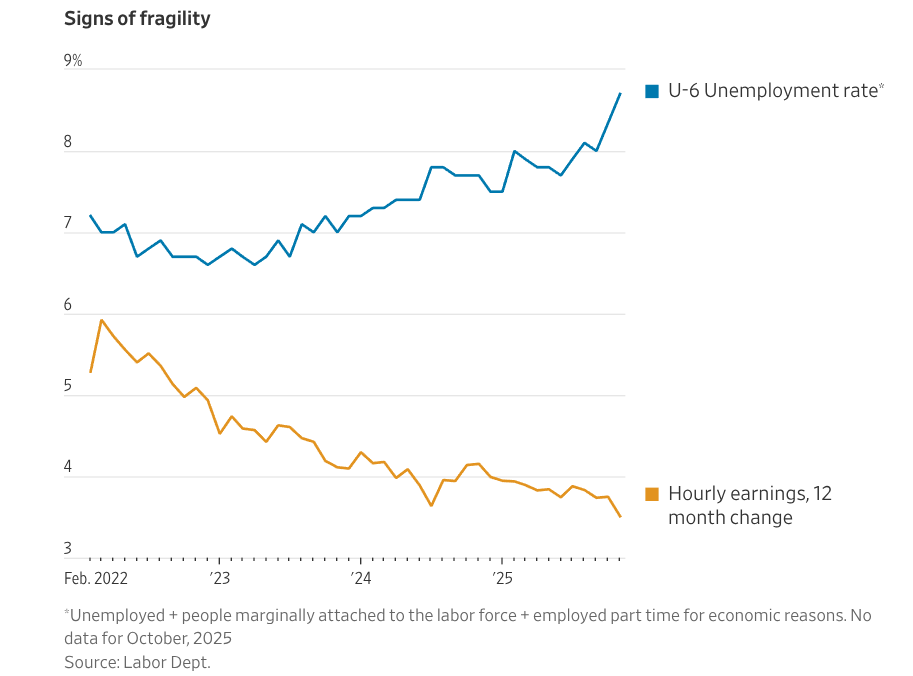
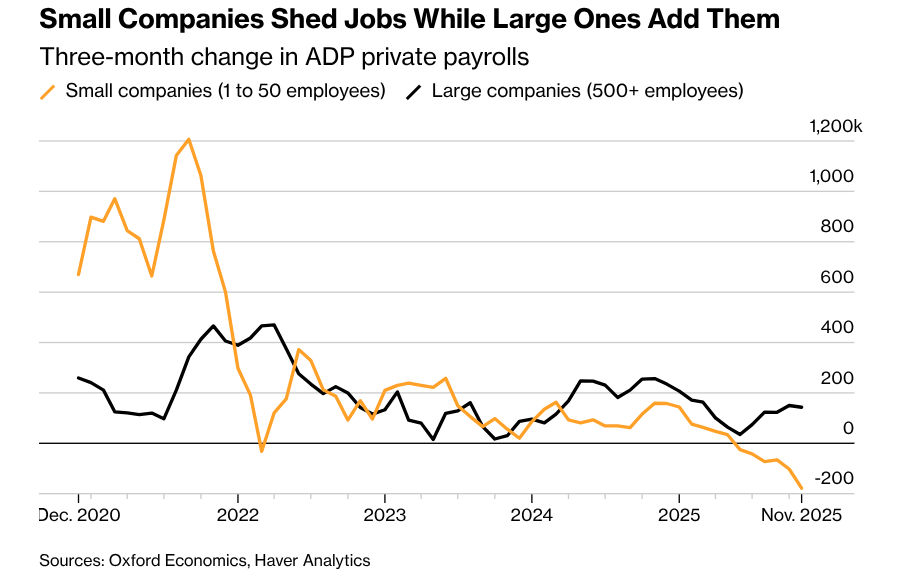
Macroeconomic anxieties are similarly trickling down to the labor market and consumer prices. Economic analysts note that with US unemployment ticking upward and wage growth slowing, jobs may soon replace inflation as the primary focus of public economic anxiety. Small businesses, in particular, have borne the brunt of recent policy shifts, with Bloomberg reporting that tariff pressures have hit smaller firms hardest, forcing them into job cuts.
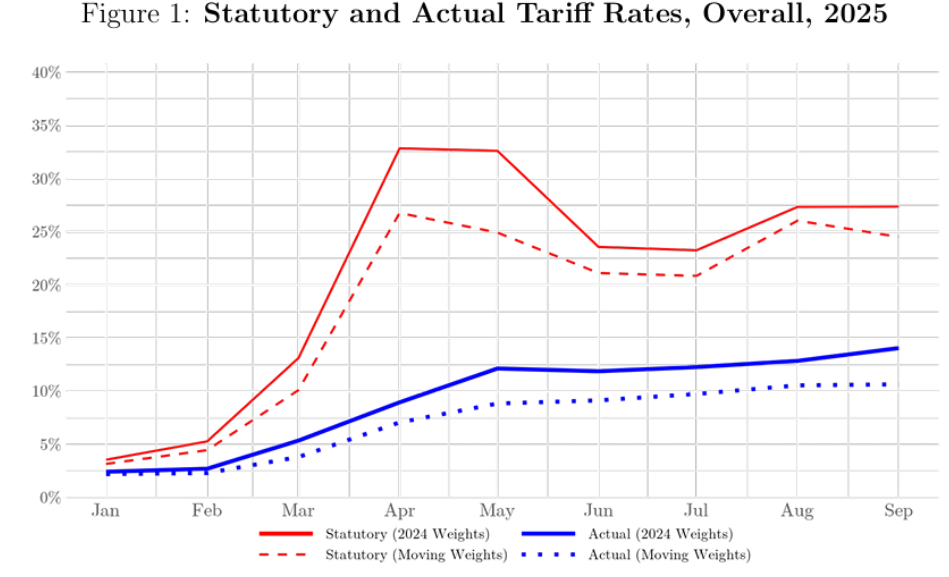
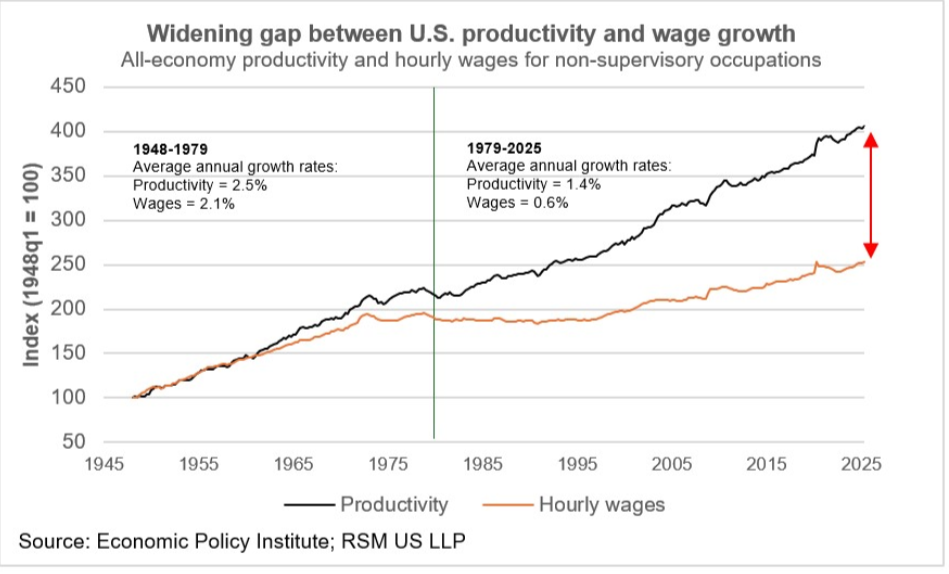
A study analyzing the impact of US tariffs highlights a complex reality for consumers. While time lags, exemptions, and enforcement gaps mean that effective tariff rates have thus far averaged about half of their headline figures, nearly 100 percent of those implemented tariffs are being passed directly through to consumers in the form of higher prices. This dynamic contributes to a widening structural gap between US productivity and the hourly wages paid to non-supervisory employees—a trend that economic observers note is only accelerating as technological advances and shifting global supply chains transform the American economy.
Cultural Shifts and New Market Metrics
As financial and technological paradigms evolve, everyday cultural habits are transforming in tandem. A report from the Financial Times earlier this year highlighted the gradual decline of personal reading habits, noting that the percentage of Americans reading for personal interest has fallen by 10 percentage points since 2005. Demographic shifts compound these trends; data from Torsten Slok shows that the percentage of US families with children has been steadily declining, while generational surveys reveal that nearly 50 percent of US teens "hardly ever" read in their spare time—up sharply from 20 percent in 1990—as digital platforms like YouTube command an increasing share of youth attention.
At the same time, international monetary dynamics are experiencing unusual shifts. The yield on 10-year Japanese government bonds recently touched roughly 2 percent for the first time since 1999. Historically, rising Japanese yields would prompt domestic savers to repatriate funds by selling foreign investments. However, the immense gravitational pull of American AI stocks appears to be reversing that traditional capital flow, keeping Japanese capital anchored in US markets.

Faced with an economic environment defined by artificial intelligence revolutions, trillion-dollar valuations, and shifting industrial scales, traditional metrics sometimes struggle to capture reality. Observing the broader sweep of industrial output, engineer and commentator Andrew McCalip recently evaluated consumer goods through an unconventional lens: measuring prices strictly by weight. His analysis revealed that a Tesla Model 3 actually costs less per pound than premium French Camembert cheese.
It is a striking realization: through modern engineering, global supply chains, and capital markets, humanity pulls raw sand, oil, and ore from the earth and transmutes them into sophisticated autonomous machines that are cheaper than aged milk. Perhaps that is precisely the kind of expansive thinking required to make sense of a world where startups raise billions in seed funding and trillion-dollar market caps are no longer the exception, but the new frontier.





Comments (0)