


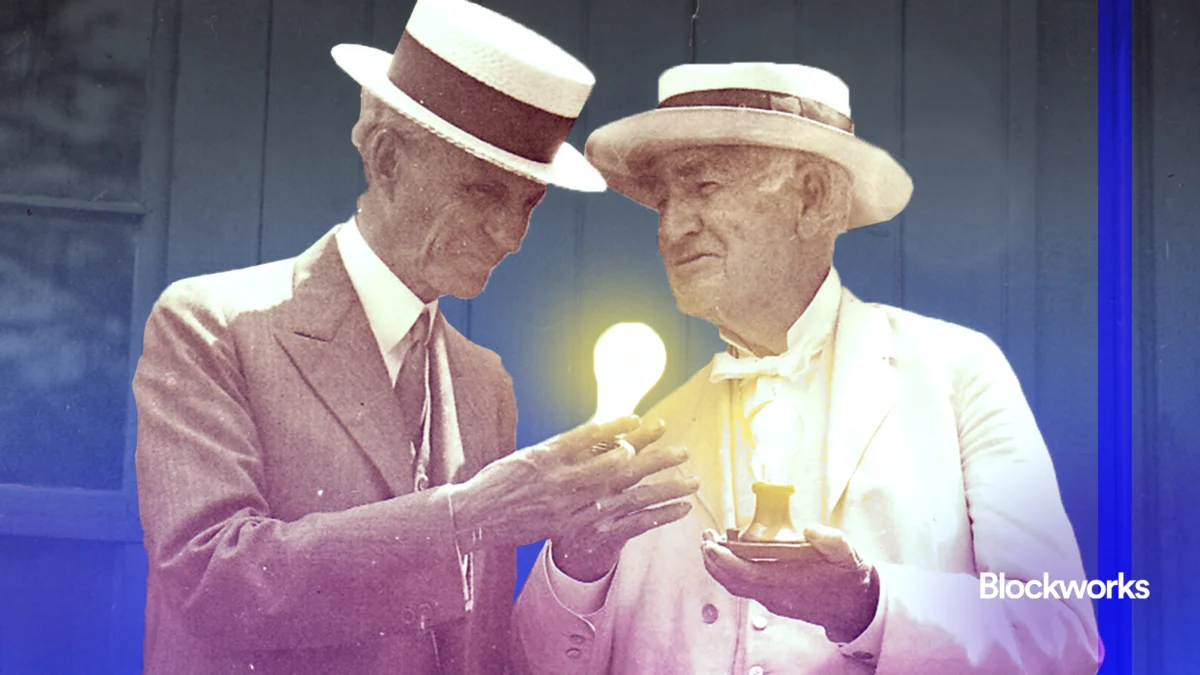
"There was no lightbulb moment in the story of the lightbulb."
That observation, penned by author Steven Johnson in his acclaimed book How We Got to Now, cuts directly against one of the most stubborn and pervasive myths in modern history. Popular culture has long associated the lightbulb with the serendipitous flash of sudden inspiration—the cinematic moment when a fully formed, revolutionary idea miraculously pops into an inventor’s head, prompting an immediate shout of "Eureka!"
Yet, historical reality was far messier, collaborative, and protracted. Popularly and reflexively credited solely to Thomas Edison, the incandescent lightbulb was in fact the accumulated product of nearly a century of relentless trial and error, cross-pollination, and experimentation by dozens of distinct inventors scattered across the globe.
The timeline of electric illumination stretches back decades before Edison even picked up a tool. Electric light was first demonstrated publicly by Humphry Davy as early as 1802, when he created an incandescent arc using a primitive battery. Decades later, the enclosed bulb mechanism was successfully developed by Warren de la Rue in 1840. Thomas Edison himself was not born until 1847.
Many more minds contributed both before and after 1847. In his definitive historical study, The Electric-Lamp Industry: Technological Change and Economic Development from 1800 to 1947, Massachusetts Institute of Technology historian Arthur Bright lists roughly two dozen individuals who can rightfully be considered co-inventors of the lightbulb. In this broader context, Edison’s famous work represented the ultimate culmination of a century-long technological evolution, not its point of origin.
"The Edison lightbulb was not so much a single invention as a bricolage of small improvements," Steven Johnson writes.
Edison’s primary and undeniable contribution to that intricate bricolage was the invention, in the late 1870s, of the carbonized bamboo filament. This crucial component was what ultimately made incandescent lightbulbs longer-lasting, safe for ordinary indoor use, and commercially viable on a mass scale.
However, even with this breakthrough, patent courts forced Edison to share credit with contemporaries like Sir Joseph Wilson Swan. Swan’s version of the incandescent lamp was historically notable for being the first to successfully illuminate both a private home—his own—and a public building, the renowned Savoy Theatre in London. This legal and technological reality led directly to the portmanteau naming of the "Ediswan incandescent lamp," which consumers could purchase in the marketplace starting around 1880.
This joint custody of the lightbulb takes nothing away from Edison’s monumental achievements as an inventor and entrepreneur. Quite the opposite is true. Edison accomplished something even bigger and more transformative than merely bringing artificial lighting to the masses: He fundamentally industrialized the act of inventing itself.
"Edison didn’t just invent technology," Johnson explains, "he invented an entire system for inventing, a system that would come to dominate 20th-century industry."
That pioneering corporate system inspired a massive proliferation of formal research and development laboratories. It fostered environments where teams of diverse specialists could collaborate directly on complex problems, share in financial upsides, absorb outside ideas, and freely build upon one another’s ongoing work. This was an early iteration of "networked innovation"—a dynamic paradigm that is infinitely more powerful than the romanticized, popular image of the solitary genius working in isolation.
That structural reality, Johnson argues, is the most important lesson to learn from the true history of the lightbulb.
"If we think that innovation comes from a lone genius inventing a new technology from scratch, that model naturally steers us toward certain policy decisions, like stronger patent protection," Johnson notes. "लेकिन if we think that innovation comes out of collaborative networks, then we want to support different policies and organizational forms: less-rigid patent laws, open standards, employee participation in stock plans, cross-disciplinary connections."
And that brings contemporary observers to an unexpected yet compelling parallel: cryptocurrency and blockchain technology.
At its core, crypto is first and foremost a mechanism designed to incentivize the kind of open, composable innovation that builds immensely powerful networks. Edison proved once and for all that systematic collaboration beats solitary isolation, but his corporate model ultimately still relied heavily on traditional patents and proprietary control to protect commercial interests.
By contrast, the most transformative and enduring networks in human history—ranging from Roman roads and standardized shipping containers to the global internet and GPS—worked entirely differently. They were built as open, permissionless infrastructure that anyone in the world could access, build upon, and integrate into their own systems.
Economist Christian Catalini recently underscored this point when discussing the history of open-source networks. "Money," Catalini observes, "is the last closed network."
Crypto, in his view, represents the long-awaited technological vehicle to open up monetary systems to everyone’s ultimate benefit. "Permissionless innovation will always create exponentially more value than a closed system," he concludes.
At the end of a difficult and often disappointing year for open-source crypto markets and builders, it is worth pausing to remember just how powerful these collaborative networks can truly become when they reach critical mass.
Just as there was no singular lightbulb moment in the true history of the lightbulb, there may never be one defining, cinematic moment when crypto "arrives" in the mainstream consciousness either. Both phenomena are classic products of networked innovation that only realize their true, world-altering potential when they evolve into fully realized networks. A lightbulb, after all, is merely a fragile glass ornament until it is plugged into a vast, humming electrical grid.
In much the same way, crypto is currently building that underlying grid for the modern digital economy—constructing open, permissionless infrastructure that is patiently waiting for the next great idea to plug in and light up the world. Hopefully, that transformation begins to bear fruit in 2026.





Comments (0)