


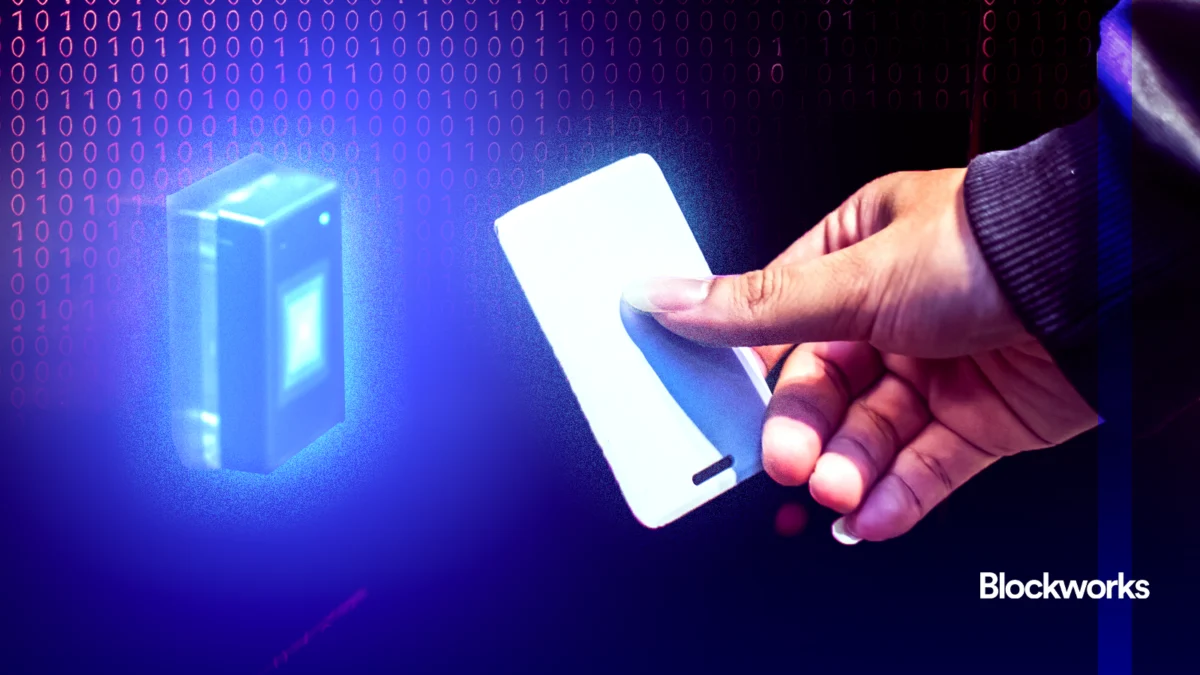
In the opening scene of Philip K. Dick’s 1969 science fiction classic Ubik, the protagonist, Joe Chip, faces a domestic dilemma that reads like an early warning system for modern technology. Finding himself behind on his rent, Chip attempts to open his apartment door for a guest, only for the inanimate barrier to block his exit with a polite yet stubborn demand: "Five cents, please." Short on loose change, Chip offers to settle the bill tomorrow, but his degraded credit score renders his promises worthless to the mechanical gatekeeper. When he tries to reason with the portal, arguing that his payments are merely a gratuity rather than a binding obligation, the door smugly instructs him to check his contract. Even when Chip threatens to unscrew the bolt mechanism with a knife, the door calmly threatens legal action before his guest finally intervenes from the hallway, dropping a coin into the slot to secure their release. Later in the novel, Chip’s refrigerator, coffee maker, and shower similarly demand immediate payment before rendering their services, transforming a standard living space into a high-tech pay-as-you-go vending machine.
For decades, this scenario stood as a quintessential example of dystopian science fiction—a cautionary tale about hyper-commercialized living environments where everyday physical autonomy is subordinated to automated corporate control. Yet, as financial technologists and decentralized finance developers look toward the next frontier of market evolution, this exact vision is increasingly being re-imagined not as a dystopia, but as the blueprint for an efficient, cryptographic utopia.
The core ambition of decentralized finance has always been the transformation of traditional assets into programmable financial instruments capable of automatically enforcing the terms of their own agreements. By removing intermediaries and relying on transparent, immutable code, blockchain networks have created a parallel financial ecosystem where transactions settle instantly and counterparties need not trust one another. However, this revolutionary architecture has long faced a fundamental physical limitation: decentralized finance is largely restricted to crypto-native assets. Because a smart contract executed on a blockchain cannot physically reach into the material world to repossess an automobile, lock a rented apartment, or evict a delinquent tenant, traditional physical collateral has remained locked out of the onchain economy.
Bridging this gap requires connecting blockchain execution with physical enforcement mechanisms—transforming smart contracts into smart locks that can secure tangible property. In this paradigm, a lender could confidently accept real-world assets as collateral against onchain loans, knowing that a smart contract can autonomously revoke access to the property if the borrower defaults.
While this concept might sound like a radical departure from traditional banking, its theoretical foundations were established long before the invention of Bitcoin or Ethereum. Way back in 1997, legal scholar and cryptographer Nick Szabo articulated the immense utility of merging smart contracts with physical security hardware. In his seminal writings on the architecture of digital contracts, Szabo explained that numerous contractual clauses—such as collateral, property rights delineation, and bonding—could be embedded directly into the physical and software infrastructure of everyday goods. By integrating these controls into the items themselves, breaching a contract becomes intentionally expensive and difficult for the offending party. These protocols would dynamically allocate control of cryptographic operating keys based entirely on the verified terms of a digital agreement, ensuring that only the rightful, compliant owner maintains operational access to the property.
For many years, the only property whose ownership could be efficiently embedded into smart contracts was digital tokens, as they were the sole asset class natively native to blockchain networks. But the integration of smart locks controlled by verifiable, immutable rules could effectively turn the broader physical world into a vast automated vending machine. Szabo famously described vending machines as the primitive ancestors of smart contracts—mechanical devices that securely hold an asset, such as a can of soda, and release it only to individuals who satisfy the precise conditions of the contract by inserting the correct coinage, entirely bypassing the need for a human or corporate shopkeeper.
Szabo envisioned a future where this rules-based automation expands far beyond snack dispensers, embedding contracts into valuable physical property managed through digital means. Sixteen years prior to the launch of Ethereum, he identified automobiles as the most straightforward and immediate use case for smart locking protocols. He theorized the creation of a smart lien protocol: if an asset owner fails to meet their payment obligations, the underlying smart contract automatically invokes the lien protocol, seamlessly returning control of the vehicle’s ignition keys to the lending institution.
While a fully decentralized, blockchain-native execution of this exact mechanism is still developing, the broader financial and automotive industries have already moved in a remarkably similar directional path. In recent decades, traditional subprime auto lenders have increasingly adopted starter interrupt devices, or SIDs, which allow financial institutions to remotely disable a vehicle when a borrower falls behind on monthly loan installments.

This modern implementation of remote asset control, however, highlights the friction inherent in legacy centralized systems. When a traditional lender disables a vehicle via an automated starter interrupt, it often creates a compounding crisis for the consumer: if the car is disabled, the borrower cannot drive to work, thereby losing the income required to catch up on their loan payments. Furthermore, resolving these disputes through traditional corporate customer service channels can be frustratingly opaque, leaving drivers stranded on highways or unable to negotiate emergency extensions. Unlike Joe Chip inserting coins into a smart door, a driver facing a legacy SID-locked vehicle cannot easily make an immediate, programmatic micro-payment from the dashboard to restore functionality.
In contrast, a blockchain-integrated smart lock ecosystem could provide immediate, frictionless resolution. By leveraging a smartphone with a digital wallet, a borrower facing temporary liquidity constraints could instantly top up their payment via a smart contract, triggering an immediate, automated restoration of vehicle access without requiring human intervention or administrative delays.
This concept of blockchain-enabled physical access control is not entirely novel to the crypto sector either. Back in 2015, a high-profile project known as Slock.it promised to deliver decentralized digital locks that mirrored the exact scenarios depicted in Philip K. Dick’s fiction. The platform’s developers envisioned a system where tenants renting a property would send payments directly to the smart lock itself, which would then dynamically enter into an immutable smart contract with the renter to grant temporary access.
Although Slock.it ultimately failed to achieve widespread commercial production—partly because its core contributors became consumed by a side project known as The DAO, an initiative that nearly destabilized the early Ethereum network—their vision may simply have been constrained by the technological limitations of the era. The underlying infrastructure required to support such applications has matured dramatically over the past decade. Modern blockchain networks are exceptionally fast, transaction fees have plummeted, and user-facing frontends have become remarkably intuitive.
At the same time, traditional finance has developed an insatiable appetite for asset tokenization. Despite fluctuations in cryptocurrency markets, institutional enthusiasm for bringing real-world assets onchain has accelerated significantly. Global investors are actively seeking productive yield outside the increasingly concentrated and expensive universe of public equities, driving demand for alternative asset classes that can generate reliable returns. Smart contract-enabled locks and tokenized physical collateral may represent the technological bridge required to unlock these markets on a global scale.
Consider the macroeconomic conditions in regions like Turkey, where soaring inflation rates have driven borrowing costs on personal auto loans to staggering heights, with rates reaching roughly five percent per month. This translates to an annualized interest burden exceeding one hundred percent, sitting far above the prevailing domestic inflation rate. If loans of this nature were tokenized and governed by transparent smart contracts capable of autonomously managing collateral and risk, they could attract a massive pool of global capital hungry for high-yield opportunities, while providing lenders with robust, cryptographic risk mitigation tools.
Institutional leaders are already recognizing the profound potential of this structural shift. BlackRock CEO Larry Fink highlighted the transformative power of tokenization, noting that the technology can dramatically expand the universe of investable assets far beyond the listed stocks and bonds that currently dominate traditional market structures.
The speculative fiction of Philip K. Dick mapped out the conceptual framework of automated physical commerce decades ago, and visionary cryptographers like Nick Szabo subsequently wrote the technical manual for decentralized contract execution. As modern financial markets continue to embrace digital transformation, the remaining challenge is not theoretical, but architectural—building the digital doors that will safely connect physical assets to the decentralized financial future.




Comments (0)