


Data Reveals Surprising Flaws in Major RPC Providers
The foundational infrastructure supporting the global Web3 ecosystem is facing an invisible crisis of data reliability, according to comprehensive new telemetry from blockchain routing network RouteMesh. While developers and enterprises routinely trust major Remote Procedure Call (RPC) node providers to deliver accurate blockchain data, a deep dive into real-world performance metrics suggests that trusting these nodes blindly can lead to dangerously inaccurate results.
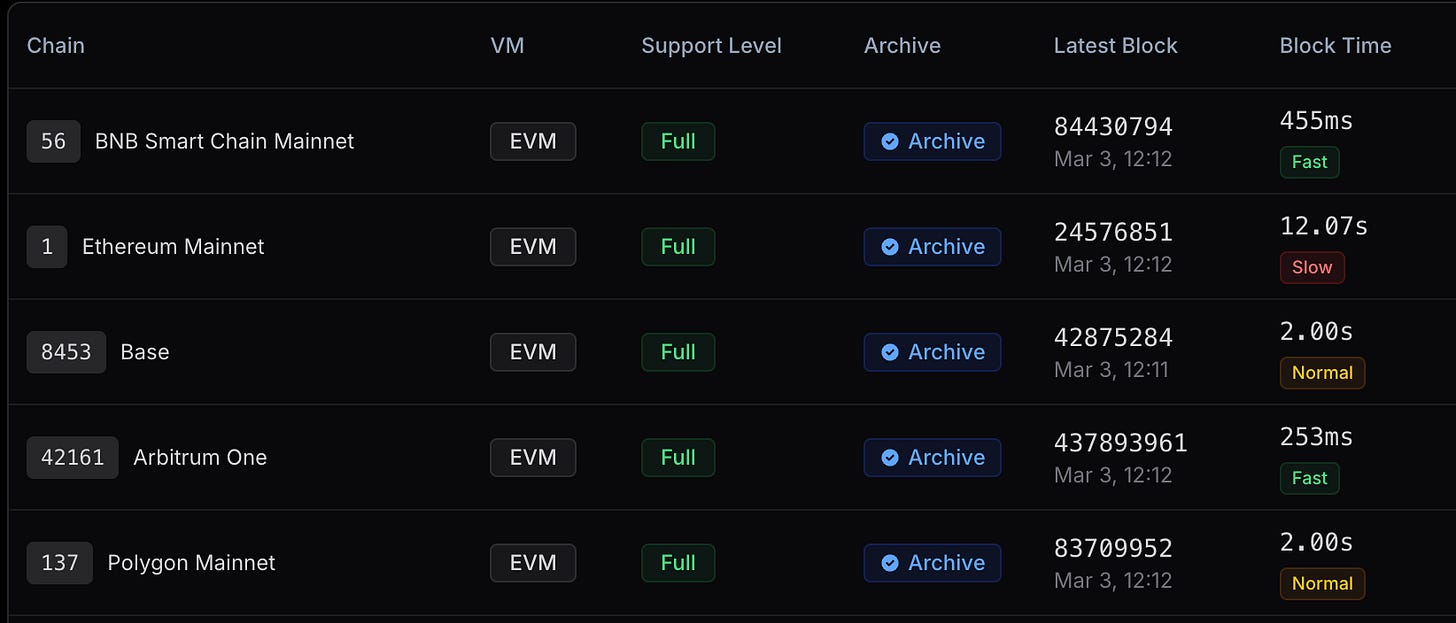
For the uninitiated, RPC nodes serve as the critical bridge between decentralized applications, data indexers, and the underlying blockchains. They allow applications to read state, submit transactions, and query historical data. However, the assumption that an RPC node always provides correct, synchronized, and untampered data is increasingly being called into question. Data compiled by RouteMesh across major global regions—including Canada East, Frankfurt, and Singapore—reveals that even the industry’s top-tier providers experience wide variances in data correctness and synchronization, with some providers dipping to alarming levels of inaccuracy depending on the network being queried.
According to RouteMesh’s empirical data, the absolute best-performing RPC providers achieve a data correctness range between 92% and an occasional 100%. Conversely, others struggle significantly, delivering correct data only 60% of the time on certain networks. This stark discrepancy exposes a major vulnerability for downstream consumers who rely on these pipelines for financial transactions, analytics, and indexing.
To understand the scope of the problem, industry analysts must look at the two core dimensions of data quality that dictate network reliability: how well a node is synchronized with the tip of the chain, and whether the data it returns is fundamentally correct. Determining either of these metrics is an immense engineering challenge that requires purpose-built, large-scale infrastructure.

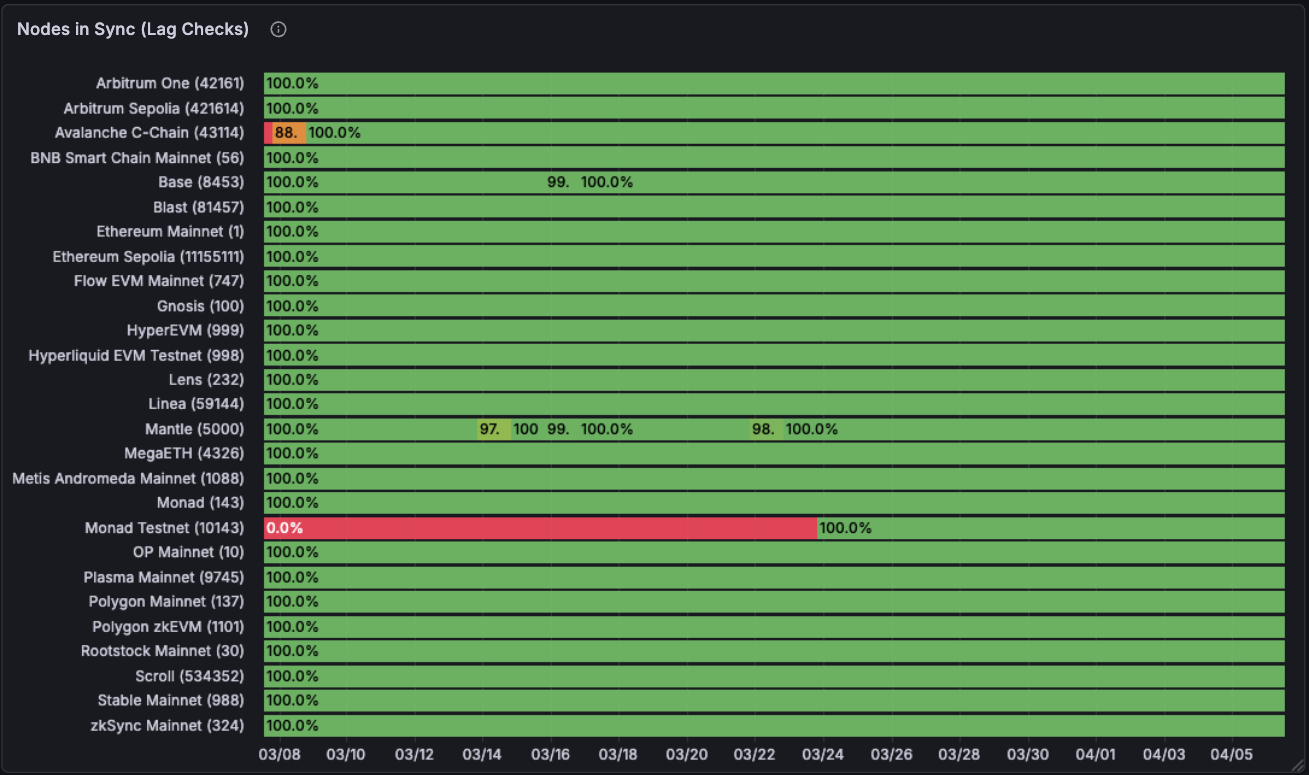
To determine how much a node is lagging behind the live state of a network, infrastructure monitors must track multiple complex variables simultaneously. Once these variables are established, systems can execute calls like eth_getBlock:latest across competing RPC nodes and compare their responses against one another. These checks must be executed at a frequency directly proportional to the activity of the specific blockchain. A high-throughput chain with rapid block production times demands far more aggressive validation checks than a slower-moving network.
While tracking chain lag is difficult, verifying data correctness is an even steeper hurdle that demands sophisticated engineering and intelligent inventory management. The most straightforward approach to validation is making every single API call twice across two separate providers. However, this method quickly becomes economically infeasible at enterprise scale. Furthermore, it introduces logical flaws if the two chosen providers happen to share a questionable track record for data integrity. Assuming an environment with two independent providers that each maintain a 90% correctness rate, a developer could still encounter incorrect data 1% of the time. At scale, this translates to thousands of corrupted entries in a database, which can have catastrophic financial and operational consequences for Web3 applications.
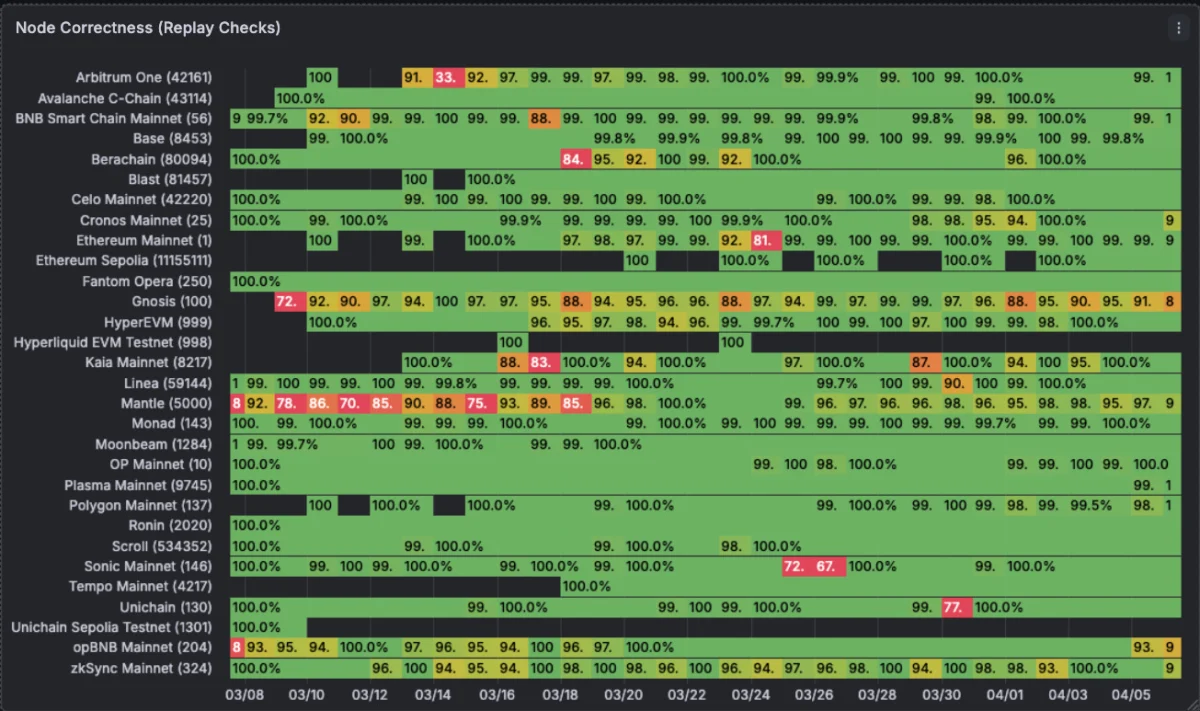
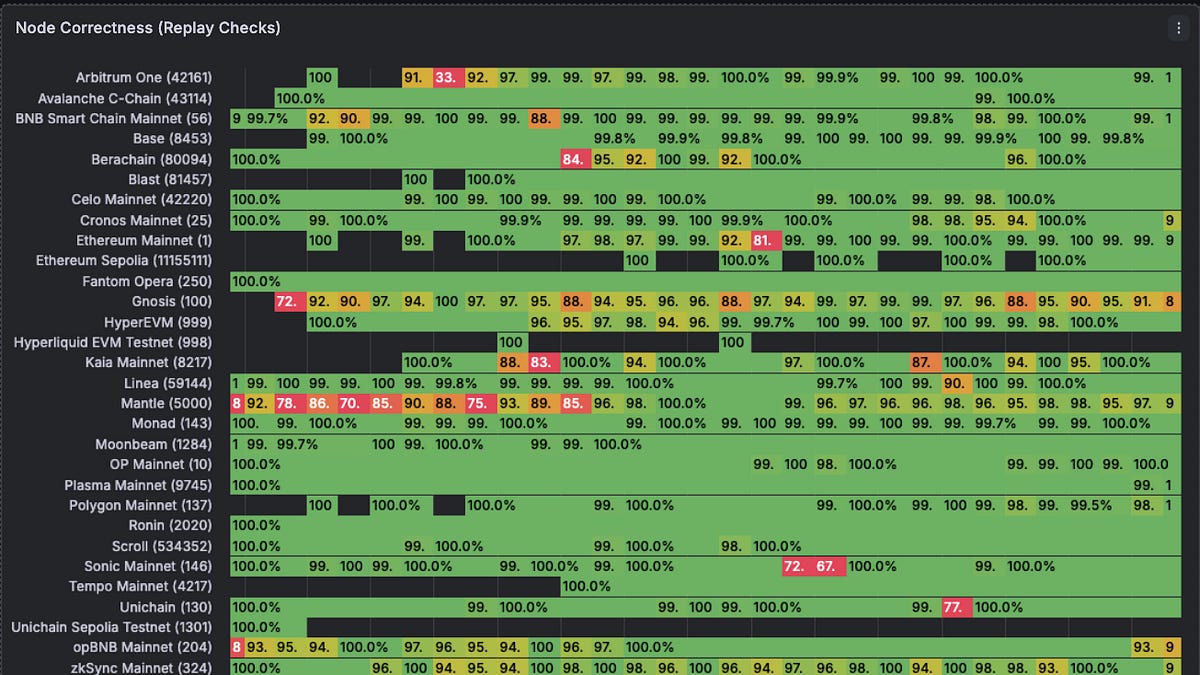
To combat this, infrastructure operations like RouteMesh utilize advanced monitoring methodologies. The process relies on executing what the team calls "replay" checks, wherein original requests are systematically replayed and audited against hash-based consensus checks. While these hash-based comparisons can occasionally introduce minor inaccuracies during evaluation, they provide a scalable way to filter out corrupted data streams.
When applying these rigorous auditing frameworks to the top three RPC providers in the industry at the time of writing—Alchemy, Quicknode, and Chainstack—the results paint a complex picture of modern blockchain infrastructure. Across a 30-day observation window, telemetry shows distinct operational profiles for each provider.
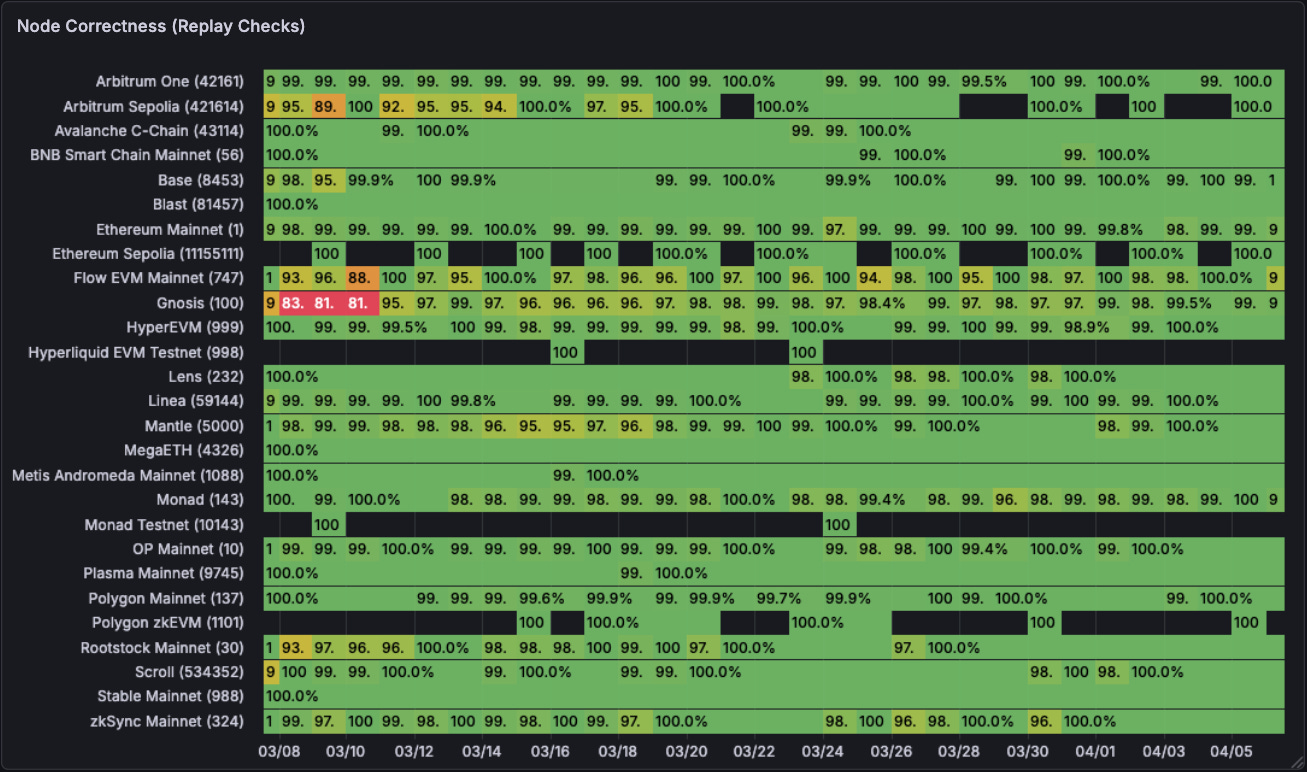
Alchemy’s node fleet, for instance, generally maintains a high degree of synchronization with the tip of the chain. Their infrastructure remains largely in-sync, save for isolated nodes experiencing intermittent issues. However, when examining node correctness rather than just synchronization, the data reveals a different story. Some networks experience severe anomalies during high-congestion periods. For example, the Ethereum mainnet exhibited notable hiccups during mid-March, while emerging networks like HyperEVM hovered in a 96% to 98% correctness range—a margin of error that can complicate the work of developers building rigorous data pipelines.
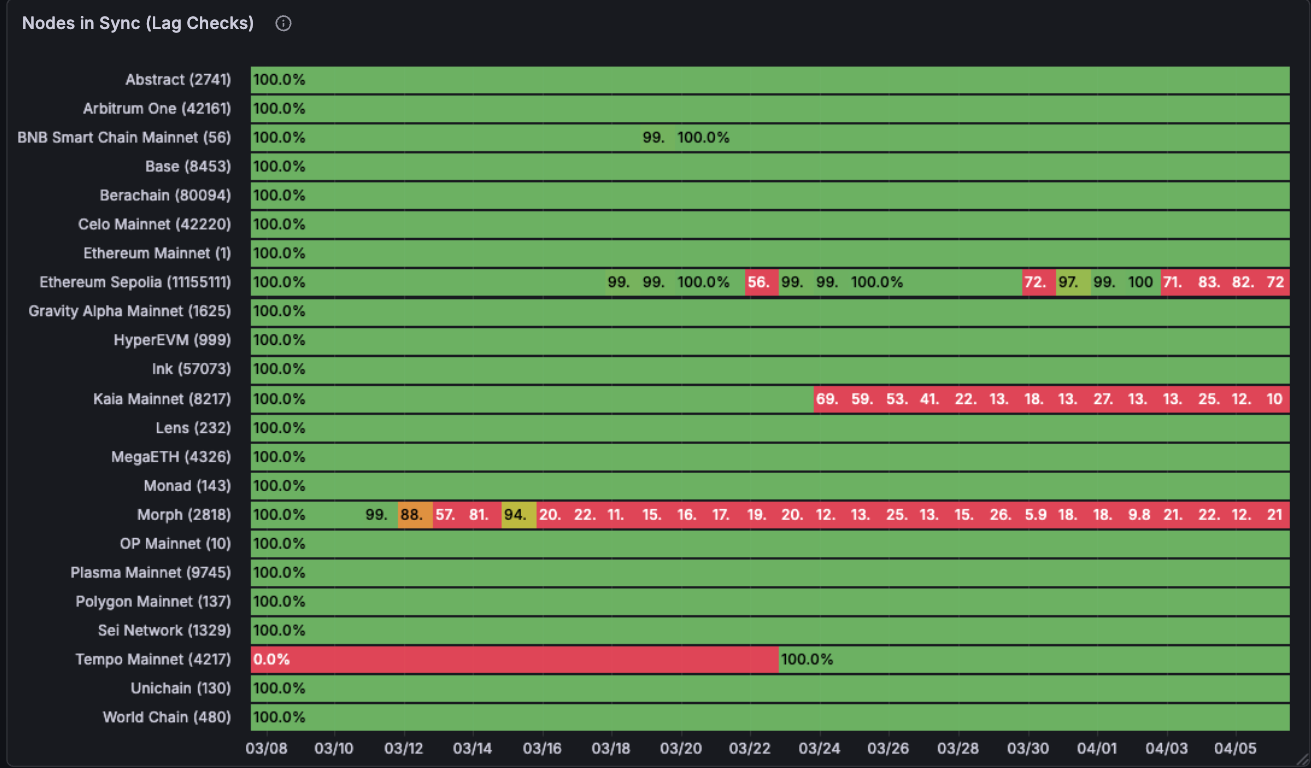
In contrast, Quicknode’s fleet tends to experience more frequent synchronization drift from the live tip of the chain. While this may stem from shifting commercial priorities regarding specific networks or ongoing fleet deprecations, the resulting data divergence is noticeable when compared to competitors like Alchemy. Furthermore, Quicknode’s correctness checks highlight similar vulnerabilities. Major networks such as Arbitrum, Ethereum, and Polygon demonstrated periods of significant divergence, suggesting that while the provider is correct for the vast majority of routine queries, it is susceptible to sharp drops in data integrity during critical windows.
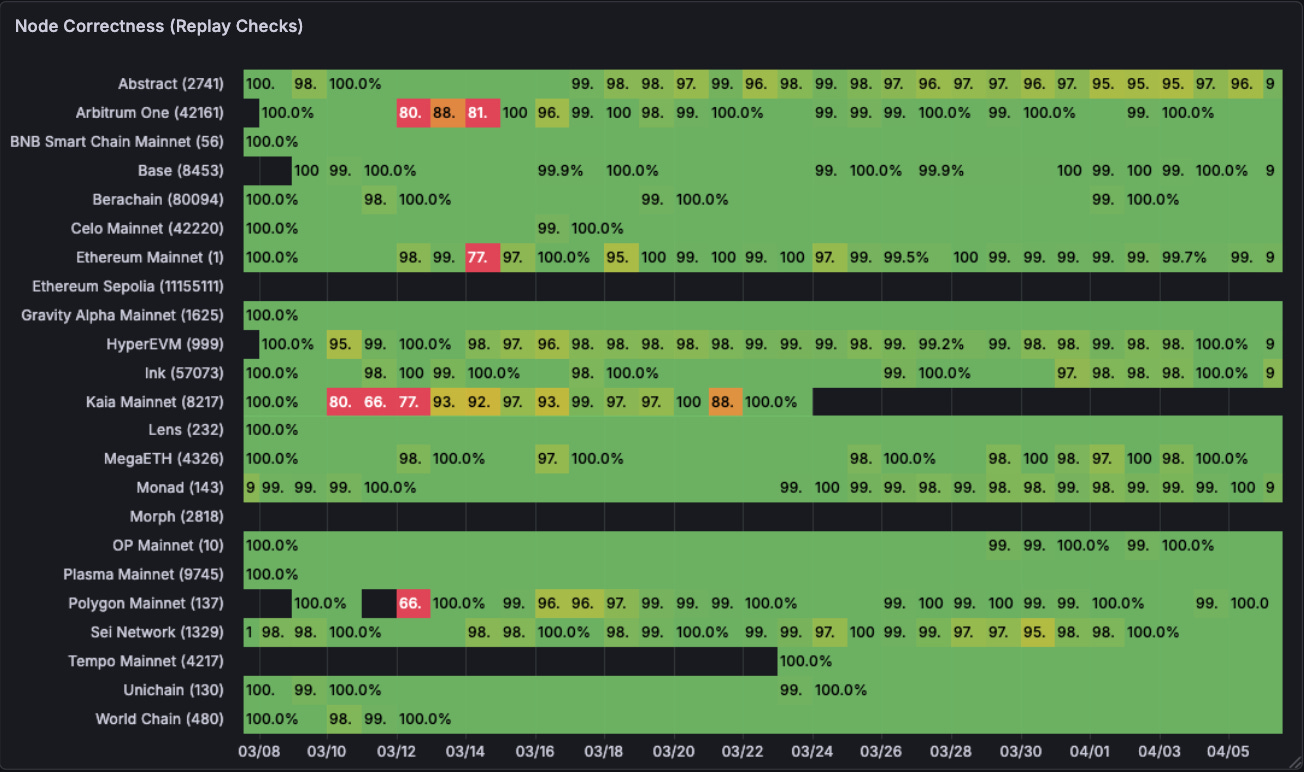
Chainstack faces even greater challenges regarding data correctness. Observational data indicates that their nodes frequently operate below optimal correctness thresholds. However, specialized routing and filtering layers can successfully isolate these underperforming nodes, allowing applications to continue utilizing the healthy segments of the provider’s infrastructure without absorbing systemic risk.
The broader implication of these findings is that a significant portion of the Web3 industry is inadvertently paying for inaccurate data that ultimately propagates into downstream datasets and analytics products. While large-scale data indexing companies are typically aware of these discrepancies and implement internal redundancy and verification layers, smaller companies often lack the resources to build such defenses. These smaller entities frequently rely on the assumption that commercial RPC providers are delivering pristine, up-to-date data straight out of the box.
Because much of the RPC market operates on static pricing models, providers currently lack direct commercial incentives to invest heavily in fixing underlying synchronization or correctness issues on smaller or more volatile chains. Incremental revenue rarely follows infrastructure hardening unless customers possess the technical sophistication to demand enterprise-grade data filtering pipelines.
By absorbing the heavy lifting of continuous node monitoring and automated data routing, platforms like RouteMesh aim to shield downstream users from these infrastructure headaches. Utilizing live production data serving billions of requests, these routing systems dynamically separate reliable node operators from underperforming ones, ensuring that applications receive verified data regardless of transient network failures. As the blockchain ecosystem continues to scale in complexity, solving the problem of RPC data quality remains one of the most critical challenges for ensuring true decentralization and trustless application development.



Comments (0)