


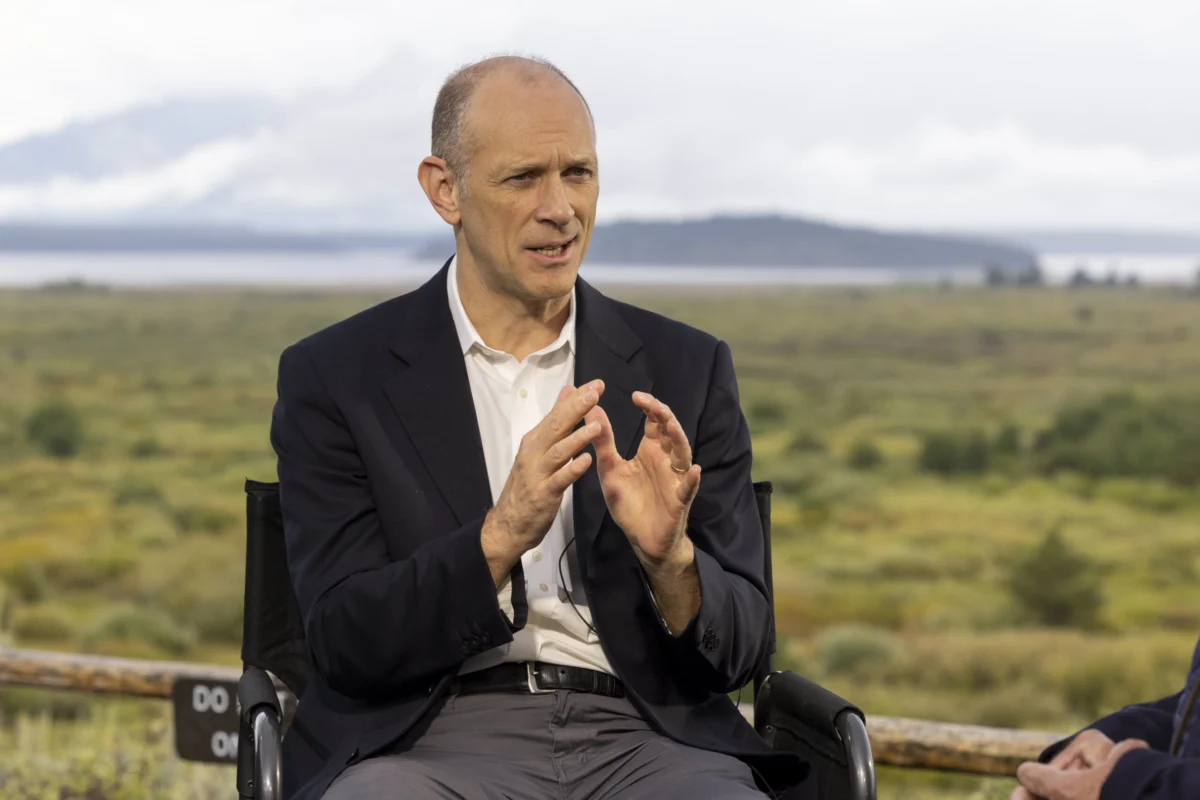
Chicago Federal Reserve President Austan Goolsbee expressed growing concern regarding the latest inflation data, indicating that the central bank likely will need to take decisive action to reestablish its long-term policy credibility as price pressures remain stubbornly high.
Speaking during an interview on CNBC’s "Squawk Box" on Friday, the policymaker addressed the state of the United States economy following a flurry of closely watched economic releases.
"I believe that the central bank has definitely got work to do to continue to reestablish its credibility," Goolsbee said during the broadcast.
His remarks came shortly after the Bureau of Labor Statistics reported that the producer price index, which serves as a key proxy for wholesale price pressures across the economy, posted a 0.3% increase in October. While that monthly increase was slightly less than what many economists had anticipated, the report also revealed a stark 6.5% annual gain. That yearly figure marks the highest wholesale inflation reading since November 2022, signaling that cost pressures further up the production chain continue to run hot.

The wholesale price data followed consumer inflation figures released earlier in the week showing that the consumer price index rose a bit more than expected during the month. Taken together, Goolsbee noted that these reports demonstrate that the Federal Reserve is slipping further away from its targeted 2% inflation rate rather than converging toward it.
"We’ve been above 2% for almost six years, and while sometimes we were making progress, lately we’re not making any progress, and if anything, it’s going the wrong way," he said.
Goolsbee elaborated on the structural shifts driving the current economic landscape, pointing to factors that have caught policymakers off guard. He explained that inflation has proved far more persistent than initially predicted at the beginning of the post-pandemic era, when disruptions were largely attributed to temporary supply shocks. Now, however, the economic dynamics have shifted.
"And now we’re adding this old-fashioned demand overheating coming from the AI data center buildout, that looks like it’s starting to spread out of its lane," Goolsbee added, highlighting how massive infrastructure investments in artificial intelligence and technology are beginning to exert broader demand-side pressures on the wider economy.
These persistent inflationary pressures have dramatically altered the outlook for monetary policy and interest rates. Financial markets are now fully pricing in a quarter percentage point interest rate increase when the rate-setting Federal Open Market Committee meets next on December 8-9. Furthermore, according to the CME Group’s FedWatch gauge of futures markets, there is currently a better than 10% probability that the central bank could opt for a larger half-point rate hike to combat the rising price trends.

While Goolsbee is not currently a voting member of the Federal Open Market Committee, he is slated to rotate into a voting position in 2027, making his policy perspectives a significant bellwether for the direction of the central bank.
The debate over the appropriate magnitude of the upcoming policy response has captured the attention of top central bank officials throughout the week. Earlier in the week, Fed Governor Christopher Waller indicated that he would be willing to entertain a 50 basis point move, contingent upon how the week’s incoming inflation data materialized.
When pressed on whether the Federal Reserve might ultimately need to adopt a more aggressive posture to rein in the stubborn price increases, Goolsbee refrained from speculating directly on the exact size of the next move. Instead, he emphasized that the policy debate must remain anchored to fundamental economic reality.
"It’s all going to be about this central question: What is happening to inflation, and are we on path back to 2%?" he said, reiterating his assessment of the current trajectory. "My feeling is, right now we’re not."


Comments (0)