



The cryptocurrency market currently finds itself in a state of existential reflection, feeling largely lost and aimless as it navigates a prolonged period of declining token valuations and collapsing yields. For many observers, the landscape resembles a shadow of its former self, stripped of the easy money and speculative excess that defined previous cycles. Across the board, traditional ponzinomics have faded away, leaving little room for the superficial excitement that once drove retail participation. While incremental innovations continue to emerge around digital payments, fintech applications, and marginal efficiency gains for traditional finance, these developments often miss the fundamental ethos that originally drew early adherents to the ecosystem.
The individuals who remain committed to the space are primarily those who envisioned a profound structural transformation of global systems, rather than a mere co-optation by institutional finance. Yet, much of the prevailing culture within mainstream crypto has drifted toward corporate suits and Wall Street aesthetics, barking up the wrong tree in search of genuine progress. To find the true drivers of the next evolution, industry participants must look toward the technological fringes—specifically toward areas that both the general masses and traditional financial institutions fail to fully comprehend. That blind spot, increasingly, points directly toward artificial intelligence.
While the intersection of artificial intelligence and cryptocurrency has frequently been marred by low-quality ventures, superficial decentralized physical infrastructure networks, and poorly conceived decentralized inference plays, a deeper, more rigorous examination reveals a profound convergence. Stepping back from prior cynicism and examining the trajectory of technological development highlights the emergence of a parallel economic framework. Human economies are notoriously sluggish, bogged down by the arduous coordination of misaligned human actors and bureaucratic friction. In contrast, a new paradigm is quietly taking shape where machines assume increasing responsibility for complex workflows, operating at a velocity entirely foreign to traditional human commerce.
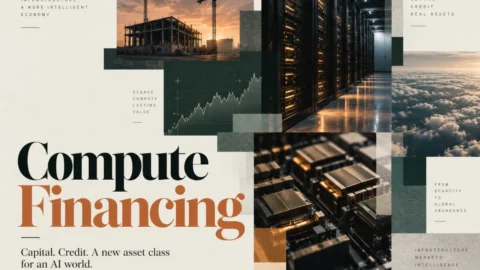
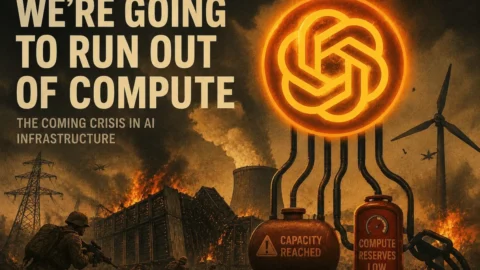
This machine-driven economy possesses its own unique economic pressures, most notably reflected in the soaring cost of computational power. Major cloud computing platforms face compounding annual price increases for compute resources, creating a hyper-competitive environment where inefficient use cases are rapidly priced out to make room for higher-value applications. Compute has cemented its status as the ultimate scarce resource in this burgeoning digital landscape. Within this context, the earliest signs of machine-to-machine commerce are beginning to manifest around application programming interface payments and rapid micro-transactions.
Rather than relying on human intervention, autonomous software agents will soon possess the capability to autonomously discover, evaluate, and compensate digital services. A developer might prompt an agent to identify and test a dozen different API providers to solve a specific engineering challenge, allowing the agent to independently establish accounts, disburse micro-payments, and execute parallel experiments in real time to determine the optimal solution. As these frameworks mature, the financial requirements of autonomous agents will inevitably expand beyond simple API calls into more sophisticated financial services, including programmatic lending, borrowing, and capital allocation.
While early experiments in on-chain GPU financing represent nascent steps toward bridging hardware infrastructure with decentralized rails, the full scope of agentic economic activity extends far beyond current capabilities. Everyday developers and technologists are already experimenting with frameworks that streamline complex workflows and enhance operational convenience. As permission-scoping mechanisms evolve and always-on autonomous agents transition from handling short-lived tasks to managing continuous operations, their need to transact with financial value will become paramount. Current estimates suggest this transition could materialize within the next twelve to eighteen months.

For core technologists disillusioned by the dominance of financially driven narratives and superficial day-trading culture, the arrival of autonomous agents introduces an entirely new dynamic. Unlike human speculators susceptible to transient hype cycles, software agents operate strictly on the basis of economic utility, technical excellence, and functional merit. Because these entities consume expensive computational resources, their operational success depends heavily on robust system design, strong security features, advanced adversarial thinking, and clean code. These are the very attributes that historically made the cryptocurrency space intellectually stimulating and meritocratic, far removed from the predatory token-emission models and high fully diluted valuation launches designed to offload risk onto retail investors.
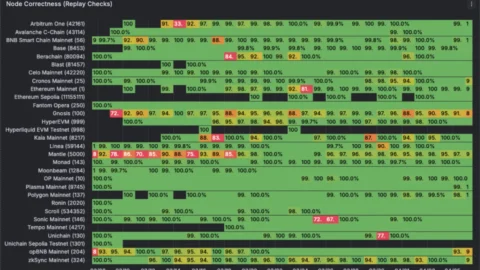
Crucially, this shift places immense value on data, fundamentally repricing an asset class that has long been treated as a secondary consideration within the digital asset ecosystem. Historically, blockchain data was consumed almost exclusively by human analysts, limiting its immediate utility beyond exploratory analytics and dashboard visualization. In an economy dominated by autonomous agent swarms, however, structured and accessible on-chain data becomes the vital lifeblood of automated decision-making. As networks of agents continuously query, analyze, and trade on-chain information, the consumption of reliable data is poised to experience unprecedented demand.
Beyond data infrastructure, several other sectors within the digital asset landscape are positioned for radical valuation adjustments as agentic activity scales. Programmable and agent-native custody solutions will become essential, replacing legacy institutional custody models with architectures designed for autonomous execution. Decentralized oracles will assume an even more critical role in supplying verified real-world inputs to automated systems, while the demand for indestructible, decentralized code will surge as agents require reliable execution environments. Furthermore, entirely new asset classes are expected to emerge organically from the continuous interactions between autonomous software agents and decentralized financial rails.
Clearing away the remaining speculative excess will bring this agent-driven paradigm into sharper focus. Collaborative initiatives like the x402 payment standard—recently transferred to the stewardship of the Linux Foundation to ensure open governance—represent encouraging milestones in laying the groundwork for machine-readable commerce. The infrastructure supporting this new economic layer must be fully functional and resilient by the time autonomous agents require seamless financial settlement mechanisms.
For builders and developers navigating the current market uncertainty, the imperative is clear: capital and competitive intensity will inevitably return as the focus shifts from speculation to foundational utility. Historically operating as a winner-take-all market where individual categories consolidate around a handful of dominant protocols, the digital asset space rewards those with a clear vision of the technological horizon. Preparing for the agentic economy requires building rigorous, scalable systems today, ensuring that the necessary infrastructure is firmly established well before the broader market awakens to the reality of the machine-driven future.


Comments (0)