


The evolving landscape of global markets and technological innovation has given rise to a distinctive and highly specialized breed of investor: the techno-capitalist. As the boundaries separating complex software engineering from institutional finance continue to dissolve, industry observers and market participants are taking a closer look at what it takes to navigate this dual-discipline arena. From the early days of cryptocurrency to the modern frontiers of artificial intelligence and semiconductor manufacturing, the archetype of the techno-capitalist is reshaping how capital is deployed, how risk is measured, and how technological progress is funded on a global scale.
In the view of industry commentators and market analysts, the genesis of the modern techno-capitalist can be traced back to the burgeoning crypto ecosystem. It was within this decentralized environment that the intersection of high-level finance and bleeding-edge technology first became an immediate reality. Rather than operating in isolated silos where engineers built software and financial analysts managed balance sheets, the crypto movement forced practitioners to understand both disciplines simultaneously. Smart contracts, decentralized finance protocols, and tokenized economies required a fundamental rethinking of monetary theory combined with rigorous systems engineering.
Following this initial wave, market participants are now witnessing what many describe as the second innings of the techno-capitalist movement. This newer iteration has expanded outward from experimental digital assets into public market equities, heavily concentrated around artificial intelligence, advanced semiconductors, and infrastructure-heavy technology sectors. Navigating these markets, however, demands an extraordinarily high degree of mastery. Investors operating in this space cannot rely solely on traditional financial valuation metrics, nor can they succeed purely through technical acumen. Instead, they must master two fundamentally distinct and largely orthogonal mindsets: the empirical, systems-driven perspective of the engineer and the probabilistic, valuation-focused perspective of the capital allocator.
Acquiring these dual skills requires deep, hands-on experience over a career. Industry experts note that attempting to learn finance and business first before transitioning into engineering is rarely successful, as the learning curve for advanced technical fields is exceptionally steep and the opportunity cost rises sharply later in life. Ideally, the modern techno-capitalist begins their professional journey with a solid foundation in engineering, where they learn how complex systems are built, scaled, and maintained. From there, they graduate into financial markets, applying hard-earned judgment, technical expertise, and real capital to high-stakes environments. This progression ensures that capital allocation decisions are anchored in a realistic understanding of technological feasibility rather than speculative hype.
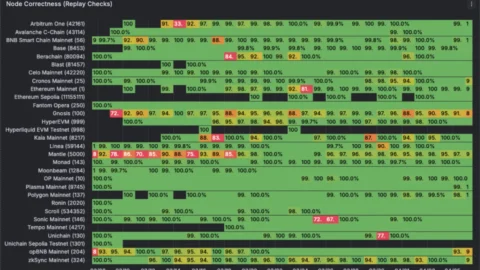
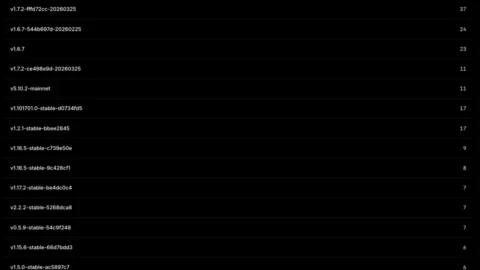
Looking ahead, market watchers anticipate that numerous other technical and financial domains will undergo massive intersection events. One of the most prominent future frontiers lies in the convergence of smart contracts, complex protocol dependencies, and on-chain insurance markets. For years, evaluating the health and safety of a digital asset or protocol required a superficial, one-time due diligence process. However, as the digital asset ecosystem has matured, the underlying reality has grown exponentially more complicated. A single modern token or decentralized finance protocol can easily involve hundreds of continuously changing smart contracts, creating an intricate web of cross-protocol dependencies that traditional risk models fail to capture.

Recent developments in the sector have begun to address this structural limitation. Innovations in on-chain data visualization—such as the balance sheet graphs developed by researchers and developers like Andrew Hong and his team—are beginning to change how market participants view protocol health. By mapping out protocol and token dependencies in real-time, analysts and investors can finally model economic and operational risks with precision. Industry participants have pointed out that tools of this nature represent the essential foundation for true, on-chain techno-insurance markets, enabling risk to be priced accurately based on empirical blockchain data rather than guesswork or qualitative assumptions.
Despite the rapid pace of technological innovation, broader financial and crypto markets are still considered too immature to fully absorb and operationalize these sophisticated risk-pricing mechanisms. Nevertheless, the underlying infrastructure is actively being built in real-time, creating a noticeable undersupply of qualified techno-capitalists who possess the necessary expertise to act as stewards of this new capital. Capital itself functions much like energy; if it is not directed carefully, thoughtfully, and with a deep understanding of the underlying technology, the broader ecosystem risks stalling progress or misallocating vital resources.
As these transformations accelerate, observers emphasize the importance of stepping back to comprehend the sheer magnitude of the changes currently underway in both technology and finance. The future architecture of global markets will look vastly different from the traditional systems of the past, requiring a new class of leaders who can bridge the gap between code and capital. For those positioned at this unique crossroads, the imperative moving forward is clear: to understand the evolving landscape deeply, apply rigorous technical and financial judgment, and accelerate responsibly into the next era of economic and technological development.

Comments (0)