



Cryptocurrency markets leaned decisively into a risk-on posture, with digital assets leading a broader market advance while traditional financial equities and safe-haven assets remained relatively muted. Bitcoin and major altcoins surged as macroeconomic sentiment improved, yields stabilized, and investors demonstrated a renewed appetite for high-beta exposure. Amid this shifting macro and digital asset landscape, Ethereum officially executed its second major network upgrade of the year, introducing a wave of technical advancements aimed at scaling data availability, restructuring blob parameter adjustments, and ultimately restoring deflationary pressure on the network’s native asset, ether (ETH).
Market Indices and Sector Rotation
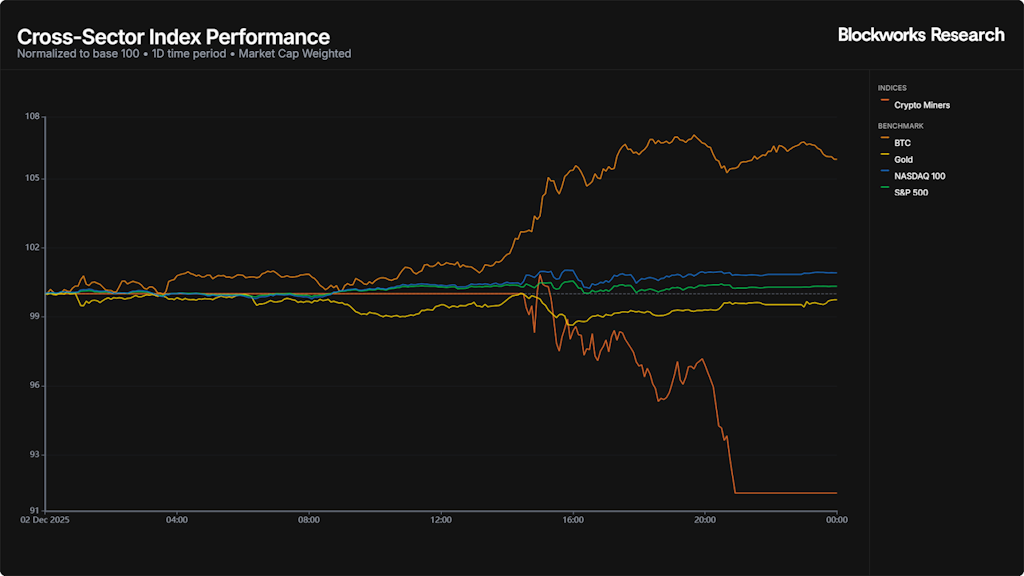
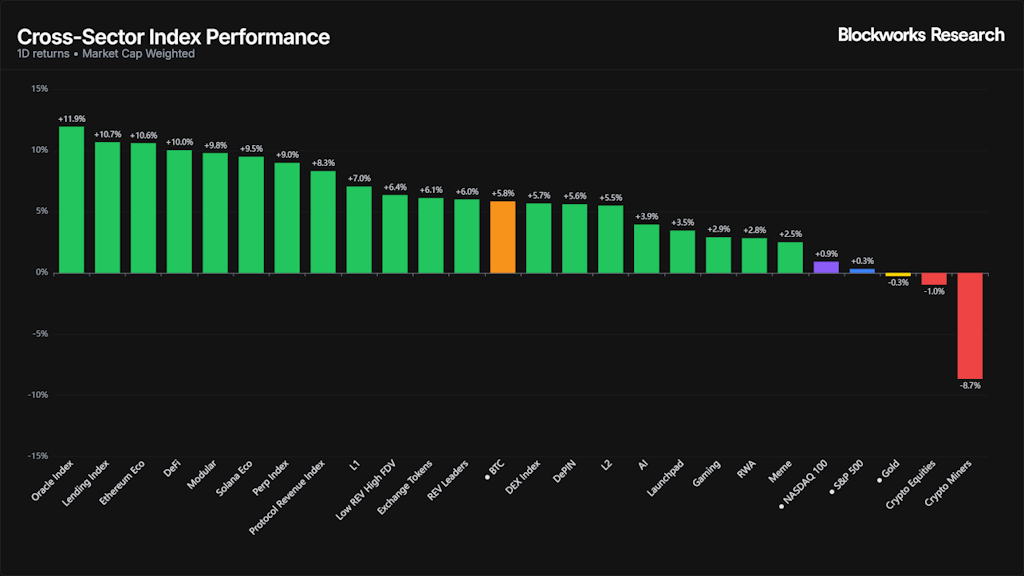
The broader financial markets displayed a clear divergence between risk-on digital assets and more reserved traditional instruments. Bitcoin climbed roughly 5.8% over the period, sitting comfortably mid-pack as sector-wide crypto breadth proved exceptionally strong. In contrast, traditional equities barely budged, with the S&P 500 inching up a modest 0.3% and the Nasdaq 100 gaining 0.9%. Safe-haven commodities faced mild pressure, as gold slipped 0.3%. The most notable outlier to the downside within the broader financial ecosystem was crypto equities and specifically crypto mining stocks, which dropped 8.7%. Market analysts attributed this pullback to profit-taking following recent gains and heightened sensitivity to Bitcoin’s short-term price consolidation phases.

Beneath the headline figures, crypto sector breadth highlighted a robust and healthy rotation back into fundamental infrastructure and high-utilization network protocols. Oracles, decentralized lending protocols, and the broader Ethereum ecosystem led the performance board, signaling that capital was flowing back into core foundational layers rather than purely speculative corners of the market. Decentralized finance (DeFi), modular blockchain frameworks, the Solana ecosystem, and perpetual futures platforms followed closely behind with solid performances, pointing to a widespread institutional and retail appetite for liquid altcoin beta.
Further down the crypto stack, layer-2 scaling solutions, artificial intelligence-focused crypto tokens, launchpads, and blockchain gaming assets all drifted higher. The notable exception to this upward trend was the speculative meme coin sector, which lagged behind utility-driven assets. The overall market move aligned cleanly with improving investor sentiment as lingering macroeconomic headwinds began to ease. Bond yields stabilized, global liquidity indicators firmed, and positioning metrics suggested that market participants were actively reintroducing risk capital following an extended period of caution.
The strong rebounds observed across core infrastructure sectors implied that market participants were anticipating higher onchain activity levels, alongside potential fundamental catalysts stemming from imminent protocol upgrades. Looking forward, market attention has naturally pivoted toward upcoming macroeconomic data releases and employment prints, which could test the durability and resilience of the prevailing risk-on sentiment. While crypto market volatility remains relatively compressed, the widening dispersion across various sectors suggests that traders should expect sharper, more rapid rotations as evolving narratives take center stage.
Ethereum’s Fusaka Upgrade and Technical Architecture
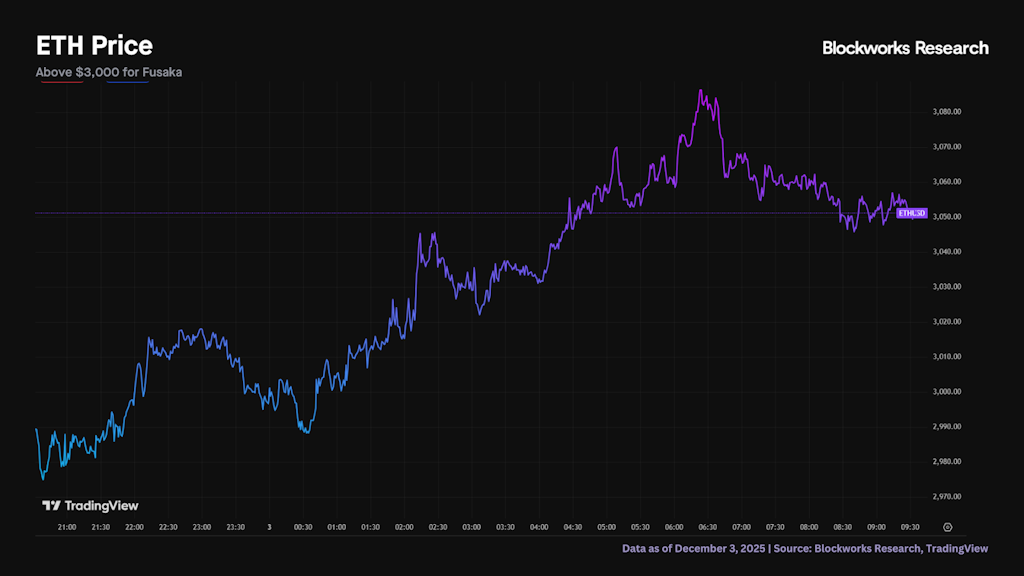
The primary focal point within the crypto ecosystem was the official rollout of the Fusaka upgrade on Ethereum, marking the second major network-wide hard fork of the year following the Pectra upgrade in May. It is historically rare for Ethereum developers to execute two major network upgrades within a single calendar year, an occurrence made possible because Fusaka functioned more as a half-upgrade rather than a massive, monolithic overhaul. During the initial development phases of the Fusaka upgrade cycle, any core protocol feature that carried a risk of delaying the fork—such as complex changes requiring extensive cryptographic research or heightened implementation complexity—was systematically deprioritized and removed from the final scope. This restructuring followed the mothballing of the Ethereum Object Format (EOF) initiative earlier in April.
Despite the reduction in the total number of included Ethereum Improvement Proposals (EIPs), the final package of 12 retained proposals carries significant implications for the network’s scaling trajectory. According to Gabriel Trintinalia, a protocol engineer at Consensys, the most impactful inclusion within Fusaka is PeerDAS. During the planning and execution phases, any feature carrying timeline risks was stripped away to ensure a smooth, on-time deployment. PeerDAS introduces data availability sampling to the Ethereum network, a mechanism that enables individual validators to efficiently share the heavy computational and storage load associated with processing large blocks of rollup data, commonly referred to as blobs. By distributing this validation burden across the validator set, the network can safely support a higher volume of data blobs per block without centralizing the requirements for running a validator node.
The introduction of PeerDAS is closely tied to another critical architectural change included in Fusaka: Blob Parameter Only (BPO) hard forks. Historically, adjusting data availability parameters like the target and maximum number of blobs per block required bundling them into major, multi-faceted network upgrades, which demand extensive coordination and testing across client teams. BPO hard forks create an entirely separate, streamlined, and significantly more efficient process dedicated solely to adjusting blob storage parameters. Moving forward, this modular framework will allow Ethereum developers to make smaller, more frequent adjustments to blob storage capacity in response to real-time network demand, eliminating the need to wait for sprawling multi-year upgrade cycles.
Resolving the Blob Fee Market and EIP-7918
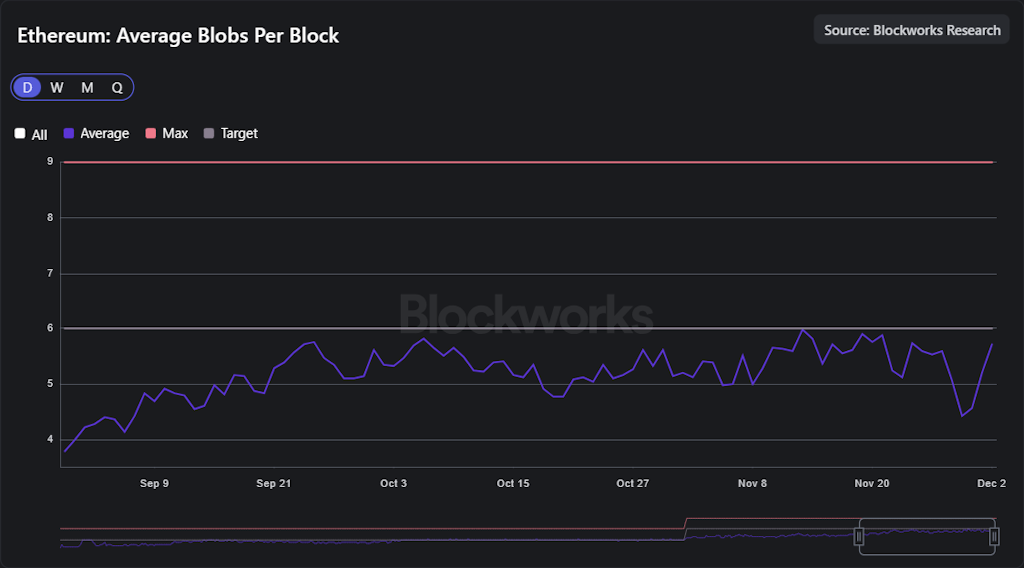
Despite previous optimization efforts, Ethereum data blobs have frequently struggled to hit their target utilization rate of six blobs per block. Just as network metrics indicated that blob utilization might finally be stabilizing toward target levels, Ethereum developers began looking ahead to scaling capacity further. However, a persistent structural issue has plagued the network’s data availability market: supply has consistently exceeded demand, rendering the blob gas price largely immaterial for the vast majority of transactions, aside from isolated blips where blob prices briefly touched a nominal 1 gwei.
Historical blockchain data illustrates the magnitude of this fee imbalance. In the post-Pectra period spanning from June through October, the Ethereum network generated a cumulative total of approximately $900 in blob-specific transaction fees. While a brief market spike in November pushed that figure higher to roughly $23,000, the amount remained largely immaterial in the context of Ethereum’s broader economic scale. Nevertheless, this November spike highlighted the dramatic order-of-magnitude difference in revenue generation when blobs actually operate within a competitive, constrained market environment.
This economic disconnect underscores the strategic importance of EIP-7918, an upgrade that industry analysts argue has not received sufficient attention given its potential impact on network tokenomics. EIP-7918 directly addresses the underlying structural flaws of the blob fee market by introducing a dynamic reserve price tied directly to underlying execution costs, creating an effective floor price for data blobs. When layer-2 execution costs consistently dominate raw blob data costs, this mechanism prevents the blob fee market from collapsing into inefficiency at the minimum 1 wei threshold.
Projections and retrospective models indicate that if EIP-7918 had been actively implemented as of June 1, the total amount of burnt blob fees would have been nearly eight times higher than what was actually recorded. Beyond increasing the absolute volume of ETH removed from circulation through the network’s burn mechanism, the upgrade introduces a much higher degree of price stability and predictability. By establishing a functional pricing floor, the protocol avoids dramatic, unpredictable fee spikes when the demand for blockspace and blob capacity suddenly becomes inelastic.
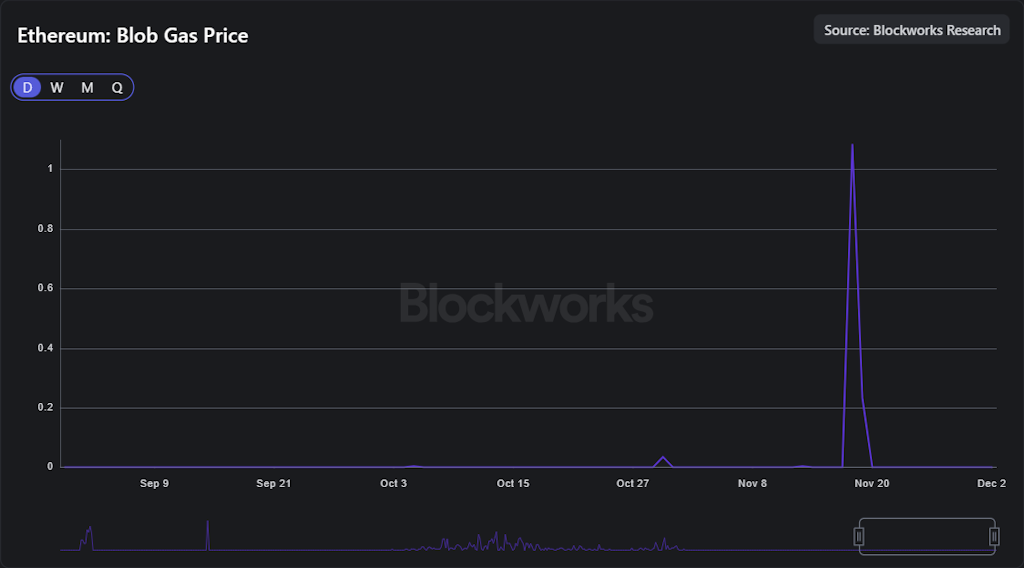
When combined with the scalability enhancements delivered by PeerDAS and the administrative flexibility provided by BPO hard forks, EIP-7918 suggests a fundamentally new economic dynamic for the network. As Ethereum successfully scales layer-2 transaction capacity and increases overall data throughput, blob fees are structurally positioned to rise alongside usage, reversing the historical trend where high scaling output directly depressed fee revenues. For long-term ETH holders, this alignment between layer-1 architectural scaling and enhanced fee generation offers a viable pathway toward returning the circulating supply of ether to a sustained deflationary phase.





Comments (0)