


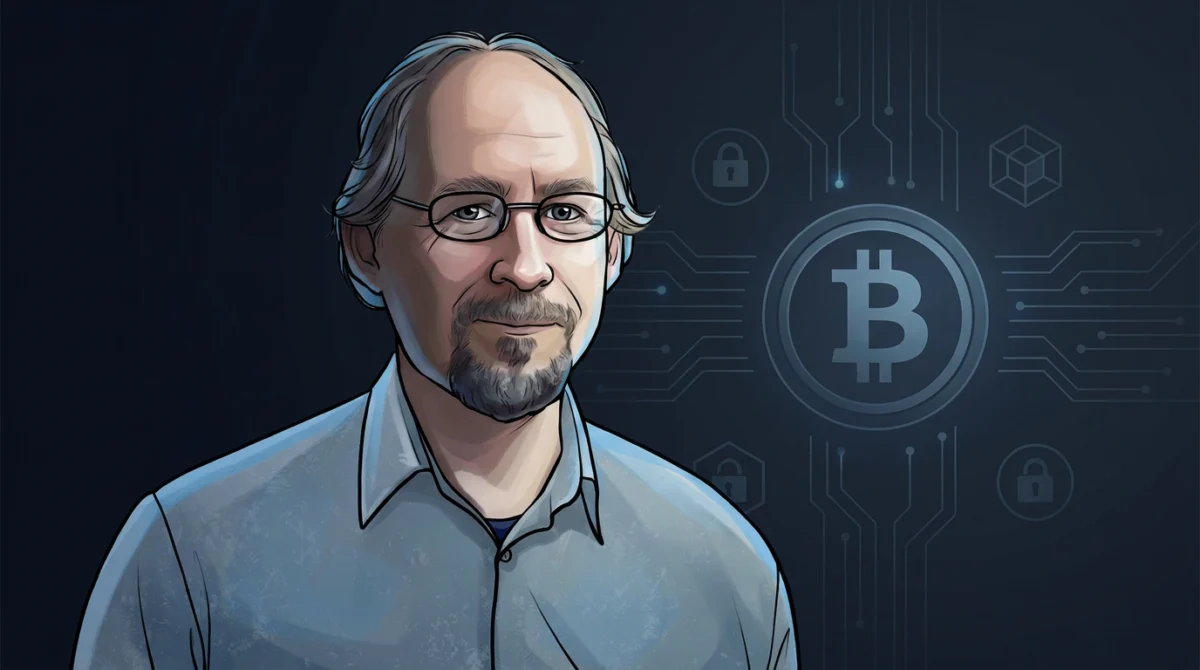
Bitcoin infrastructure pioneer Blockstream has officially launched a new institutional digital asset custody solution developed in collaboration with French technology group Thales. The release marks a significant push by the company and its co-founder, Adam Back, toward simpler, hardware-based offline security systems designed to protect enterprise Bitcoin holdings against a wave of increasingly sophisticated cyberattacks.
Announced on Friday, the new enterprise-grade offering combines Thales’ advanced hardware security modules (HSMs) with Blockstream’s Secure Multi-Party Computation (Secure-MPC) technology. This integration allows institutions to securely authorize transactions while keeping sensitive cryptographic operations strictly confined within dedicated security hardware, according to the company.
Unlike conventional Multi-Party Computation implementations—which often execute portions of the transaction signing process outside of dedicated hardware environments—Blockstream states that its new architecture handles the entire signing protocol directly within the protected, tamper-resistant enclosure of Thales’ HSMs.
Adam Back, a legendary figure in cryptography whose earlier work on the Hashcash proof-of-work system laid vital groundwork for Bitcoin’s consensus mechanism, spoke at length about the practical limitations of traditional custody infrastructure. In an interview, Back explained that conventional MPC protocols are frequently encumbered by excessive complexity, requiring heavy communication between disparate devices that makes them entirely impractical for true, offline cold storage setups.
"When people talk about MPC, they’re talking about some very esoteric and complicated protocols that are hard to secure and are very interactive. So you can’t really use them in a cold storage setting," Back noted, emphasizing the operational friction that financial institutions and enterprises face when trying to balance operational flexibility with high-grade security.
Adam Back Makes the Case for Simpler Bitcoin Custody
Addressing the broader landscape of digital asset security, Back pointed to recent high-profile breaches, such as the massive $6.3 billion Binance hack, as glaring examples of the severe risks that threaten internet-connected custody infrastructure. He argued that removing the attack surface by keeping signing devices completely offline is one of the most effective ways to prevent unauthorized network access and malicious credential harvesting.
According to Binance’s official investigation into that incident, malicious actors successfully compromised employee devices and obtained high-level administrative credentials, ultimately granting them unauthorized pathways into the exchange’s core wallet-signing infrastructure.
Expounding on the vulnerability of connected systems, Back warned that even seemingly robust network perimeters are ultimately susceptible to human error and advanced penetration techniques. "If you connect equipment to the internet, even if it’s via firewalls and so on, there is risk that you can get unauthorized access. You can get hackers into the network, get hackers with access to logins they shouldn’t have and so on," he cautioned.
Furthermore, the Blockstream chief executive highlighted the rising threat posed by artificial intelligence in modern cybersecurity. He suggested that as cybercriminal syndicates begin leveraging AI tools, existing security challenges will become exponentially more difficult to manage, particularly because automated systems can assist attackers in discovering subtle, hard-to-detect flaws in complex cryptographic implementations.
"The AIs can help attackers find small implementation errors and things like that, which may not be obvious," Back explained, pointing to an evolving threat vector that demands a fundamental rethink of institutional security postures.
When asked whether the broader digital asset custody industry is likely to embrace similar offline security models moving forward, Back expressed hope that institutional players would recognize the shifting risk landscape. He argued that firms must adapt to an increasingly hostile environment by aggressively migrating major asset volumes into cold storage, thereby minimizing their exposure to potential AI-assisted and remote network attacks.
"Complexity is the enemy of security. And going back to basics is the answer, you know, just cold-store it," Back added, reinforcing the philosophy that foundational security principles remain the ultimate defense for safeguarding institutional capital in the Bitcoin ecosystem.



Comments (0)