


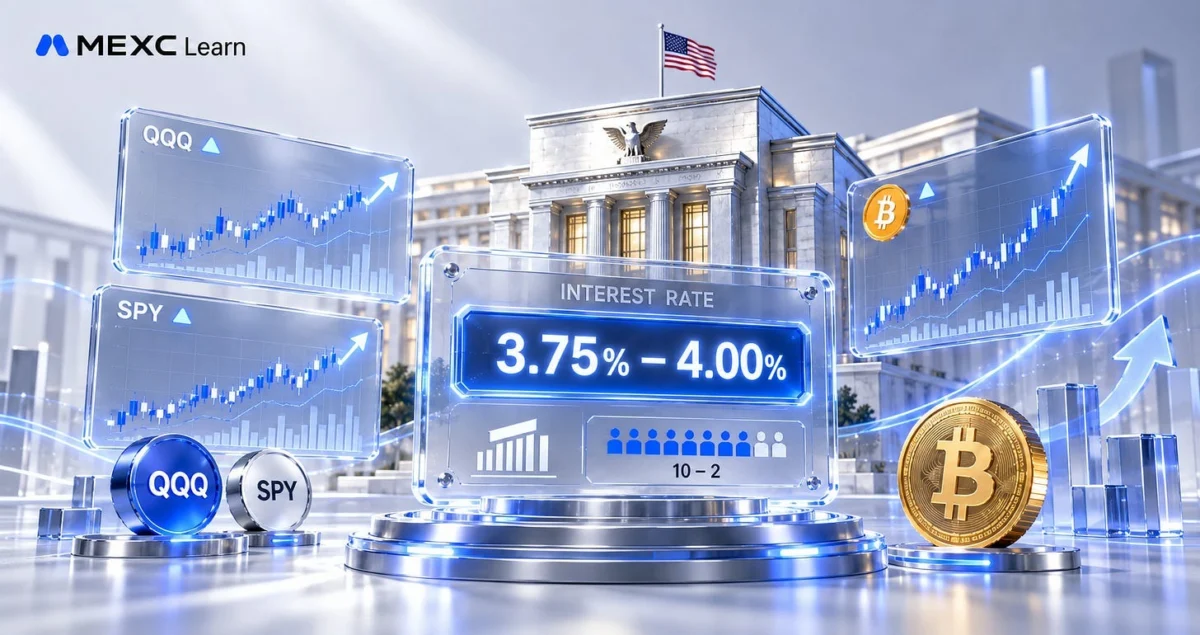
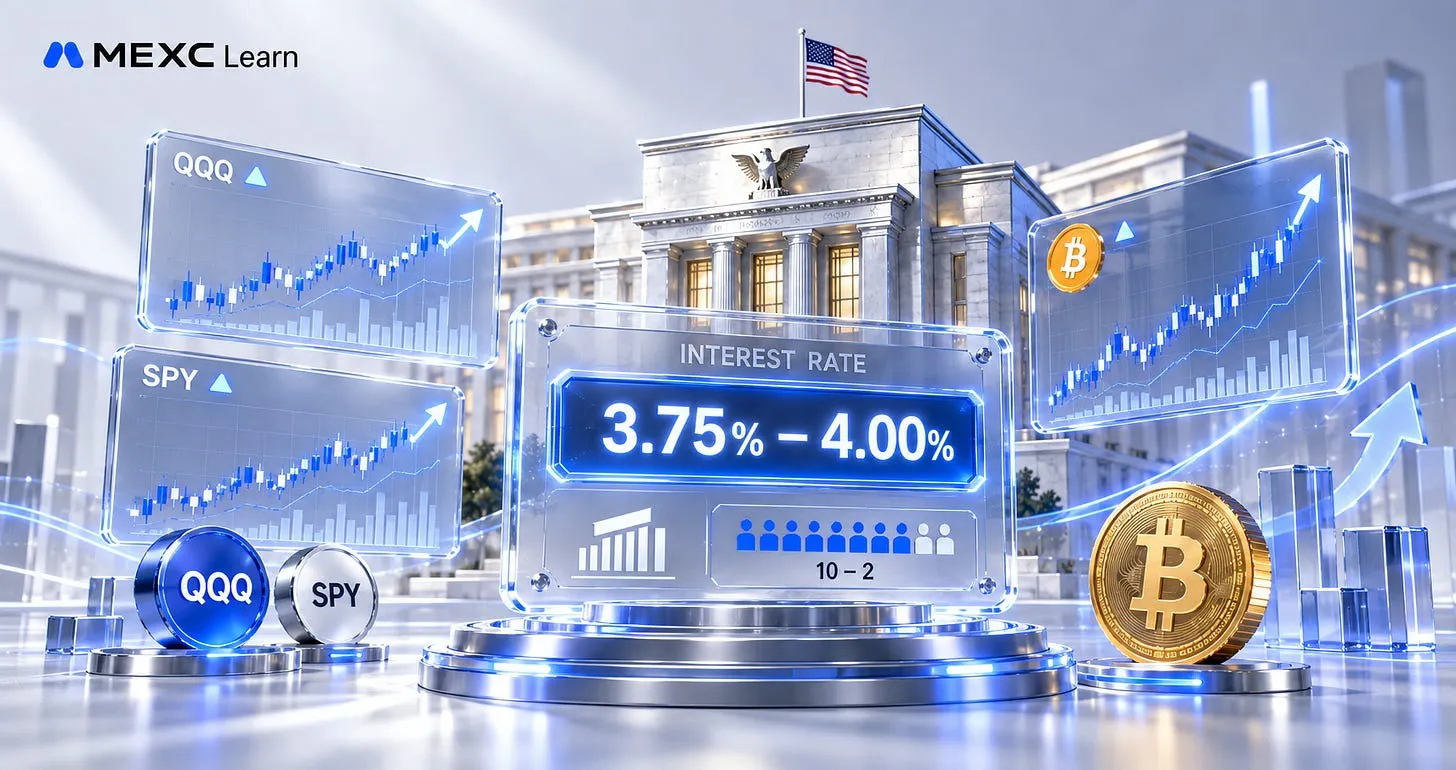
The Federal Reserve opted to keep its target interest rate range steady at 3.75% to 4.00% on October 28, 2026, pausing its monetary policy tightening cycle just six weeks after implementing a quarter-point rate hike in September. The decision, finalized by the Federal Open Market Committee (FOMC) with a 10-2 vote, reflected a cautious approach by central bank leadership as officials balance strong economic momentum against lingering inflationary pressures.
Despite the central bank’s decision to hold rates steady, the consensus was far from unanimous. Two prominent monetary policymakers, Federal Reserve Governor Lisa Cook and Cleveland Fed President Beth Hammack, dissented from the majority view, casting their votes in favor of an immediate quarter-point increase. According to market reports, this instance marked a notable policy dissent for Governor Cook, highlighting emerging internal debates within the central bank regarding how quickly monetary policy needs to respond to ongoing economic strength.
Following the policy announcement and the subsequent press conference led by Chair Kevin Warsh, financial markets swiftly adjusted their expectations for the remainder of the year. Data from the CME FedWatch tool indicated that traders saw a December rate hike as increasingly likely, with the implied probability climbing to 85.0% following the market close, up noticeably from 78.3% just a day prior.
Broad equity markets finished the session with modest gains. The S&P 500 rose 0.28% to close at 7,743.97, while the Nasdaq Composite advanced 0.27% to 26,549.85, and the Dow Jones Industrial Average ticked up 0.19% to 52,475.10. However, significant volatility arrived after the closing bell as major technology giants Microsoft and Alphabet released their quarterly earnings reports, sending ripples through derivative markets and after-hours trading platforms such as MEXC, where perpetual contracts tracked pronounced movements in major indices and digital assets.
What Did the Fed Decide in October 2026?
The official FOMC statement confirmed that the target range for the federal funds rate would remain at 3-3/4 to 4 percent, keeping the interest rate paid on reserve balances unchanged at 3.90%. The pause follows the September 16 meeting, where policymakers had raised rates by a quarter point in a unanimous 12-0 vote.
The decision by Governor Cook and President Hammack to advocate for a 25-basis-point increase emphasized that a faction of the committee remains concerned that economic activity could outpace the central bank’s efforts to anchor inflation permanently at its 2% target. Nonetheless, the majority favored a pause to evaluate the cumulative impact of past monetary tightening and incoming macroeconomic data.
What Changed in the Fed Statement?
A granular review of the October FOMC statement compared to its September predecessor reveals three critical adjustments in the central bank’s official phrasing. Most notably, the committee upgraded its assessment of economic activity, describing growth as expanding at a "strong pace" compared to the "solid" designation used previously.
Additionally, policymakers removed a sentence that had explicitly stated the September rate hike would support a timelier return to the central bank’s 2% inflation objective. In its place, the committee added a line emphasizing that the accumulation of more information will help guide its decisions regarding the appropriate future policy stance.
The FOMC maintained its language asserting that inflation remains somewhat elevated and that officials remain fully committed to delivering price stability. Furthermore, the committee continued to characterize productivity growth as robust and capital investment as strong—themes mirrored in the corporate earnings reports released hours later by Microsoft and Alphabet, which highlighted heavy artificial intelligence-driven infrastructure spending.
What Did Warsh Say About a December Rate Hike?
During his post-meeting press conference, Fed Chair Kevin Warsh refrained from committing to a specific policy path for the upcoming December 8-9 meeting. Instead, he stressed that the coming weeks would feature a dense calendar of crucial economic data that would leave the committee better positioned to determine its next steps.
That upcoming data schedule includes the third-quarter gross domestic product report, the national midterm elections, the monthly employment situation report detailing October payrolls, and the October consumer price index reading. The most recent inflation data available during the meeting—the September CPI report—showed headline inflation at 3.7% year-over-year, with core inflation registering at 2.6%.
Addressing reporters, Warsh maintained that political considerations played zero role in the committee’s policy deliberations. While he suggested he did not personally view the broader economy as excessively overheated, he acknowledged that many of his FOMC colleagues held contrasting views. Warsh argued that inflation can successfully return to the 2% target without requiring a severe economic slowdown or widespread job losses, pointing out that higher borrowing costs are already effectively tightening credit conditions across the financial system.
Why Is the Fed Changing Its Meeting Schedule?
In a notable administrative shift, Chair Warsh announced that while the Federal Reserve will maintain its traditional schedule of eight monetary policy meetings per year, certain sessions will be transitioned into dedicated long-term strategy discussions devoid of scheduled interest rate decisions.
Under the planned adjustment, the 2027 calendar will feature one dedicated strategy meeting alongside seven active rate-setting meetings, while the 2028 calendar will incorporate two strategy sessions and six rate-setting meetings. Although the central bank has not yet published a formal calendar release reflecting these exact structural changes, the transition signals an evolving institutional framework. For financial market participants, reducing the number of rate-setting meetings places heightened importance on each remaining decision day.
How Did Markets React to broader Economic Indicators?
Beyond the equity markets, fixed-income and currency traders adjusted their positions as the policy details emerged. The yield on the two-year U.S. Treasury note slipped 1.46 basis points to 4.722%, while longer-dated yields ticked upward, leading to a modest steepening of the yield curve following the conclusion of the press conference. Meanwhile, the U.S. dollar index retreated 0.2% to settle at 102.15.
Energy markets also commanded significant attention throughout the session, remaining a central factor in ongoing debates surrounding input costs and inflation. Benchmark Brent crude settled 1% higher at $115.32 per barrel, while West Texas Intermediate U.S. crude jumped 3% to close at $102.78 per barrel. The rally in oil prices was fueled by reports of an attack on a Saudi Arabian refinery, underscoring the geopolitical risks still influencing global commodity prices.
How QQQ, SPY, and BTC Perpetuals Reacted on MEXC
Derivative markets offered a real-time window into how traders positioned themselves across various checkpoints during the policy announcement, the press conference, the market close, and the subsequent cryptocurrency funding settlements.
Initial reactions to the 2:00 p.m. policy statement were relatively subdued. Leading up to the press conference, QQQUSDT perpetual contracts dipped as much as 0.24% from an initial level of 723.73 USDT before stabilizing by 2:30 p.m. Simultaneously, SPYUSDT contracts traded slightly lower by 0.08%, while BTCUSDT recorded a marginal 0.09% increase.
Activity escalated sharply at 2:30 p.m. as Chair Warsh began his press conference. Trading volume surged, with the five-minute candlestick for QQQUSDT handling approximately 1.31 million USDT in volume—roughly tenfold the activity seen in the hour preceding the event. By the official 4:00 p.m. stock market close, QQQUSDT had risen 0.38% compared to its 1:55 p.m. baseline, SPYUSDT was up 0.08%, and BTCUSDT had advanced 0.89% to reach 81,544.7 USDT.
The most substantial volatility of the day, however, was triggered by after-hours corporate earnings. Within the first five minutes following the closing bell, QQQUSDT spiked to 728.11 USDT as initial Microsoft earnings optimism circulated, before reversing sharply to 721.05 USDT by 5:00 p.m. as Alphabet shares tumbled roughly 10%, translating to a 0.74% slide from the cash market close. Over that same post-market hour, SPYUSDT dropped 0.29% and BTCUSDT declined 0.31%.
When the funding settlement window arrived at midnight UTC, both QQQUSDT and SPYUSDT settled at a neutral 0% rate, matching the previous funding cycle. The absence of positive funding rates indicated that the derivatives market did not accumulate excessive leverage pressure from long positions following the central bank’s announcements. The evening’s price action underscored how heavily major equity indices now rely on the quarterly financial results of a small cohort of megacap technology firms, often overshadowing the immediate market impact of Federal Reserve rate decisions.




Comments (0)