


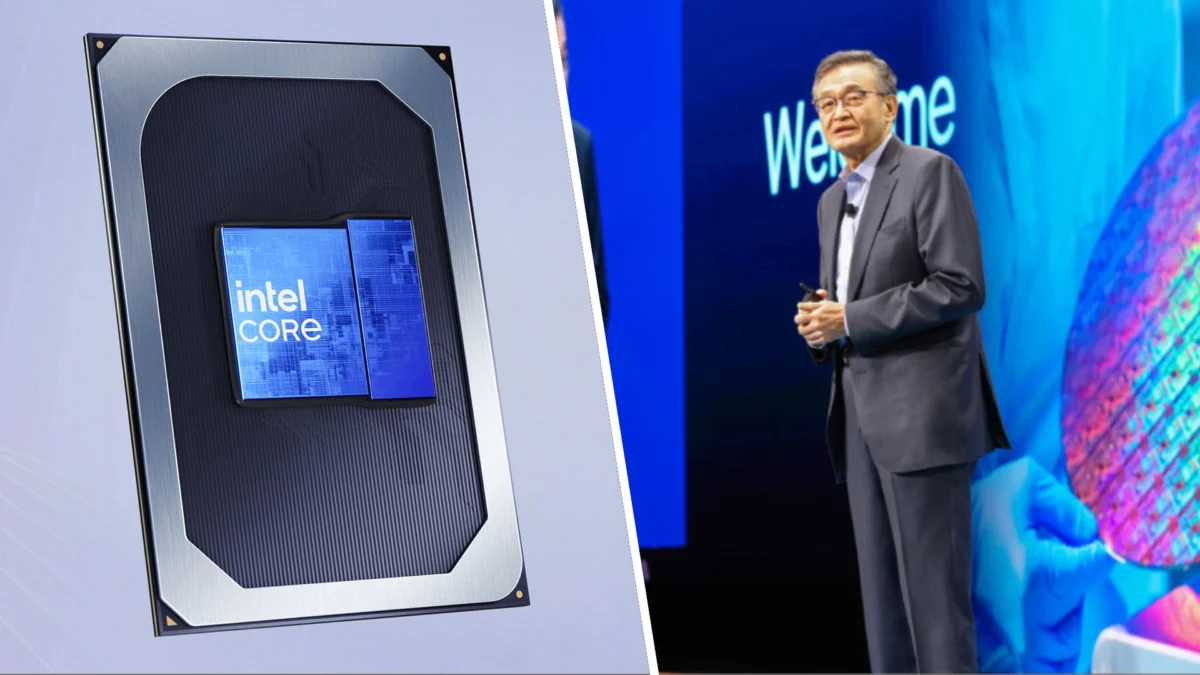
The global memory crisis is continuing to exert intense pressure across the hardware industry, driving up prices for memory and storage components and fundamentally altering how major semiconductor manufacturers approach production. For Intel, these macroeconomic headwinds are translating directly into a much more difficult environment for selling consumer-grade computer chips. Addressing stakeholders during the company’s latest earnings call, Intel CEO Lip-Bu Tan acknowledged the turbulent climate, stating that the next few quarters will present significant challenges for the personal computer market. Rather than sitting on inventory of advanced Panther Lake chips that current market conditions cannot easily absorb, Intel is actively pivoting. The company has announced plans to shift a portion of its valuable Intel 18A manufacturing capacity away from client hardware and toward the production of data center chips instead.
The strategic reallocation was detailed further when CFO David Zinsner responded to analyst inquiries during the financial briefing regarding whether the company intended to redirect wafers toward the lucrative data server segment. Confirming the shift, Zinsner explained that the operations moving offline to establish Intel 3 production capabilities in Oregon are tied directly to 18A wafers that were otherwise designated for building Panther Lake products. By freeing up this advanced manufacturing capacity, Intel believes it can better capitalize on steady demand in the enterprise sector by manufacturing more data center wafers.
At present, Intel maintains two primary consumer chip families utilizing the cutting-edge 18A node: Panther Lake and Wildcat Lake. Meanwhile, the enterprise market relies on distinct architectures like Clearwater Forest for corporate customers. While Panther Lake has recently achieved a successful production ramp onto the 18A process, it is actually the more recently introduced budget-oriented Wildcat Lake chips that are experiencing the strongest demand across the retail and commercial landscapes.
Emphasizing both the hurdles and the bright spots in the current product lineup, CEO Lip-Bu Tan noted that while the broader PC market faces a demanding multi-quarter stretch, the company’s underlying technological roadmap continues to strengthen and its long-term outlook remains positive. Tan highlighted the successful ramp-up of Panther Lake on Intel 18A while explicitly pointing out that demand for Wildcat Lake is currently outstripping available supply. Expanding on this consumer preference for budget-conscious silicon, CFO Zinsner revealed that Wildcat Lake—characterized as a cost-optimized Intel 18A client CPU—saw its unit shipments increase by approximately seventy percent sequentially, leaving the product line completely sold out.
The market reality underscores a fundamental consumer trend: buyers are gravitating toward affordable components amid a wider economic squeeze. However, Zinsner cautioned that manufacturing constraints cannot be solved simply by adjusting where silicon wafers are allocated within Intel’s fabrication facilities. The company is simultaneously facing bottlenecks on the substrate side, meaning that supply chain limitations exist beyond the primary node production.
Looking ahead, Intel’s internal forecasts suggest that relief may not arrive immediately. The company’s Client Computing Group, which oversees gaming and consumer chips, anticipates a sequential decline of greater than twenty percent. This projected downturn stems from downstream companies proactively reducing their inventories and scaling back component orders as they prepare for the upcoming business year.
This localized slowdown tracks closely with broader warnings issued by prominent research firms and industry stakeholders embedded within the memory supply chain. Analysts have repeatedly warned that elevated component pricing could persist throughout the year and potentially extend much further into the decade. This systemic crisis inevitably trickles down through every level of the technology ecosystem. End consumers encounter inflated prices at the checkout counter, prompting them to purchase fewer complete systems or hardware upgrades. In response, retailers and system integrators pull back on their wholesale orders, forcing component suppliers to trim their own production forecasts until the shockwaves ultimately reach silicon manufacturers like Intel and ripple back through their upstream partners.
The compounding weight of these market conditions, combined with conservative forward guidance, has already impacted investor confidence. In the wake of the earnings report and financial outlook, Intel’s share price dropped twenty-three percent in after-hours trading, reflecting the profound challenges the semiconductor giant faces as it navigates the ongoing memory crisis and rebalances its manufacturing priorities to protect its bottom line.





Comments (0)