


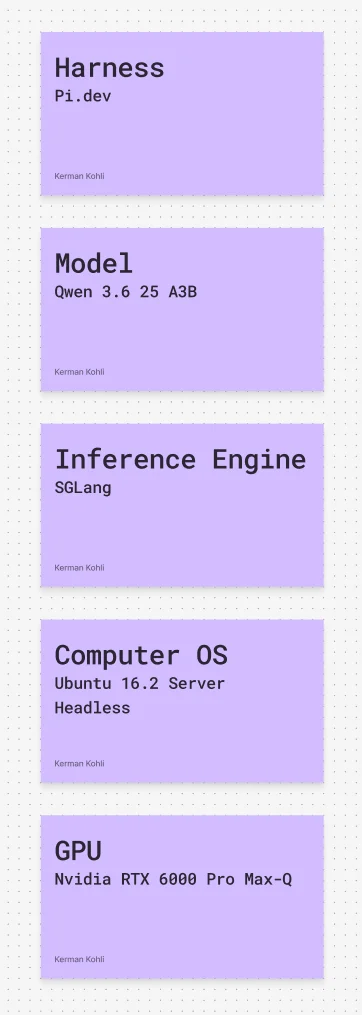
Following an initial exploration into what it takes to construct a custom inference machine from scratch, the focus naturally shifts toward operationalizing that hardware to extract genuine, tangible value. In the rapidly evolving landscape of artificial intelligence, hardware and software are bound together in a remarkably tight ecosystem. Every strategic decision made during the assembly phase must maintain absolute coherence with the software stack deployed above it.
To understand this interdependence, one must examine a specific high-end custom build. This configuration dictates the immediate requirement for software that supports its exact specifications, laying bare the core layers of the modern AI stack. Choosing the foundational hardware is arguably the single most critical decision in designing a local AI or large language model setup, as it directly restricts and shapes every single layer built on top of it. Technologists navigating this space generally weigh several distinct hardware paths, ranging from consumer-grade multi-GPU rigs to unified memory architectures and cloud-reliant alternatives.
When evaluating these options, performance priorities quickly narrow the field. For those requiring high-throughput, parallel sessions capable of churning through heavy workloads without lagging at a sluggish ten to fifteen tokens per second, memory bandwidth and memory capacity emerge as the absolute top priorities. While Apple’s hardware lineup offers high memory capacity through its unified memory architecture—particularly when running MLX-optimized models—it locks the user into a rigid ecosystem and presents severe limitations regarding server environments. Operating macOS as a remote server frequently proves problematic, lacking the robust remote management, stable secure shell connectivity, and dependable reboot recovery found in Linux-based environments.
Consequently, the hardware choice shifts toward NVIDIA graphics processing units running on Linux kernels. In deciding between an older-generation hardware setup, such as dual-linked RTX 3090 cards offering forty-eight gigabytes of video random access memory at a lower cost, and a top-tier modern alternative, power efficiency and bandwidth bottlenecks become decisive factors. While older consumer cards feature high VRAM configurations, AI inference remains fundamentally memory-bound, and power consumption scales dramatically. Opting for a modern, high-performance consumer-grade GPU from the Blackwell series introduces advanced optimizations, such as specialized native numerical formats, though at a premium cost. This top-tier hardware ensures long-term utility, as high-end components retain their market value far better than older legacy architectures.
Once the hardware foundation is secured, the operating system choice becomes equally definitive. Running Windows on a dedicated compute box is widely dismissed in favor of Linux-based kernels, specifically headless Ubuntu distributions. Eliminating a graphical user interface preserves precious gigabytes of video memory, ensuring that every megabyte is channeled directly toward maximizing model performance and concurrency. Managing this headless compute box remotely is typically achieved through secure networking tools like Tailscale, allowing administrators to establish a private, sovereign network and execute administrative tasks seamlessly via secure shell protocols from remote workstations.
With the hardware and operating system established, the next critical hurdle involves selecting an appropriate open-source inference engine. The open-source community features several prominent engines, though preliminary experimentation quickly reveals vast performance discrepancies among them. While beginner-friendly options are frequently recommended for casual users, they often lack the efficiency required for heavy, concurrent workloads. Llama.cpp serves as an effective choice for more basic hardware setups, but advanced architectures like Blackwell chips demand specialized inference software designed to leverage their unique processing capabilities. Concurrency management—handling multiple chat sessions simultaneously—further narrows the viable selections.
Advanced inference engines often incorporate sophisticated machine learning optimization techniques, such as paged attention mechanisms. By caching past prompts and executive codebases, these systems dramatically reduce the memory footprint of incremental prompts, resulting in blazing-fast response times and significantly enhanced concurrency for users engaged in parallel tasks.

However, deploying the inference engine is only part of the equation. Integrating the model itself introduces another layer of complexity, requiring careful balancing of parameter counts, architecture types, KV cache sizes, concurrency limits, and quantization levels. Because certain inference engines do not fully support every available model architecture, developers face a rigid three-way dependency among the hardware, the inference software, and the chosen large language model. This intricate web of dependencies underscores why meticulous, end-to-end planning from the initial hardware purchase onward is essential to avoid operational bottlenecks.
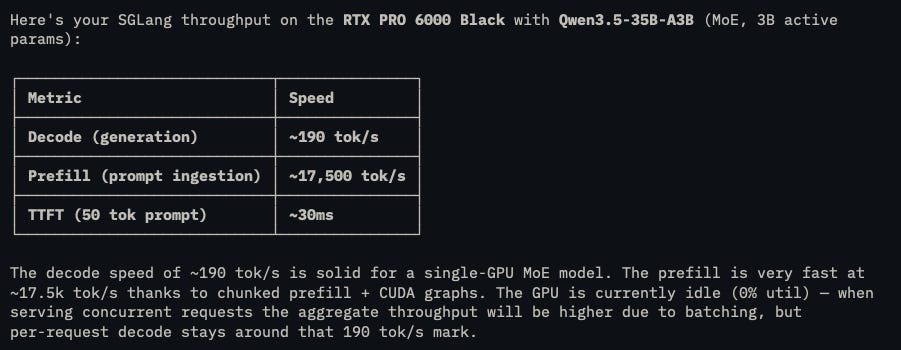
Selecting a specific configuration, such as a mid-sized open weights model running unquantized on an optimized inference engine, delivers performance levels that drastically outperform standard consumer hardware setups like Apple’s unified memory systems. Proper configuration of underlying reasoning parsers is also vital to ensure that the development harness can accurately interpret and utilize the model’s outputs.
The final piece of the sovereign intelligence architecture is the development harness itself. Rather than relying on rigid, pre-packaged tools that impose external ecosystem constraints, builders often gravitate toward fully open-source, modular solutions designed for incremental expansion. These lightweight harnesses allow developers to easily cycle between different models and orchestrate complex multi-model workflows without unnecessary bloat.
While a self-hosted local AI setup may not fully match the raw capabilities of the largest frontier models accessible via commercial application programming interfaces, it offers distinct, compounding advantages. Operating a private infrastructure eliminates rate limits, guarantees absolute data privacy, and ties ongoing operational expenses solely to the marginal cost of electricity. As commercial cloud compute costs and rental index prices continue to climb sharply, establishing independent compute infrastructure offers a strategic hedge against inflation. For technologists willing to navigate the complexities of hardware orchestration, building a sovereign intelligence stack represents a vital step toward long-term digital autonomy.




Comments (0)