


As the intersection of advanced technology and global finance accelerates, a new breed of market participant is emerging at the forefront of modern economics: the techno-capitalist. According to industry observations by investor and commentator Kerman Kohli, this distinct class of professionals represents a rare fusion of deep technical competence and financial acumen, bridging a gap that has historically divided software development and capital allocation.
The concept of the techno-capitalist hinges on a fundamental shift in how complex systems are built, analyzed, and funded. In Kohli’s view, the first generation of these techno-capitalists was born organically within the cryptocurrency ecosystem, where the traditional boundaries separating financial instruments from underlying software code dissolved into real-time, programmable markets. In these environments, understanding the mechanics of a decentralized ledger or a smart contract was no longer distinct from understanding yield, liquidity, and asset valuation; the technology itself was the balance sheet.
Today, this phenomenon is expanding into its second innings. Modern techno-capitalists are increasingly stepping into public market equities, particularly within sectors driving artificial intelligence and semiconductor manufacturing. However, participating in these high-stakes arenas demands an exceptionally high degree of mastery. It requires navigating two distinct and often contradictory mindsets: the creative, foundational logic of the engineer and the disciplined, risk-adjusted calculation of the market investor.
These two critical skill sets are largely orthogonal to one another, requiring years of genuine experience to master. Industry experts note that attempting to learn finance and business first before transitioning into engineering is rarely successful. The learning curve for advanced technical architecture is simply too steep, and the delay in acquiring those foundational skills often creates insurmountable disadvantages later in life. Instead, the ideal trajectory for a techno-capitalist typically begins with a rigorous engineering background, followed by a deliberate graduation into financial markets where technical judgment and structural expertise can be applied directly with capital on the line.
Looking ahead, analysts anticipate that numerous technological and financial markets will continue to converge on a massive scale. One of the most promising frontiers for this convergence lies at the intersection of smart contracts and automated insurance. Traditional financial markets have long relied on qualitative assessments and historical data to price risk, but the complex architecture of modern digital assets requires an entirely new approach to auditing and security.

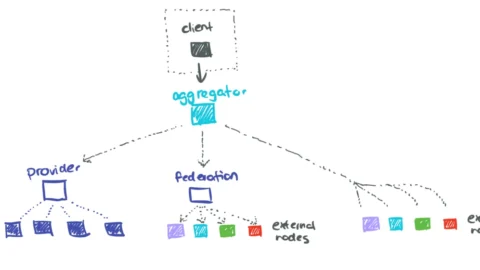
This evolution is already taking shape through advanced analytical tooling within the developer community. Referencing recent developments in the space, developer Andrew Hong and his team have introduced balance sheet graphing mechanisms designed to map out complex protocol dependencies for digital tokens. Rather than relying on traditional, one-time token due diligence—a method that has grown increasingly obsolete as modern protocols interact with hundreds of constantly changing smart contracts—these new analytical models allow market participants to visualize entire dependency networks and comprehensively model underlying economic and operational risks.
Observing these advancements, industry participants have noted that this level of granular visibility is precisely what will enable true on-chain techno-insurance markets to function. By breaking down the opaque web of smart contract interactions into transparent, verifiable balance sheet graphs, risk can finally be priced accurately and autonomously on-chain.
Despite these promising technological foundations, crypto markets and digital asset frameworks are still considered too immature for these sophisticated risk-pricing mechanisms to be deployed universally. Yet, the necessary infrastructure is actively being constructed in real time, creating an ongoing undersupply of qualified techno-capitalists who can act as knowledgeable stewards of this emerging capital.

Capital, in this context, functions as a powerful form of economic energy that must be directed carefully and thoughtfully. Without informed oversight from professionals who truly understand both the code and the capital behind it, markets risk misallocating resources and potentially stalling technological progress. As these two worlds continue to merge, observers emphasize the profound magnitude of how rapidly global financial and technological systems are changing, signaling a future where the ability to synthesize engineering logic with financial strategy will define the next era of economic growth.



Comments (0)