


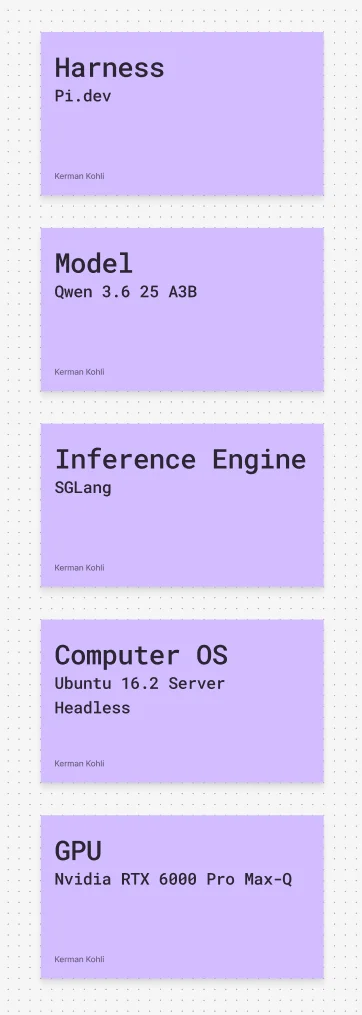
Following an initial exploration into constructing a local inference machine from scratch, the focus now turns to putting that hardware to work and extracting genuine value from a self-hosted artificial intelligence setup. Navigating the modern AI landscape requires recognizing that hardware and software are deeply intertwined. Every architectural decision must be coherent, as a choice at the base hardware layer directly dictates and significantly narrows the options available at every software layer above it.
The foundational decision in any local AI or large language model deployment centers on selecting the primary computing hardware, as this dictates performance, efficiency, and scalability. When evaluating high-performance processing units, the debate typically involves weighing the trade-offs between memory bandwidth, capacity, power consumption, and ecosystem lock-in. For advanced local operations requiring high throughput—such as maintaining multiple parallel chat sessions for concurrent users without enduring sluggish generation speeds—memory bandwidth and capacity emerge as the absolute top priorities. While hardware options like Apple’s unified memory architecture offer high capacity, they suffer from slower speeds and lock the user into a proprietary ecosystem that lacks proper server-grade support. Operating robust, reliable backend services necessitates a Linux-based environment, rendering consumer desktop operating systems and restricted hardware configurations impractical for a dedicated sovereign infrastructure.
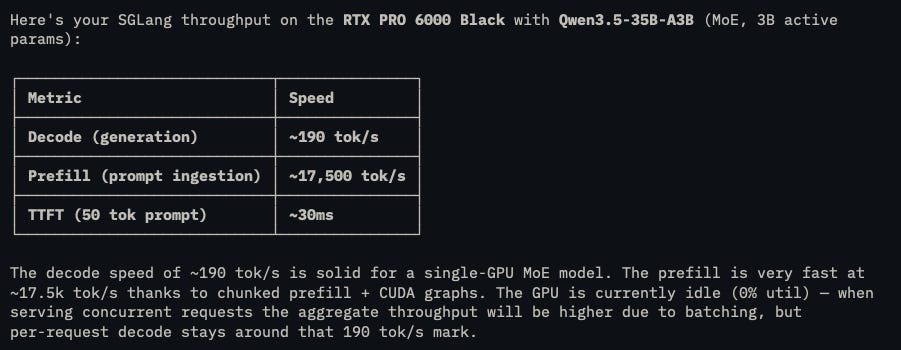
This reality points directly toward high-performance enterprise and consumer-grade graphics processing units, specifically within the NVIDIA ecosystem, which serves as the industry standard for accelerated compute workloads. When selecting a GPU, builders often weigh older-generation hardware, such as the widely available RTX 3090 featuring 24 gigabytes of video RAM and NV-Link interconnect capabilities, against cutting-edge flagship architectures. While older cards offer a lower initial financial barrier and sufficient memory when linked, they present significant bottlenecks in memory bandwidth and draw substantially higher power relative to their computational output. Newer architectures, such as those leveraging advanced Blackwell series optimizations like native NVFP4 support, provide superior efficiency and future-proofing, albeit at a higher initial acquisition cost. Investing in top-tier silicon ensures that the system avoids artificial performance bottlenecks while maintaining long-term hardware value in an appreciating market for dedicated compute resources.
Operating a high-performance compute node requires a reliable, lightweight operating system that eliminates unnecessary resource overhead. Running resource-intensive desktop environments consumes valuable video RAM that is better allocated entirely to model execution and context caching. Consequently, a headless Linux distribution—specifically Ubuntu without a graphical user interface—serves as the optimal operating system choice for dedicated AI servers. Managing such a system remotely requires robust networking tools like Tailscale to establish secure virtual private networks, enabling seamless, secure SSH access from client machines without requiring physical proximity to the hardware. This configuration transforms the local machine into a reliable component of personal sovereign intelligence infrastructure, capable of operating indefinitely with minimal maintenance.
Once the foundational hardware and operating system layers are established, the next critical component is selecting the appropriate inference engine to handle model execution. The open-source community offers several popular frameworks, but performance varies dramatically depending on hardware specifications and concurrency requirements. Standard introductory options often prove inefficient for high-throughput environments, while basic engines struggle with multi-session concurrency. Modern architectures, particularly those featuring advanced hardware optimizations like Blackwell chips, require specialized inference software designed to leverage specific hardware instructions and memory management techniques. Frameworks utilizing advanced memory optimization strategies, such as paged attention mechanisms, cache past prompts and extensive codebases to drastically reduce memory footprints and accelerate response times for concurrent users.

Selecting and deploying a large language model introduces a complex web of dependencies involving parameter counts, model architectures, quantization levels, context window sizes, and reasoning parsers. Standard dense models and Mixture of Experts architectures interact differently with various inference engines and hardware configurations, demanding meticulous planning to ensure seamless execution. Failing to align these interdependent variables can result in software incompatibilities or severely degraded processing speeds. After evaluating these constraints, deployments often settle on optimized configurations, such as running specific iterations of advanced open-source models like the Qwen series on specialized engines to maximize token generation speed and responsiveness. Properly configuring reasoning parsers ensures that downstream harnesses can fully utilize the model’s native capabilities without administrative friction.
Integrating local models into daily workflows requires an adaptable software harness that respects the underlying hardware stack rather than forcing reliance on centralized cloud ecosystems. While numerous developer environments and coding assistants exist on the market, fully open-source, modular harnesses provide the flexibility needed to orchestrate local intelligence effectively. These tools allow users to effortlessly cycle between different models and manage workflows locally without relying on proprietary cloud services or enduring arbitrary rate limits.
Maintaining a sovereign AI setup offers distinct advantages over relying exclusively on commercial frontier models, including complete data privacy, freedom from rate limits, and predictable operational costs tied solely to electricity consumption. While local hardware may not match the absolute capability of the largest commercial cloud models, it delivers sufficient performance for the vast majority of day-to-day development and reasoning tasks at a fraction of the long-term cost. As cloud compute rental prices continue to rise amid surging global demand, establishing independent intelligence infrastructure provides a strategic hedge against ongoing compute inflation. Building and orchestrating local AI capabilities empowers individuals and organizations to retain full ownership of their data, ideas, and computational destiny before broader market pressures trigger a widespread scramble for independent hardware resources.


Comments (0)