


This week’s cryptocurrency market dynamics have underscored a deeper, more fundamental structural evolution across the digital asset ecosystem. While traditional macroeconomic benchmarks experienced a relatively muted session, Bitcoin managed to outpace broader equity indices, signaling selective risk appetite. More importantly, recent developments point to a structural shift in how crypto markets are being distributed, moving away from traditional centralized exchange listings toward decentralized infrastructure and backend integrations.
Parallel to these distribution shifts, the broader corporate landscape in digital assets has undergone an unprecedented transformation. An examination of mergers, acquisitions, and fundraising over the past year reveals drastic growth in consolidation and institutional investment. Together, these converging trends highlight a market where underlying infrastructure, rather than isolated token listings, is becoming the primary driver of scale, liquidity, and retail access.

Market Indices and Sector Rotation
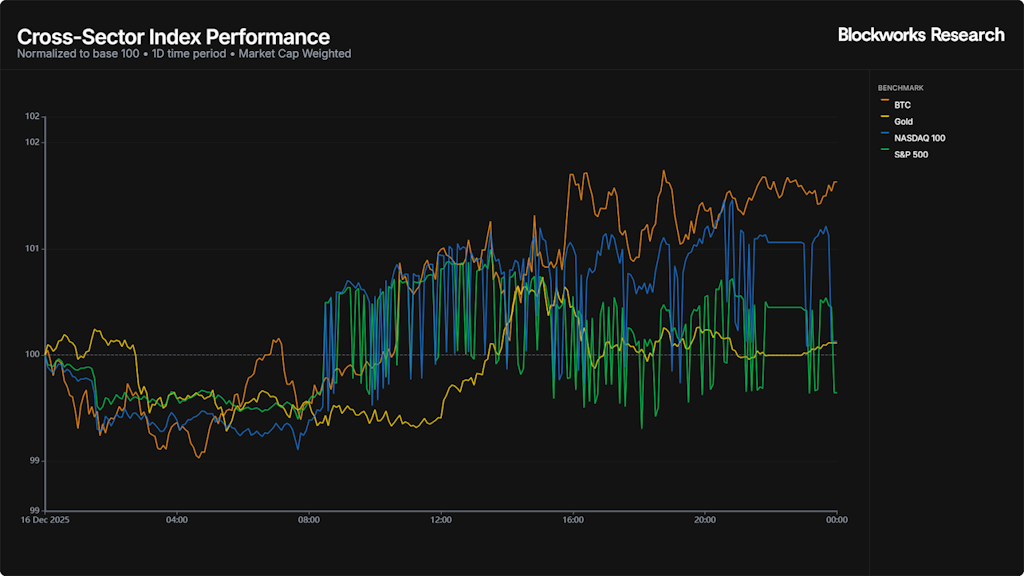
Trading activity over the recent session leaned modestly risk-on, with digital assets and growth sectors leading the charge while defensive holdings lagged behind. Bitcoin outperformed broader macro measures, posting a 1.6% gain on the day. In contrast, the Nasdaq 100 and Gold were effectively flat, both ticking up by a mere 0.1%, while the S&P 500 slipped modestly by 0.4%. This divergence reinforced the observation that incremental risk appetite was concentrated squarely within crypto rather than spilling over into broader macroeconomic asset classes. Although noticeable intraday volatility manifested across all lines, market participants consistently bought the dips, particularly during the active U.S. trading window.
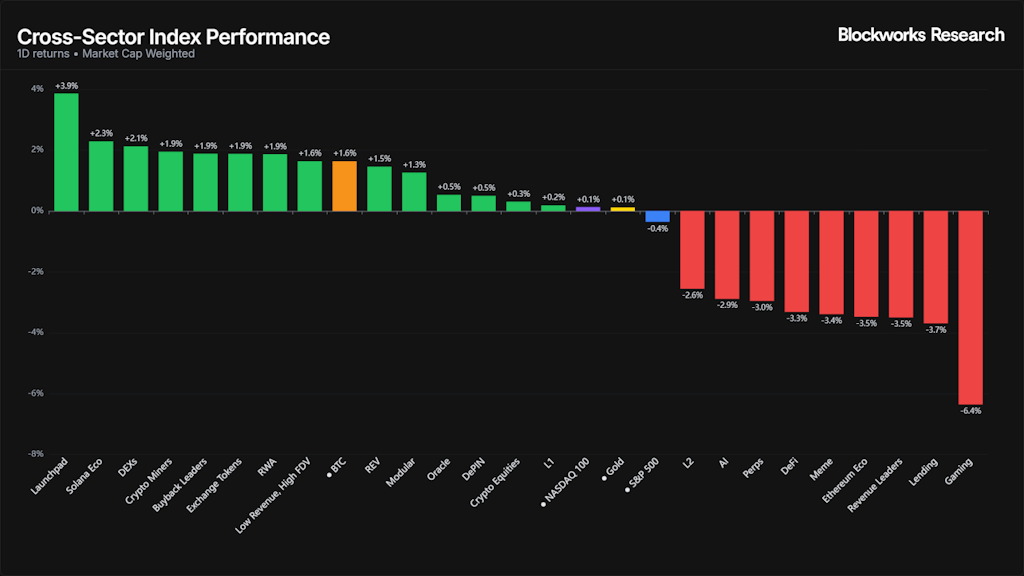
Within the digital asset complex, the tape was heavily defined by aggressive rotation into specific trading themes. Launchpads led the broader market by a wide margin with a 3.9% gain, followed closely by the Solana ecosystem at 2.3% and decentralized exchanges at 2.1%. Crypto miners, tokens featuring active buybacks, exchange native tokens, and real-world asset plays all finished the session comfortably in the green, each securing approximately 1.9% upside.
Conversely, several market categories suffered sharp givebacks. The gaming sector emerged as the clear laggard, plunging 6.4%. It was followed by steep declines in lending protocols, revenue-leading applications, the Ethereum ecosystem, and meme-centric tokens, which fell by 3.7%, 3.5%, 3.5%, and 3.4%, respectively.
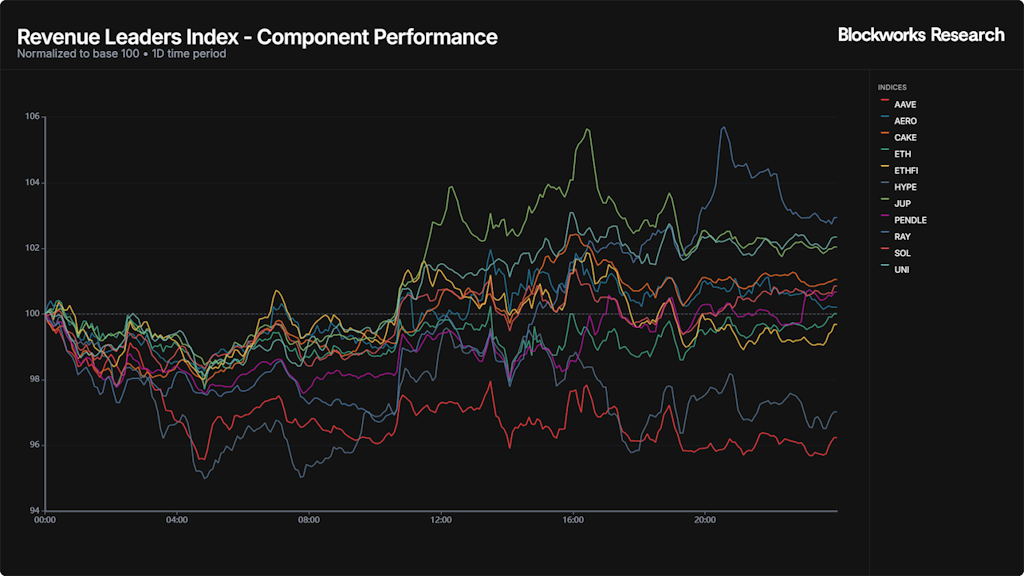
Within the revenue-leading category, governance and utility tokens continued to face headwinds. HYPE underperformed amid emerging market discussions regarding long-term revenue sustainability, take-fee structures, and rising competitive pressures. Meanwhile, AAVE registered as the worst-performing asset in its respective index, declining 3.8% as ongoing community and market concerns persisted regarding the strategic alignment between Aave Labs and the broader decentralized autonomous organization. This downward pressure occurred despite notable capital signals from leadership, including a move by Aave founder Stani Kulechov who swapped nearly $10 million of wrapped ether into AAVE to visually and financially demonstrate alignment with the token’s ecosystem.
Overall, the prevailing market action suggests tactical, thematic rotations rather than a broad, indiscriminate risk-off shift. Market volatility remains elevated, and capital flows appear highly selective. Sustained upward follow-through will likely depend on Bitcoin’s ability to defend its recent price gains and decisively reassert leadership across the wider asset class.
Market Update: Coinbase and Jupiter Bridge Centralized and Decentralized Rails
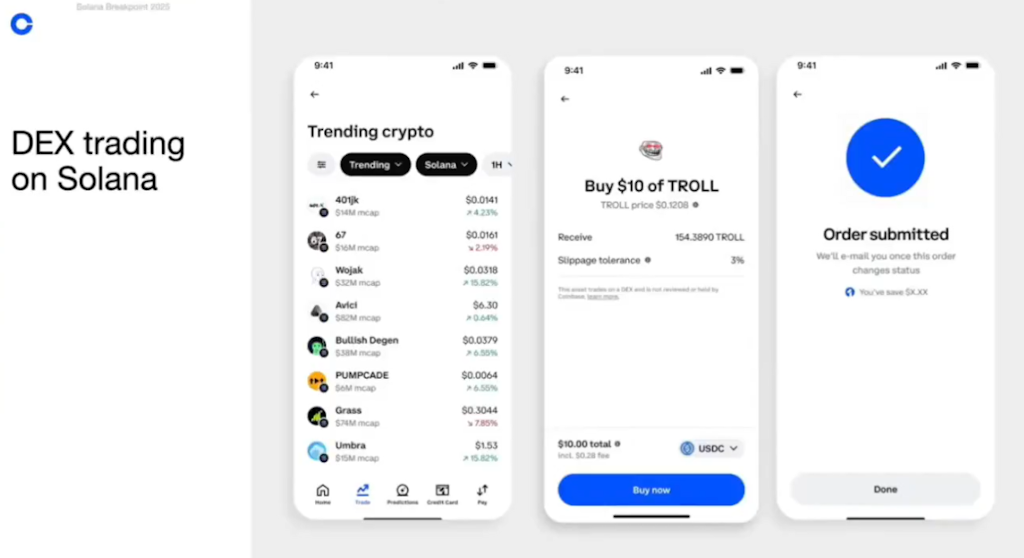
In a landmark integration that exemplifies the industry’s structural evolution, Jupiter has officially integrated with Coinbase’s onchain trading stack to power token swaps for Solana-based assets. This development brings one of Solana’s most vital liquidity layers directly into a mainstream, centralized crypto interface. The integration allows everyday users to trade Solana-native tokens seamlessly through Coinbase’s onchain experience, while Jupiter handles the complex tasks of routing and execution across Solana decentralized finance protocols entirely in the background.
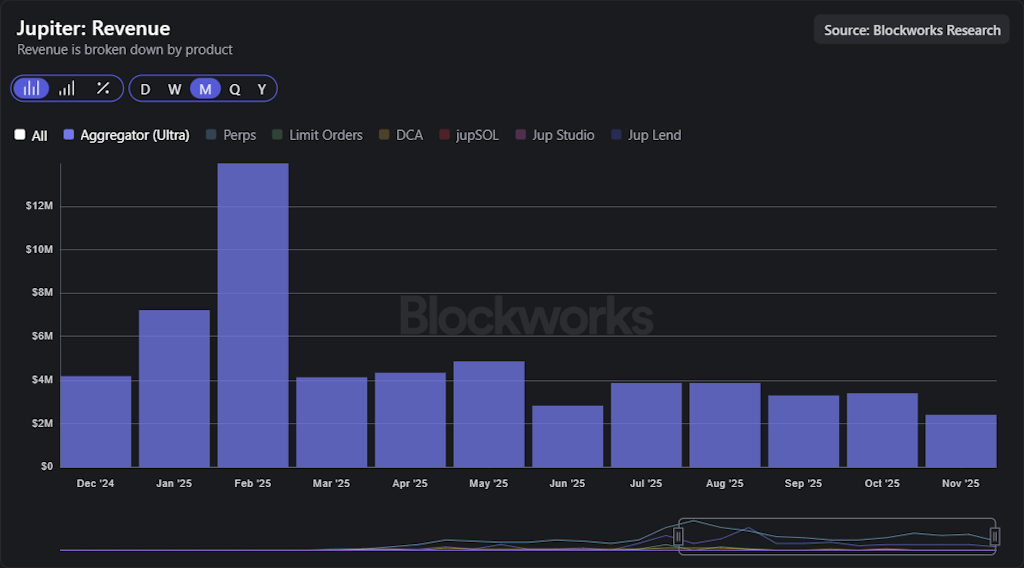
On average, Jupiter generates roughly $4 million in monthly revenue from its core aggregator offering, and this high-profile integration paves the way for further monetization of its routing engine. Rather than relying on the traditional, labor-intensive process of listing new Solana assets individually on a centralized order book, Coinbase is leaning heavily into onchain rails. In this architecture, Jupiter serves as the execution engine, aggregating liquidity across multiple decentralized exchanges, optimizing trade routes, and settling transactions natively onchain. Meanwhile, Coinbase provides the massive distribution network, user experience, and essential fiat on- and off-ramps.
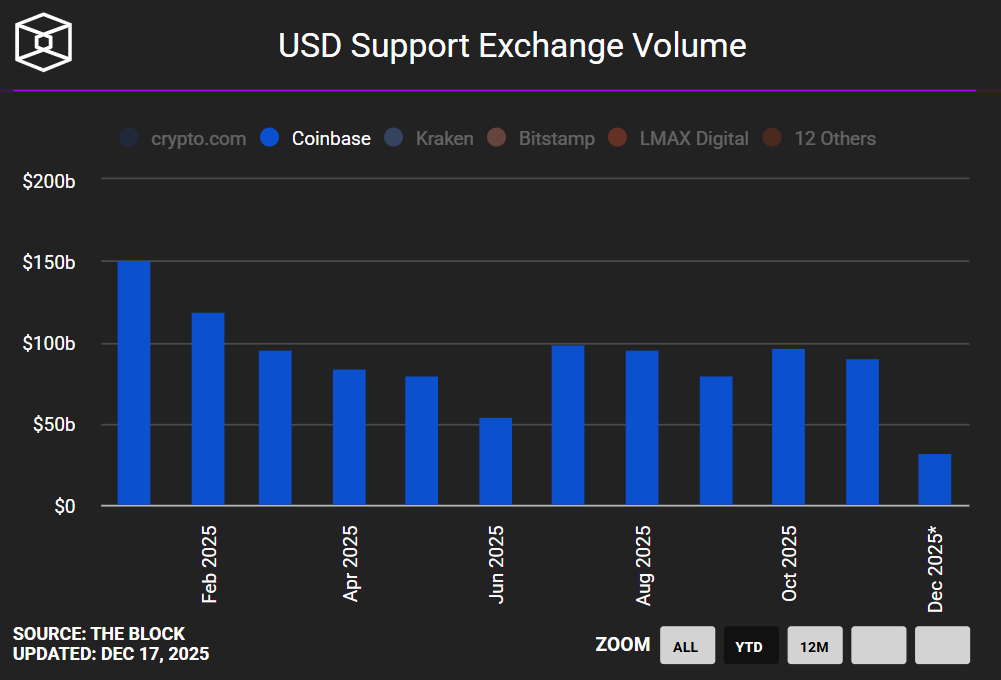
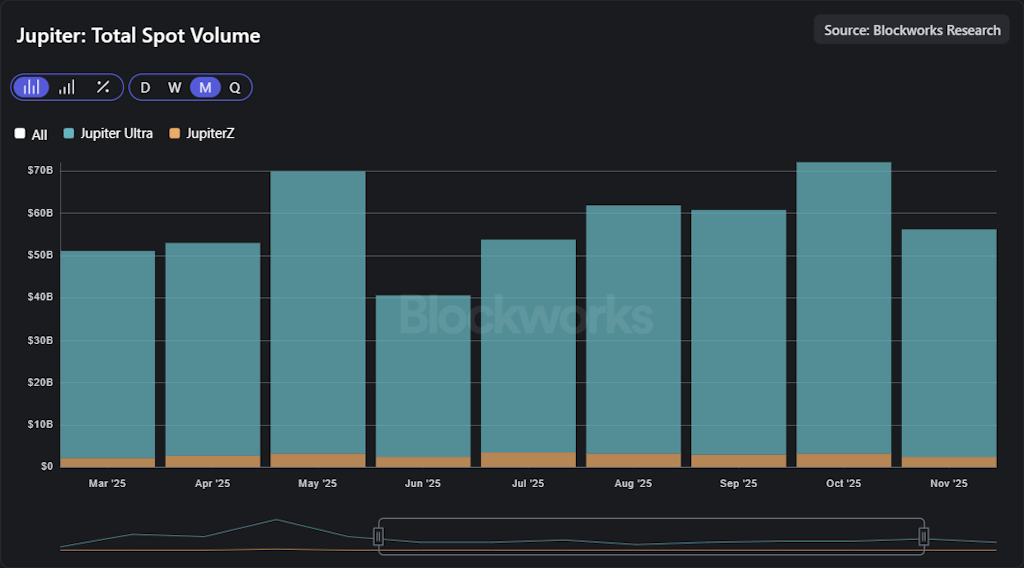
For retail users, this architectural setup translates to instantaneous access to a vastly broader universe of Solana tokens than would ever be available through standard centralized exchange listings, all without requiring the user to leave the familiar Coinbase ecosystem. Coinbase commands a massive global footprint, boasting an average monthly spot trading volume between $80 billion and $100 billion. Similarly, Jupiter sits firmly at the epicenter of Solana spot trading activity, handling roughly $50 billion in monthly spot trading volume.
By combining these forces, the partnership significantly expands how Solana-native assets reach the broader retail audience. Notably, Coinbase is not attempting to compete with native Solana decentralized finance primitives; rather, it is actively embedding them. This strategy reflects a broader, industry-wide shift wherein centralized platforms increasingly operate as frontends to decentralized liquidity. The underlying economic logic is compelling: onchain trading removes the long lead times and bureaucratic bottlenecks historically associated with centralized exchange listings, allowing markets to form organically wherever liquidity already resides. Amid a broader market downturn, this kind of synergistic integration may act as a powerful rerating catalyst for both enterprise entities by expanding overall trading volumes and revenue potential.
However, permissionless markets inherently cut both ways. Unrestricted access to a wider array of tokens inevitably introduces exposure to illiquid, highly speculative, or malicious assets. Consequently, rigorous user verification, robust liquidity checks, and prudent trade sizing remain essential safeguards. Ultimately, the Jupiter-Coinbase integration is less about a single isolated partnership and more indicative of a profound structural shift, wherein major centralized exchanges increasingly rely on decentralized infrastructure to deliver comprehensive market access.
Fundraising and M&A Update
Corporate consolidation and fundraising within the digital asset sector have experienced extraordinary growth over recent quarters, reshaping the financial landscape of the industry. Mergers and acquisitions volume in November 2025 alone reached approximately $10.7 billion. This massive figure was driven predominantly by Naver’s high-profile acquisition of Dunamu, the prominent operator of the Upbit cryptocurrency exchange, for $10.3 billion.
This late-year surge follows a historic third quarter in 2025, during which crypto M&A activity topped $10 billion for the first time in history. That milestone effectively doubled the previous quarterly record of $5 billion and represented an astonishing thirty-fold jump compared to the same period in 2024. By November 2025, total cumulative M&A deal value for the year reached $8.6 billion across 133 distinct transactions, excluding the Dunamu mega-deal. This single-year tally surpassed the combined total of the previous four years altogether. To put this trajectory into perspective, quarterly M&A volume has scaled dramatically from just $457,000 in the first quarter of 2021 to $4.2 billion by the second quarter of 2025, marking an approximate 9,000-fold increase.
This acquisition spree has been spearheaded by major crypto exchanges executing aggressive, enterprise-level expansion strategies. Coinbase completed six distinct corporate acquisitions in 2025, highlighted by its $2.9 billion purchase of Deribit, the leading cryptocurrency options trading platform. Similarly, Ripple completed four corporate acquisitions, anchored by the $1.25 billion purchase of institutional prime brokerage Hidden Road. Kraken also expanded its footprint aggressively by completing five acquisitions, including the purchase of NinjaTrader for $1.5 billion and Small Exchange for $100 million. This consolidation momentum extended further into December with additional transactions, including Paribu acquiring CoinMENA for $240 million, Stripe acquiring mobile wallet provider Valora, Kraken purchasing tokenization firm Backed, and Galaxy acquiring liquid staking protocol Alluvial.
Parallel to the M&A boom, primary fundraising within the crypto sector has also demonstrated robust recovery and expansion, growing approximately 41% from the previous cycle peak of $4.63 billion recorded in January 2021 to a new high of $6.52 billion in July 2025. Fundraising activity remained resilient throughout 2025, albeit with more pronounced month-to-month variation. Following its July peak, monthly totals stabilized between $4 billion and $5 billion through the third and fourth quarters.
Notable capital raises during this period included Kraken securing $800 million across two separate rounds in November—which included a $200 million injection from Citadel Securities at a $20 billion valuation. Additionally, Kalshi raised $1 billion at an $11 billion valuation to fuel its regulated prediction markets platform, Monad completed a $188 million public token sale at a $2.5 billion valuation, and RedotPay successfully closed a $107 million Series B funding round to scale its cryptocurrency payments infrastructure. Total year-to-date fundraising through November 2025 reached approximately $36 billion, marking a dramatic recovery from the prolonged crypto winter of 2023 and 2024, when monthly fundraising figures frequently struggled to clear the $1 billion threshold.





Comments (0)