


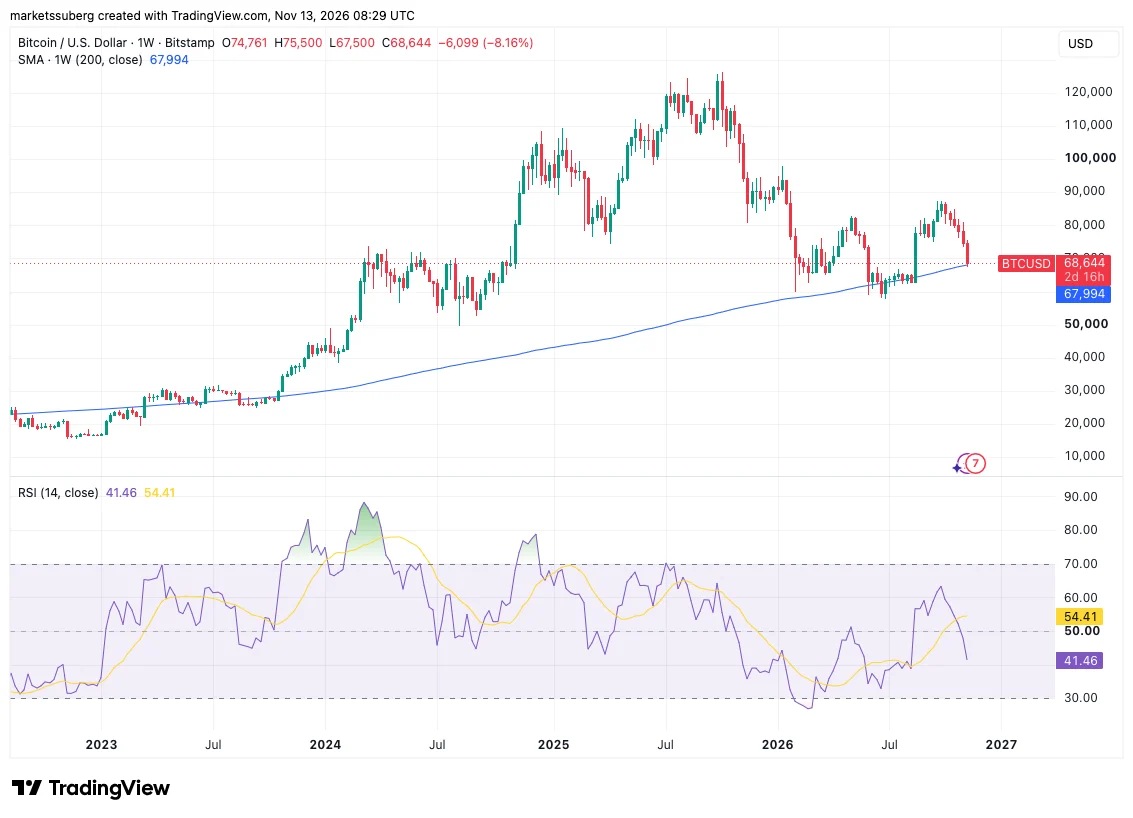
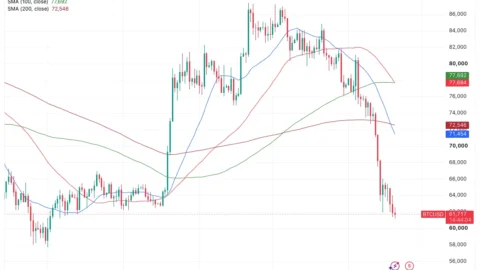
Bitcoin (BTC) pulled back to $67,500 on Friday, dipping below its closely watched 200-week simple moving average (SMA) during its first test of the vital technical indicator in nearly three months. The downward move reflects a broader wave of caution sweeping across global financial markets, compounded by macro-driven tremors originating from traditional equities and the technology sector.
BTC Price Falls Back to 200-Week Simple Moving Average
TradingView market data revealed that Bitcoin had previously touched its 200-week simple moving average back on Aug. 19. Historically, this critical moving average has served as a defining reference point for Bitcoin’s macro cycle lows, functioning alternatively as robust support or formidable resistance during prolonged bear market phases.

Market participants have long monitored this metric closely. Bitcoin previously traded within the vicinity of this average from March through October 2023, and subsequently again from June to mid-August of this year. Technical analysts note that decisive, sustained movements back above the 200-week SMA on the weekly timeframe have routinely preceded sharper, more aggressive market rallies.
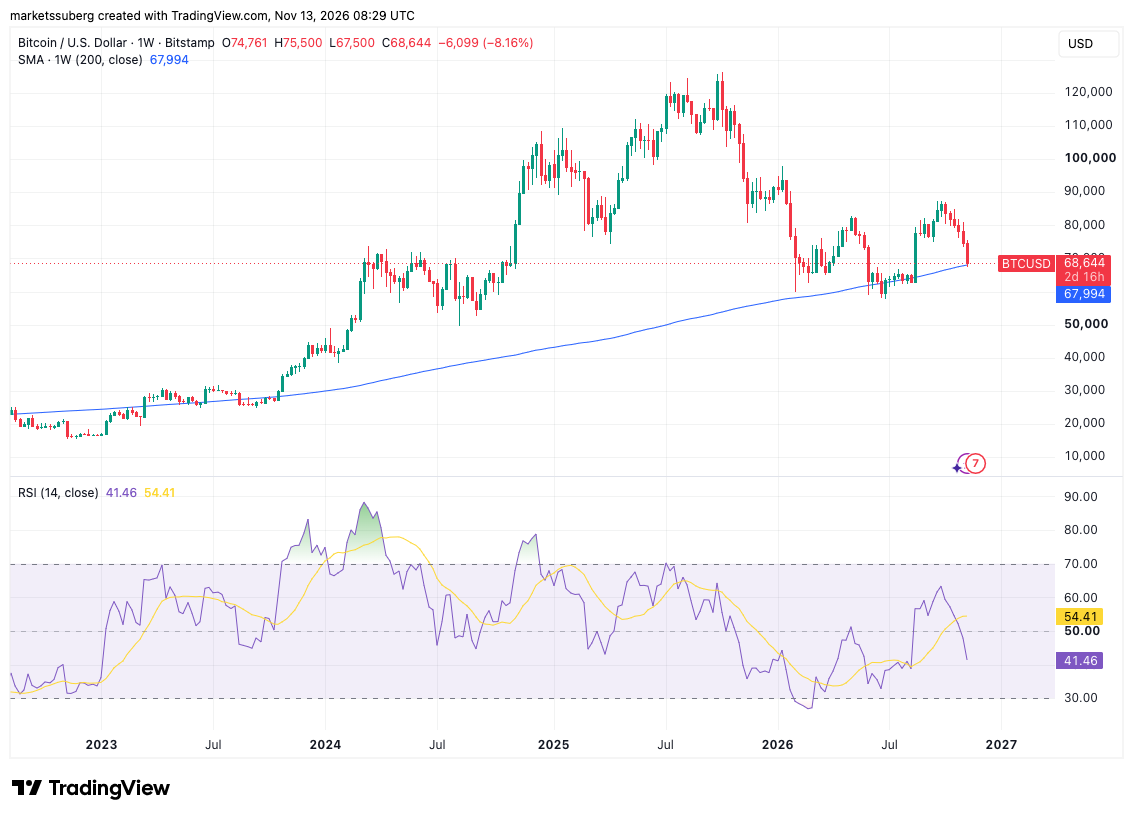
In his latest market assessment, Keith Alan, co-founder of crypto trading platform Material Indicators, highlighted that the 200-week SMA currently shares technical confluence with an important resistance-to-support flip level on Bitcoin’s relative strength index (RSI). According to the latest readings, the weekly RSI has pulled back to 41.5, matching a baseline level that it successfully established as support in late July after spending several weeks attempting a wider breakout.
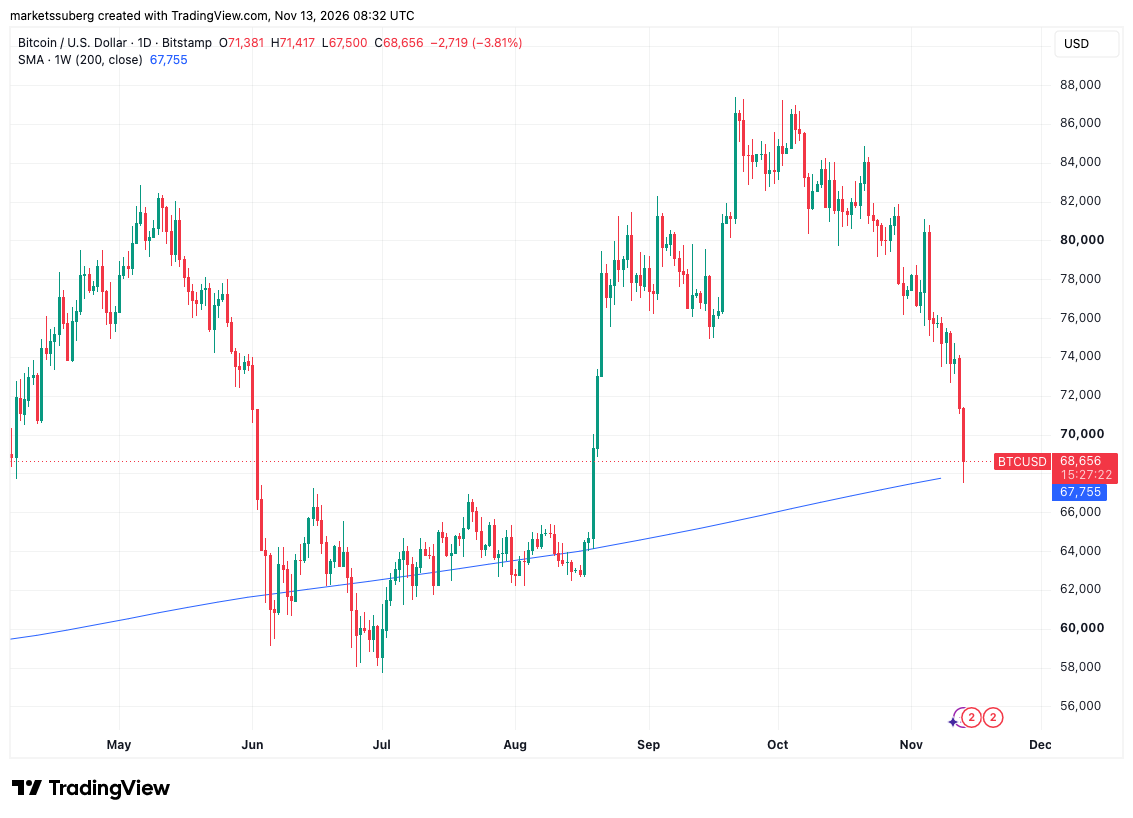
"Losing 41.5 on Weekly RSI opens the door to test the cycle low at $57.7k," Alan wrote Friday in a post on X, while also emphasizing the significant bullish implications that successfully defending this established support zone would ultimately yield for the broader market structure.
Stocks on Edge Amid Calls to Reinstate Nvidia’s Huang
The downward pressure on Bitcoin’s price accelerated sharply on Friday as Asian equity markets digested the sudden resignation and ongoing corporate controversy surrounding Nvidia CEO Jensen Huang. The regional shockwaves were immediate and widespread. Hong Kong’s Hang Seng Index finished the trading day down 1.55%, while South Korea’s benchmark KOSPI Composite Index ended 0.98% lower.
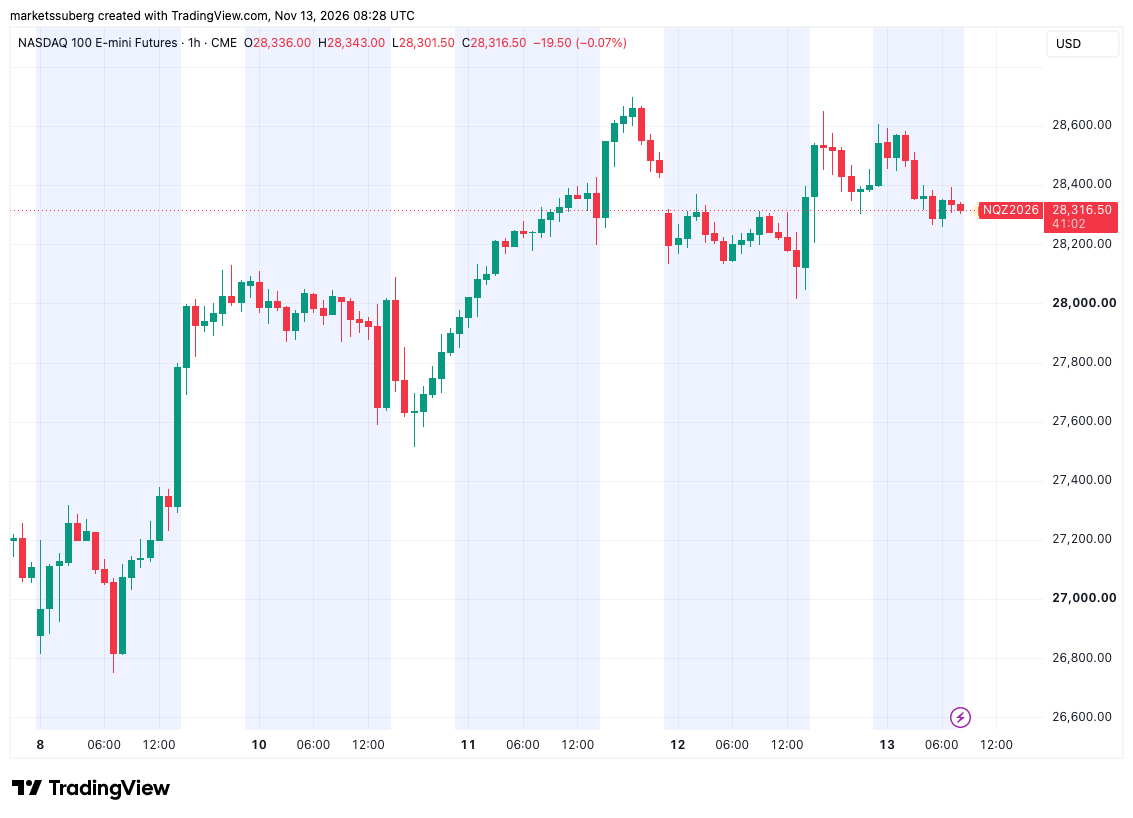
Across the Pacific, United States stock market futures also pointed lower ahead of the opening bell. The tech-heavy Nasdaq 100 futures contract declined by 0.2% as institutional analysts scrambled to evaluate potential capital redistribution strategies. Many market watchers began eyeing shifts into Nvidia’s primary competitors as investors sought to preserve exposure to the overarching artificial intelligence trade.
"What you’re seeing in markets now is a bit of a rotation into other advanced chip design companies, on the assumption that this will enable other companies effectively to catch up," Mark Franklin, head of multi-asset solutions for Asia at asset manager Manulife Investment Management, told CNBC.
Despite the broader market uncertainty and the initial shock of executive departure, Nvidia shares managed to trade 0.7% higher in pre-market activity. This modest recovery came amid reports of rapidly growing internal and external support for Huang’s potential return to the helm. An internal corporate post highlighted by media reports drew more than 1,600 comments from concerned employees urging leadership to address the situation, keeping investor attention squarely fixed on the evolving technology giant.




Comments (0)